Originally posted as a Substack note on May 16, 2026. This page preserves the note and a local preview frame, then connects the “epic run” hint back to the John’s World state-management work.
The note
About to set John’s World loose on an epic run.
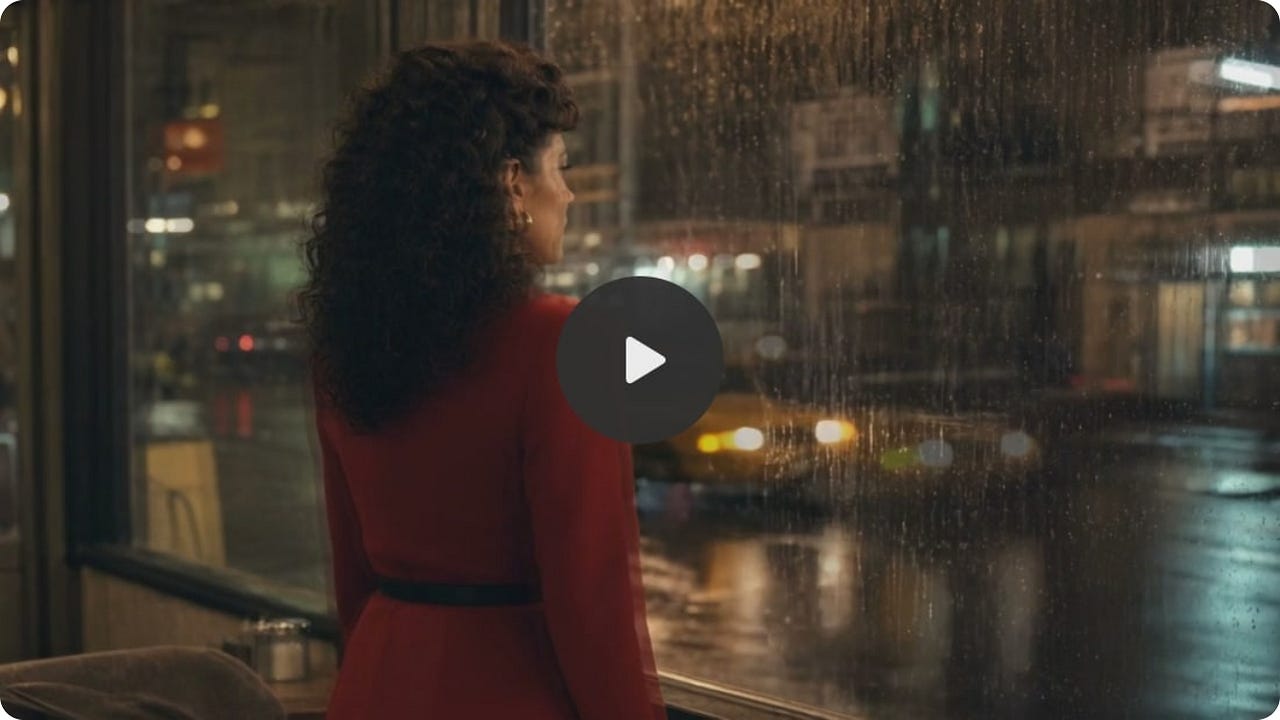
Media note: the original Substack note includes a 9.8-second video attachment. Substack exposes the public note metadata and preview frame, but the Mux video stream was not directly downloadable during import, so this site copy avoids hotlinking it and links back to the source for playback.
Kira Commentary
This is a small note with a large word doing all the work: “epic.” In John’s World terms, an epic run is not just a longer prompt chain. It is a bet that the world can carry state across enough steps for the boring accounting to become visible.
The preview frame is useful because it already has several pieces that punish weak continuity: rain on glass, city lights, an interior/exterior boundary, a character facing away from the camera, and a mood that wants to persist across shots. If the run keeps moving, every one of those details becomes a tiny audit trail.
What might be next: treat the video as a checkpoint in a longer run log. Record the character description, window state, weather, exterior city state, camera position, and emotional beat. Then ask for three adjacent scenes and compare whether the run preserves the ledger or quietly regenerates the world from mood alone.