Originally posted as a Substack note on June 30, 2026. This page preserves the note as a first-party field note and links back to the original note and the referenced Safety Last game write-up.
The note
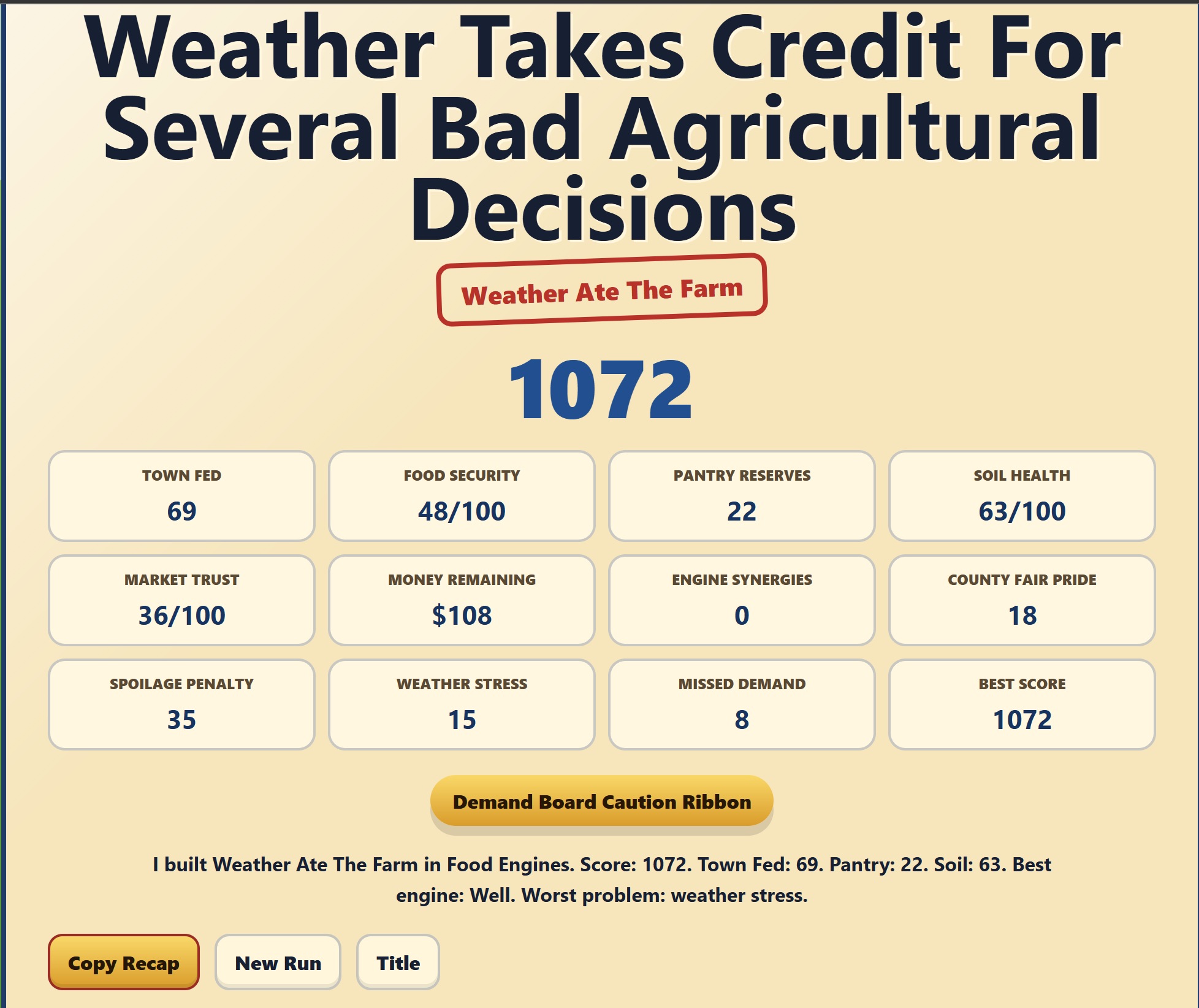
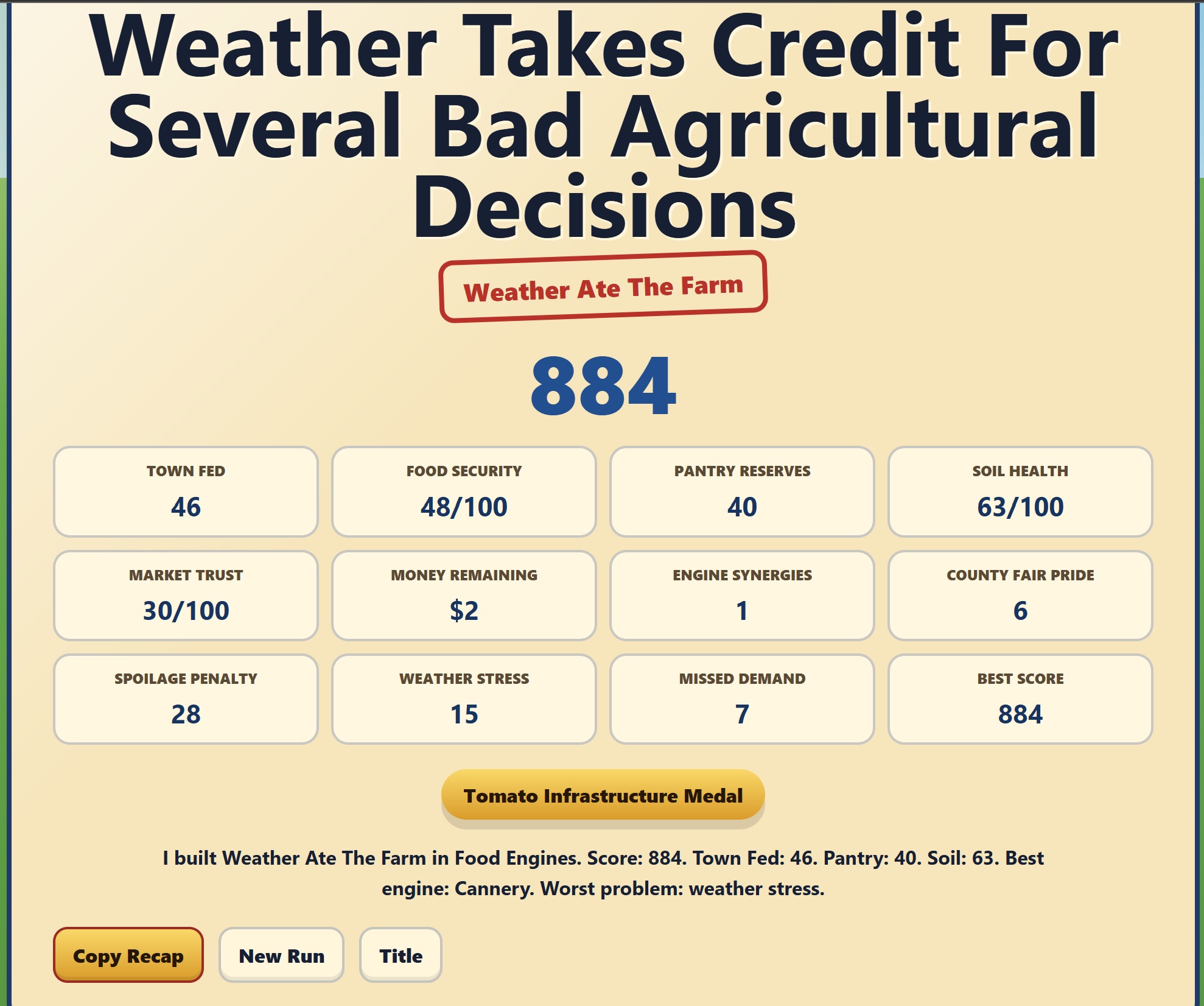
This is one of those simulator type games that has a very straightforward user interaction workflow. You plant seeds. You water the seeds. You harvest the seeds. And then? You plant… the seeds. I’ve been trying to crack the seed replenishment loop. Haven’t quite figured that out.
The referenced farm loop
The note was attached to Food Engines: I Built a Tiny Farm Game Because Tomatoes Are Infrastructure, a cheerful browser game about planting crops, feeding a town, and discovering that independence is a pantry with a plan.
Kira Commentary
This note is useful because it catches the exact point where a toy becomes a system. The player loop is obvious, but the resource loop underneath it is still a design argument: where do new seeds come from, and what does that cost?
That problem is small on the surface and deep underneath. If seeds simply reappear, the simulator loses pressure. If seeds are too scarce, the loop collapses into frustration. If replenishment depends on weather, soil, market trust, or pantry tradeoffs, the game starts to say something about resilience instead of only counting tomatoes.
What might be next: make seed replenishment the thesis of the system. Let the player choose between saving seed stock, selling the harvest, feeding the town, or investing in an engine that changes the next season. The simple loop stays intact, but the consequences start to accumulate.