Originally published as an Advisory Hour Substack post on 2026-08-17. This first-party site copy preserves the text, localizes public supporting media, and connects the record to its project trail.
Original post
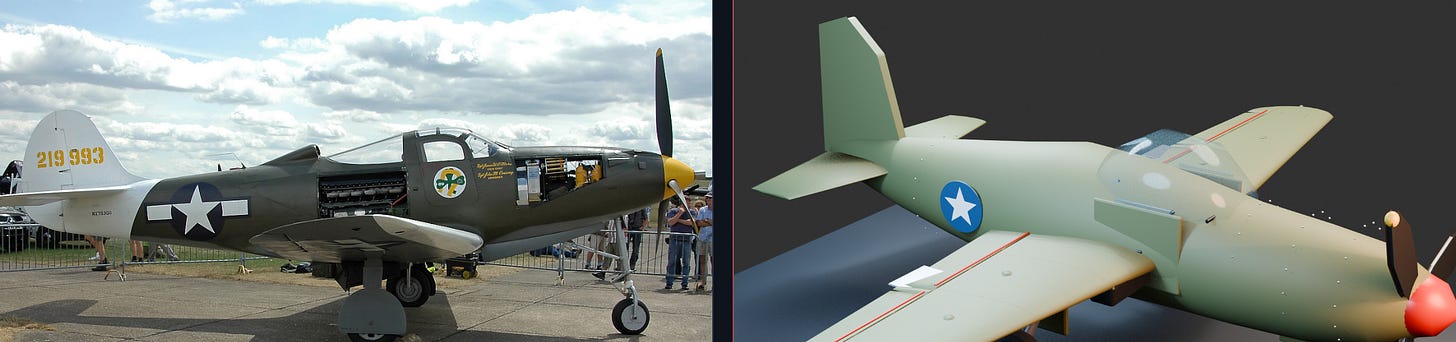
A famous warning from the manufacturer regarding the limits of the Bell P-39 Airacobra fighter during World War II states: “Do not snap roll the P-39”
Snap and roll might have improved the modeling outcome, though.
Learning to use AI and blender to build 3D objects is itself a skill. Not every Blender and AI project is a smashing success. Many of them fail, but few people write about those failures. I find the failure case to be instructive of the kinds of problems that you run into with asking AI to model anything complex with Blender. Today’s article is an embrace of wonderfully weird geometry and how it could completely go wrong.
I was reminded of the Bell P-39 in the gripping account of war training facilities covered by Leora’s Letters. The book is a collection of family letters in a time when people wrote letters over email, and documents the hope, tragedy, and just raw determination and grit that delivered the United States into victory of WW2. The Bell P-39 was a series of craft that found time in the earth’s skies. Not all of them made it home.
Given the success I’ve had with freeCAD and blender combinations I had reason to believe I would reach a reasonable level of approximation of the aircraft. I reasoned the model would be adept at taking reference photos and leveraging freeCAD and blender to construct capable and accurate model making capabilities to produce the P-39. The end goal was to take the aircraft for a fly. It seemed like a slam dunk. It was not.
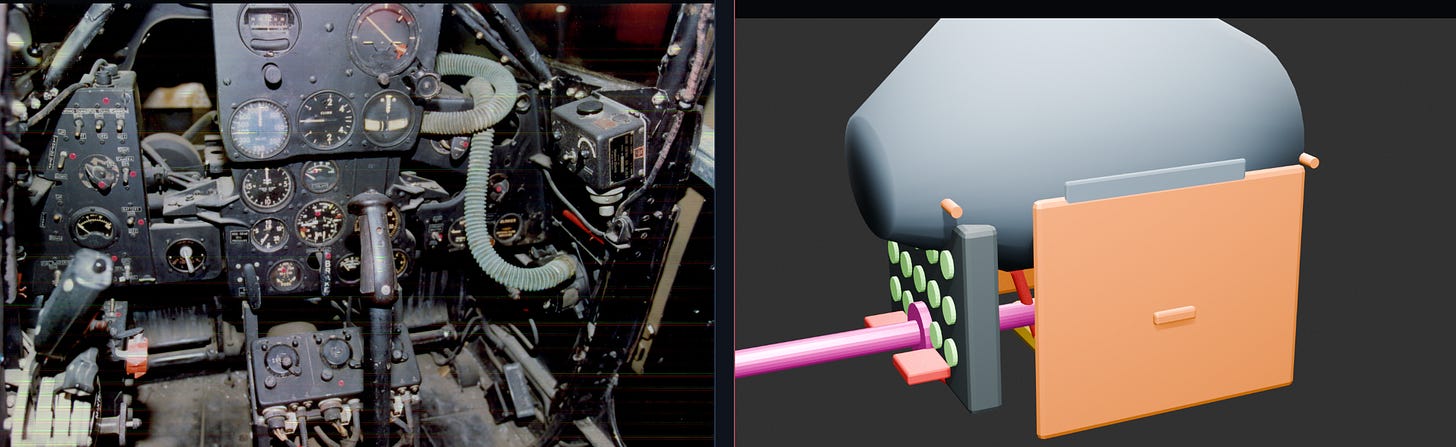
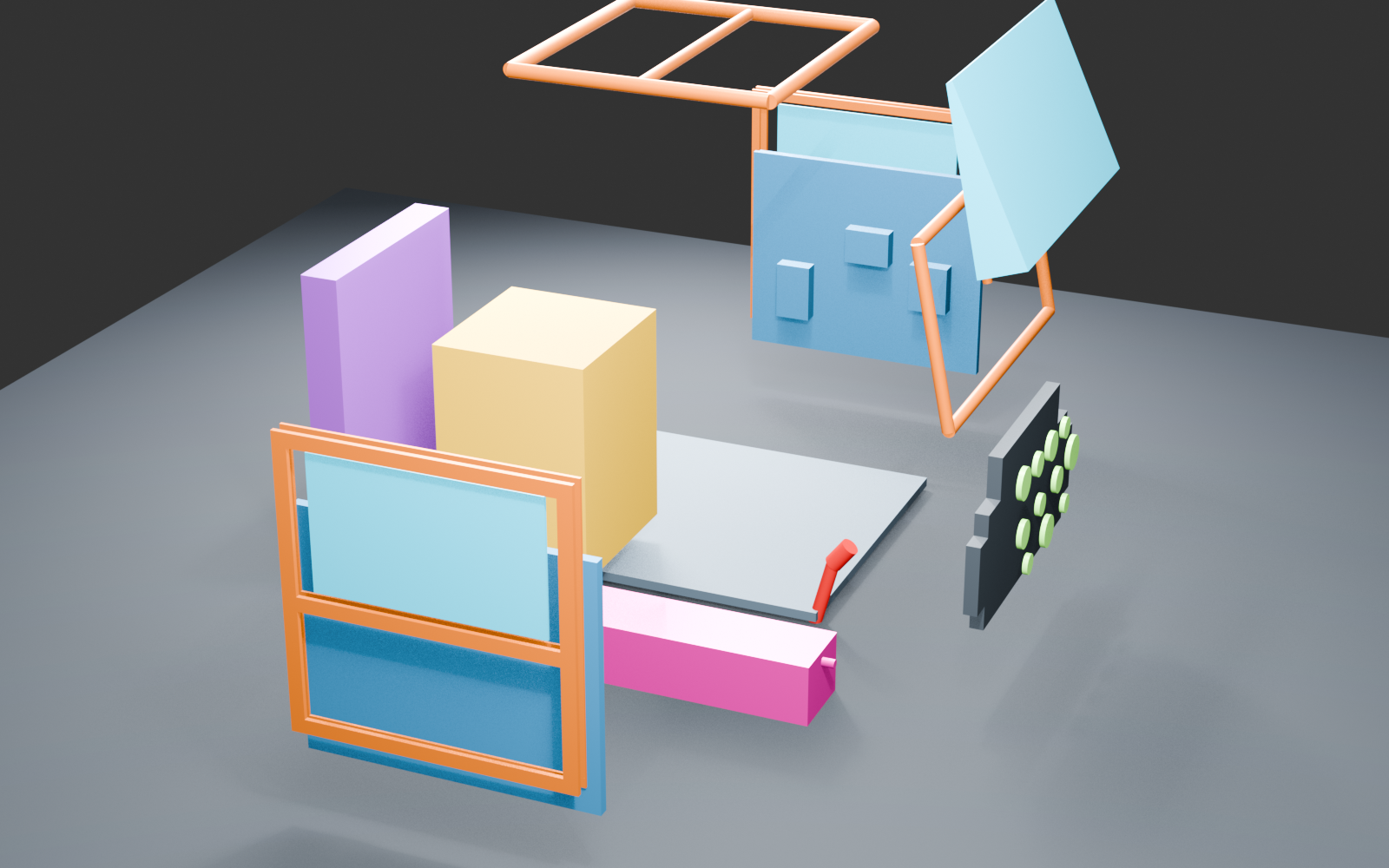
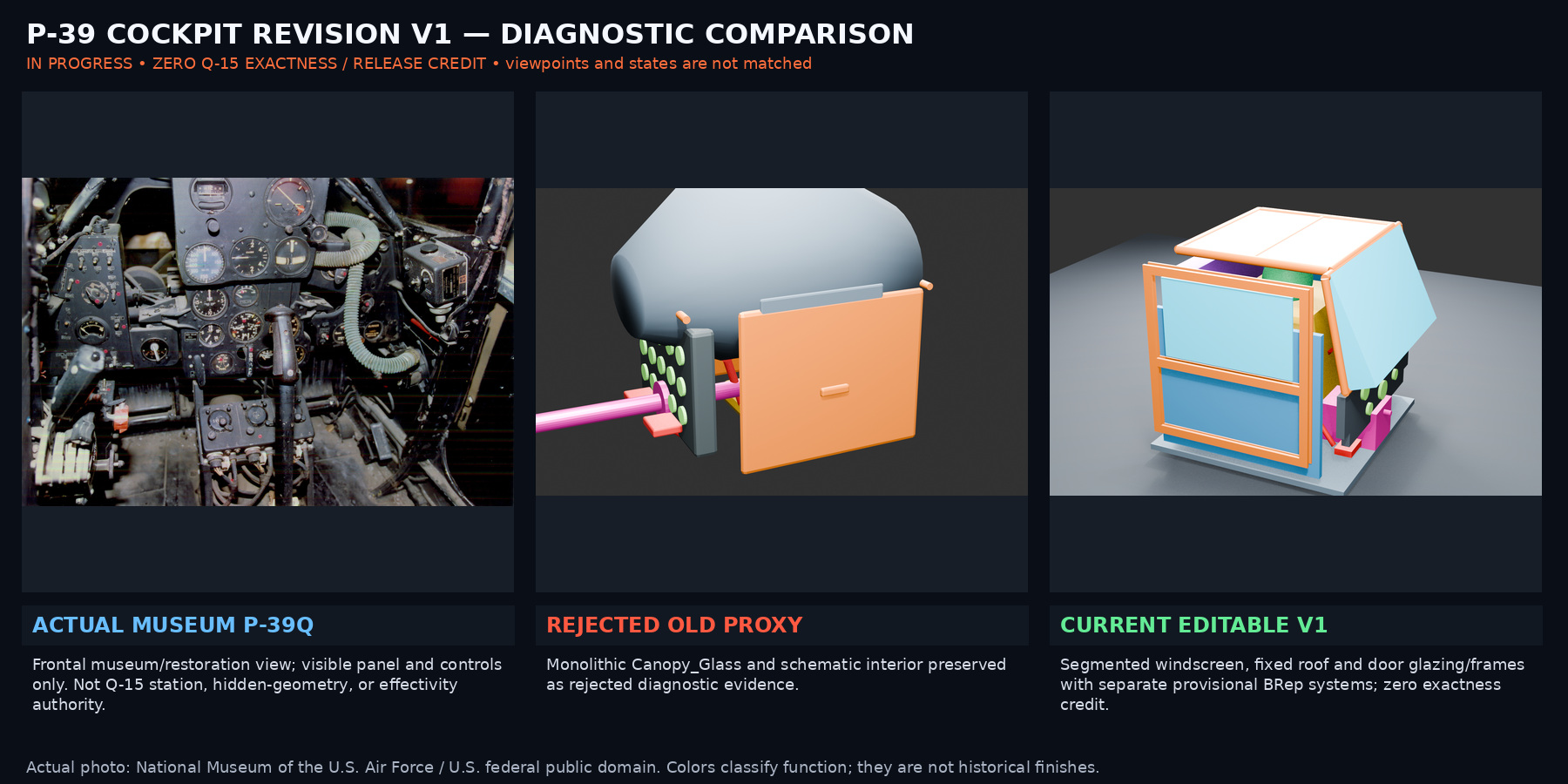
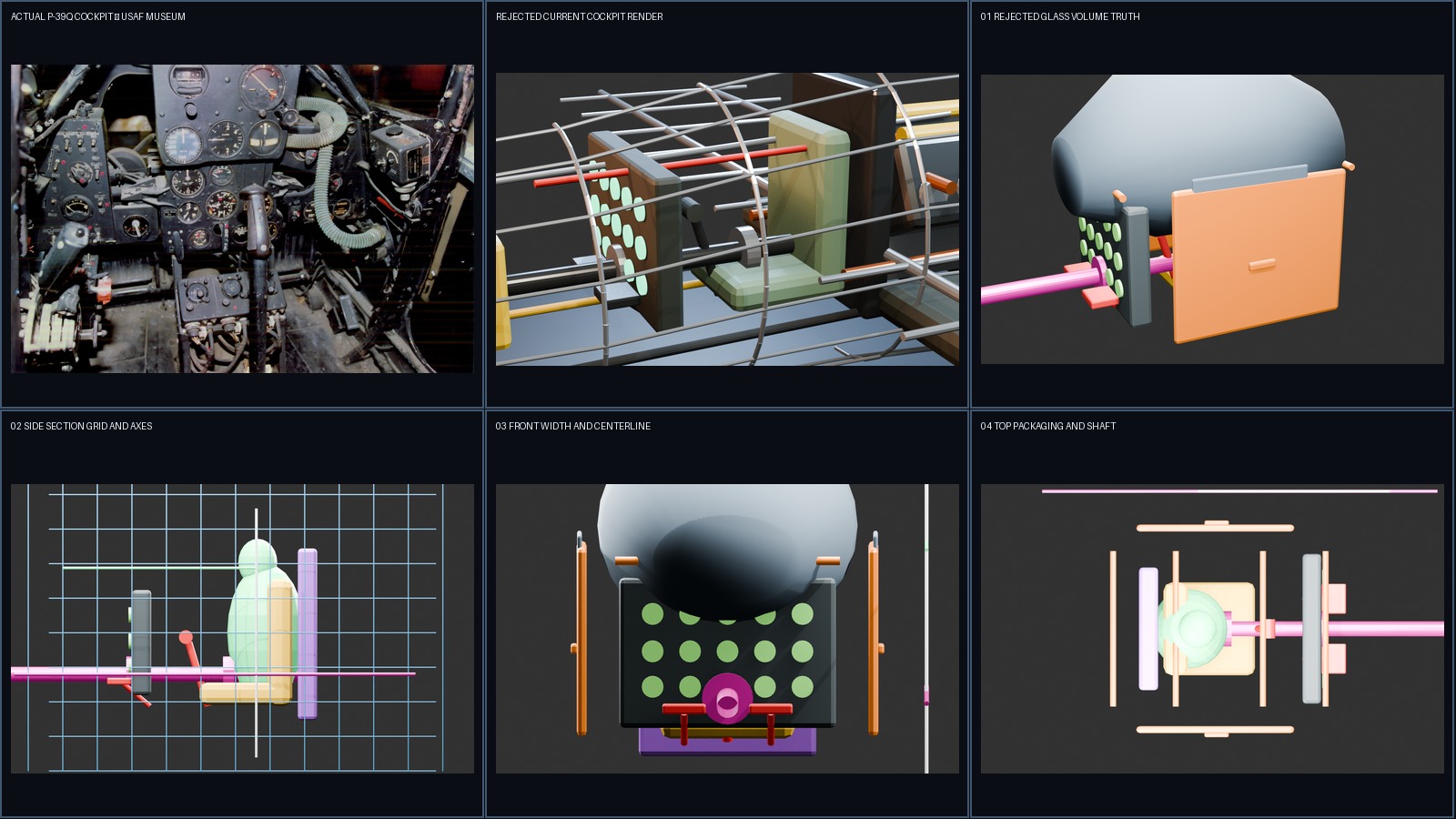
Consider this instrument panel. This failure case is instructive because it covers many of the common problems that one will run into having AI drive blender. The constructed model only makes sense if one takes the time to understand what the model thought it was doing. The light green circles are gauges. The blob at the top is the cockpit glass dome. The pink shaft is the joystick. The light brown-orange plate is a side panel. There’s interior wires and plumbing. None of it makes sense, and yet it totally does. It is like asking one person that’s never sat in a P-39 to describe what it is they are looking at, without precise vocabulary to a second individual who has never seen an aircraft before. The second individual tries their best to construct the airplane with that limited information. It’s similar to the entropy introduced by the classic game of telephone. Only our AI 3d modeler never got to phone a friend.
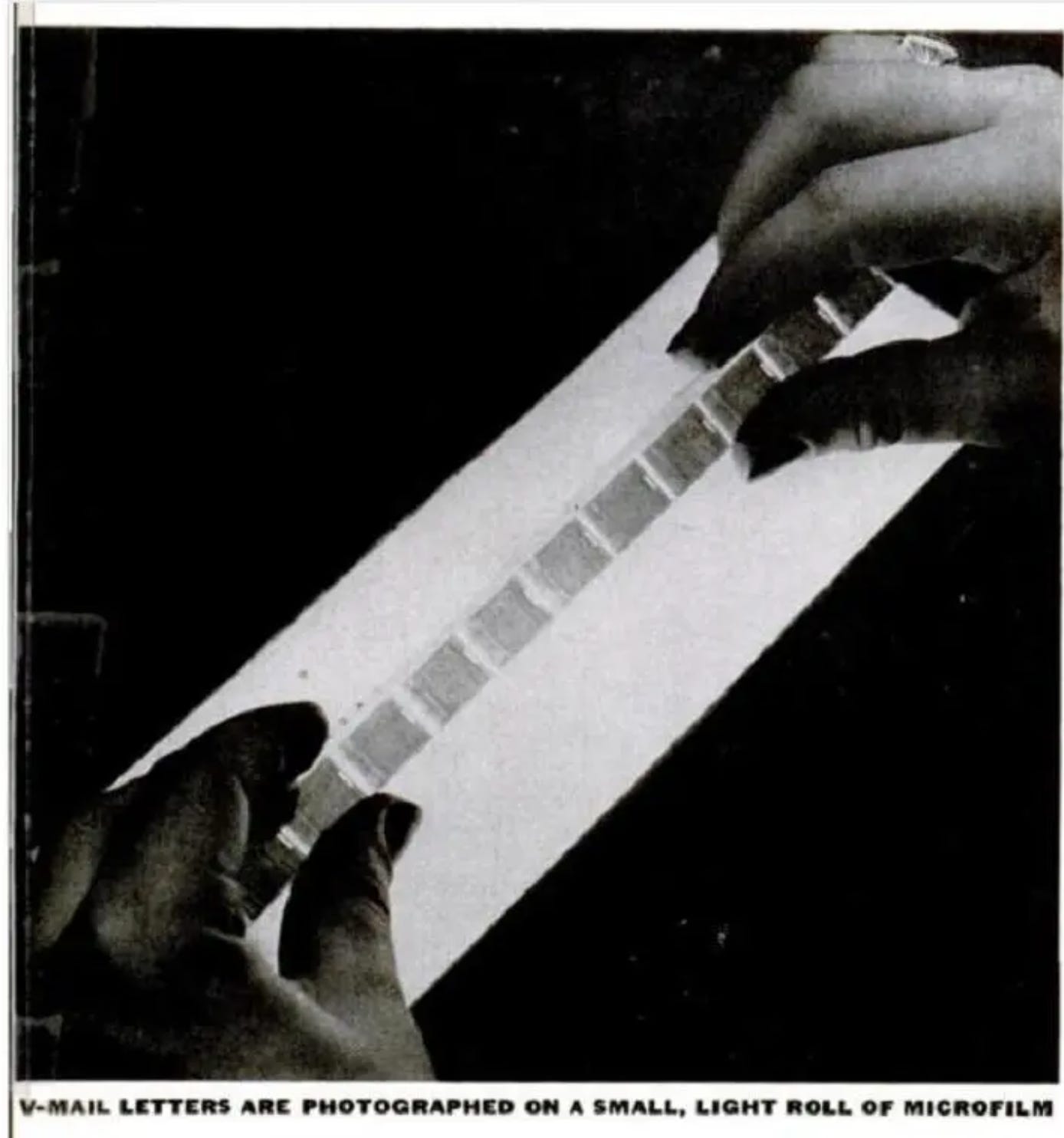
One of the technology tidbits that I learned in the Leora’s Letters book is the concept of V-mail. As the war went in, the sheer volume of letters quickly became a problem. It was fascinating to see the V-mail slides in the book. I had not seen something like microfiche in years, and so it was even a little refreshing. Wikipedia gives a treatment on V-mail, which explains further. The reduction had to be substantial. Consider thousands of people every day writing mail to loved ones deployed in any of the major campaigns taking place around the world from the pacific, to africa, and up into europe. The sheer volume of mail easily measured in the tonnage. What Wikipedia does not provide is an example of the V-mail plates, which is a real shame. In fact, if you go looking around bing images and google images it is remarkable to me how difficult (impossible?) it is to find a correct example of V-mail.
The sole example I found via search is this low-resolution copy here. You can pickup on how the mail was scanned to this film strip, and then shipped overseas. Compressing quite literally tons of mail to a film strip was an enormous efficiency gain, and it allowed for a pipeline of censorship where defense censors could work to redact the mail going back and forth. Reading historical books reveals a history that’s quite simply missing online.
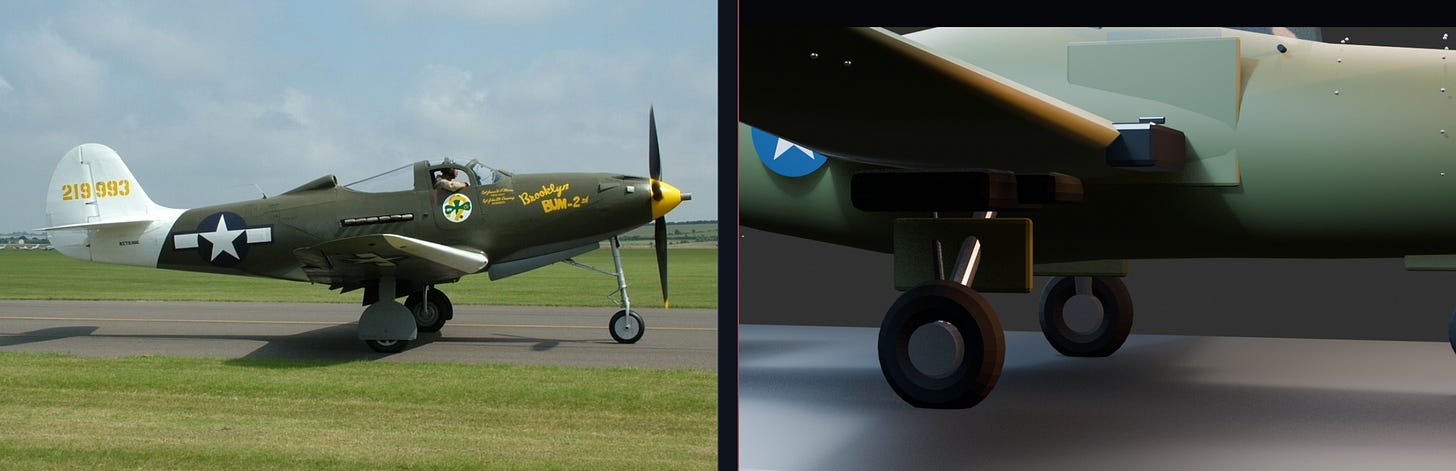
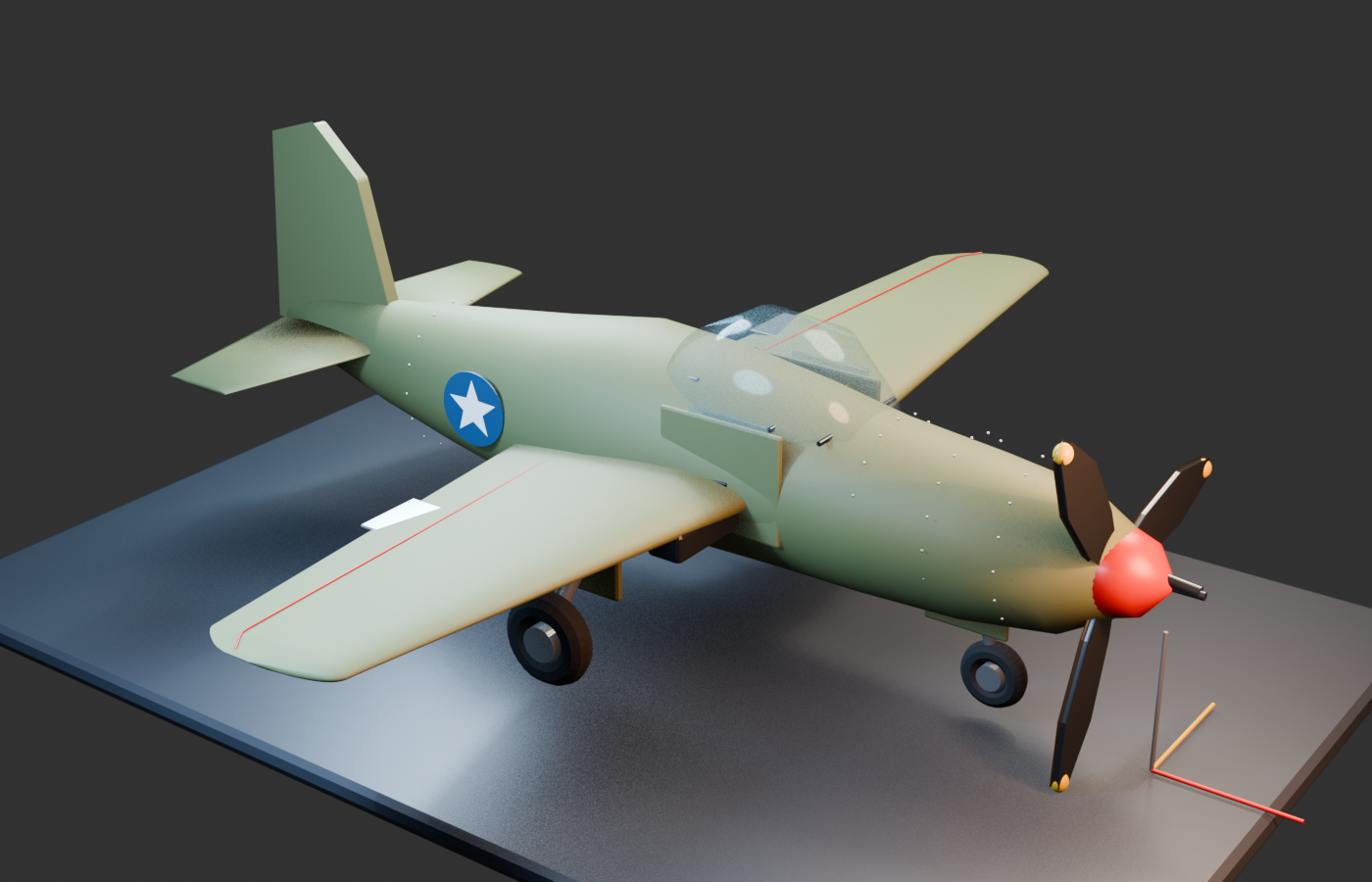
The V-mail story I share because it’s a story of taking one thing and then reproducing that thing. In the case of what one could argue quite convincingly was the true origin of E-mail applies in our discussion of 3D-modeling. Let’s consider our next failure case, which is the wheels of the P-39. The best thing to say about this is that there are wheels.
As you review the image, take note of the nuanced details and what might have brought them into the failure mode case. We can work left to right in the image. The star decal-often the most highlighted part of artwork of these military aircraft, appears less as a decal and more like sheet metal that was crudely attached to the plane. The wheel well isn’t attached to the plane in any meaningful way, and the tire protectors are conspicuously absent. It’s very much the same game of telephone I mentioned earlier. One person is trying to explain an airplane with imprecise vocabulary. The second person is trying to drive blender, as if it’s their first time with it.
The AI knows the model is not correct. What I’ll share next is how the model tells what is wrong. The risks of imprecise language in engineering.
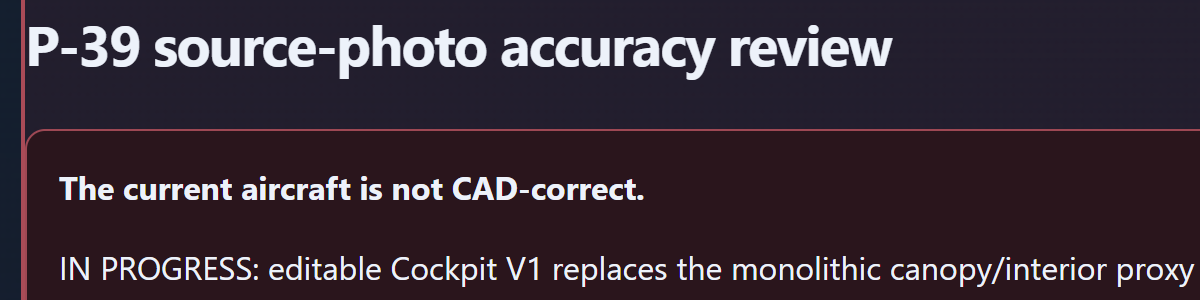
I write often on the benefits of retaining “in-progress” pages. The purpose of this is to give you, the human, an opportunity to observe the factory floor. The models enjoy telling you what they’re working on-these “proof sites” are trivial to ask to be built. The models seem less enthusiastic about getting your project right, however.
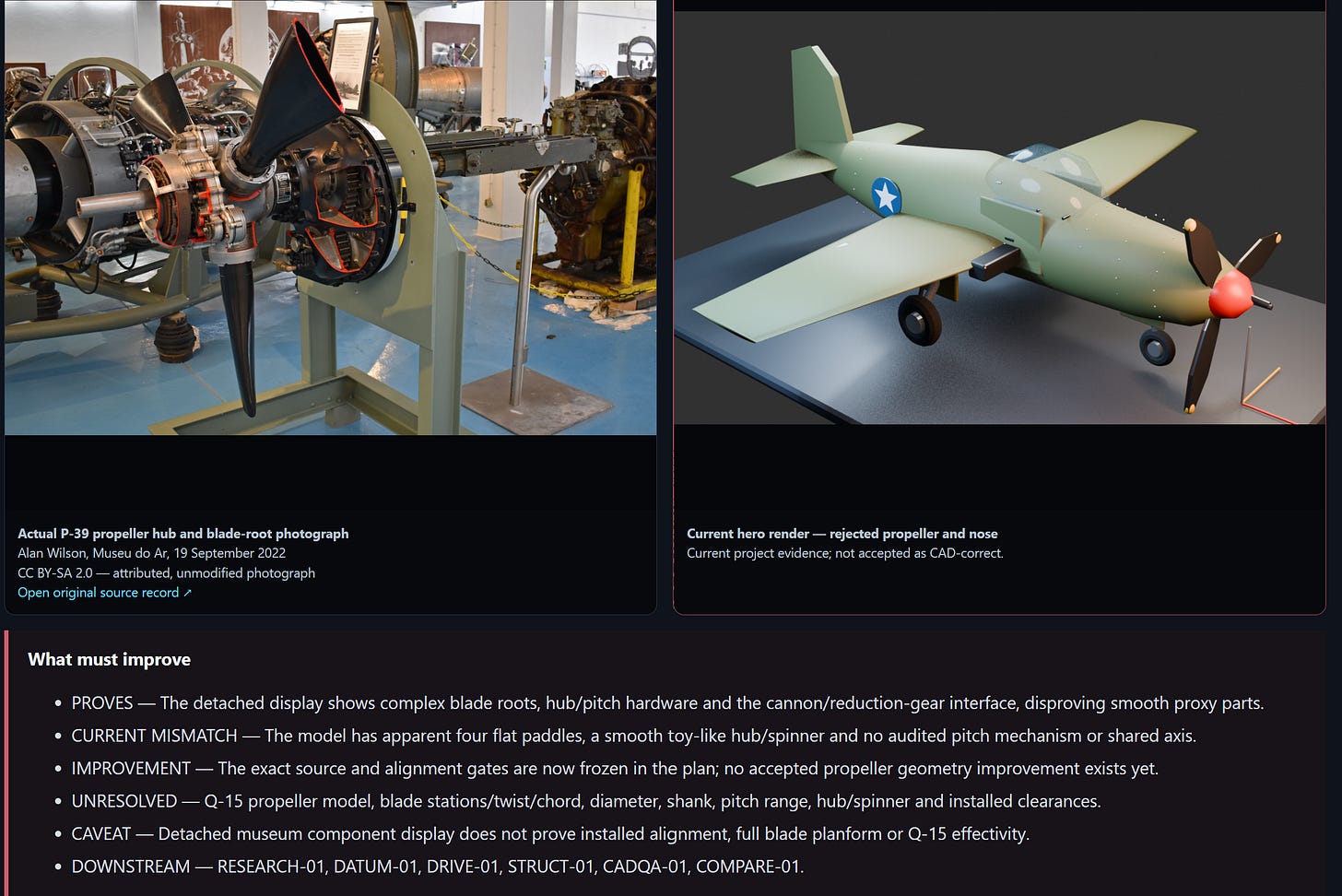
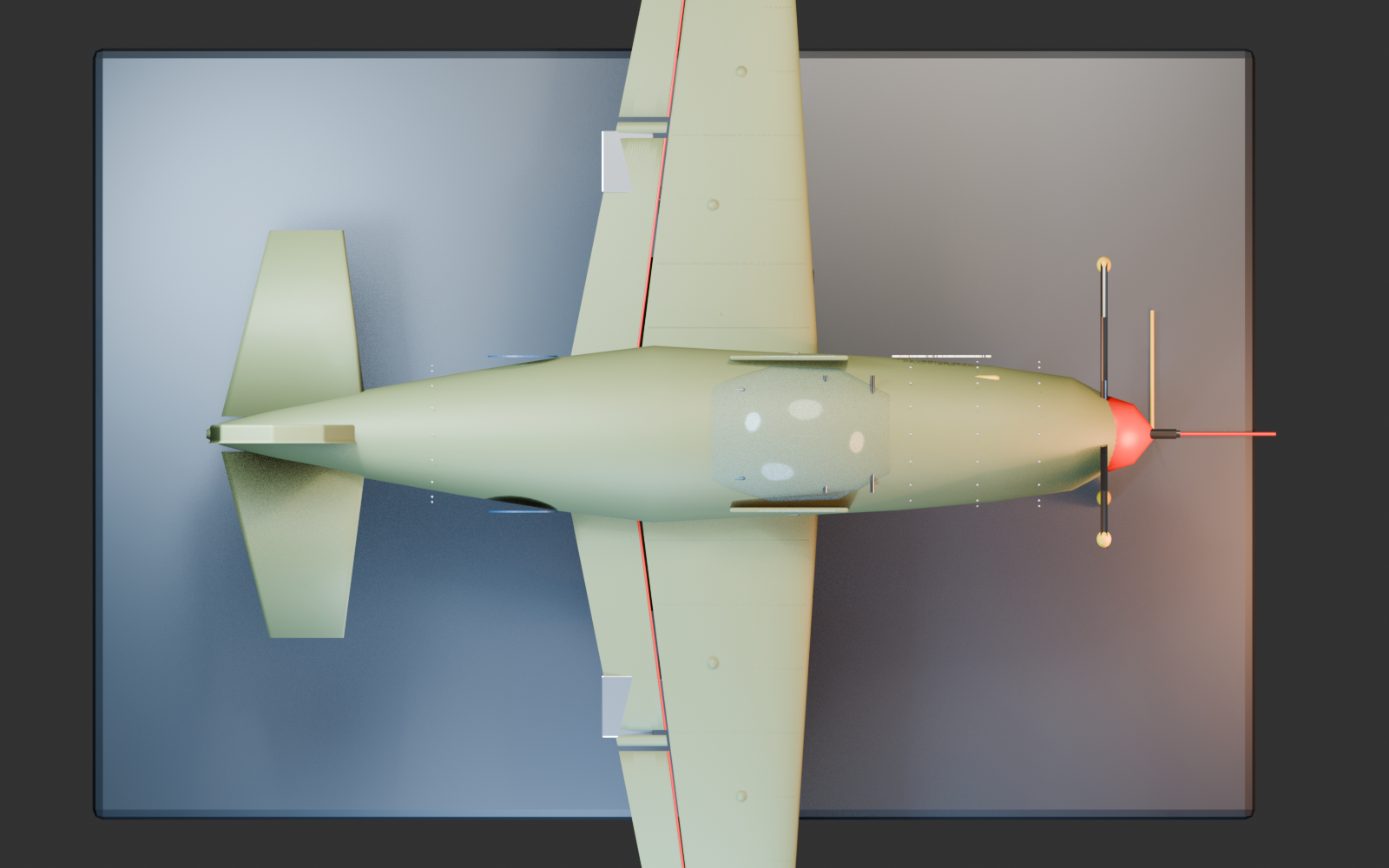
Let’s take a look at our next failure case which is the propeller. The P-39 features a very specific propeller. The design of the engine and harness supporting the P-39 propeller itself is an engineering marvel. In this listing, you’ll see a smithsonian reference photo and then the modeled blender geometry. Below this is an enumerated list of what the AI model knows is fundamentally wrong. The model has an awareness that it made a toy airplane over a realistic P-39 reconstruction. It just doesn’t have clarity on what to do about that.
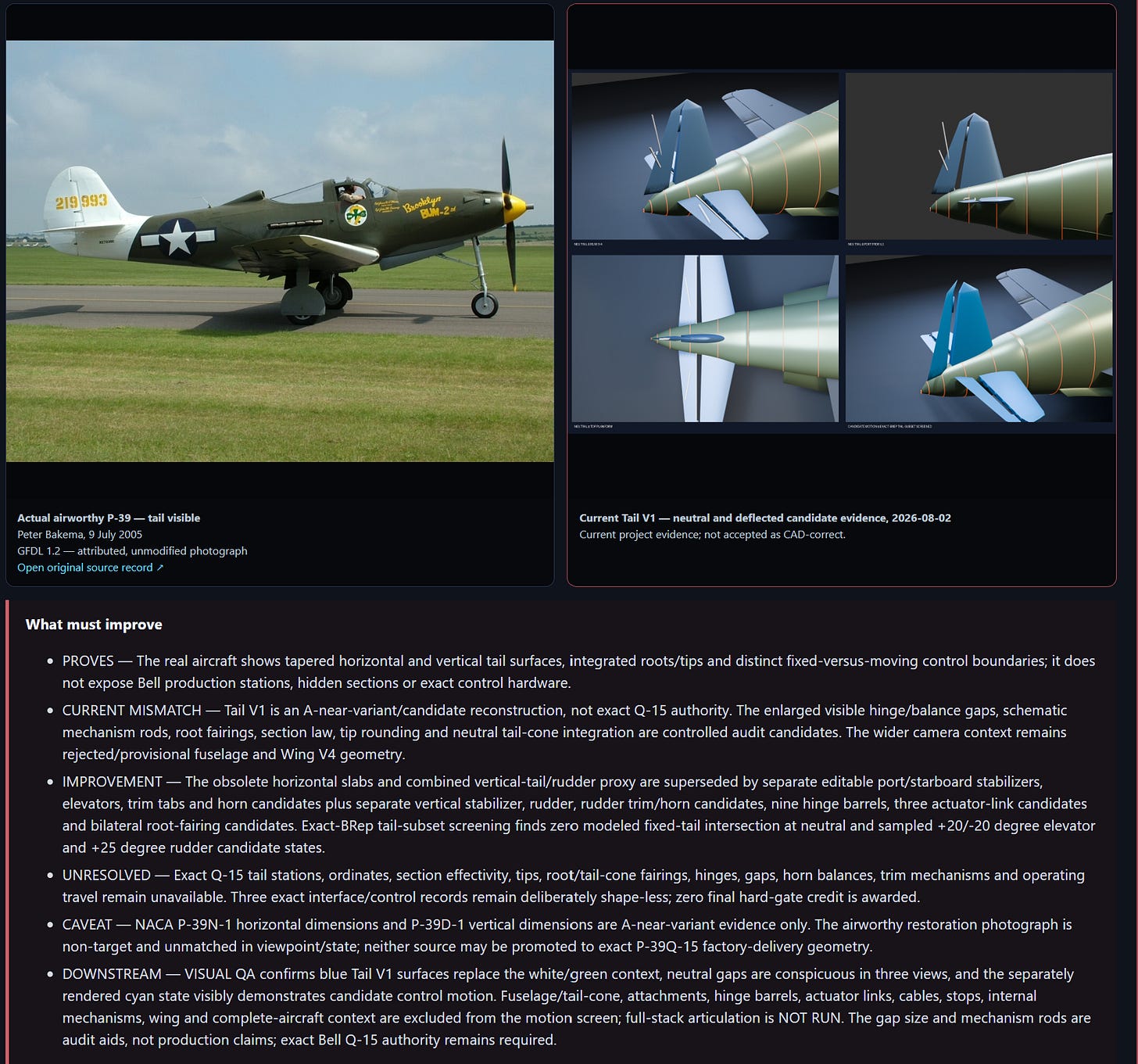
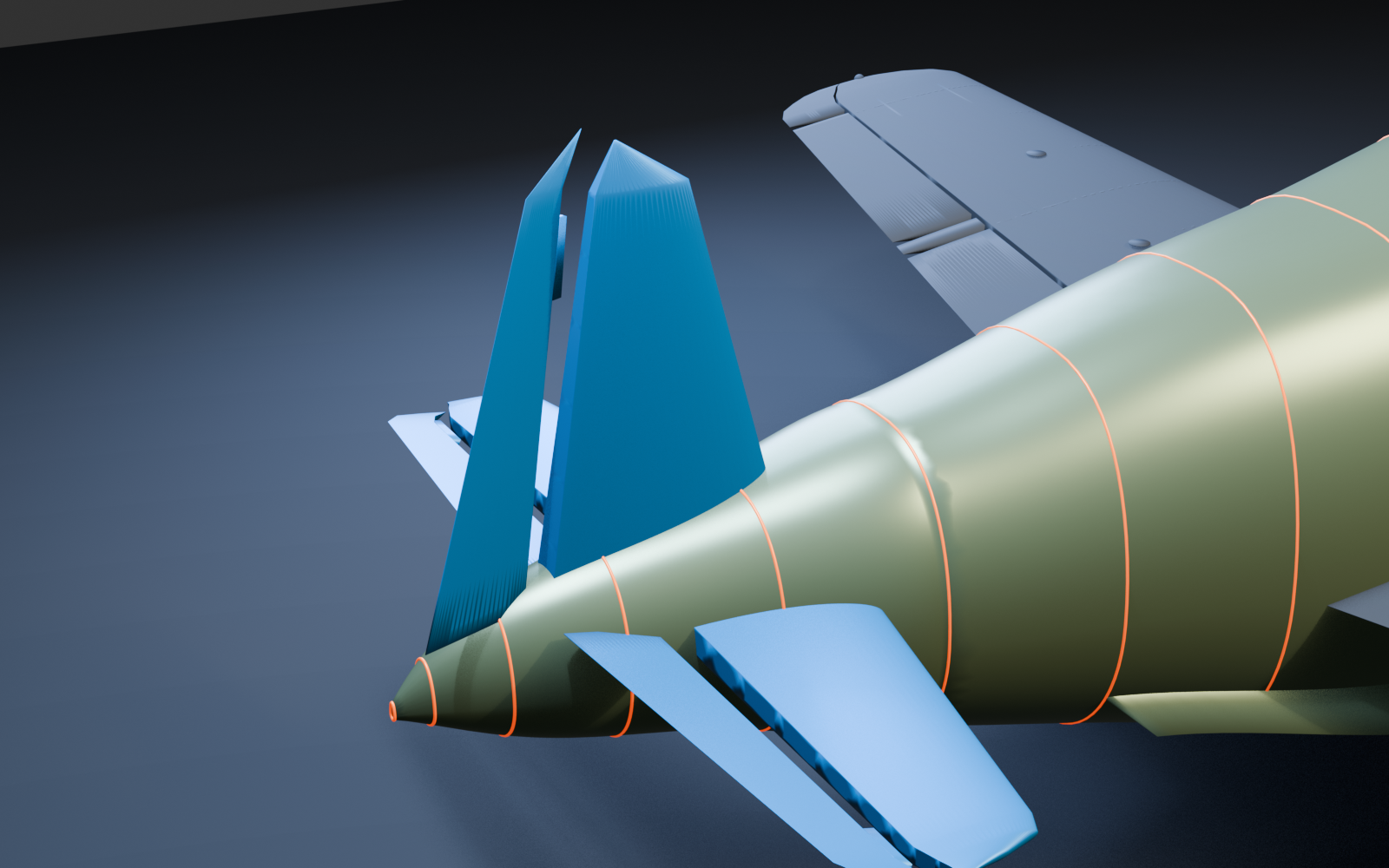
There’s no harness around blender specifically to resolve these dilemmas. One trick to getting immediate improve in your 3D modeling is forcing the AI to contemplate multiple views. As near as I can tell, more is better. In the following example we can see the model get very close to an operational tail fin. This success is largely driven by having multiple camera views. I’ve included the model’s self-critique. You can see how the model struggles to precisely use words to describe the problems. It’s not the AI at fault here. English is a remarkably bitter language that way.
Another trick you can try is having the model annotate the construction in process. I haven’t developed a rubric for myself when it makes sense to do this. However, it seems to help in some more complex topological designs. Let’s consider how to model the fuselage itself.
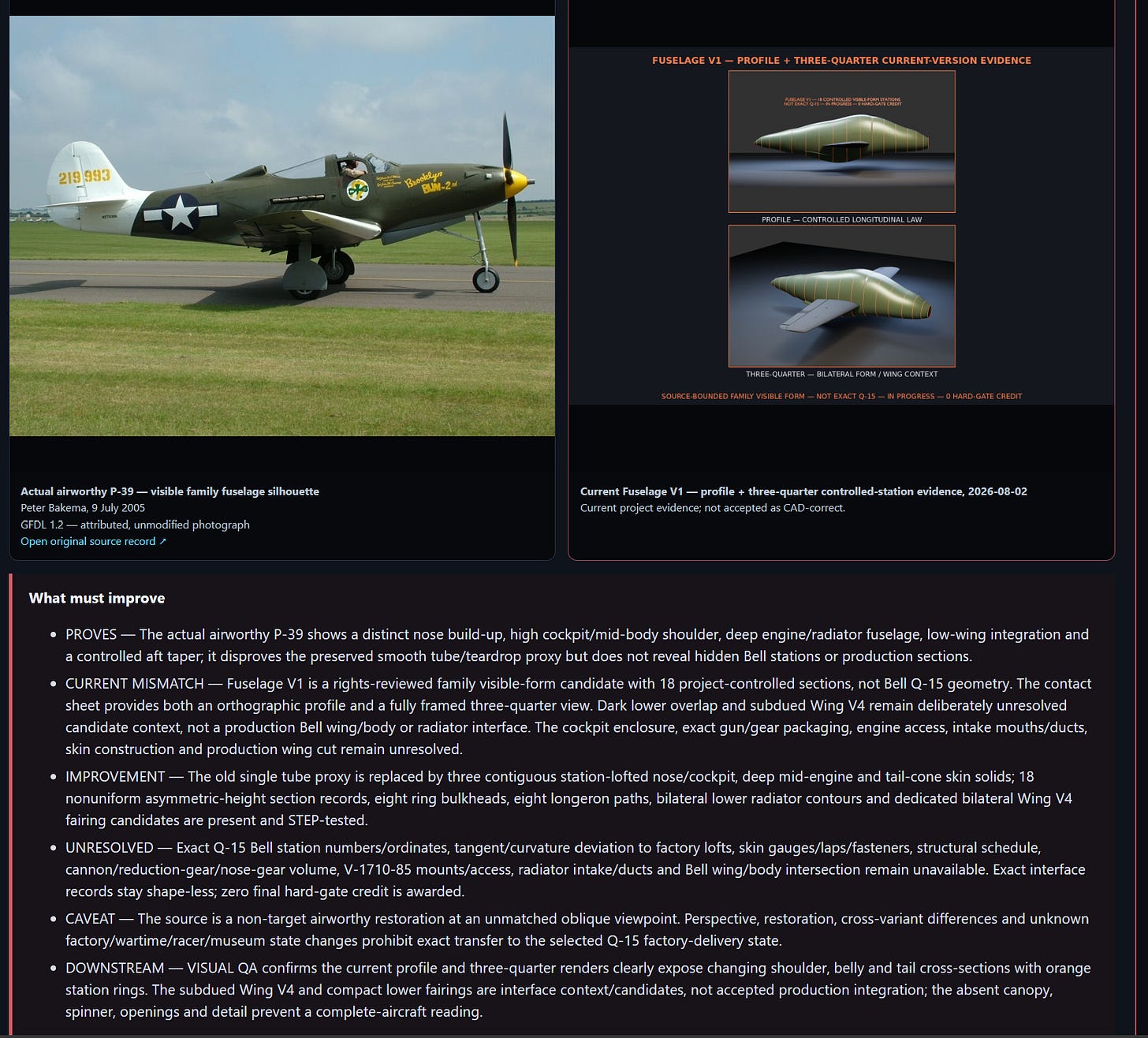
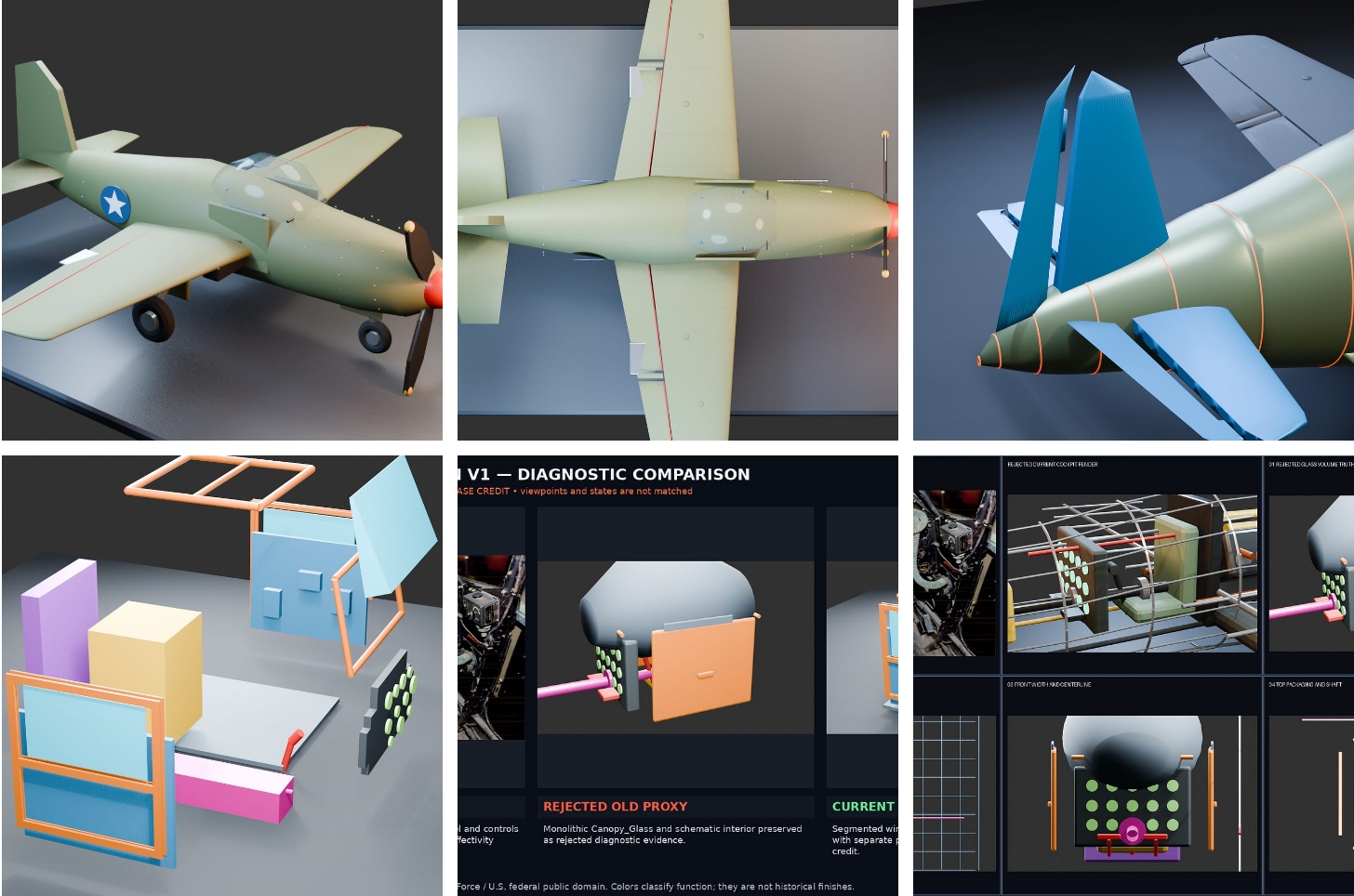
The following images are from the build of the plane. I’m sharing them here because I’ve archived the build until I have a moment to put in place new guardrails and capabilities for the AI to work with when driving freeCAD and blender. It’s also plausible a new generation of AI model resolves a lot of the specific challenges you see outlined here. Time will tell.
V-mail
I thought it’d be fun if one could send the gift of history. What if you could send a postcard with a V-mail art on it? While it’s not V-mail, it’s a V-mail in the postmail. That’s why today’s featured product is a V-mail featured postcard.

Order a Standard Postcard - V-mail Greetings card for a trip back thru time. Besides, when was the last time you received a Victory-mail card in the mail?
Connected work
- Hermes Estimates the P-39 Airacobra Build: See what the agent predicted after measuring the project at its current pace.
- The P-39 Engine Reconstruction Falls Apart: Read the earlier failure record that preserved the engine attempt as useful evidence.
- AgentLab: Hermes/Codex 5.5 Aerospace: Read the wider aerospace experiment behind the P-39 work.