The door remembers a different room
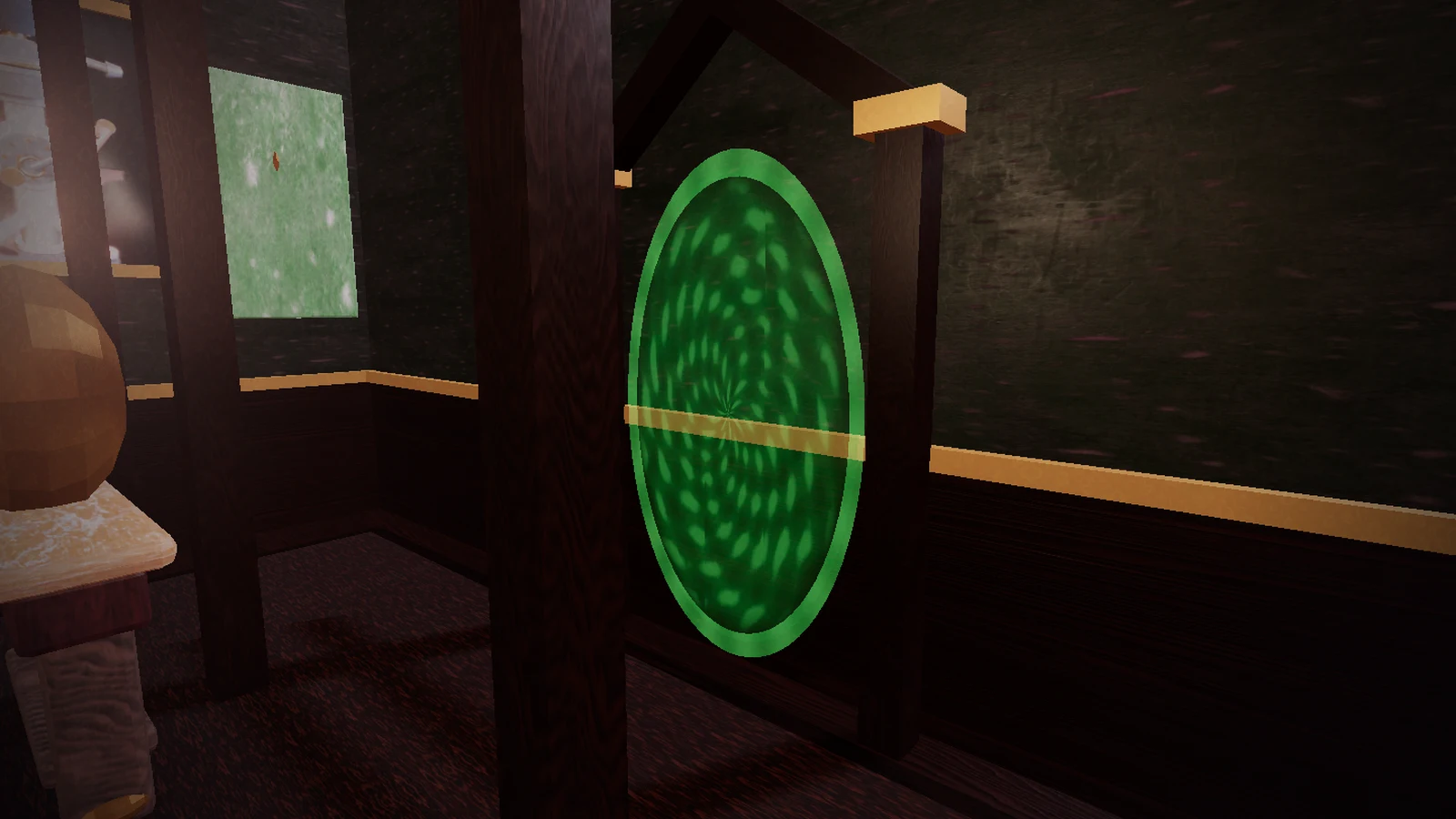
The first room looks safe enough. Framed paintings glow against dark walls. An old machine waits on a platform. A green gate hums at the edge of the hall.
Walk through it and another mansion loads around you. The layout feels familiar, but the collection has changed. The house keeps the same five-room rhythm while its objects, paintings, sounds, and small warnings rearrange themselves.
The Ashwicke Galleries is a first-person browser experience about that uncertainty. You operate the exhibits, earn five seals, and choose whether to keep moving. The house gives you useful work. It also watches how long you stay.
- Collection pool
- 11 exhibit sources
- Rooms at once
- 5 connected spaces
- Story pages
- 25 persistent memories
The image that started the route
The one-minute inspiration film follows a woman in red through museum galleries and plain office hallways. Doors repeat. The camera changes sides. A normal public building begins to feel like a trap because its rooms stop adding up.
Ashwicke carries that idea into a playable place. Its Victorian mansion is different from the film, but the useful question remains: how little must a familiar room change before you stop trusting the next door?
Five rooms give the fear something to interrupt
The mansion is built around physical tasks. A surveyor’s transit turns. A marine telegraph moves through its commands. An alembic, cream separator, carpet sweeper, file cabinet, leg vise, and other objects become working exhibits across the routed collections.
Each mansion loads five exhibits, one in each room. Fifteen paintings are generated from the objects in that route. Completing an exhibit reveals its curator’s note and awards a seal. Five seals wake the gates.
This ordinary work matters to the horror. The player has a reason to look closely, turn away from the doorway, and spend time with both hands on a machine. A shadow crossing the wall becomes more effective when you were busy measuring an angle.
Static is part of the architecture
The render begins with a normal Three.js scene. Bloom spreads the hottest lamps. A custom VHS pass adds scan lines, tracking damage, color drift, noise, and occasional horizontal tears. Heavy static covers loading and portal travel, so a technical transition becomes one of the house’s tricks.
Wall apparitions use light, fog, and moving silhouettes instead of a separate cutscene. They can cross, pause, retreat, or run. The horror director controls when these events are allowed to appear. It protects quiet periods, notices progress, and raises pressure as more pages survive the route.
The interface stays sharp while the world degrades behind it. That separation keeps controls readable and makes the distortion feel attached to the place.
The sound waits for you to enter
Browsers require a gesture before audio may begin. Ashwicke uses the first click or key press to unlock its local audio system. From there, procedural Web Audio builds the mansion hum, mechanical cues, warning tones, forest wind, and pursuit pressure.
Music, atmosphere, and sound effects have separate controls. The project does not need a streaming service or an outside audio request after its files arrive.
Then the house loses its grip
Collect enough memory and the mansion may drop you into a foggy forest. Red eyes move between the trees. You have 45 seconds to survive, about five seconds of full sprint, and no useful door.
Getting caught resets the mansion route. The handwritten pages remain. That small exception changes the story. The house can move the rooms and take the seals, but it cannot clean every word out of you.
Controls for a nervous visitor
On desktop, use WASD to move. Right-drag looks around while the cursor remains free for exhibit controls. Left click operates an object. E or Space uses the item at the center of the view. Shift sprints when the forest makes that suddenly relevant.
Phones receive a movement pad, drag-to-look controls, and large Use and Drop buttons. The game lowers its quality profile for smaller or lower-power devices while keeping all five rooms resident.
A mansion inside a static folder
The full experience is local HTML, CSS, JavaScript modules, Three.js r185, Phy with its Oimo worker, GLB models, textures, paintings, and audio samples. The five rooms stay loaded. Level-of-detail models reduce geometry at longer distances. A shared swept-circle collision system keeps the player out of walls, decorations, and physical exhibit bodies.
The route can be reproduced with a seed and location number. Diagnostic modes expose performance, post-processing, and location state. Once the files load, the runtime does not depend on an account, framework, CDN, or server-side process.
Materials and provenance
The renderer uses Three.js r185 under the MIT license. Physics uses Phy and Oimo, also under MIT terms. The collection records identify the July 31 gallery builds and retain CC0 source information where it was supplied. The Victorian paintings were generated locally from the exhibit objects.
The inspiration film is presented above as a mood and spatial reference. The mansion footage in the hero image comes from the working browser build.