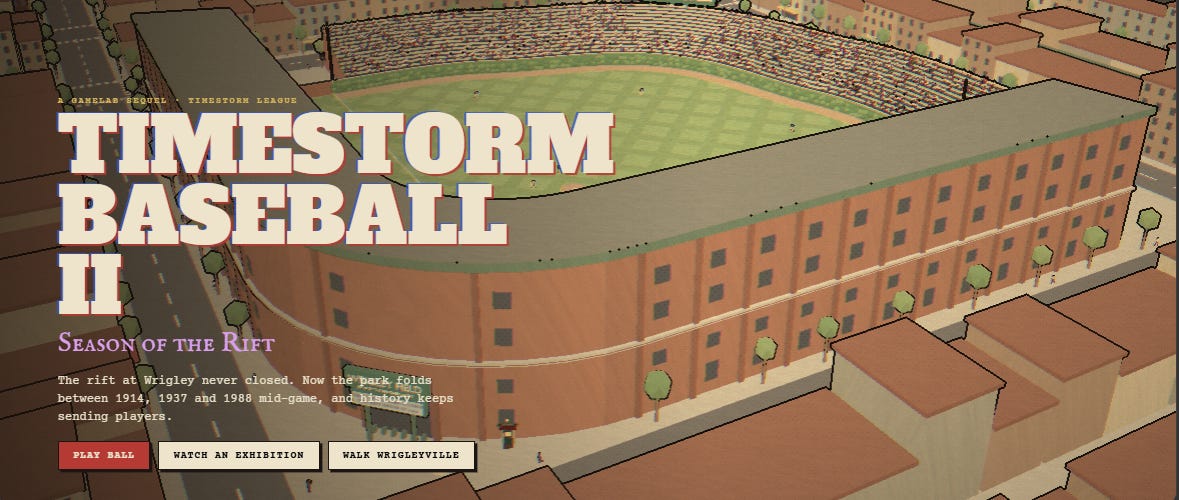
- Three ways in
- Play, watch, explore
- Three eras
- 1914, 1937, 1988
- Runs in your browser
- Keyboard or touch
Three ways to spend an afternoon
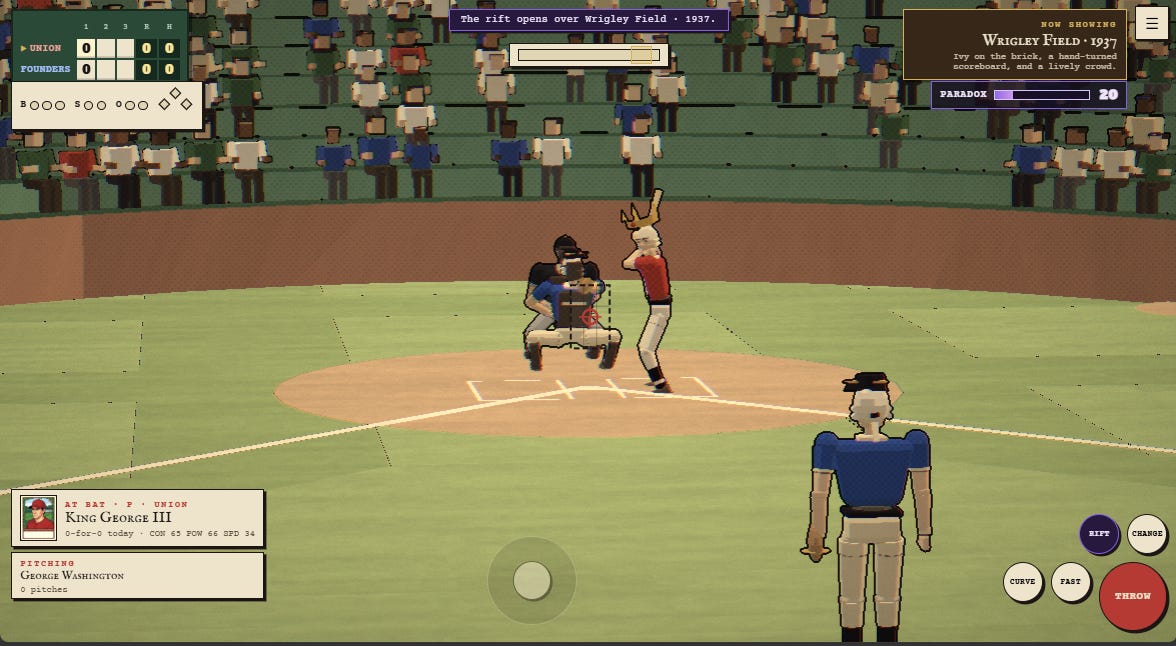
Play ball puts the Founding Fathers and the British Union on opposite sides of the diamond. Aim a pitch, time a swing, or hold back and take the ball. The umpire crew calls the results. A storm can fold the park into another year between innings.
Watch an exhibition lets the game play itself as a nine-inning broadcast. An announcer introduces batters, two commentators call the action, and fictional commercials interrupt the game after the third and sixth innings. You can skip a commercial with Enter or a tap.
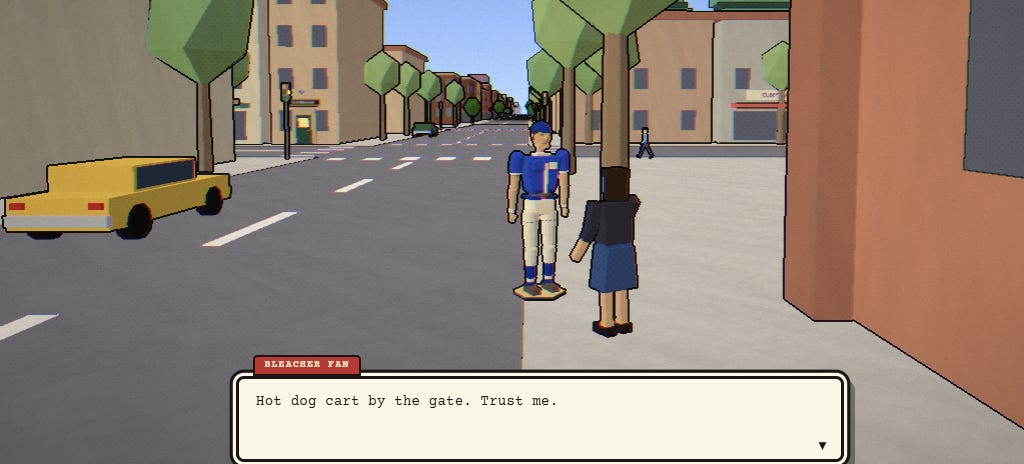
Walk Wrigleyville takes you outside. Talk to people, step into a building, ride the train, or borrow a car. The baseball game waits while you find out what the neighborhood has been doing.
Walk through a different Chicago
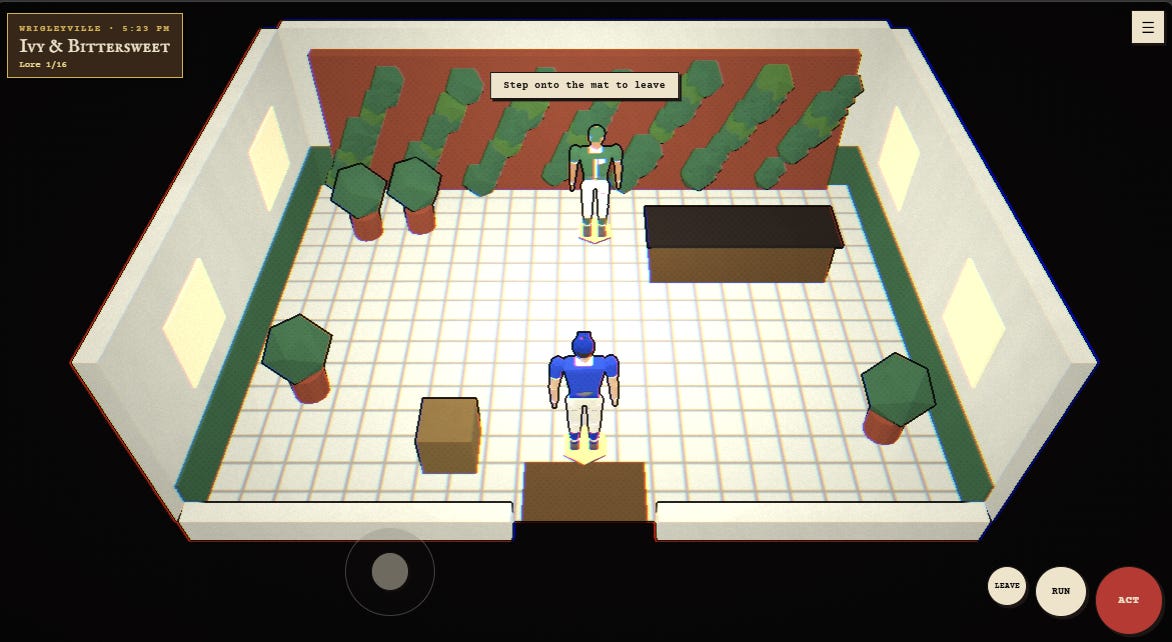
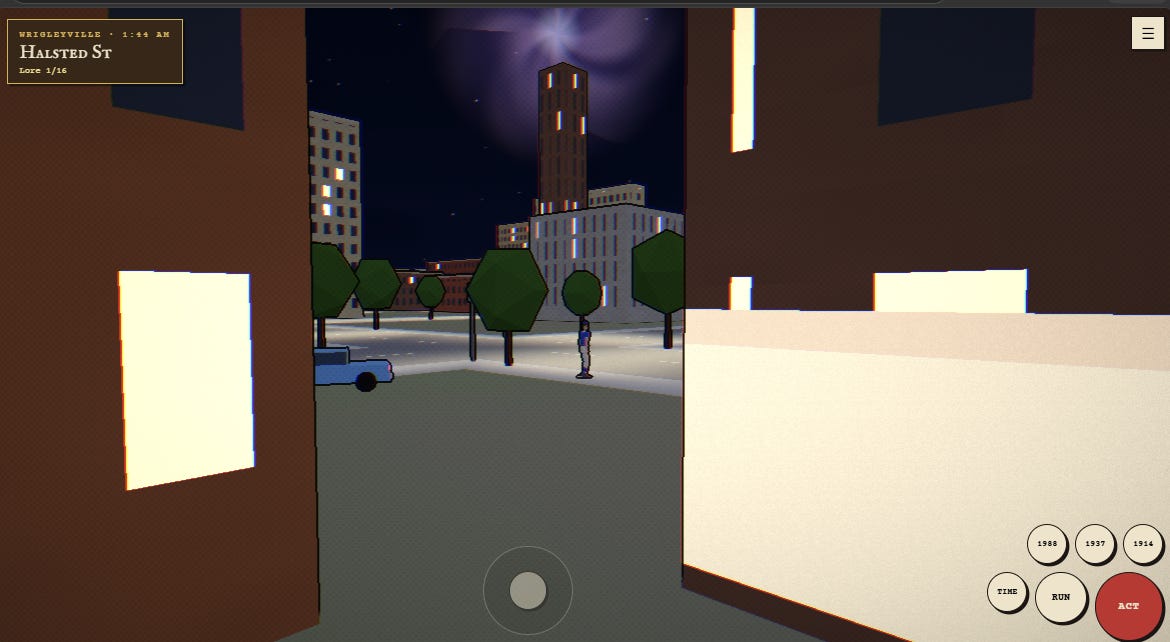
The year buttons switch the neighborhood between 1914, 1937, and 1988. Streets, buildings, signs, and conversations respond to the era. There are ten rooms to enter around the park, from the Scoreboard Crew to Tesla's Rift Lab. Some teach ballpark history. Others let the time-travel premise get into trouble.
Walk close enough to a person and use the action control to talk. A hot dog tip may be all you get. Inside, choose a reply or read a plaque. The facts you collect go into a small lore journal saved in your browser.
Day turns to night while you walk. Traffic queues at lights, drivers honk, and a car can knock you down if you step out too late. If walking starts to feel slow, approach a car from the side and borrow it. The game gives you a horn. Chicago may regret that.
The park folds into another year
A Paradox meter tracks how close the next storm is. Rift pitches, home runs, and completed half-innings fill it. When it reaches the top, a later inning can begin in a different version of Wrigley Field. The scenery folds away and the next era rises into place.
The year also affects the ball. The 1914 setting gives it less carry; 1988 makes it livelier. A storm can bring fog, a change in gravity, or a visitor who pinch-hits once. This is a historical fantasy with baseball rules, so a tidy scorecard is an achievement.
Controls at a glance
| Action | Controls |
|---|---|
| Bat | Arrow keys move the swing ring. Space swings, P power-swings, and holding B bunts. |
| Pitch | 1 to 4 select a pitch. Arrow keys aim. Hold Space and release in the gold band. |
| Walk and talk | WASD moves, Shift runs, and dragging looks around. E talks, enters a car, or uses a nearby object. |
| Change the year | While walking, 1, 2, and 3 select 1914, 1937, and 1988. |
| Drive | W and S accelerate or brake. A and D steer. Space uses the handbrake, H honks, and E exits when the car is slow enough. |
| Pause and sound | Esc opens help or returns from a room or walk. M mutes, V toggles umpire voices, and C toggles commentary. |
On phones and tablets, a thumb-stick appears on the left and action buttons on the right. In walk mode, use the year buttons to change the era and Act to talk or interact. The menu button acts like Esc: it pauses a match, closes a conversation, leaves a room, or returns from a walk to the title. Portrait and landscape layouts are supported.
How the sequel was built
The scene. Three.js r186 draws the world in the browser. Blender scripts build the ballpark, player figures, and crowd pieces. The painted look comes from shaders, small programs that control how surfaces appear, with outlines, paper texture, and halftone shadows.
The match. A separate simulation resolves the ball's flight, fielding, throws, and runners. The scene then plays those results back. That split lets the exhibition mode run a game while the cameras follow it.
The neighborhood. Buildings, crowds, cars, and trains reuse small sets of models. Rooms and conversations add reasons to stop. Era changes, daylight, and traffic give the same streets different moods as you return.
The sound. Recorded effects and voices were generated with ElevenLabs. The game combines them with browser-made sound and ambience. The announcer, commentators, and umpire take turns speaking so a new batter does not arrive under three competing voices.
The first game, and the source story
The original Timestorm Baseball put the Founders and the British on a 3D diamond. This sequel keeps that matchup and grows the setting into a neighborhood you can explore. The park now changes eras, the broadcast has a booth and commercial breaks, and the street outside has its own conversations.
Read the original Advisory Hour article, published October 3, 2026, for the build reflection and all eleven screenshots. This overview was added October 4, 2026.
The next inning can wait.
Start a game, watch the broadcast, or find the hot dog cart.
Play and read more at www.ericrhea.com/gamelab/timestorm-baseball-2.html