Source context: This short field note first appeared on Eric's Advisory Hour Substack. View the original note.
The field note
Raining outside so trying to see if Learning by Osmosis works on the Jetson Nano.
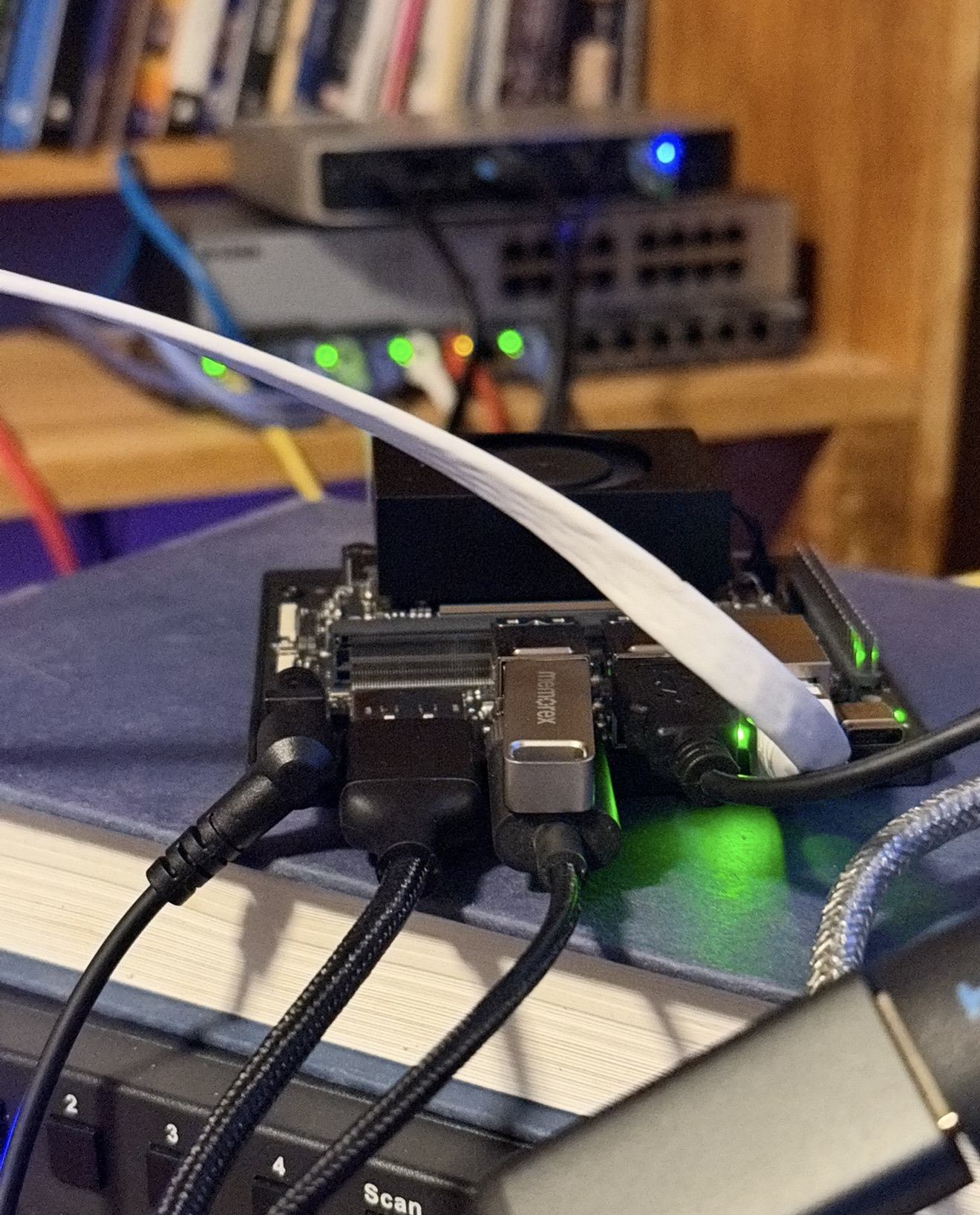
Why it belongs in the SLM notebook
The useful signal here is not a polished benchmark. It is the impulse to keep moving the loop down onto small, nearby machines: Jetson Nano, NPU, GPU, CPU, whatever can run the next constrained experiment cheaply enough to try.
That is the same thread running through the nanochat and small-language-model work. The question becomes less “can this replace a frontier model?” and more “what useful slice can this local device handle often, privately, and cheaply?”
What this note points toward
- Edge experiments: rainy-day hardware sessions can reveal where local inference is already good enough.
- Cheap repetition: small boards make it easier to test training, eval, or osmosis-style loops without treating every run as precious.
- Harness pressure: the next problem is orchestration: prompts, datasets, measurements, and handoffs that make tiny hardware useful.
Connection to the local-inference thread
This field note sits beside Tinkering with a NPU, NPU and Gemma4, and Local Inference Puzzle. The common pattern is the same: put real hardware under pressure, inspect where the work actually runs, and decide what is worth automating next.
Original source
This local copy preserves the note text, image, and source link from Eric's Advisory Hour. Original Substack URL: https://substack.com/@advisoryhour/note/c-275870190. You can also subscribe to Advisory Hour.