
The anime image in this post is channeling some distinct “megaman” vibes. The kitbashed kit of local ai, cables, and blinking lights strung together like the final act of the National Lampoon’s Christmas Vacation (1989!) all keep a dull ambient light running. A proverbial “Dr. Light”.
Megaman is the right visual and thinking metaphor for the Jetson Orin Nano. It’s small, but mighty. In fact, anytime I think I can’t do, I’m soon proven wrong. And to be clear, it’s not going to produce outputs that rival the output of a billion dollar frontier model. What it can do is still quite impressive.
When I first started poking around then Jetson, I had a hard time making sense of why I’d use this over a Raspberry Pi. I’ll confess a lot of this was comfort: I’ve tinkered enough with the Pi to have a deep familiarity with the Pi series. The portal, low-powered nano to the Pi5 all have a special place in my heart-even if they can be unruly and difficult at times. The ribbon connects are a bane of my viking ancestry. I sometimes wonder what it’d be like to have hands not meant to hold a battleaxe while assembling the Pi. This is very much a me problem.
The Jetson has a little API as well as interactive admin dashboard I can use across my wifi network to test various capabilities. For example, here’s a screen snippet from the dashboard.
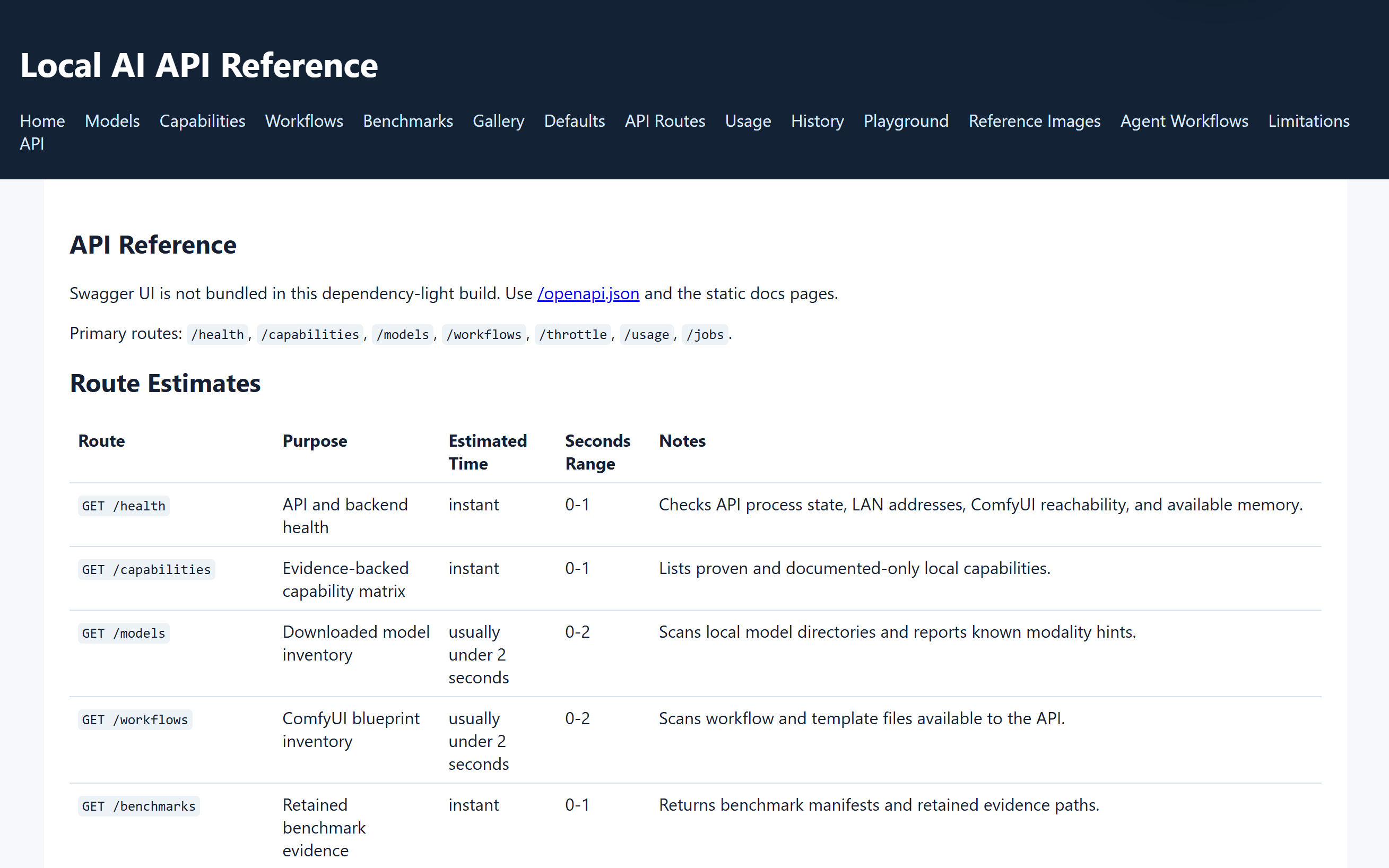
One of the better ideas I’ve had is documenting in the API itself as well as the overall documentation, the average response times. This is extremely useful for agents. An agent will understand, a frontier agent, that it’s code needs to modulate, withhold or even apply a set and forget it approach to certain tasks.
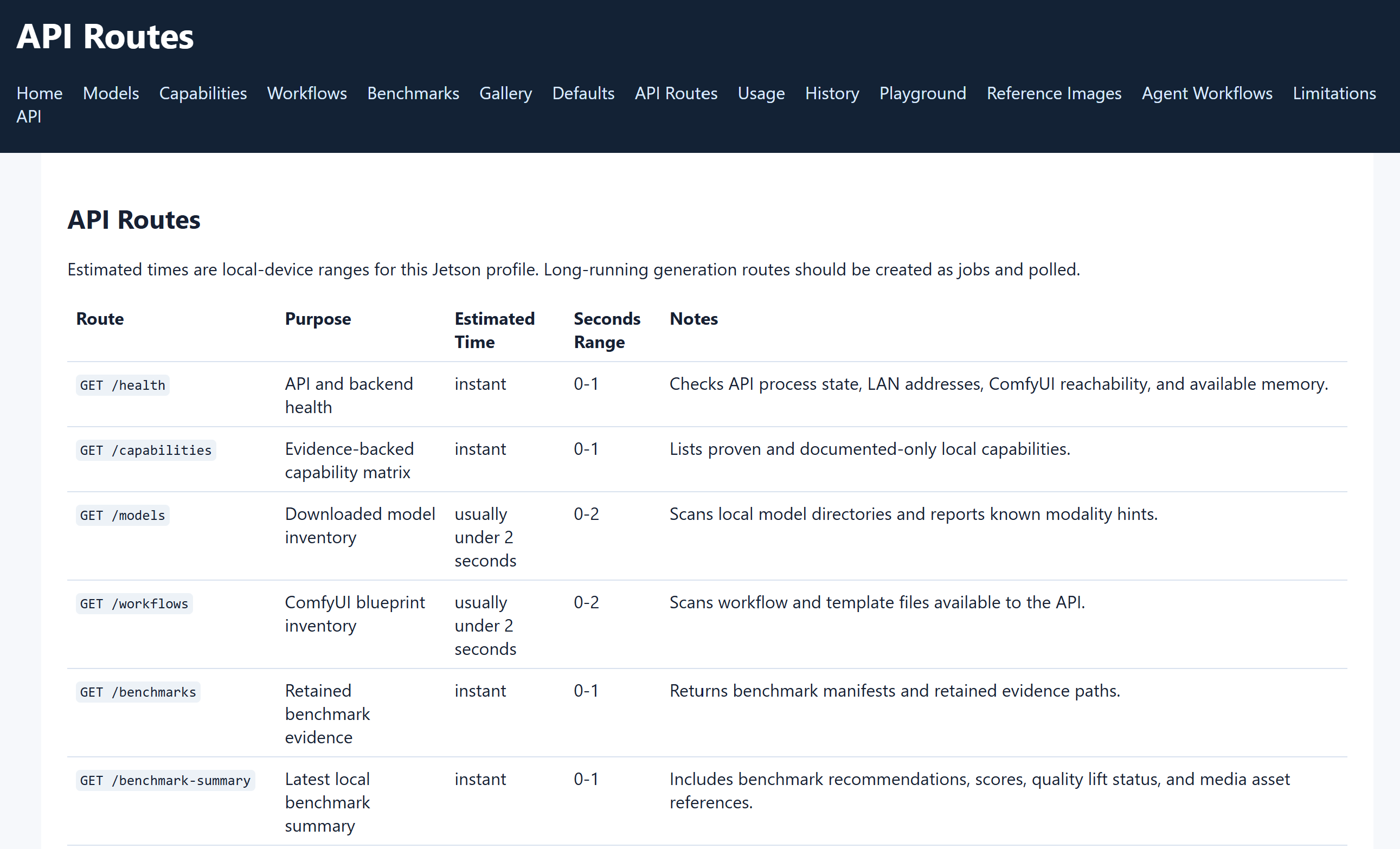
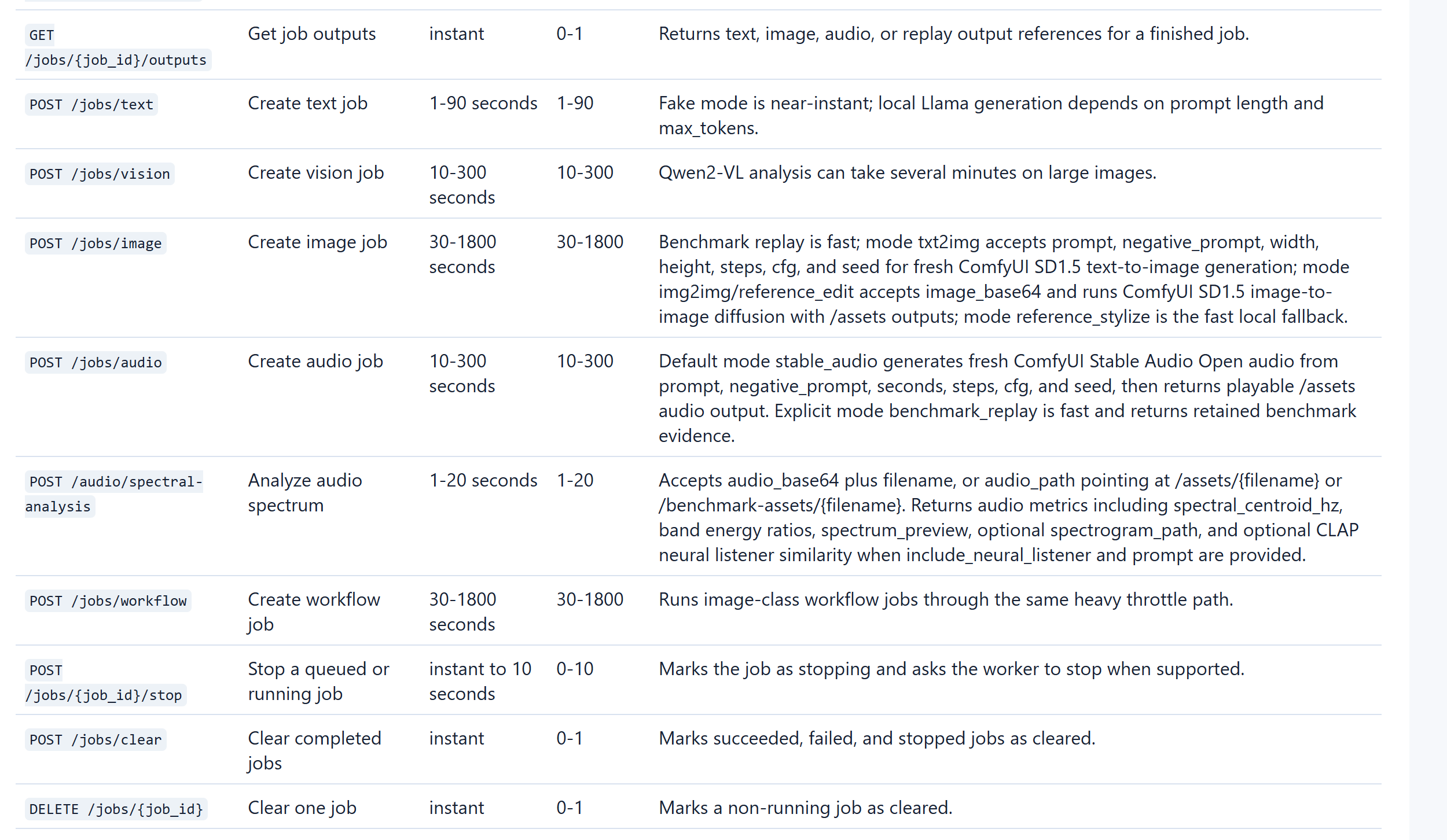
The image above shows some speedy operations, but once you start doing meaningful work the compute time goes up. Consider the following.
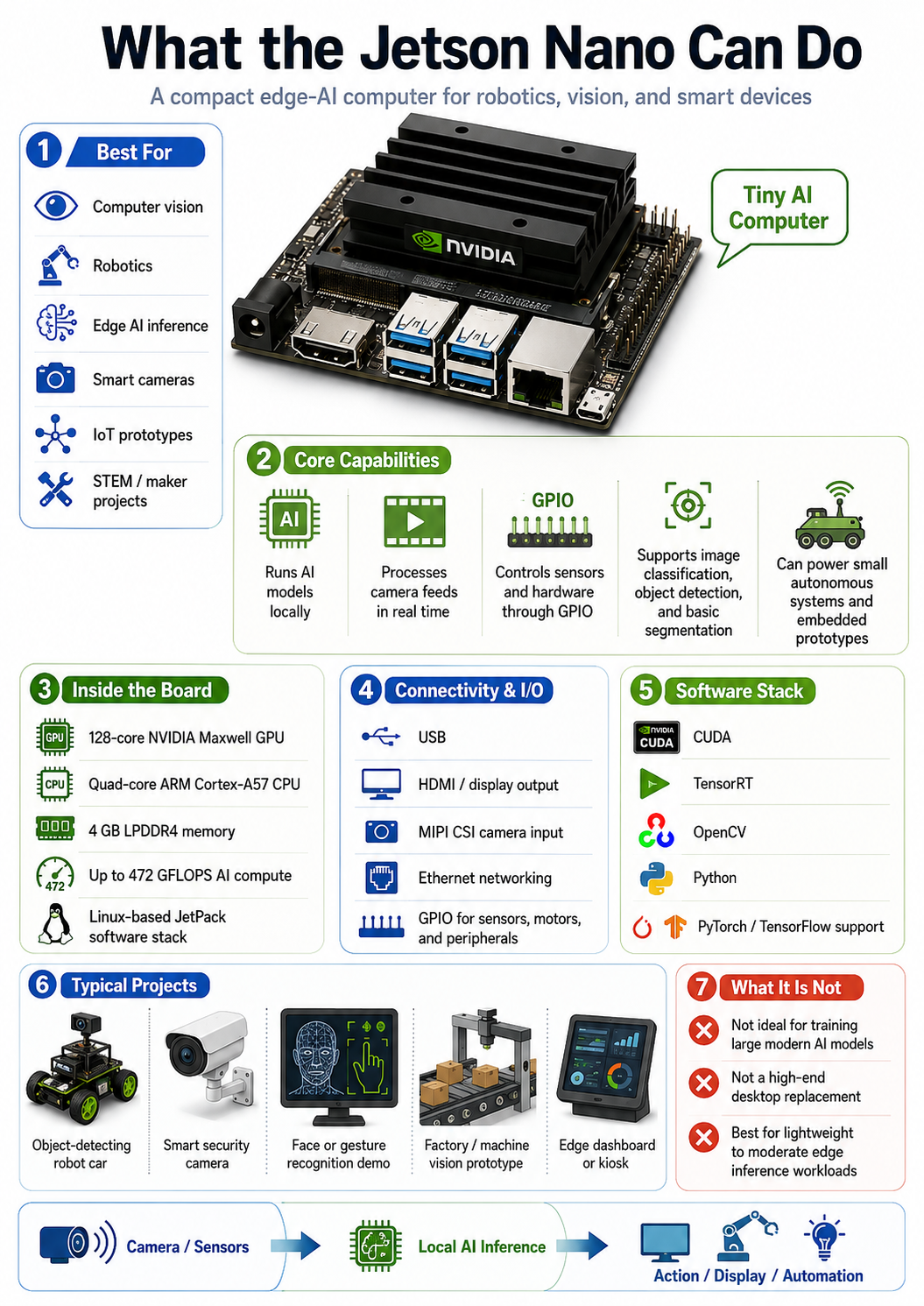
There’s a lot of capabilities in this API-it’s been something I’ve been poking around with for a few weeks now. If you want to reverse out your own version of this, you may be inspired by this infographic which has all the relevant high level detail-but also the section of this article that follows.
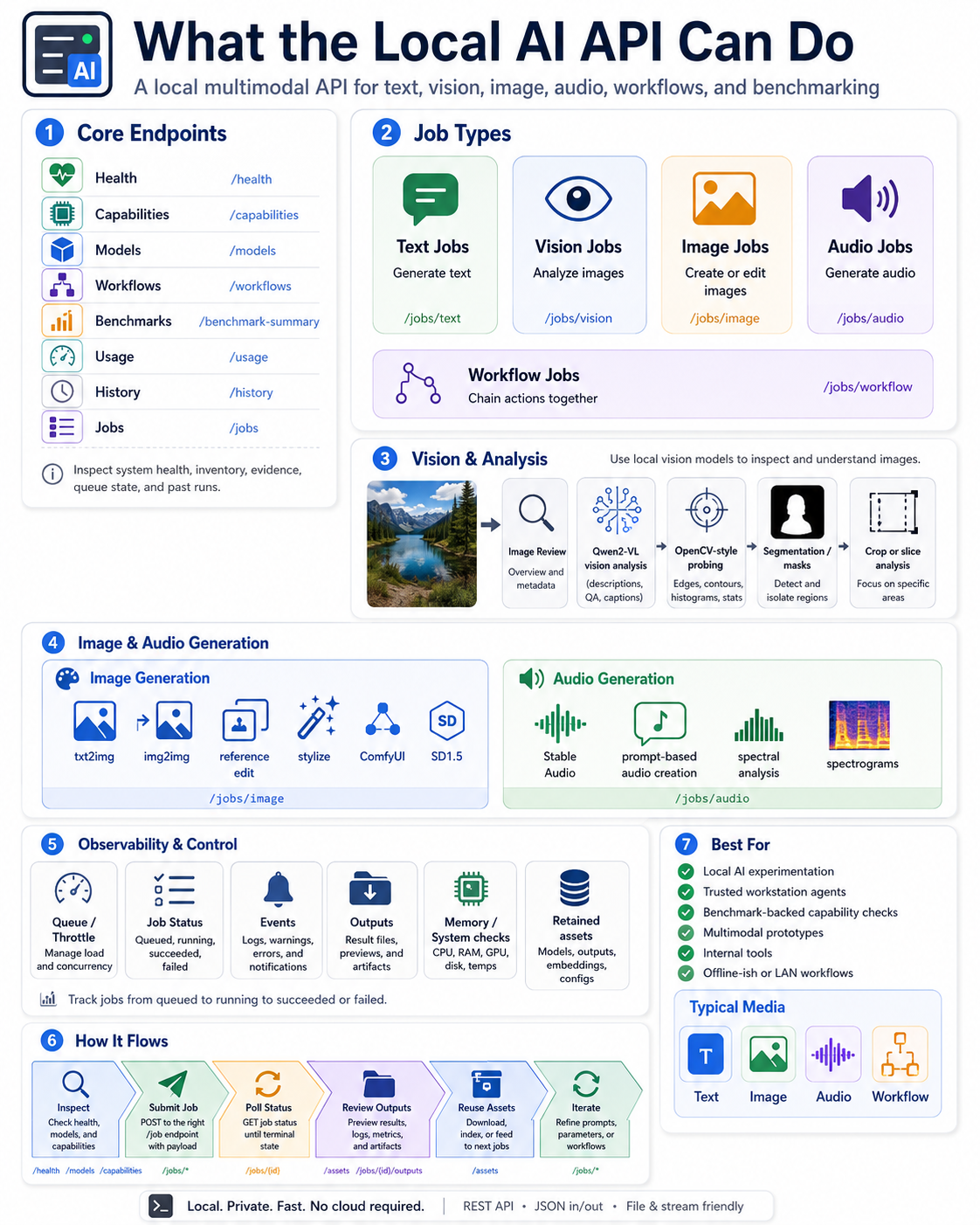
Send your agent over to read this next
This article is intended to be an information about building on a Jetson Orin Nano, but it could be useful for any local AI ideas you’re playing with. What I did is extract the architectural bones of my Jetson API, how it works and how everything fits together so you can just send those articles over to a coding agent to replicate it-or if you’d prefer, take some time to read thru them.
Homebrewed Jetson API Field Guide
Routes, jobs, reference-image workflows, throttling, capabilities, and QA receipts for the local Jetson service.
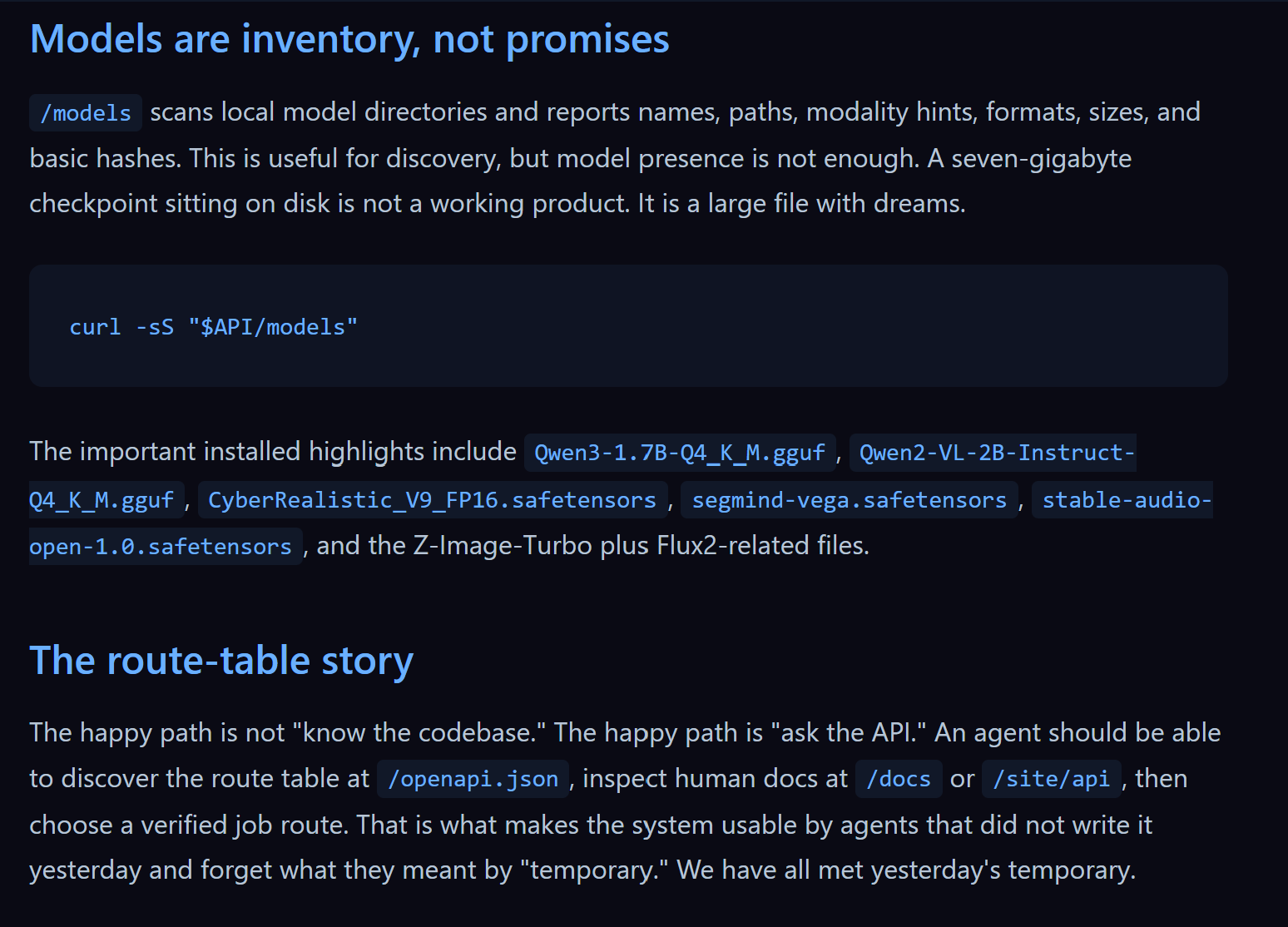
The site has several subsections and covers everything from API shape, architecture, throttling, models that I’ve found working and so on. For example, one subsection of this mini-section of my site details out the following-
Generations
Free is such a great unlock for AI. It just opens up a lot of weird exploration that one can do. I always appreciate when people provide real examples-it helps turn the “ok you built something, but what does it do” and too often there’s just not enough examples of the doing. So, I present the doing.