Originally published as an Advisory Hour Substack post on 2026-07-25. This local copy preserves the text and public supporting media alongside the research record.
Original post
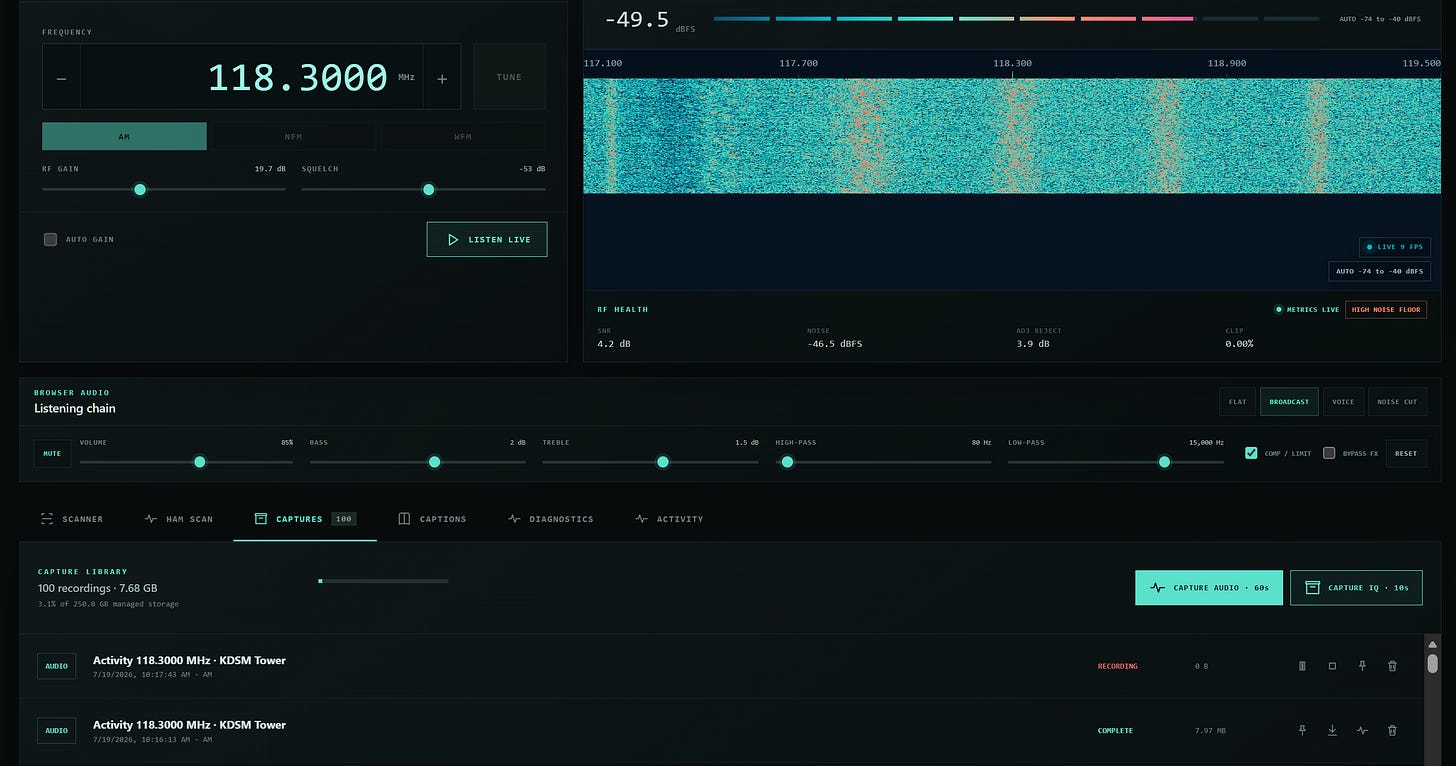
If you’re experimenting with local AI and transcription models like whisper, then it’s worth taking time to learn enough about software radio. While it can be interesting to capture signals from FM frequency, the more interesting place is ham radio. The reason is this. Dropping in on ham radio is like attending a prehistoric discord channel.
I wrote about software radio and Rosie before, and so just to catch you up if your new. While on a little excursion down to Texas I happened upon a magazine with a UK flair that covered electronics principally obtained from oriental markets. This taught me a few things, software radio amongst them. You really can learn anything in two weeks if you put your mind to it. Rosie is a little more than that. I’ll give you a moment to connect the Rosie character and the Jetson hardware.

Rosie-she’s the character that’s coming into being based on the Jetson hardware. It’s the grand synthesis-from components to character. I mentioned I had a backlog already, so if you really want to learn more about that then check my post history on Rosie or message me and I’ll send you the link.
In this post I’ll just keep things a little simple with the radio capabilities of Rosie and the RTL SDR. I’m using the RTL SDR v5, which is toggled up and over to passthrough. What this means is that I can scan various frequencies-and I’ve written on how amazing of an experience it is to listen to local radio via VPN over my phone while outside my house, and not even in the same city.
The Scanner
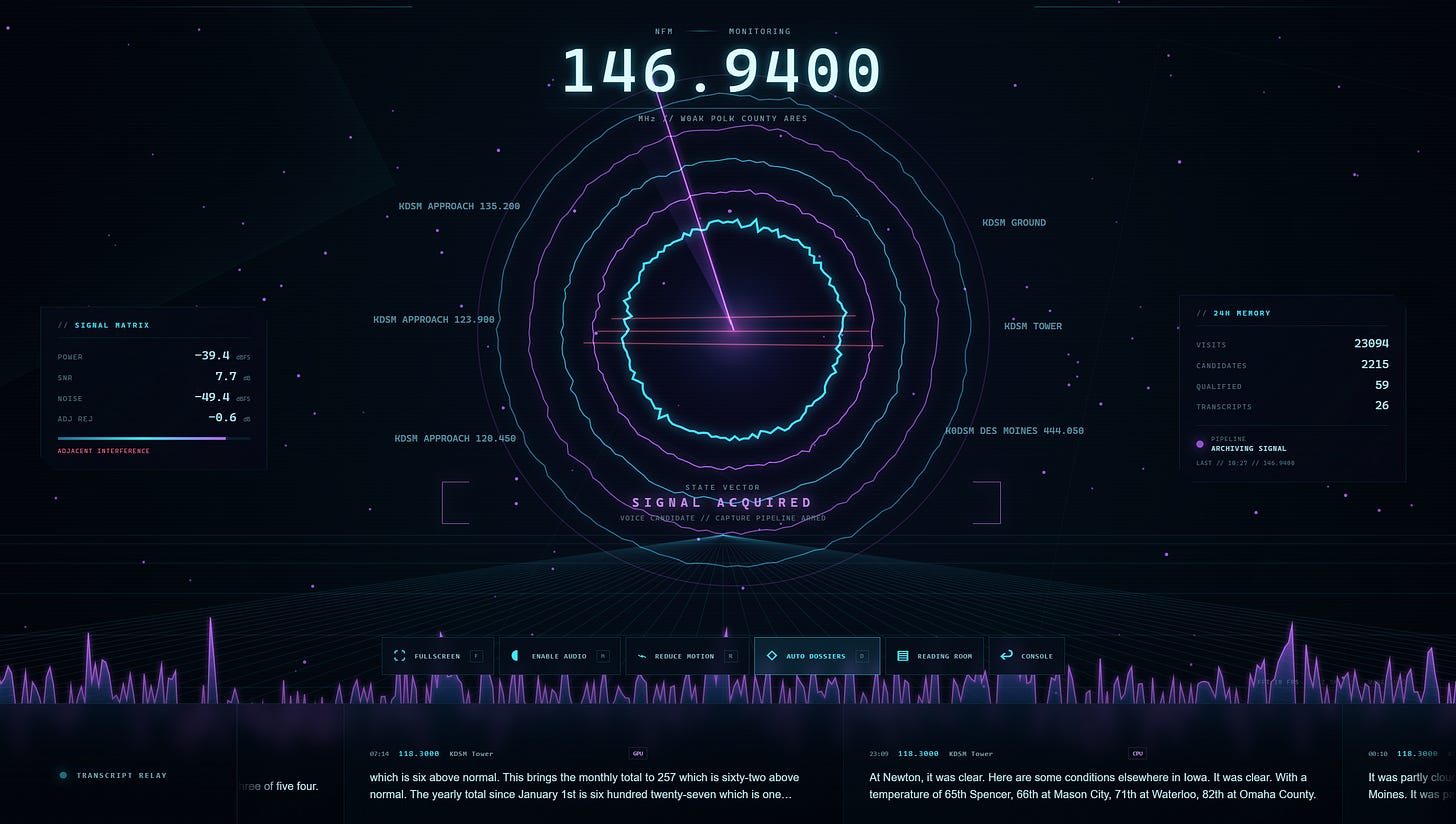
The Scanner was my solution to “well, I don’t even know what signals I can pickup near me. Are there even any signals?” Turns out there are. If you review the image above you’ll see a few things. There’s the signal quality and more. The thing that might catch your attention is the transcription at the bottom. This is part of an automatic GPU+CPU pipeline I’ve setup around audio transcription. The signal scan looks for a possible signal, and the moment it does it captures the audio until the signal wears out, then tosses that over to the pipeline for automatic review. When it completes, I can review on the screen a deeper dive into the signal hit, what was said, and so on.
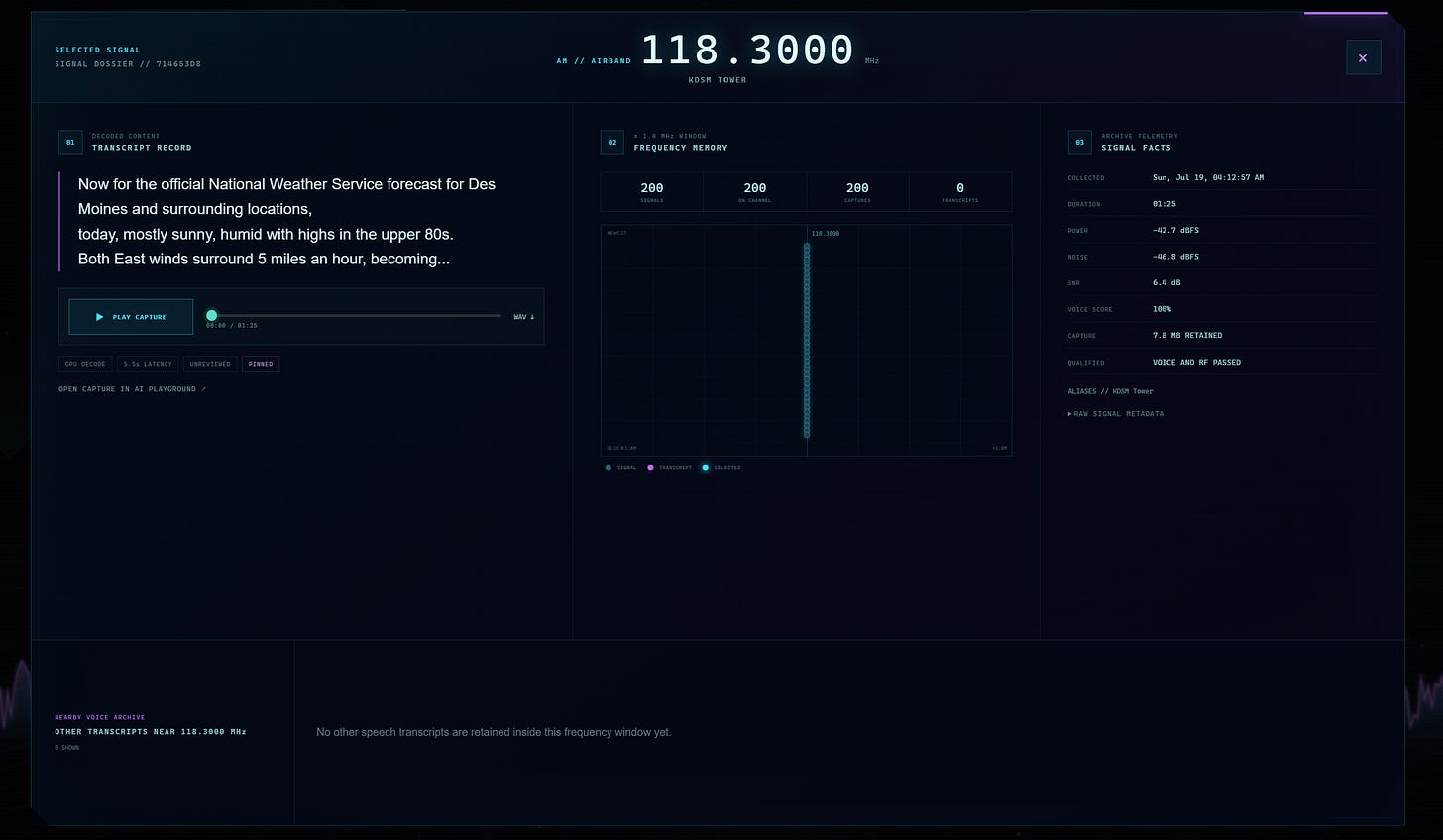
That, I feel, is pretty cool. But then I wanted to take it one step further. Where can I review all of the transcriptions? After all, sometimes I might be out of the house for an extended time. Where can I catch up on what’s all there? What about over night while I’m asleep-did anything interesting happen? The answer to this was a reading room. So, I built a library and that’s when I learned there’s an entire invisible world of conversation happening around all of us.
Transcription Library
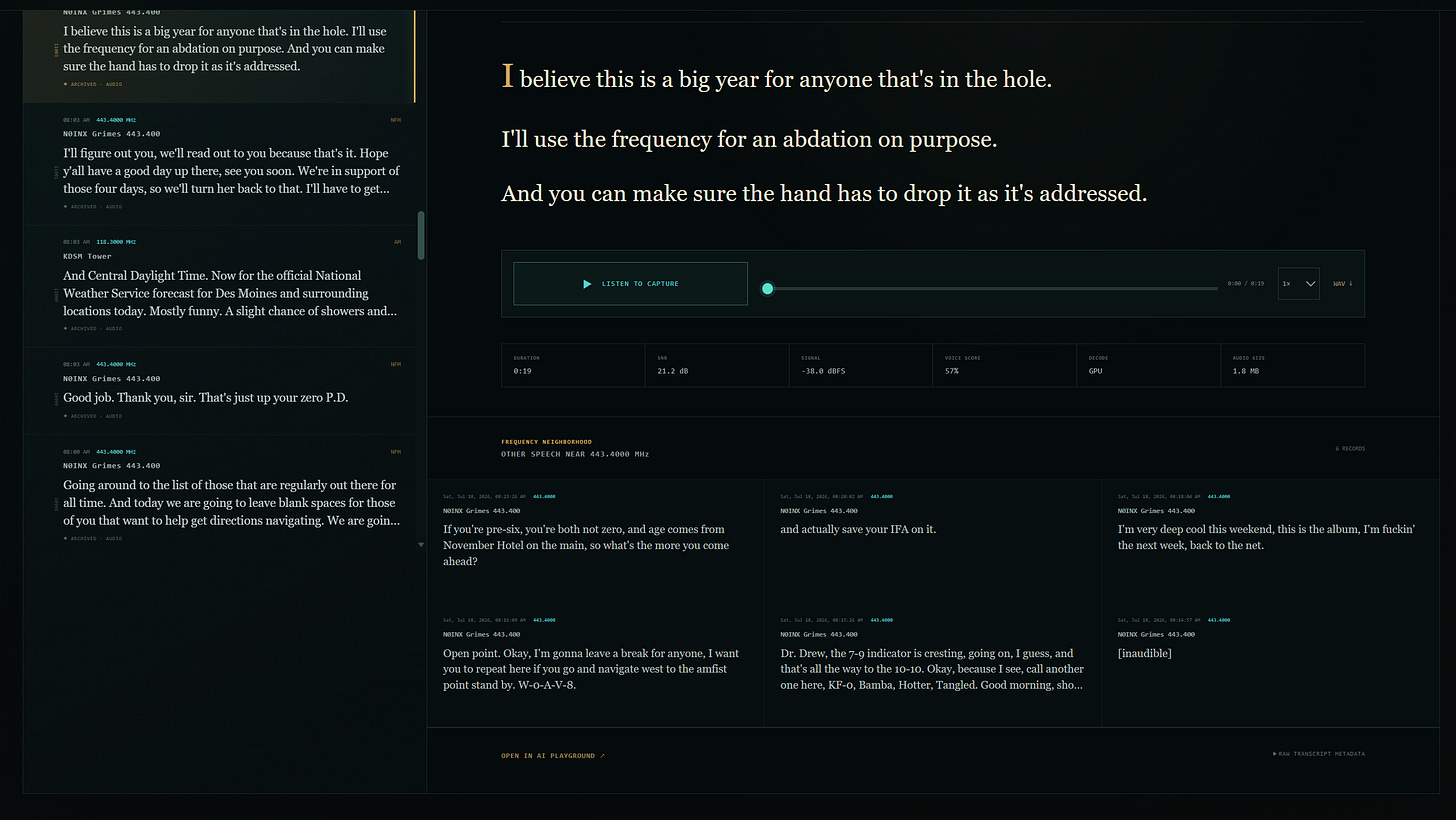
I realized I didn’t include in the screenshot of the library the search controls. That might interest someone, so let’s briefly discuss what those do. You can search across the transcripts, by source, and organize by latest or not. The search is interesting if there’s an operator on the airwaves that tends to identify themselves consistently.

It’s also just useful to find certain clusters of content-which makes for some odd reading at all hours of the day.
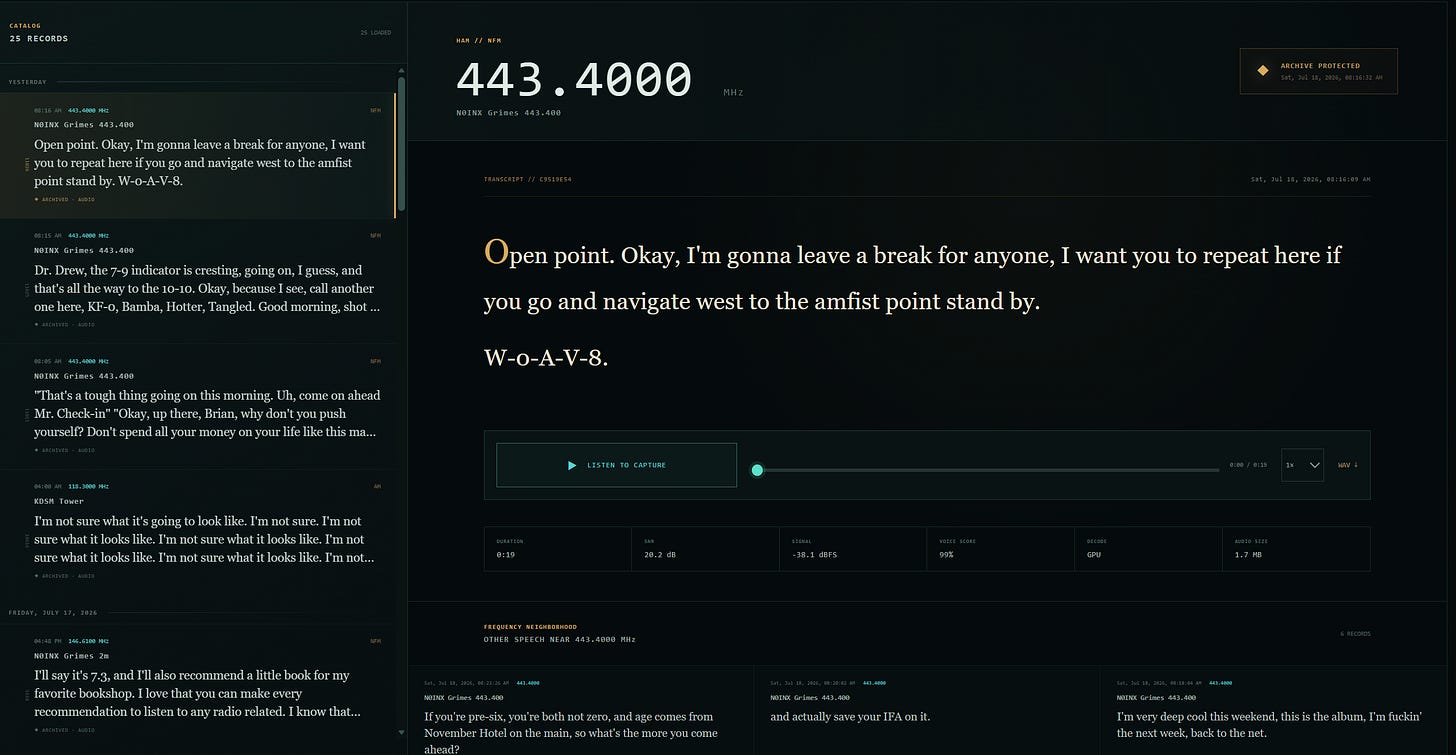
One of the more unusual conversations I’ve come upon is the fine art of sales. I wasn’t expecting a conversation of sales to take place on ham radio-the ins and outs of sales really wasn’t on my personal radar for what I’d run into doing this. However, it makes sense when you break down some things. First, here in Iowa it’s a robust farming economy. The impulse isn’t for apps or chat rooms: it’s for the old school, proven radio systems. If you think AI is diffusing slowly, then just consider that fine point: we’re still using public radio for conversation-and I’d wager not just in Iowa.
In fact, it’d be pretty cool to stand up Rosie in all the major metros. I’d need quite a few of her. But then there’d be this amazing signal loop of high quality signal not diffused by digital media-as close to reality as I think it gets.
And then there’s other conversations where you learn how to build stuff.
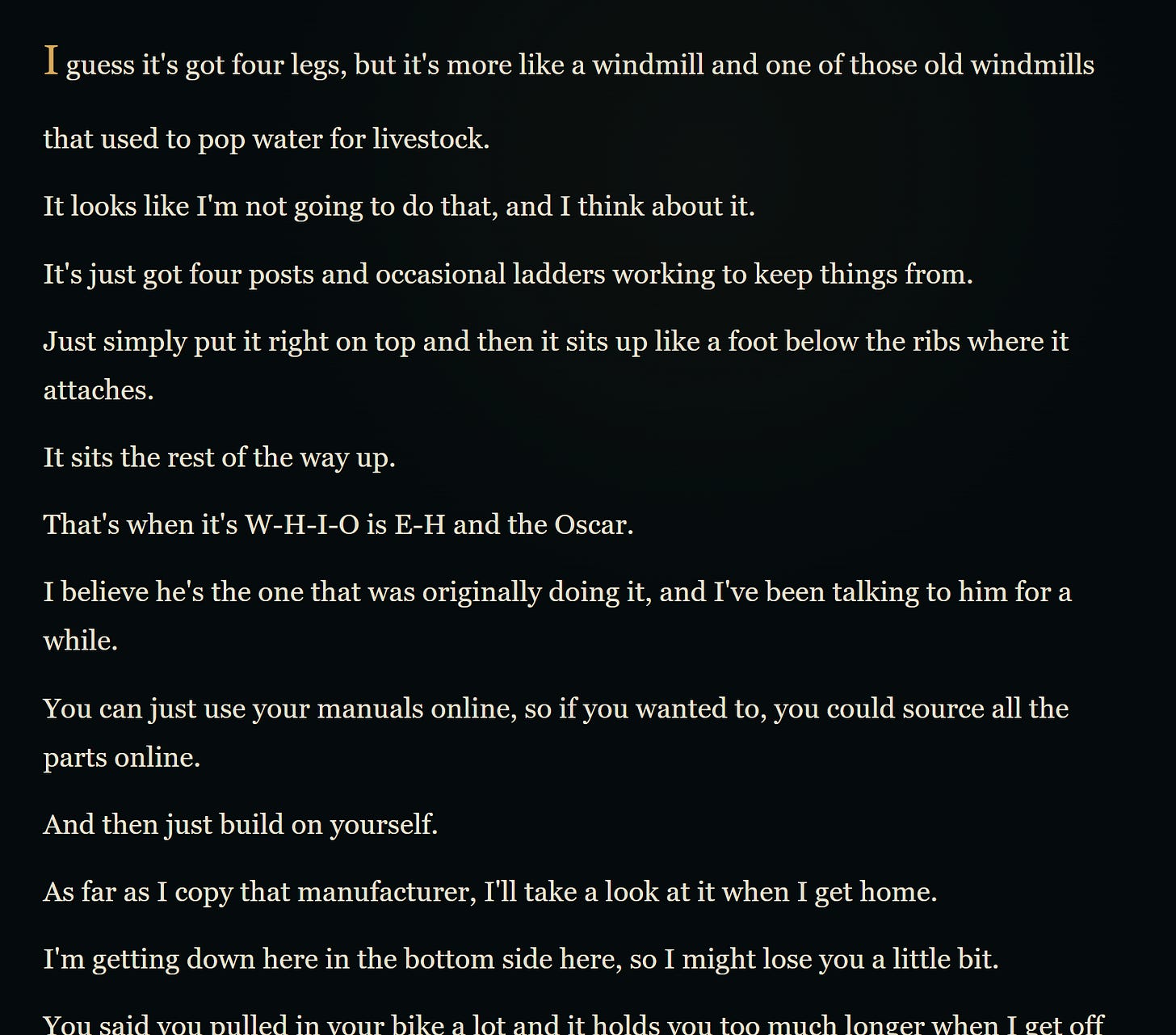
So this is definitely one of the neater things I’ve built-and as someone who has logged well over 500+ public experiments, I don’t say that lightly. What I like about it is that it’s more integrated into a real world situation-it’s quite literally soaking in the airwaves. As a feature/capability for Rosie, I think that’s pretty cool. I don’t think everyone would want or need this, but if you’ve ever wanted to render visible the invisible world of radio around you… local AI and a radio receiver can go a long way,
Connected work
- Local AI: Jetson Gets a Rosie: Read how the private local-AI character came into being.
- Dancing to the Music: Jetson With a Radio: Follow the first SDR signal path into the Jetson and a phone-friendly browser player.
- Frequency Scanner With Live Transcripts: See the earlier visual build note for the scanner.