Originally published as an Advisory Hour Substack post on 2026-09-18. This local copy preserves the text and public supporting media alongside the research record.
Original post
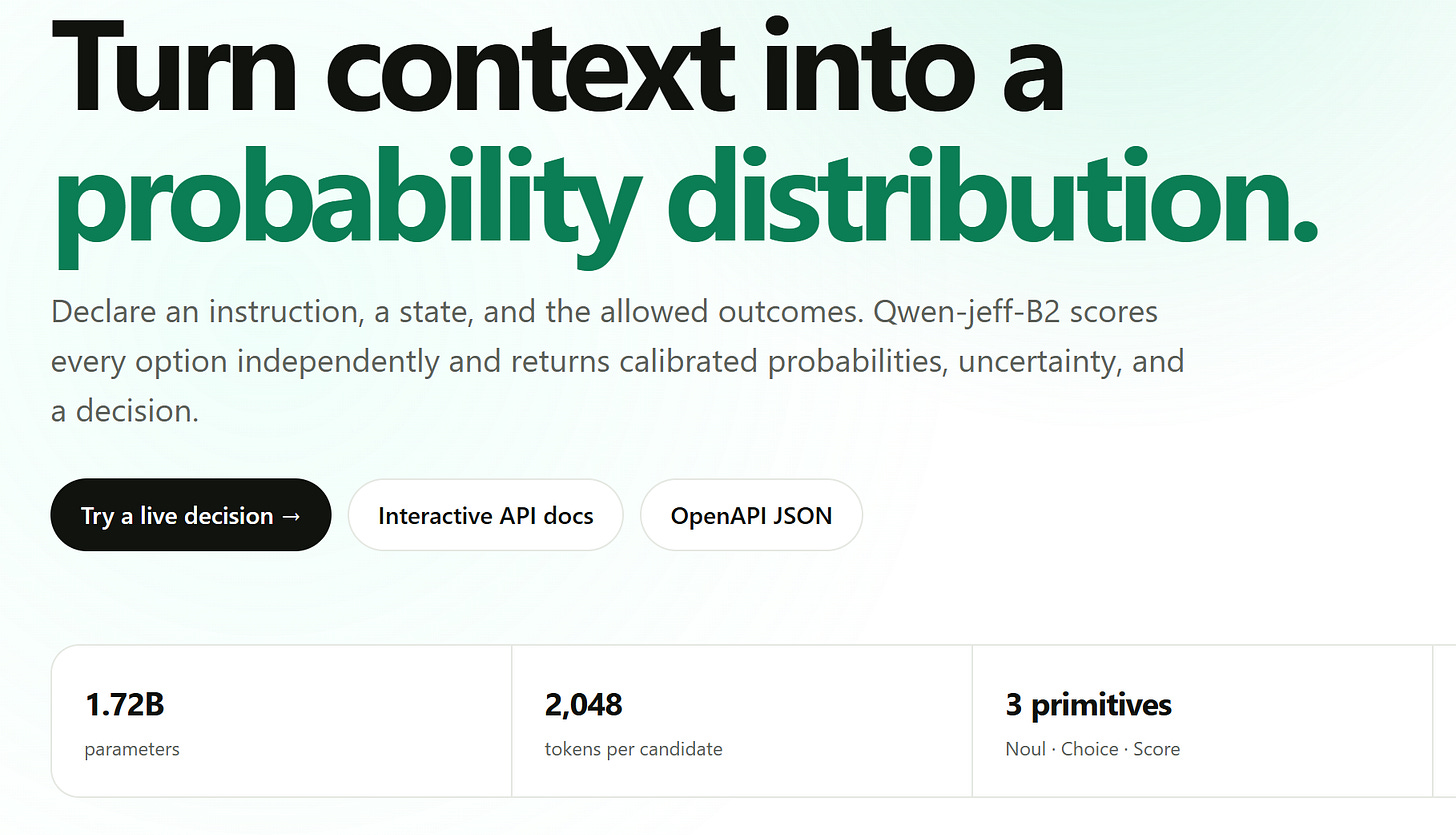
The humble ‘if’ statement appears in software as often as salt in food. A tremendous amount of software is decision focused. If this thing happened, then do that thing instead. Entire architectures and stacks of complicated enterprise software bloat is effectively a stack of ‘if’ statements. Entire long tenured careers could be argued as nothing more than 'if this, then that’ and explaining it to other humans or systems.
A novel AI architecture named Jev emerged this week from one of the co-inventors of ChatGPT. It solves a ridiculous number of problems around context and state management that there’s already opensource alternatives (such as Jeff, which I used here). The idea is simple enough to be replicated, and of course to be done well is why Jev exists.
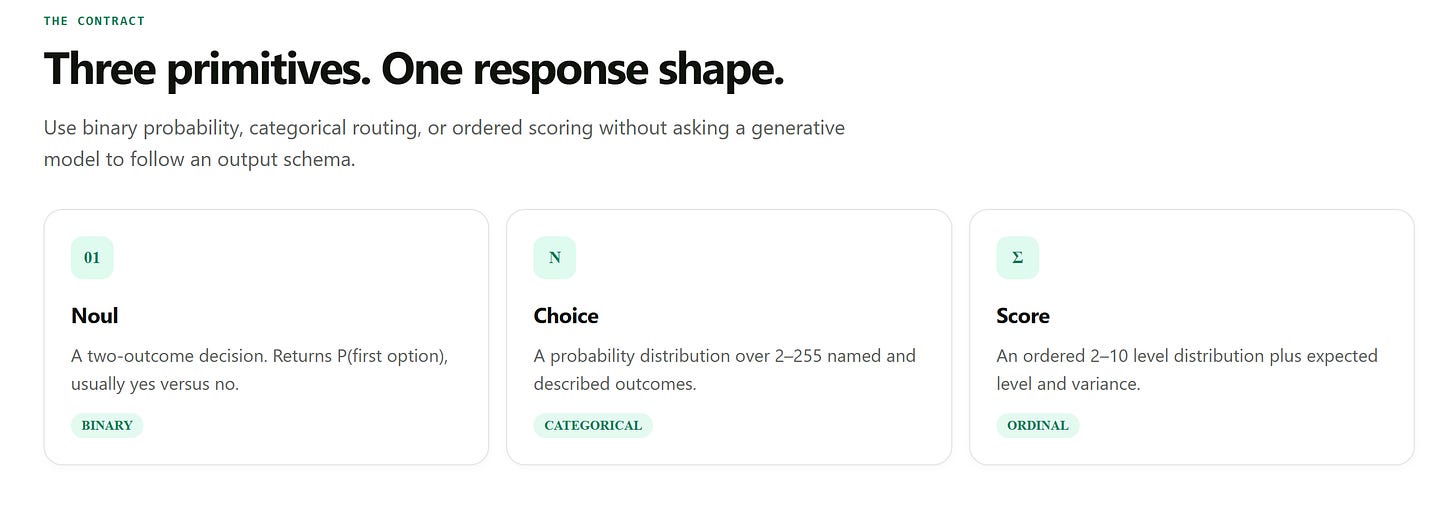
Let’s walk thru some examples of my Jeff API that follows three different shapes.
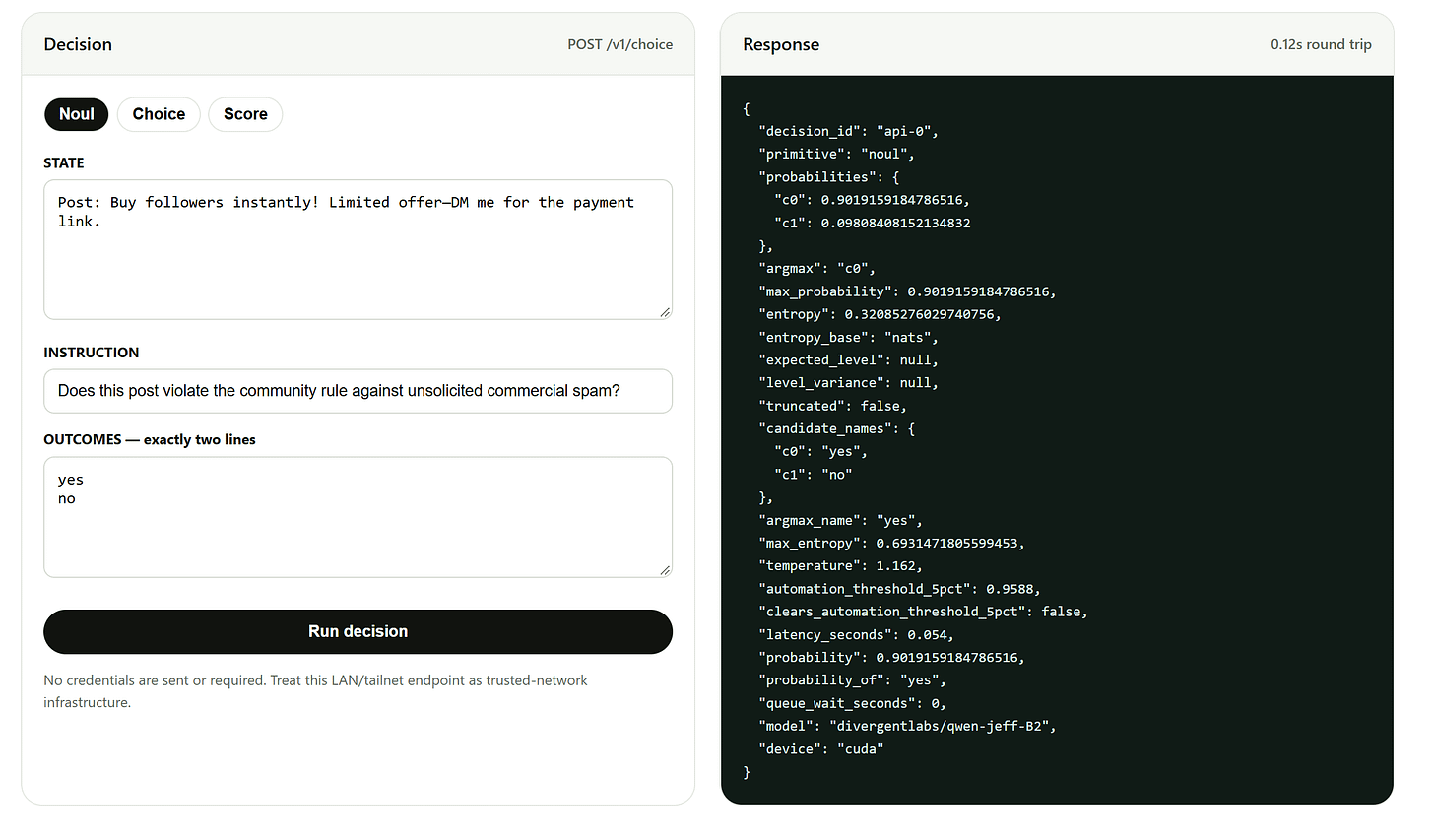
The first is Noul. In this, a binary decision needs made based on arbitrary input context. This could be anything from say a legal document to a policy guide. Consider the following about whether a post violates a social media community rule.
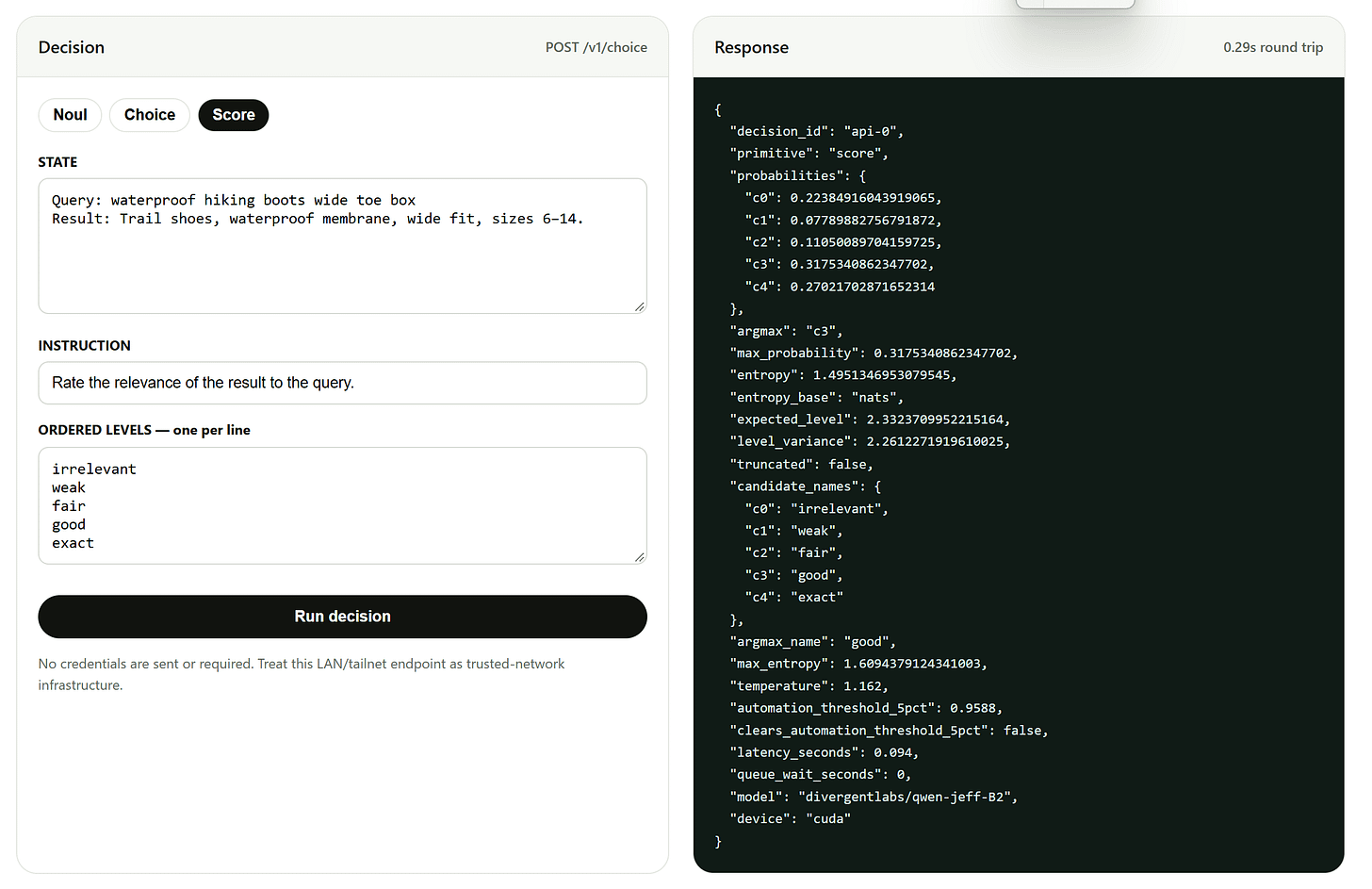
Another way to model this is via a choice framework. Say you have a search engine and need to present the best option to a user, and need an evaluation as part of a classification exercise where you’re reviewing how accurate the search results are. Consider these search results which we ask the model to identify if the trail shoes match the query, and to what extent. The options fit into a distribution.
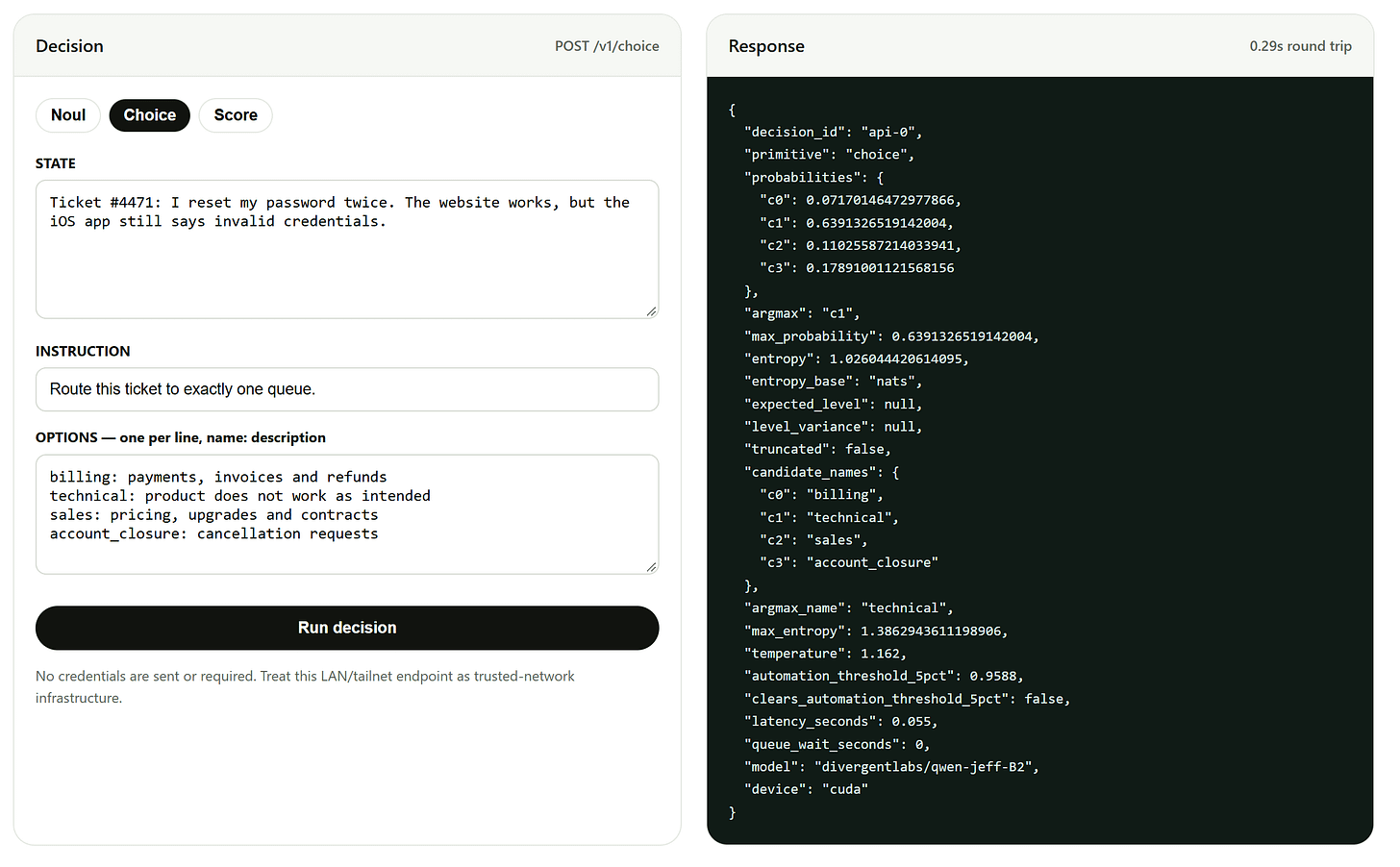
And of course, there canonical example: how about ticket routing? Who gets the ticket? In this example we have an incoming ticket #4471 that needs routed to the appropriate department given the available list of options. Here we can see in the probabilities the technical support should receive the password reset request.
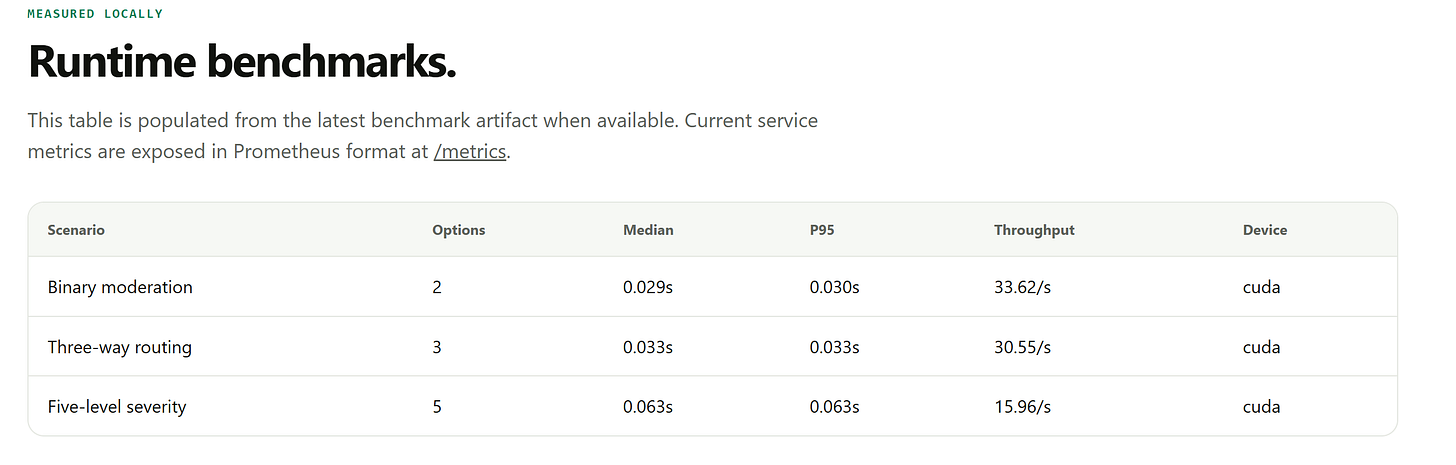
On my local hardware, this decision framework sits on an API inside my tailnet. The runtime performance is acceptable for my use-cases. Here you can see generally how the complexity of the choice relates to the performance impact.
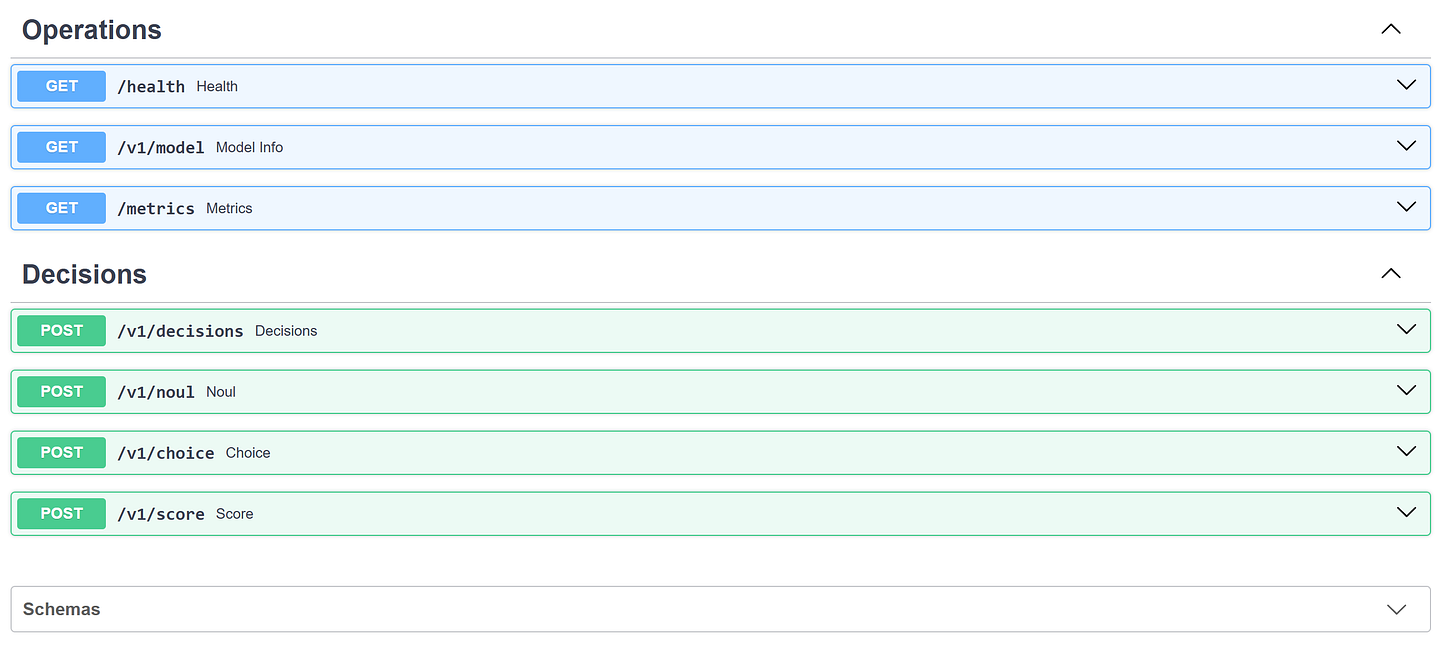
This API is fairly small. It’s focused and frankly doesn’t do much more than advertised. I provide these routes here if you have a mind to build something like this yourself.
While there’s a rapid flourishing of different options appearing, this is one I started with here. If you’re qwen-blocked by your organization, then be aware you won’t be able to use this model, either. What this model offers is size: it fits on darn near anything. I even had it running on a CPU bound device, which has me think it’ll be quite something to try on a Pi5 class hardware.
divergentlabs/qwen-jeff-B2 · Hugging Face
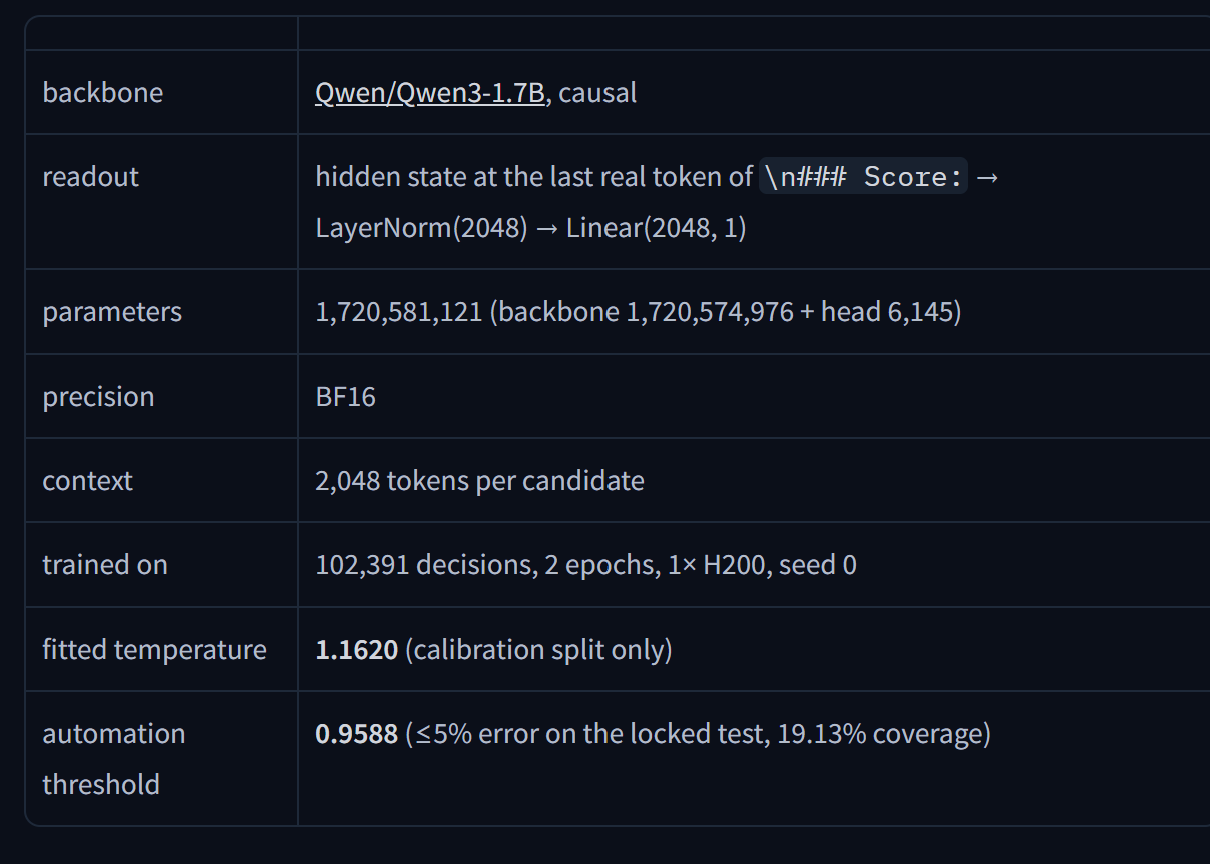
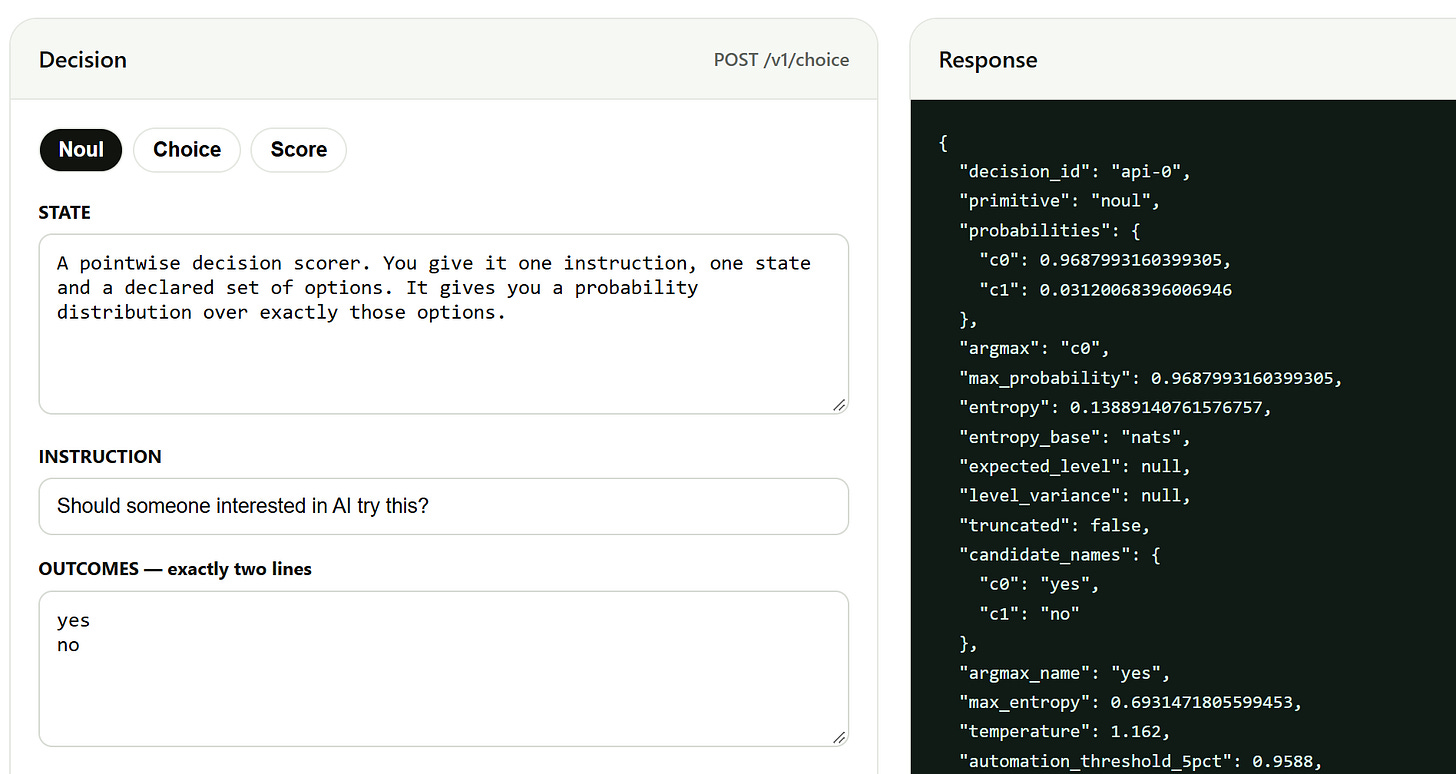
There’s a lot of detail I skipped over that I’ll call “the fine print”, which the author of the jeff-B2 model did a great job documenting up in the link above. And should you try this? Well, let’s ask the model.
Use-cases to contemplate:
Code reviews
Dataset curation
Routing model requests
rag precision
Context compaction
Filtering email
Moderation tasks (discord, etc)
Decisions in video games
A lot of expert rule systems
Fuzzy API routing (llmrouter, etc)
Connected work
- Research: Browse active experiments in local AI, agents, and virtual systems.
- Jetson API Field Guide: See more local inference work on small, practical hardware.
- Model Training: Follow the experiments that test local models against real tasks.