Originally published as an Advisory Hour Substack post on 2026-08-04. This local copy preserves the text and public supporting media alongside the research record.
Original post
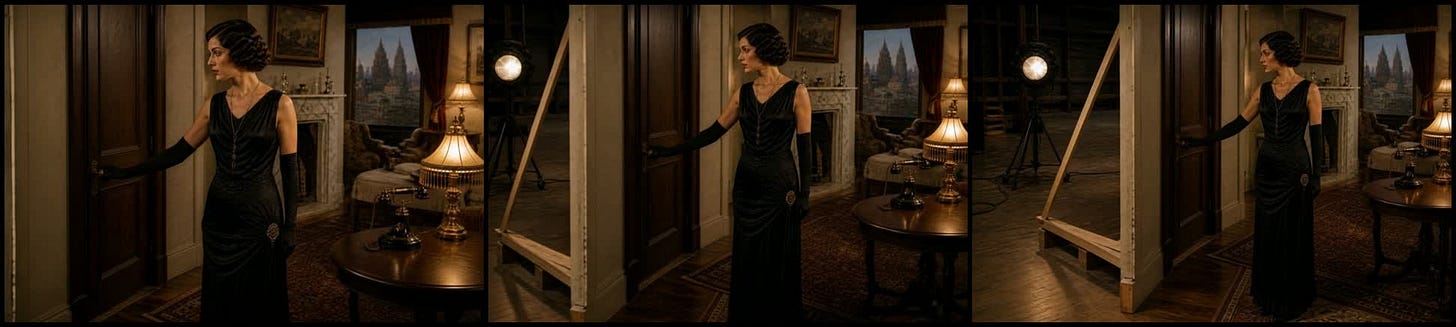
One of my longer running experiments is the poorly named “John’s World”. It’s just as much “Jane’s World”. I write about this experiment from time to time.
In this article, I’m sharing an experiment where I try to drive a chain of video models (kling and wan) to pull-off an actress on a film set. The video is the most likely reason why you’re here, and it is at the end of the article.
Contact Sheets
Establishing contact with another world.
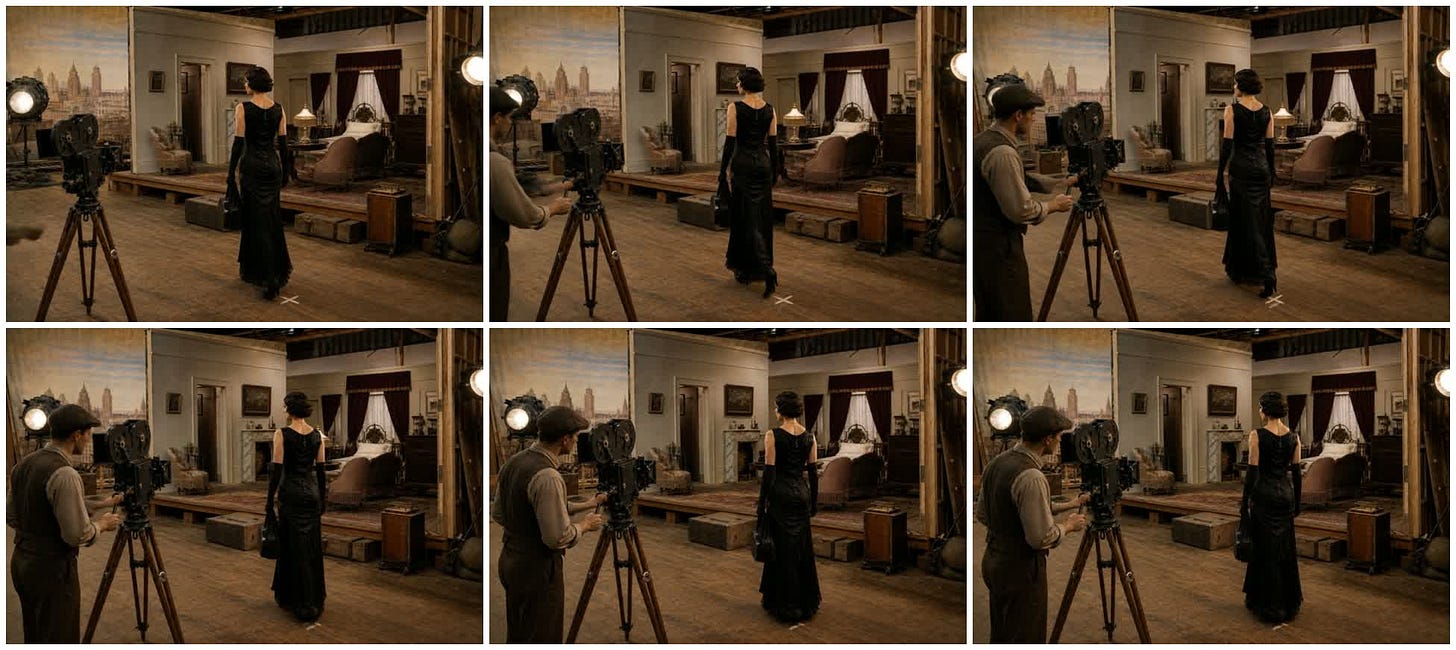
Contact sheets are one of my film debugging tools. It allows me to spot frame by frame differences that are acceptable and those that are deal breakers. For example, if the actress grows an abrupt third arm, or the background shifts too far from the original set. What I love most about these is the sense of time and place. It is easy to imagine how, as the technology advances, we reach a point where it’ll be possible to time travel to any imagined place via these video models. It’s likely a tremendous amount of software collapses into video models and some simplified harness like John’s World, too.
The B&W Film Era
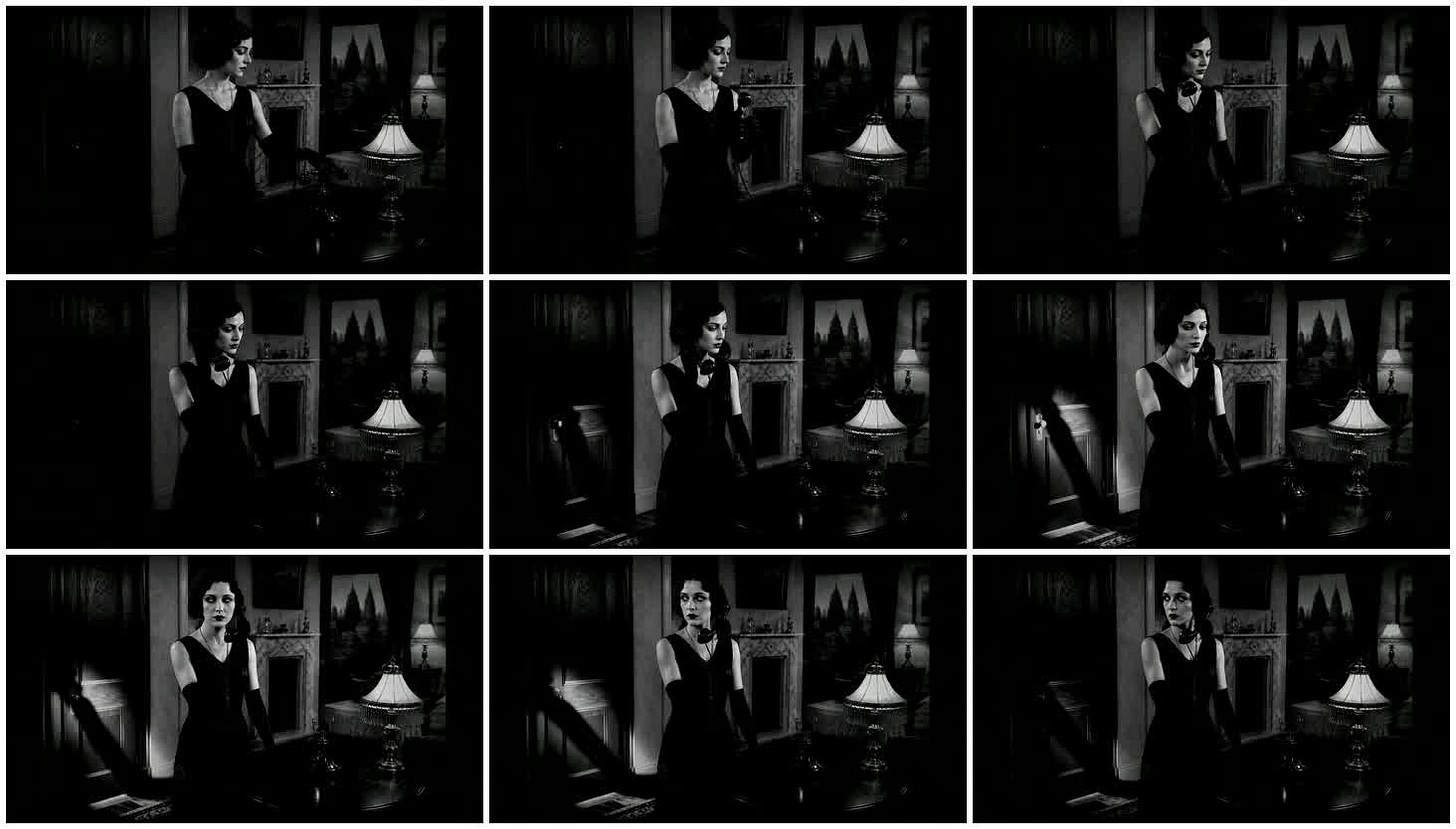
My first exposure to television, and in fact, the only TV I had for some time was a black and white television that likely emitted enough radiation to produce a bag of microwaveable popcorn. I even remember playing Nintendo games on such a thing-which might seem incredible to many today. It was a different time.
Still, what it fostered was a nostalgia for simpler times and the possibility of just shades of gray. The mind is forced to work to put together a scene-the imperfections blend out, and small errors become tolerable because the difference between two colors in the scene isn’t so great in a black and white television. In a lot of ways, it’s superior to an 8K tv display. Do you really need to count the pores of the cast of characters on the screen?
Filming the Scene
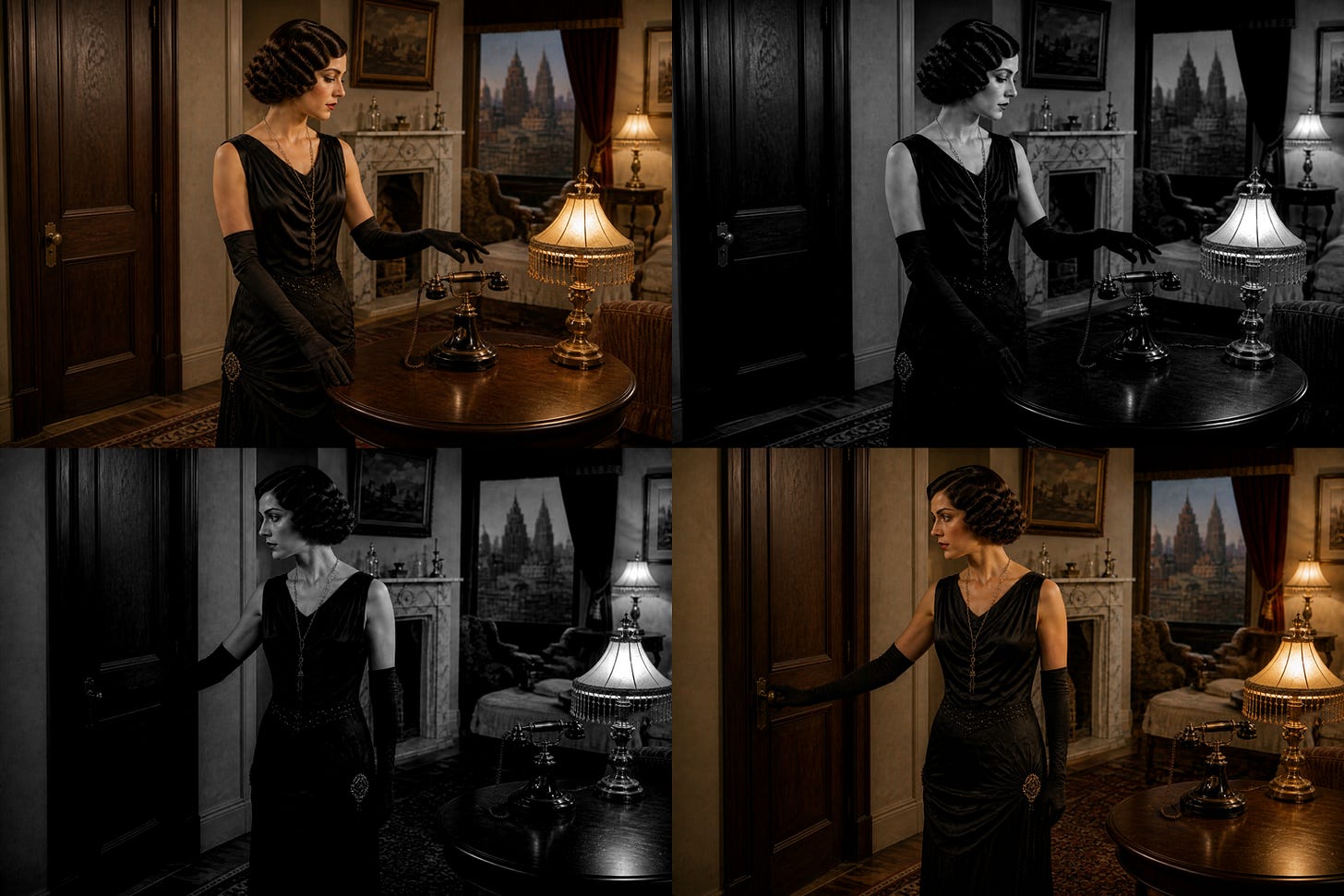
The scene needed to be several things at once. It needed to be a film studio. The actress needed, at times, to interact with the set as the crew and director moved about doing the things that a film crew does. The scene needed to be easy enough to be understood: after all, audio generation is expensive. In a way, I had to sell you a story of a person on set, doing a thing. I wanted to “feel the click” as she puts down the phone.
Vivienne’s Big Scene
I’ve not yet had the good fortune to get my hands on the newer (at the time of this writing) model like Seedance 2.5 or one of the other newer models. It just raises a lot of weird questions about the pure scale of video and what the point is. I’ve done now, what, a couple hundred different interactive game experiences and those are interesting. It used to be that video was too costly and too difficult to tell stories. What if, however, that were no longer true?
Connected work
- John's World: The Ashwicke Gallery: See how a generated-world experiment becomes a gallery with rooms, exhibits, and a changing route.
- Vivienne's Stage: Follow the silent-film character and the stage built around her.
- John's World: Browse the wider research record on generated-world continuity and character behavior.