Originally published as an Advisory Hour Substack post on 2026-05-04. This local copy preserves the text and public supporting media alongside the research record.
Original post
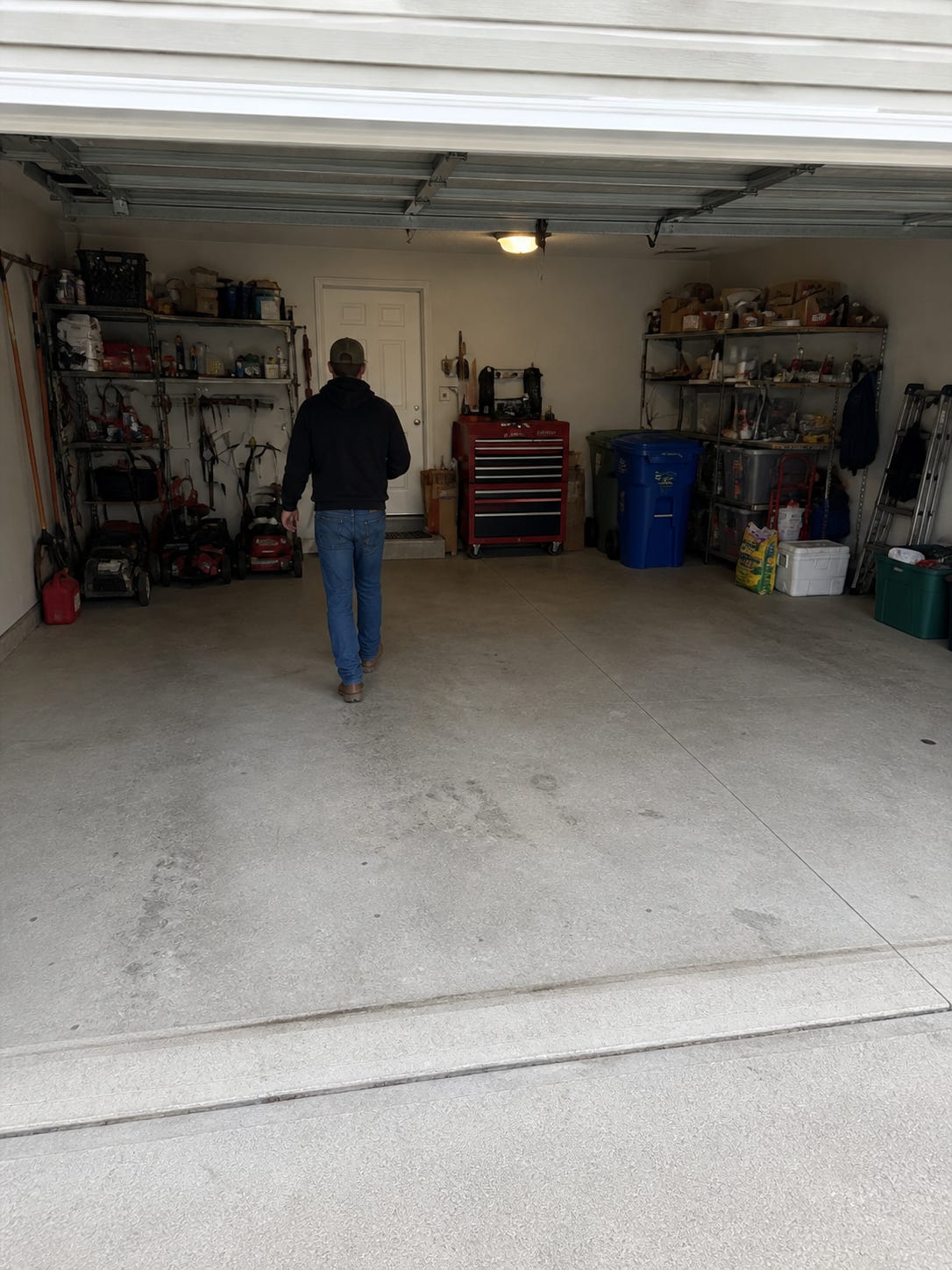
I messed around and discovered an entire HOA inspired world inside gpt-image-2.
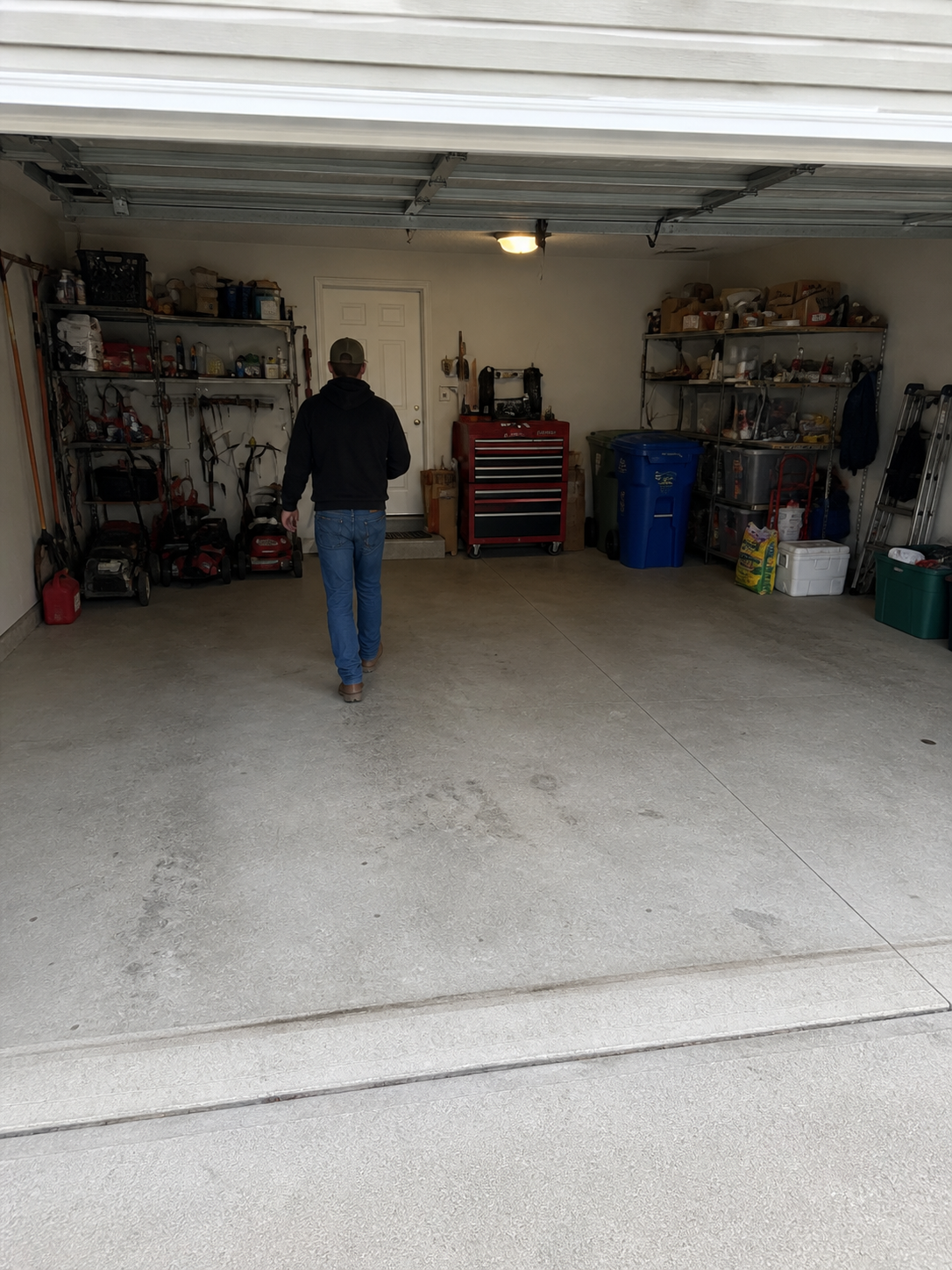
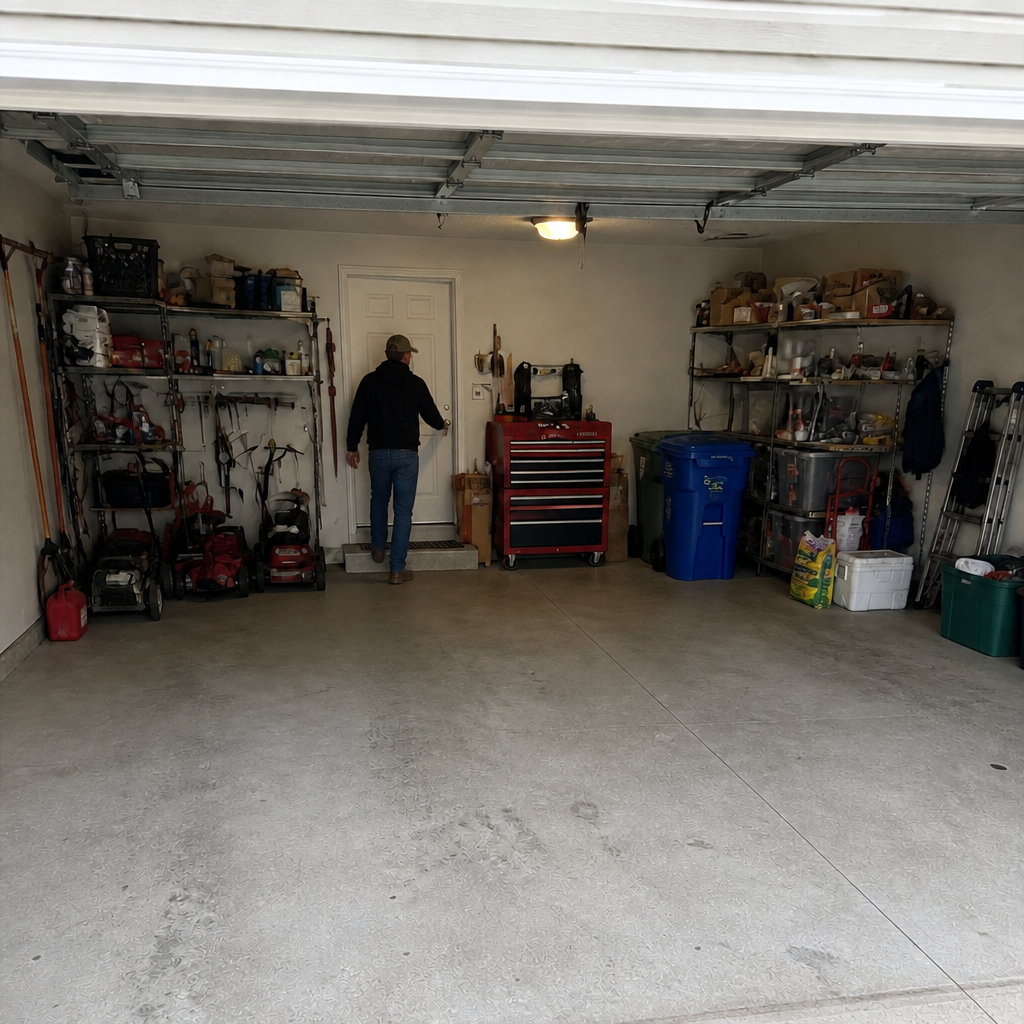
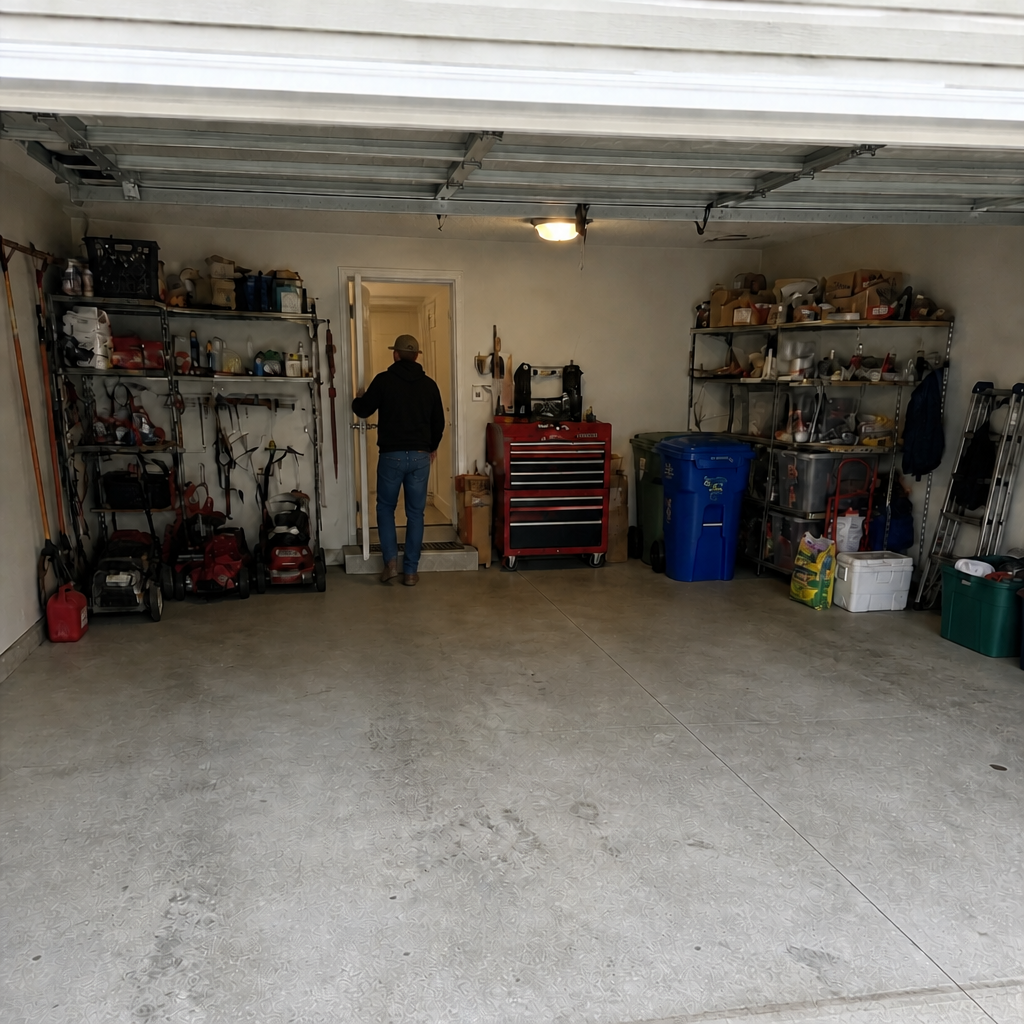
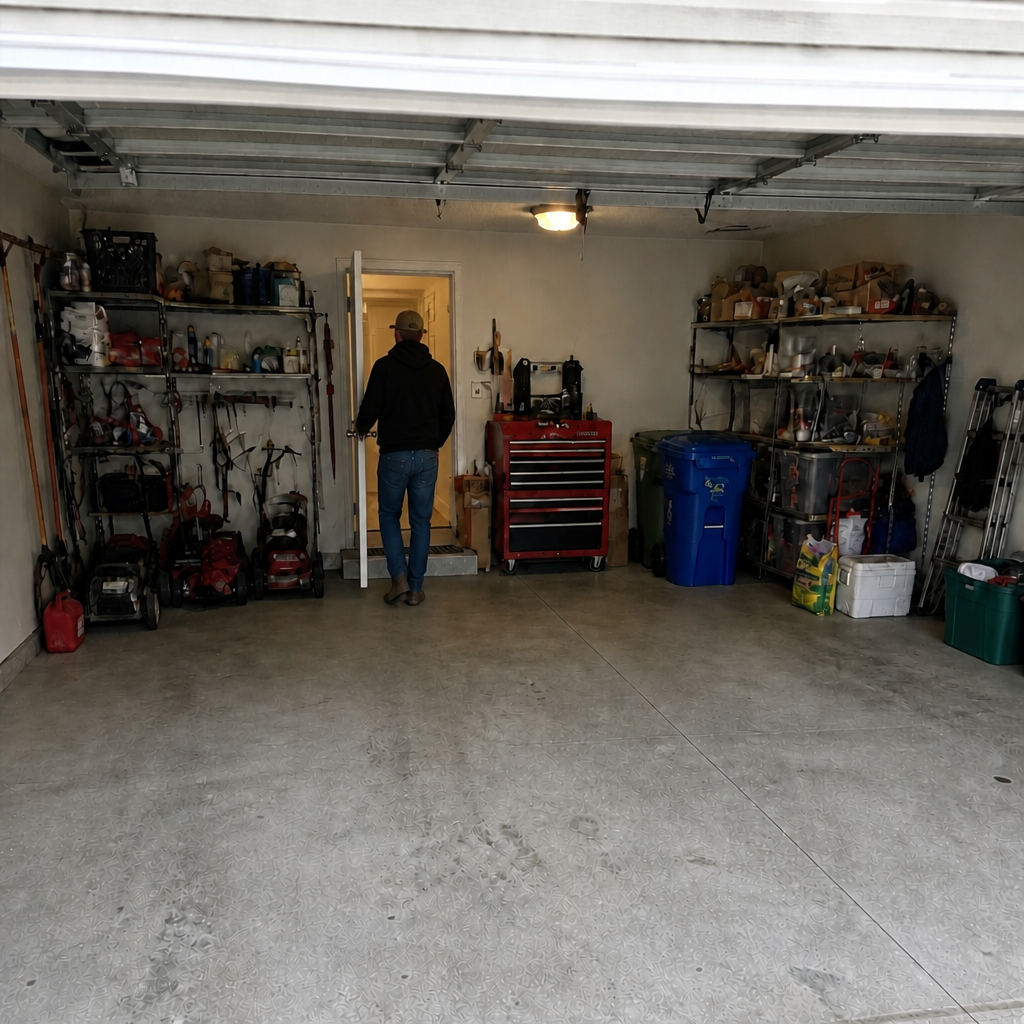
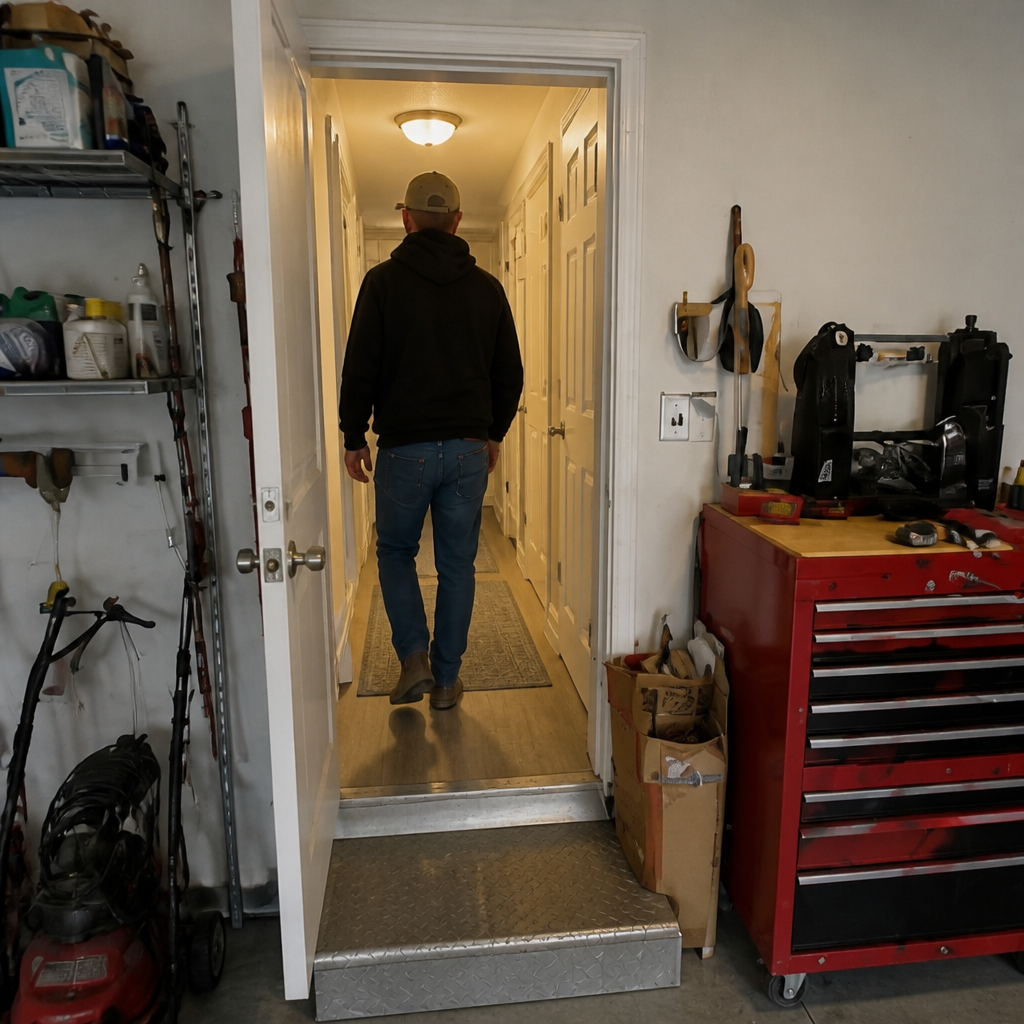
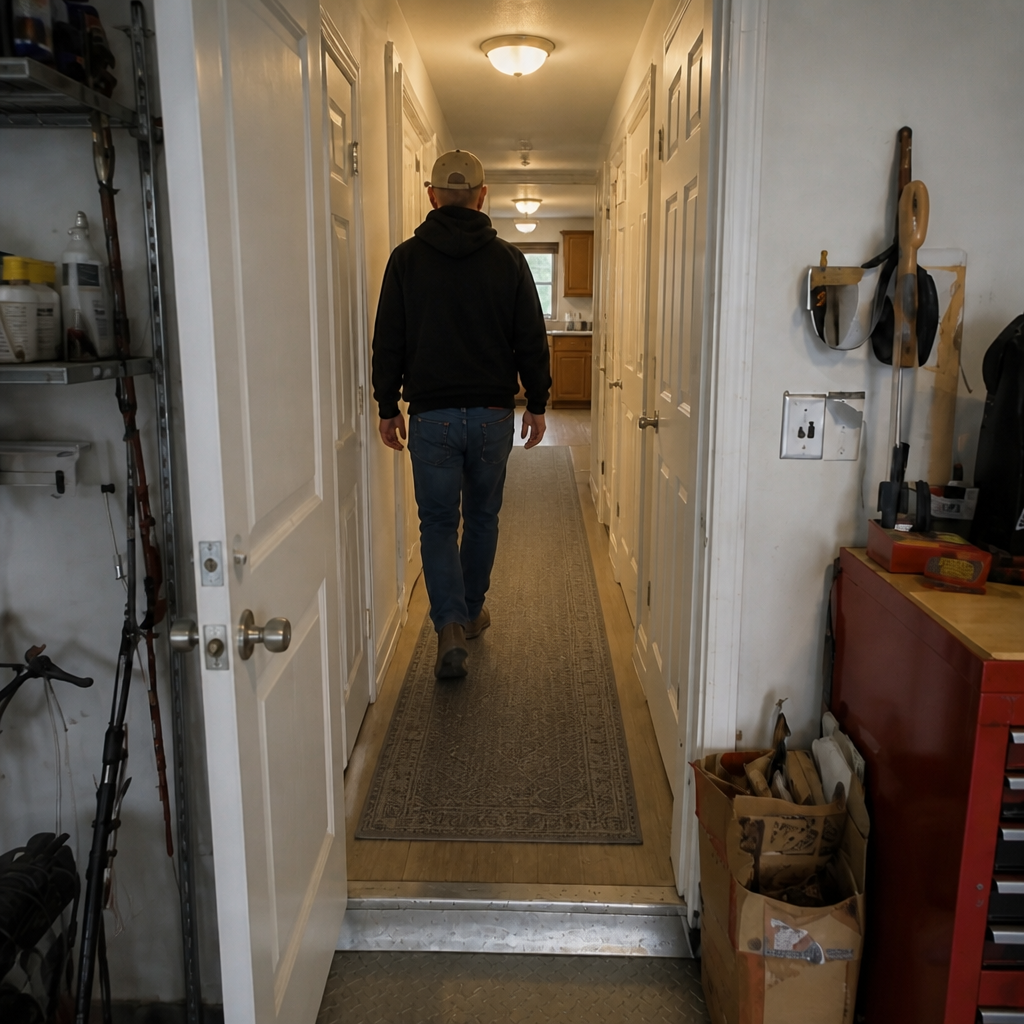
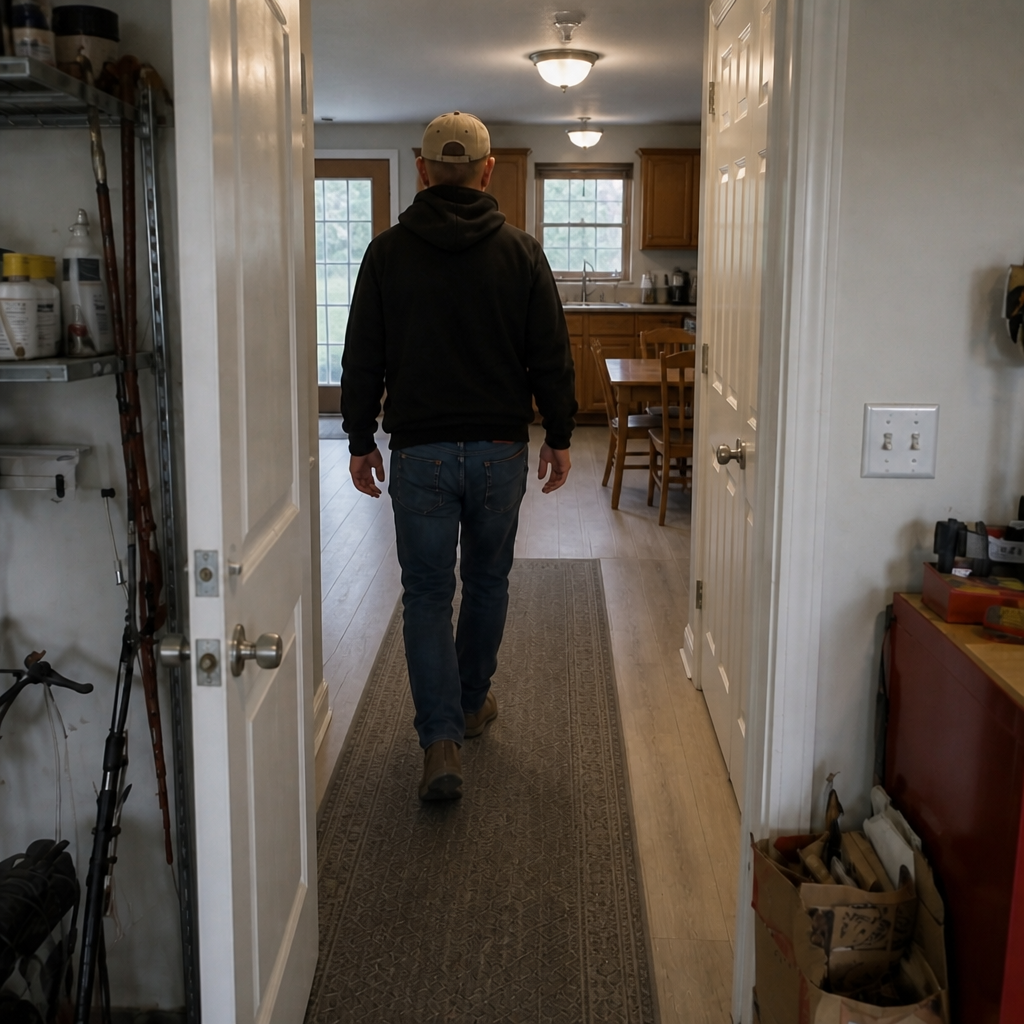
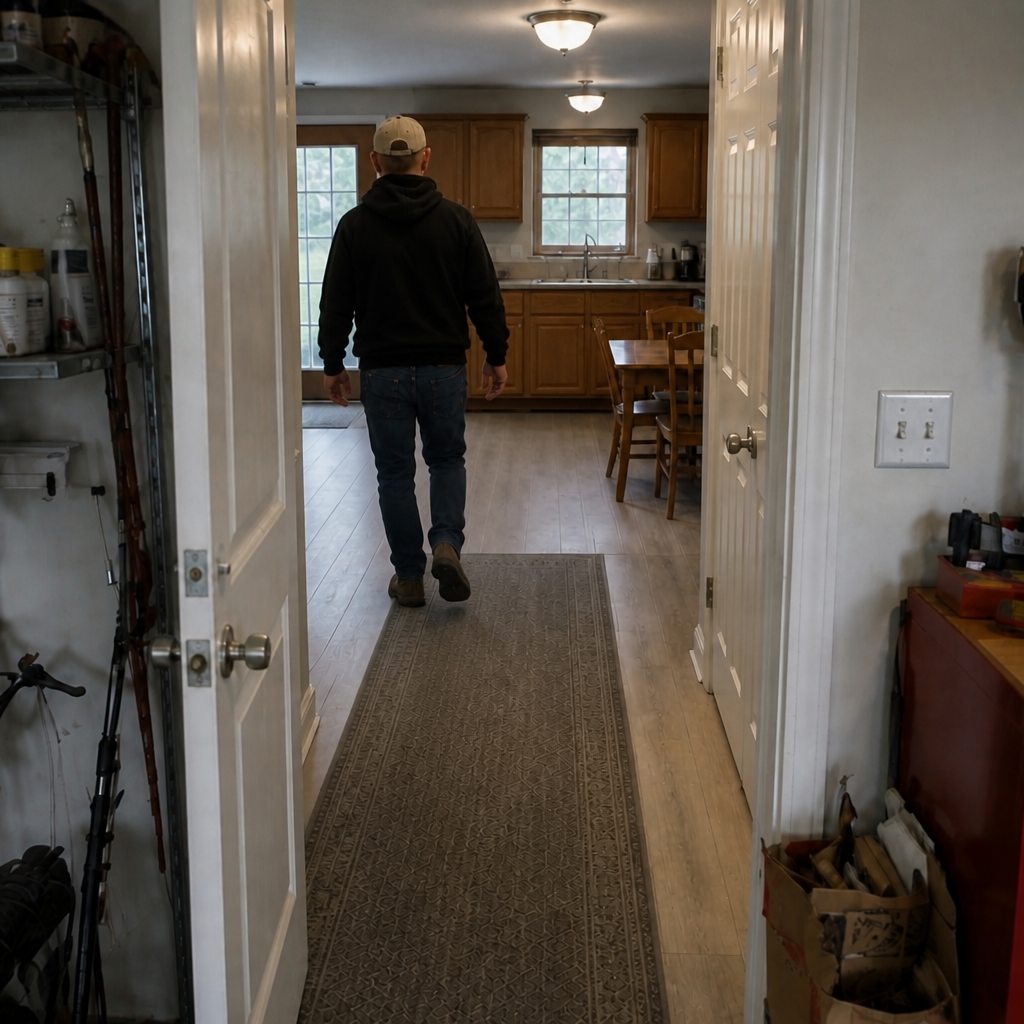
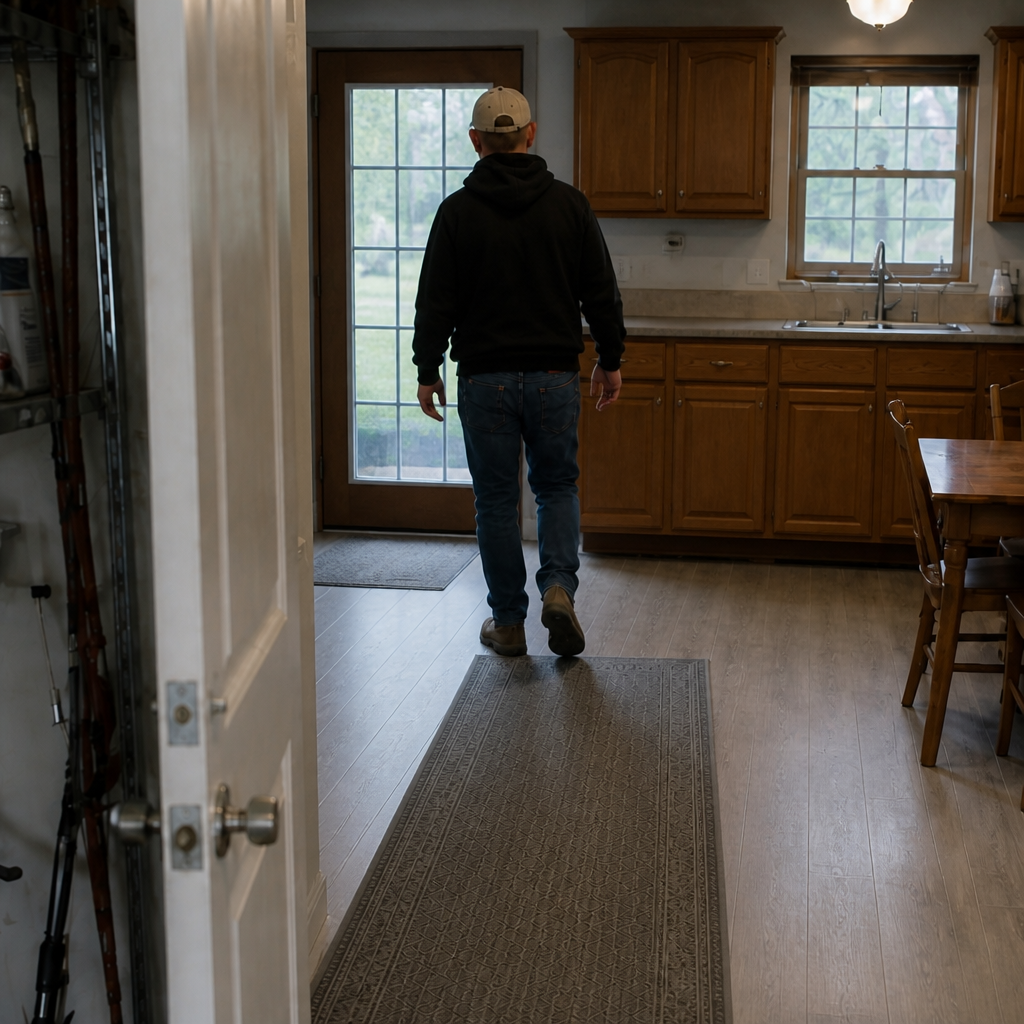
The photo above, of some random garage in middle of the united states, is a genai one. The person there? No idea who that is-”it” just emerged while testing a flow. Strange still is the following point: turns out you can “drive” such a character in the ChatGPT mobile app. Copy that image, put it in ChatGPT, ensure ‘create image’ is selected, and then say “Step forward 20 steps” and see what happens. 99% of the time the character moves forward.
But that isn’t the full extent of what I’ve seen-I just couldn’t quite believe it. So I’ve written an autonomous world explorer that drives the character “John” in his world to see what happens. For example, John has a cellphone he can use with contacts.
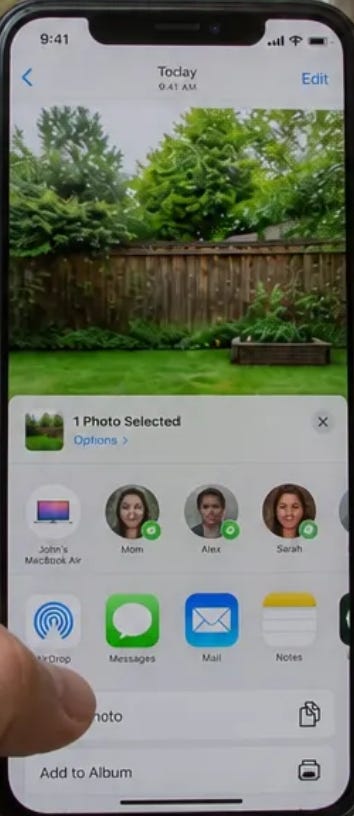
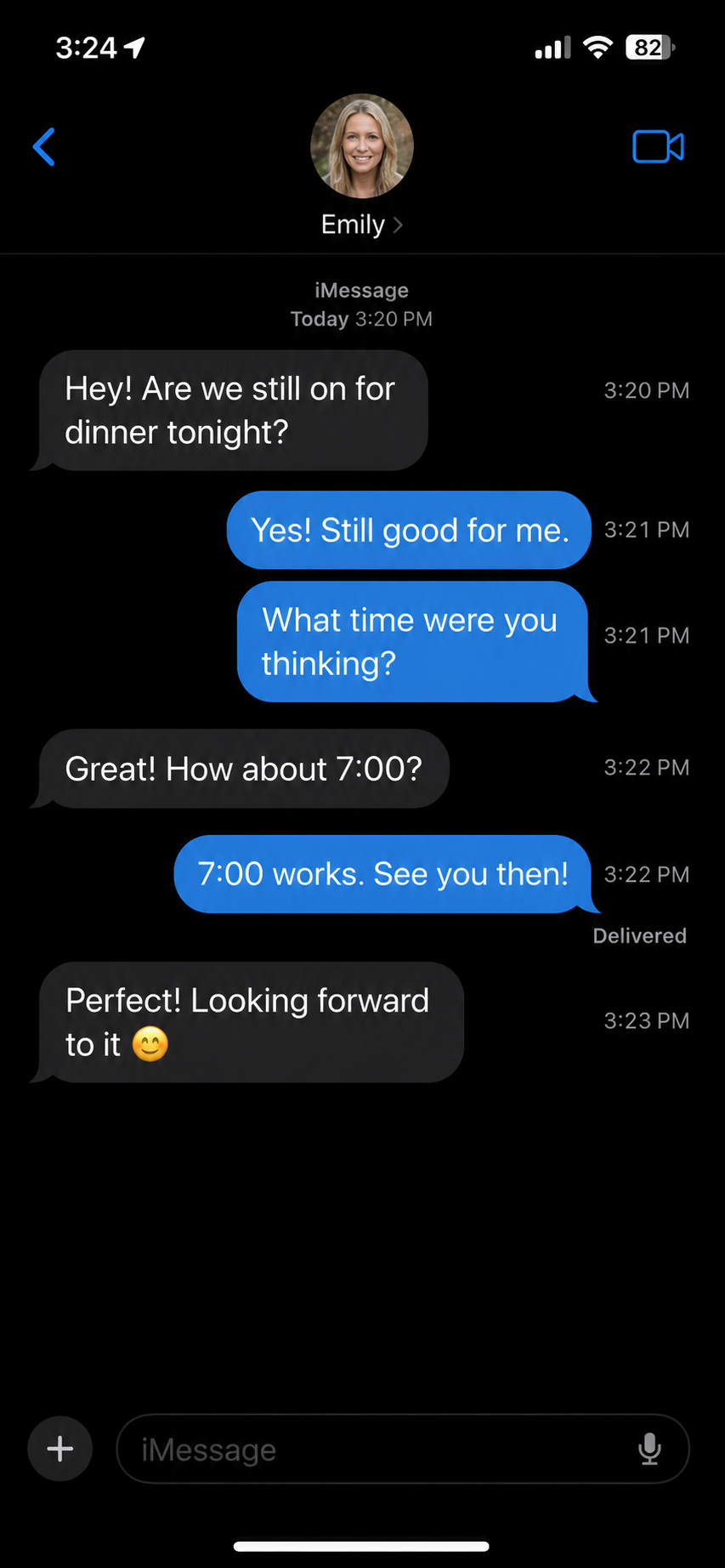
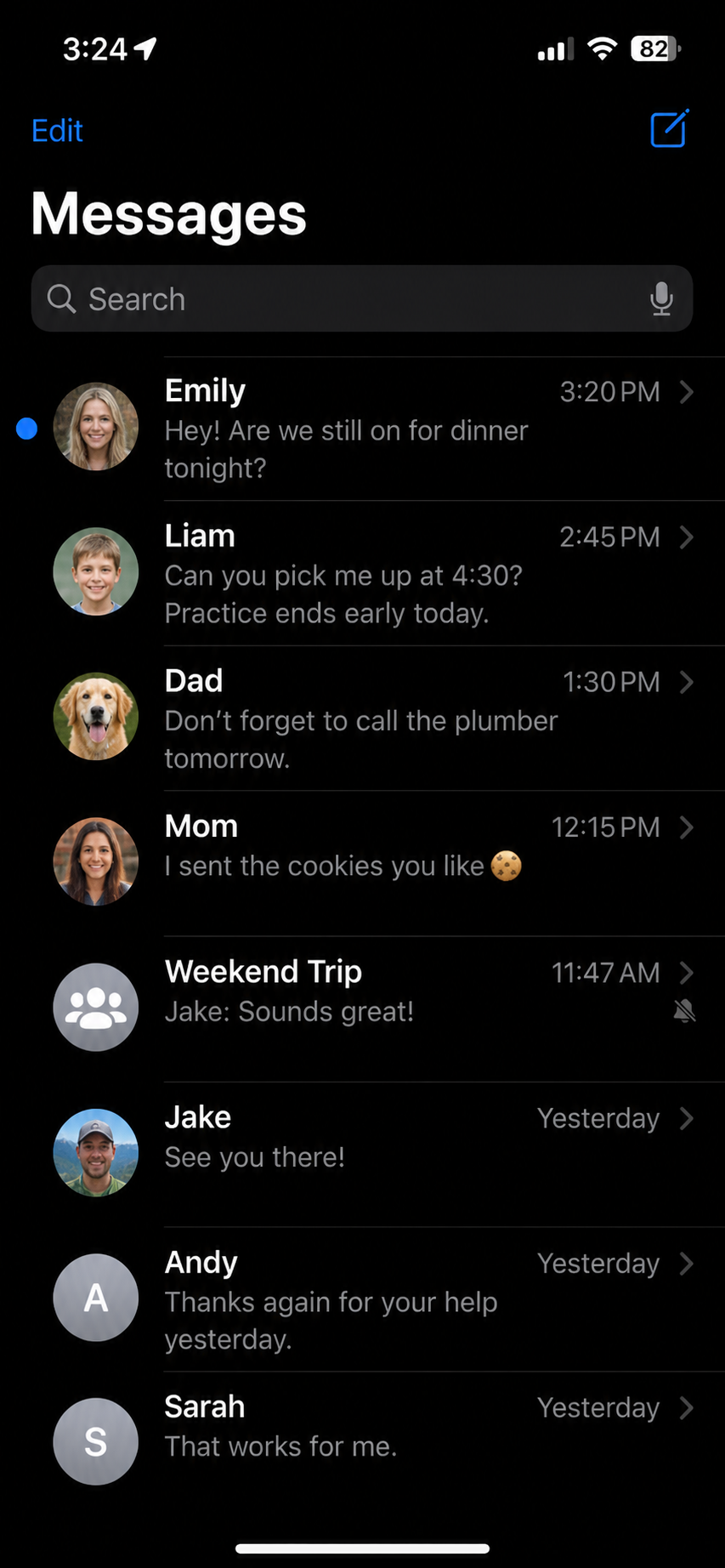
If you’re manually driving via the ChatGPT app, you can have John open up nearly any iPhone app, read his messages, or even confirm a calendar appointment. It’s… a strange experience. One that is bound by compute.
How I discovered suburbia
I’d love to tell you this came from some incredible insight, or a week of careful planning, or one of those respectable whiteboard sessions where people draw boxes and arrows and pretend the future is under control.
It didn’t.
I found suburbia by accident while testing a system.
“Wait, what the heck?” I said out loud in the yard, standing there with the dog and staring at my phone like it had just developed its own opinions.
A few steps back.
The system I was testing is my Shellsensor virtual world. I’d been experimenting with new ways to drive story inside it, and one of the ideas was basically a slow-motion Google Maps, except inside its own game space: move forward a little, render the next view, move again, keep the world coherent. I had a Codex-built UI for it, and I was fighting with the generations because they kept breaking in ways that were just coherent enough to be annoying. The space would drift. The logic would wobble. I couldn’t tell whether the problem was in my application or whether the model considered continuity more of a friendly suggestion.
So, exasperated, I bailed out to the ChatGPT app to test the raw idea more directly. I wasn’t at my computer, which meant I couldn’t easily pull up the Shellsensor reference art for an actual scene location. So I did the lazier thing. I grabbed a random photo, fed it to the image model, and typed: “Step forward 20 steps.”
At first, it worked.
The next image actually moved forward. The geometry mostly held. The scene stayed coherent enough that I did it again. And then again. I was slowly walking through this image, twenty steps at a time, while also wondering what exactly I had managed to screw up in my Shellsensor build if this improvised phone test could hold together at all.
Then I got close to one of the houses and the whole thing took a strange turn.
A man appeared. John.
No one introduced him. The model simply behaved as though John had always been part of the neighborhood lore and I was the one arriving late. So naturally I kept going. I had John open the garage door. Walk into the kitchen. Answer his phone. At one point I found myself wondering whether I could have John call me if I gave him my number, which is not a sentence I expected to think that day.
That was the moment I realized I wasn’t just testing visual consistency anymore. I had accidentally backed into something much weirder. Ask the model to keep moving through space long enough, and it doesn’t drift toward abstraction. It drifts toward suburbia. Houses. Garages. Kitchens. Named men who seem to own cordless phones and a mortgage. The whole quiet grammar of domestic space just rises up out of the system like it had been there waiting for me.
That was how I discovered suburbia: not through theory, but by telling a machine to take twenty more steps and watching it wander into someone’s kitchen.
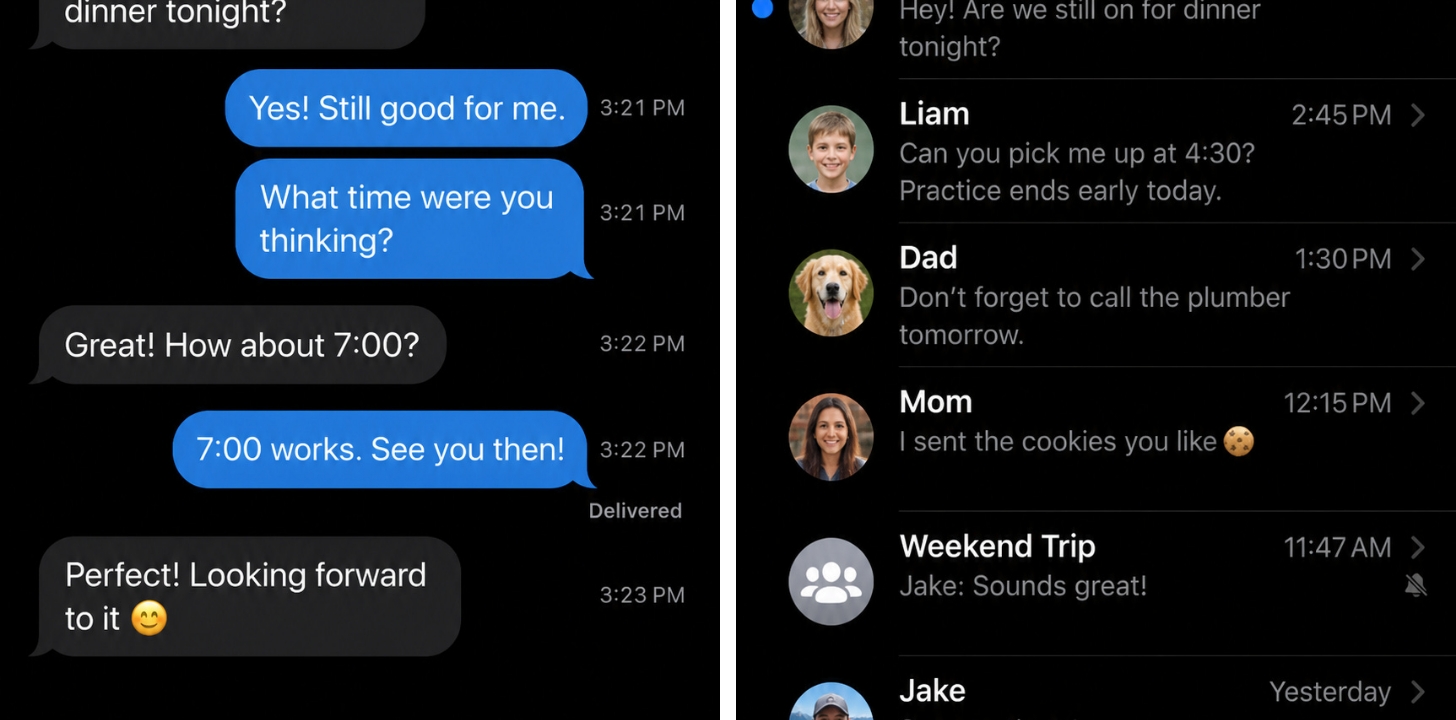
Here’s some of John’s cellphone.
This was just the beginning of John’s story, however.
John’s Autonomous HOA life
This article would be dramatically too long if I were to go in to every nuance for how the code works. So, if you’re so intrigued you can refer to this infographic. In fact, if you pass this to codex 5.5 on extra high thinking? You’ll probably be able to replicate the basic ideas well enough to iterate on.

A rudimentary build will look something like the following. It’ll provide the timeslice from John’s world, along with some specific nuances and details.
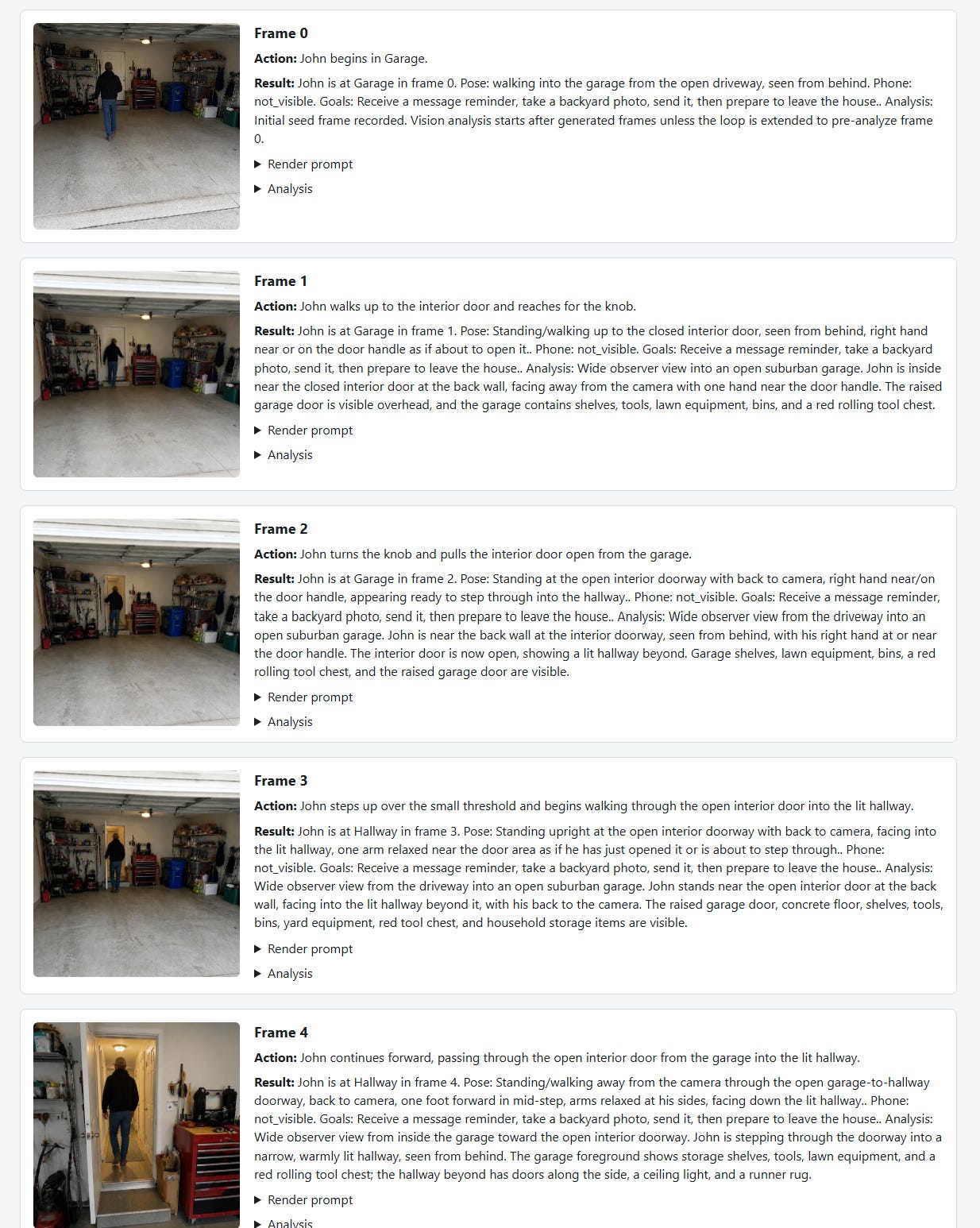
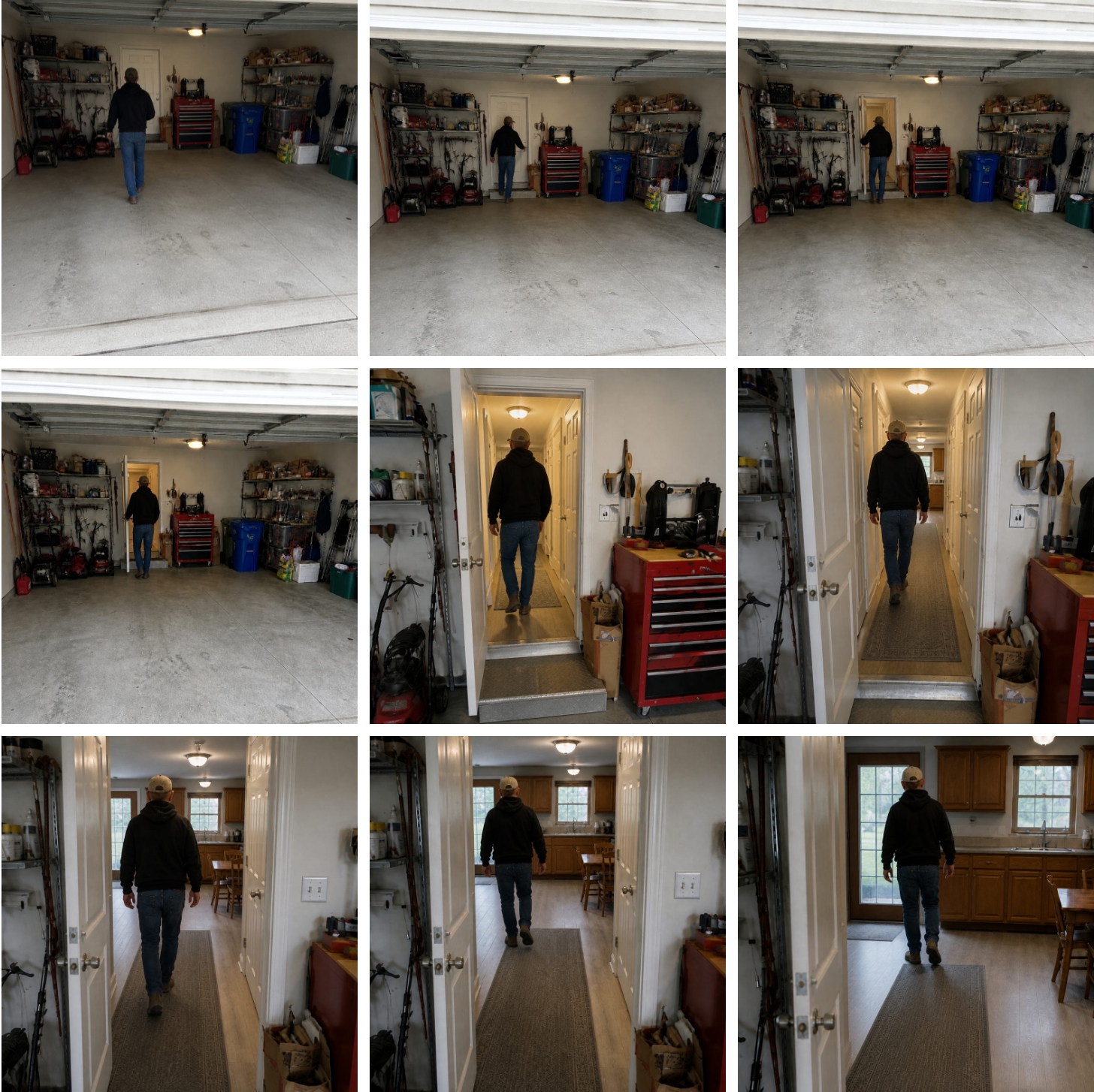
Every now and then you have to remind yourself of a key fact: these are not real photos. Here, let’s watch as John walks outside.
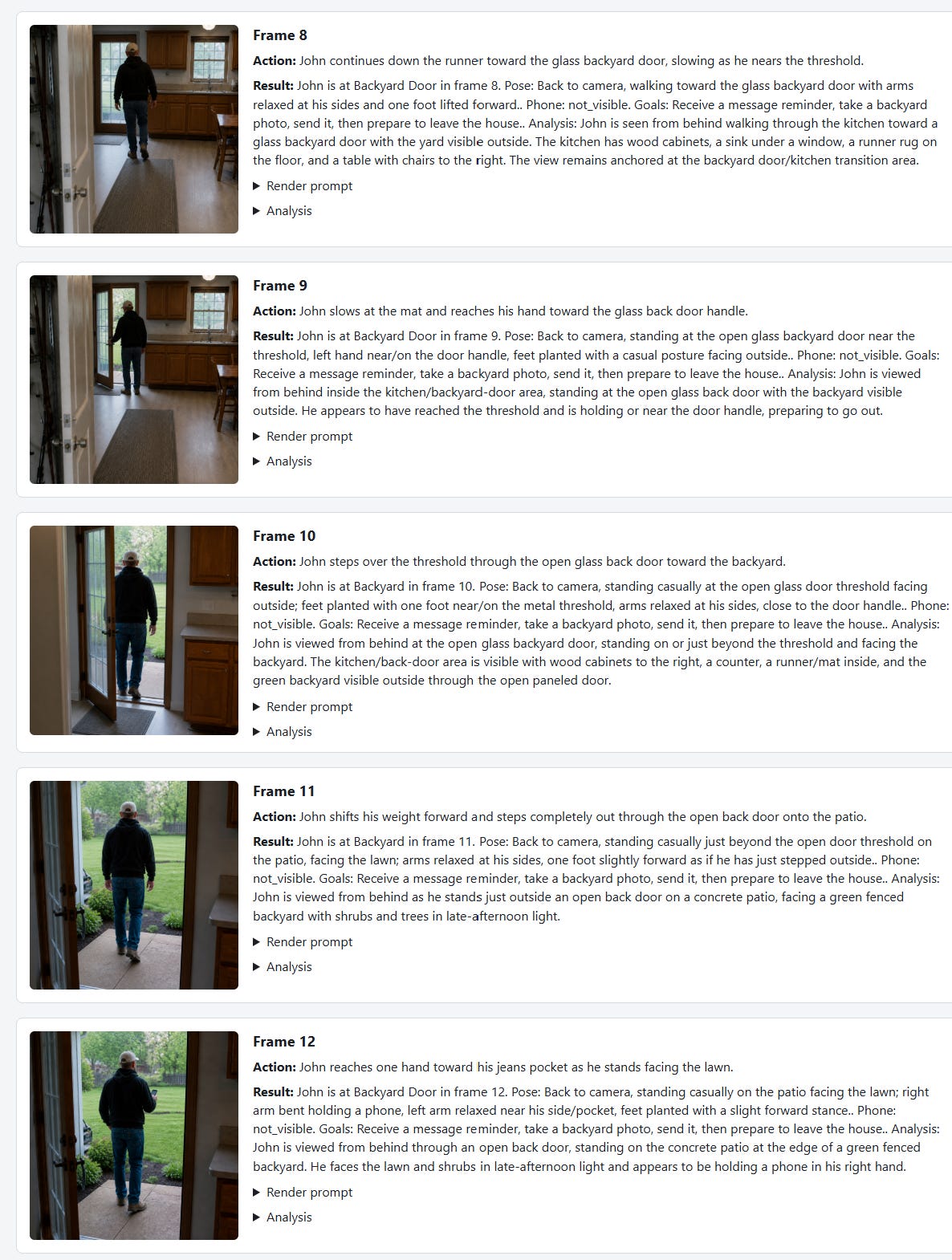
And then we can watch as John uses his cellphone, to take a picture of his back yard.
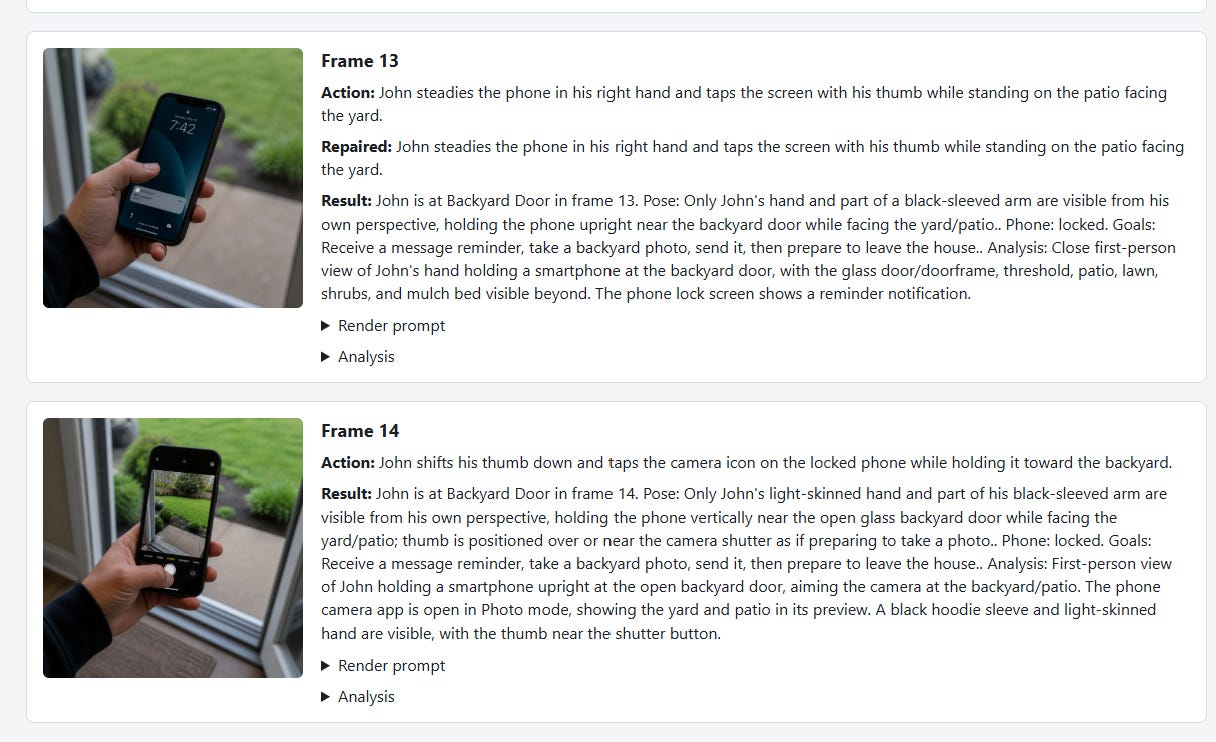
Substack is limited to 9 photos in a gallery, but you’ll get the idea of just these 9. It’s quite interesting.
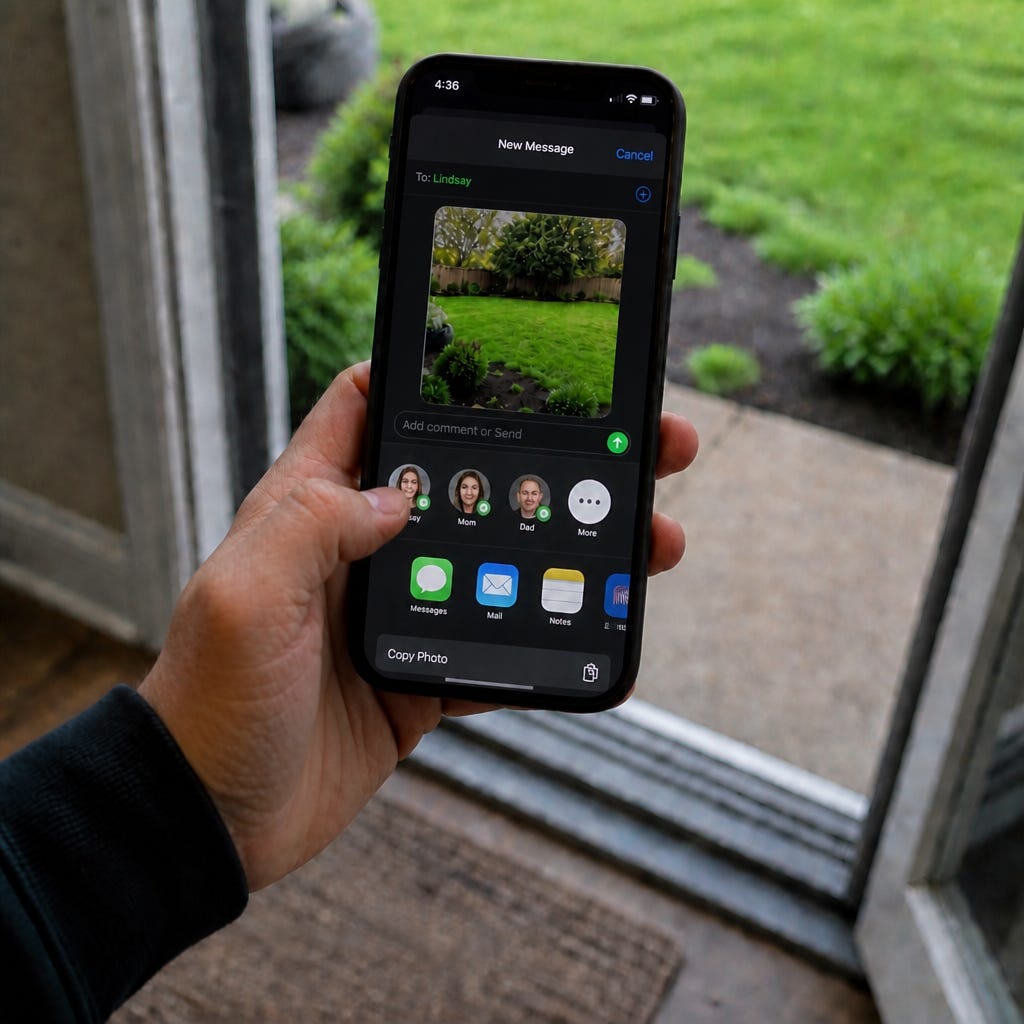
I’m gearing up to do a much longer test. I’m curious where John’s story goes next. After all, he seems to be texting photos of his backyard to someone
“Action: John taps the Lindsay contact icon in the share sheet while holding the phone at the open back door.”
Thanks for reading! Subscribe for free to receive new posts and support my work.
Huh, … John’s going somewhere?