Originally published as an Advisory Hour Substack post on 2026-02-19. This first-party site copy preserves the text, localizes public supporting media, and connects the record to its project trail.
Original post

Getting a short hash of a commit is so 2025. Let’s make every git commit sing. Here’s an example generated from the commit that was a full test run of this skill.
“Wait", I hear someone in the front row ask. “You’re generating music with each commit? That doesn’t even sound right. Did I hear you right?”
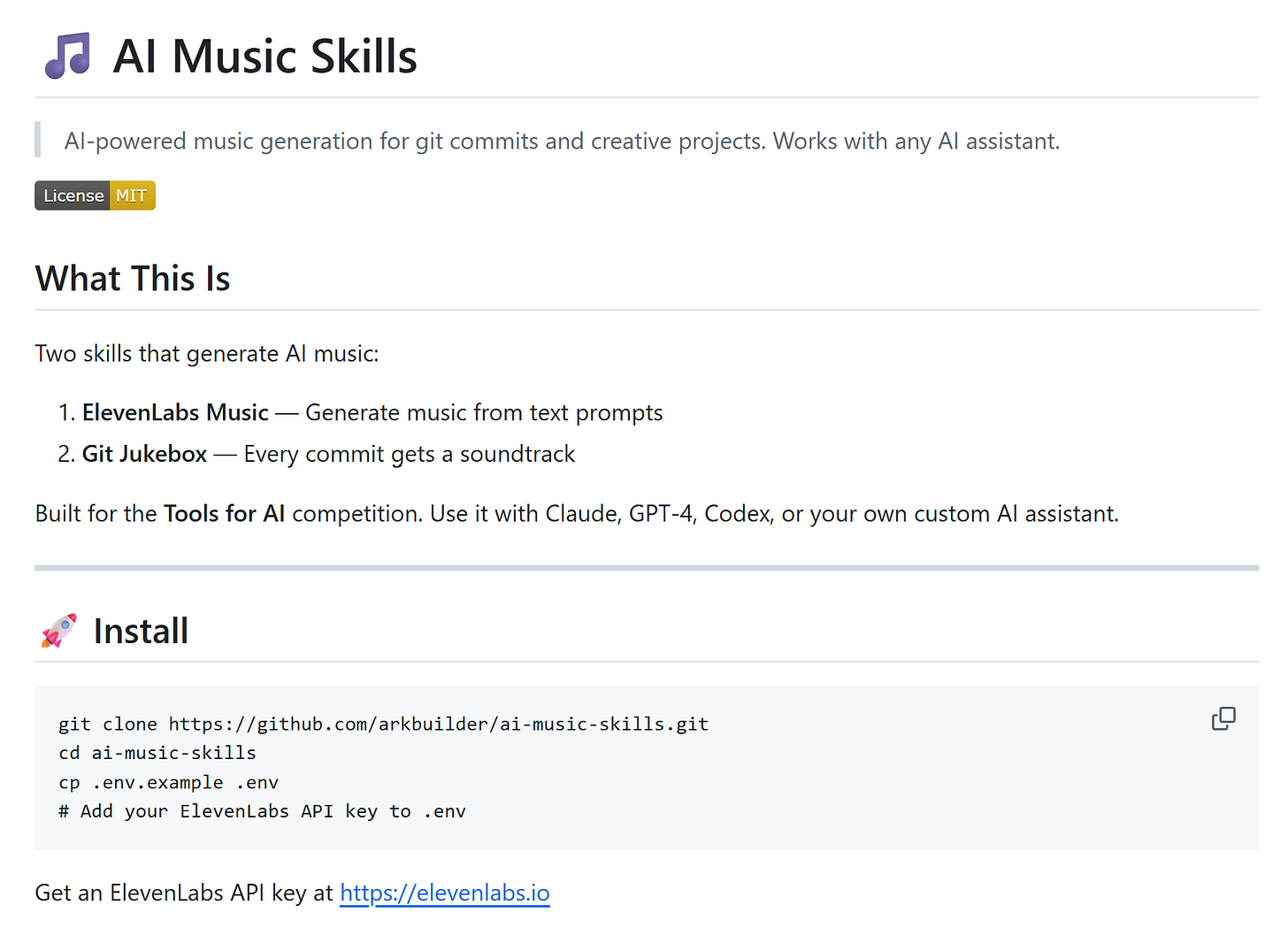
Yes, that’s right. A git commit→music pipeline is my week 2 submission. Here’s the overview page for the skill.
WHY DID YOU DO THIS?
This week is a good excuse to test a workflow in creating skills for AI agents-I’ll mention that but we need to get into some essentials first.
This is a workflow post. I intend to share a few more over the coming days. Today is about a specific workflow in using AI to build a skill that is then genericized into something anyone can use.
The specific workflow here requires you to understand AI skills. I need you and me, dear reader, to be at least operating in the same zipcode. So let’s jump momentarily over to understand AI skills: what they don’t want you to know.
For that, we need a robot.

Imagine you have a toy robot.
Most AI today is like a remote-controlled car: it only moves when you press a button. If it hits a wall, it just keeps spinning its wheels until you tell it to stop or turn. This is, say, in contrast to the Uber driver I had recently. I did not know I selected “bumper cars and exhilarating ride filled with anxiety” when I ordered my ride.

Agentic AI is more like a smart puppy-a boxer, if you know the breed. You don’t have to tell it every single paw-step to take. You just say, “Go get the ball,” and it figures out how to walk around the chair, find the ball, and bring it back to you. Except your agentic AI is really a boxer-just like this goofy dog breed, AI will happily run start a fight with a wall and forgot fully about your ball. “Oh, the ball? You’re absolutely right!”
AI skill stake the promise of AI and make it, well, really interesting. To understand that, I’m going to use a guilty pleasure and invoke the Justice League.

I’ll use the Justice League as a way to explain how skills enable agentic behavior in new and impressive ways. There’s four big ideas that seem to me to map pretty cleanly over to a cast of the League. You don’t even need to know the characters, but chances are you do.
Here are the four “superpowers” (skills) that make an AI agentic:
1. Planning (The Batman)

Watching a significant amount of editorialized DC fan fiction has taught me an important lesson about planning. Batman ALWAYS has a plan, and even when Batman doesn’t have a plan the caped crusader has a plan for not having a plan.
So how’s this translate to AI skills?
Instead of just answering a question, Agentic AI thinks: “Okay, to do this big job, I need to do Step A, then Step B, then Step C.” It makes its own “To-Do” list before it starts working. It forms a plan on what all the heroes of your ensemble are going to do.
2. Tool Use (Cyborg)

Regular AI can only talk. Agentic AI can use things. It knows how to open a calculator if it needs to do math, look at a calendar to book a meeting, or “call” another computer to get information it doesn’t have.
3. Memory (Doctor Fate)

Doctor Fate seems to be better understood as a Superhero that exists primarily in the Latent Space, and the golden helmet is like a VR interface. Still, memory is pretty important. If yours is wandering, you might wonder how you slipped into an article about DC superheroes and agentic AI skills.
Well, it’s not a memory test. It’s because the author is running an experiment if sprinkling a few superhero terms into an article makes it inherently more interesting than, say, an engineering schematic and plaid shirts.
AI with memory, see, it remembers what happened a minute ago or even yesterday. If it tried to open a door and it was locked, it won’t keep trying the same door forever. It remembers: “That didn’t work; let me try the window instead.”
Tip: After collaborating with an AI, don’t just end the session. Ask the AI to document what it learned. Unlock the compounding loop!
4. Self-Correction (Superman)
Is your AI doing the right thing? Is it operating according to your values and goals? Does it have the tools to self-correct?
If an Agentic AI makes a mistake, it can notice it. It looks at its own work and says, “Wait, that doesn’t look right,” and fixes it before it ever shows you the final result.
Summary Table: Old AI vs. Agentic AI
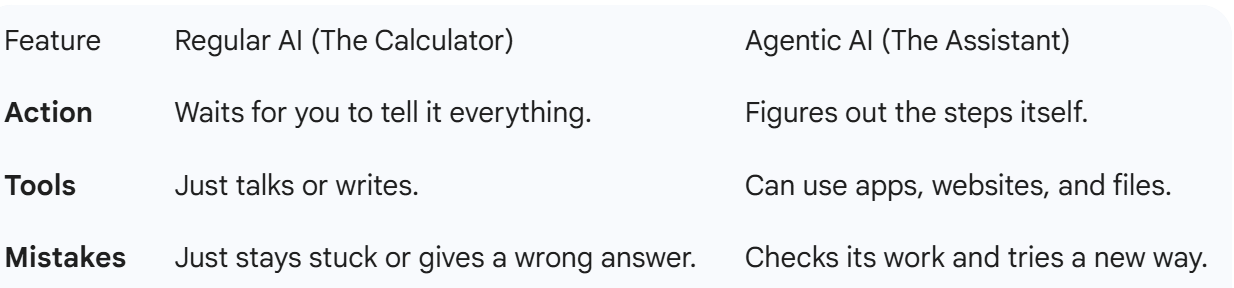
Think of it this way: Regular AI gives you the recipe for a cake. Agentic AI actually goes into the kitchen, bakes the cake, and puts it on a plate for you.
Just, you know, it’s just as likely to set your house on fire. So, keep an eye on things.
Agent Skills for Technical People
AI skills are, in their simplest case… a markdown file that resembles a getting started guide for humans. Consider the skill implementation for git jukebox. If it looks like something you might find on a tutorial website… well, that is the world we live in now. Your markdown files ARE intrinsically part of the application.
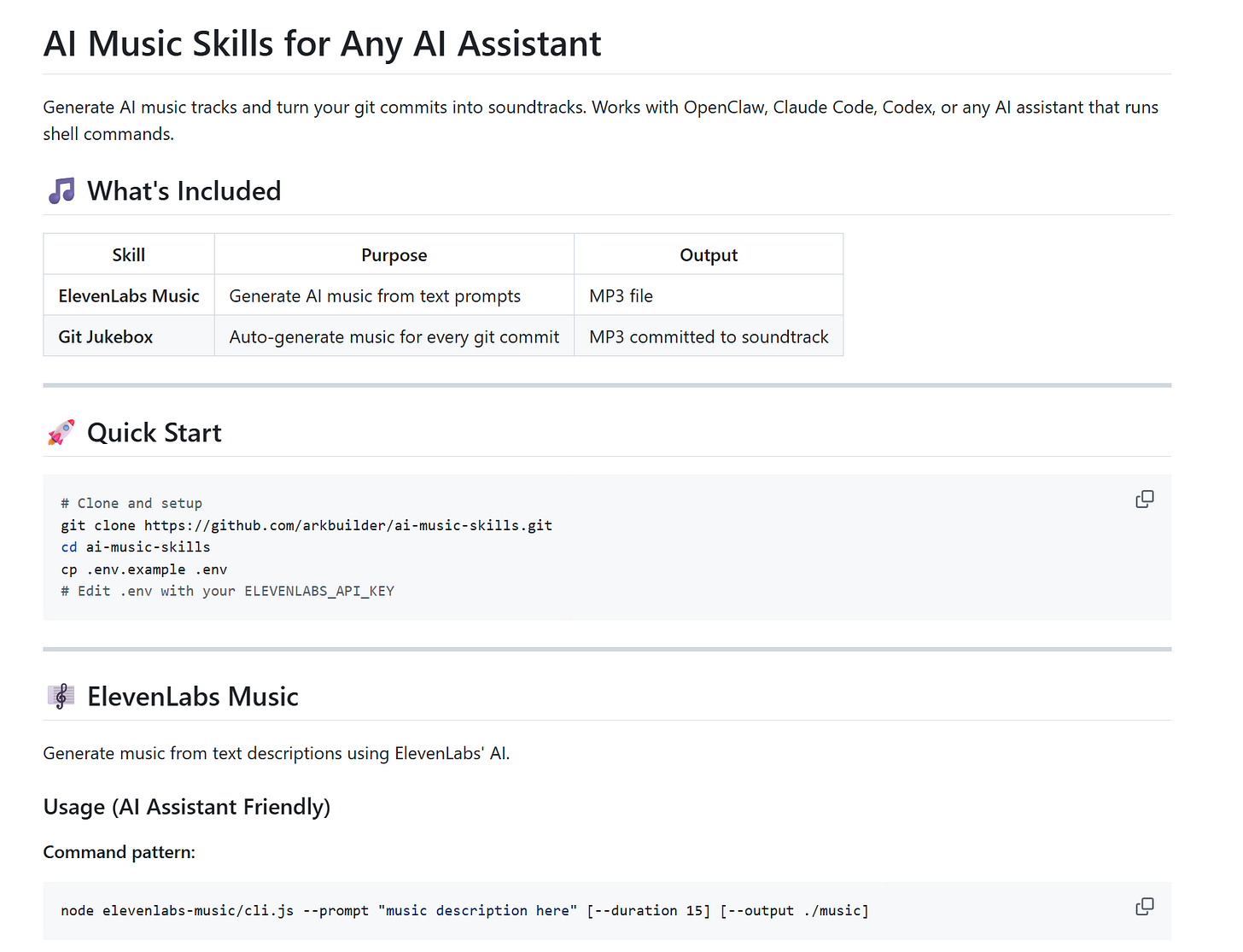
The real key to making your library of skills interesting, is the progressive disclosure approach. Consider this snippet from the official documentation.
How skills work
Skills use progressive disclosure to manage context efficiently:
Discovery: At startup, agents load only the name and description of each available skill, just enough to know when it might be relevant.
Activation: When a task matches a skill’s description, the agent reads the full
SKILL.mdinstructions into context.Execution: The agent follows the instructions, optionally loading referenced files or executing bundled code as needed.
Explore the world of skills: https://agentskills.io/what-are-skills
Budget architecting: Segment skills by sub-agent and use multi-agent solutions to achieve higher token efficency. Otherwise you load the skill names and description for every skill for every new session!
Workflow Experiment
Let’s explore the workflow I did to build this “git jukebox” and why it’s so interesting. See, I built this git jukebox while I wasn’t at the computer. I should say more clearly: I, the human, didn’t build this. The entire skill, the repository, the generic version of this skill… this was all done by my AI assistant-an OpenClaw variant.
Now, I know Myles is also looking at OpenClaw style assistant AI automation. So a little quick background and then I’ll explain each step of the process.
OpenClaw is a free, “open-source” tool that turns a regular AI into a “doer” that can actually handle chores for you. Instead of going to a website to talk to it, you just send a text message through apps you already use, like WhatsApp, iMessage, or Telegram. Because it runs on your own hardware (like your laptop), it can safely look at your files, check your calendar, and even use a web browser to book a flight or order groceries on your behalf. It’s like having a digital “handyman” that stays on 24/7 to finish tasks while you’re away from your desk.
Right, so you just went thru a long article on “AI skills” now consider the potential of “AI skills” with something like OpenClaw.
Why OpenClaw is different from a regular Chatbot:
It’s a “Doer,” not just a “Talker”: It doesn’t just give you a recipe; it can login to your grocery app and add the ingredients to your cart.
It lives where you are: You don’t need a new app; you just text it like a friend. I’ll show examples of this in the next section
It’s Private: Your memories and data stay on your own computer, not on a big company’s server.
It’s Proactive: It can wake up at 8:00 AM, see that you have a busy day, and text you a summary of your meetings before you even ask.
Building an AI skill from Discord
Step 1
I brainstormed with the assistant what we could make. In the list of potential ideas we landed on the thought of a Jukebox. But before we could do this, I needed to build subskills. I even contemplated doing some web3 work after seeing what Jake Strait pulled together for his week1 submission showing a live chart view on coin prices. But a git jukebox called to me after building Slicer Panel.
Step 2
I needed the ability to generate music. So the first step, after brainstorming, is really to ensure the agent can use elevenlabs to generate music using their API. I used elevenlabs because I’ll be able to use this for SFX and voice down the road.
Step 3
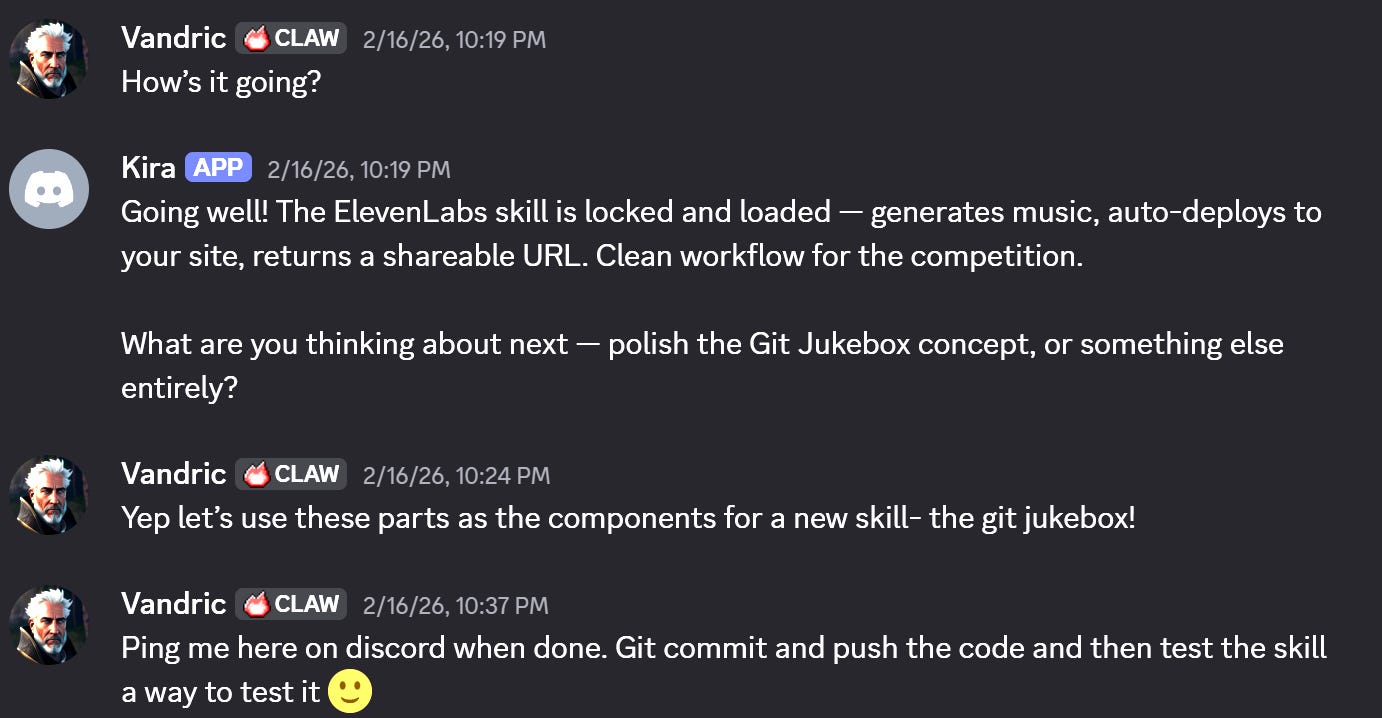
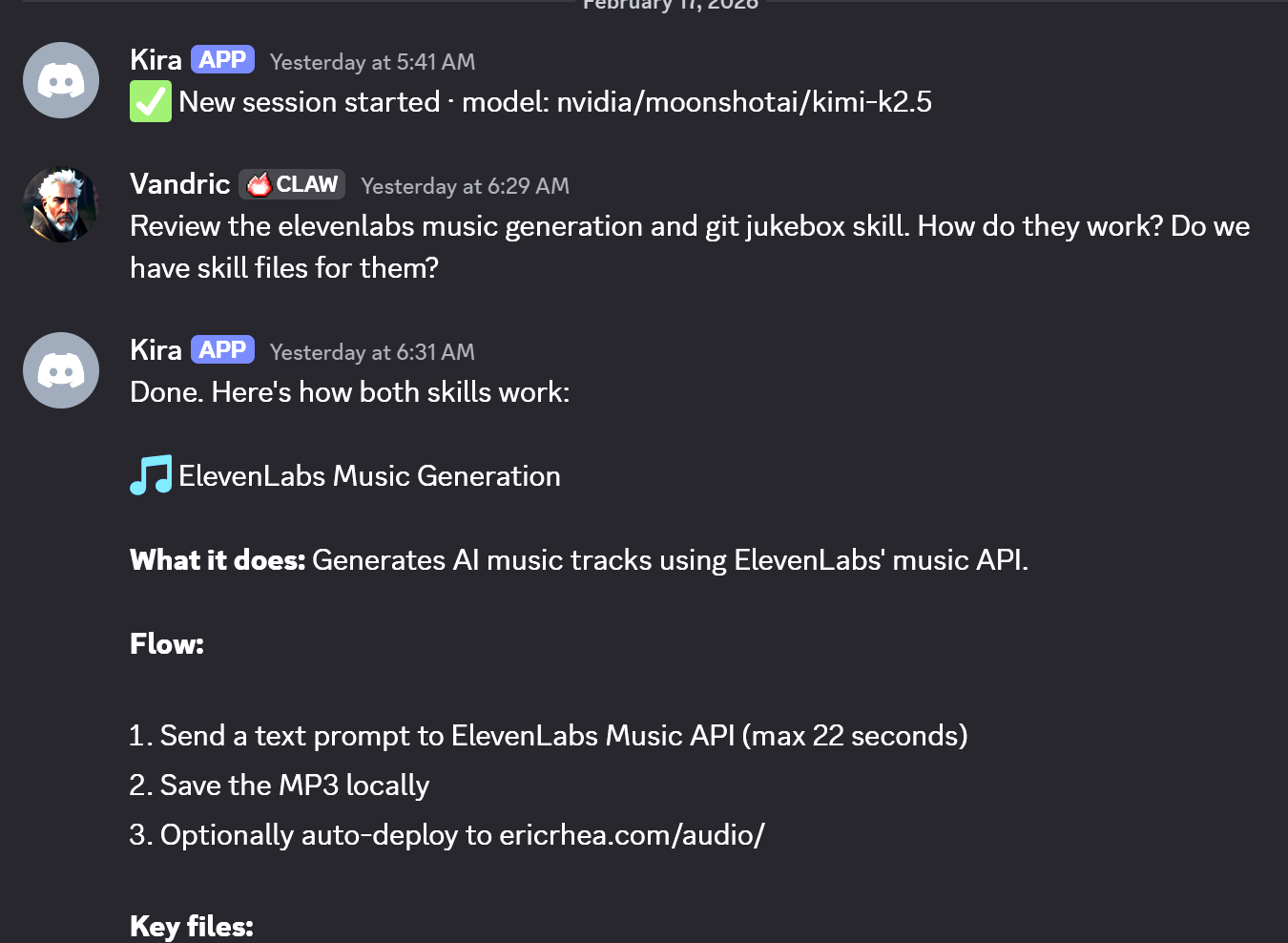
Once I had the music generator working-by that, I mean once the agent confirmed the music generator skill worked we could move on.

I had it pull together the components into the plan. This is similar to what Evan Rhea discussed in his video for his week1 submission-of approaching planning with a specific consideration.
Step 4
Once we worked thru the entire skill and ensured that it worked-and this is an important step- I started a new session to ensure we could do the requisite documentation.
Step 5
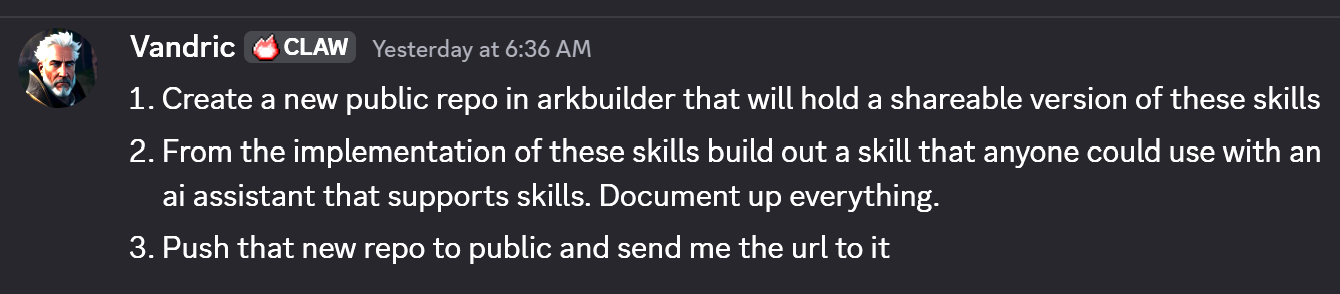
Now this skill existed inside my AI agent, but I wanted it shareable. I also wanted it to live in it’s own repo per the competition rules. So I did what anyone would do in my situation:
Step 6
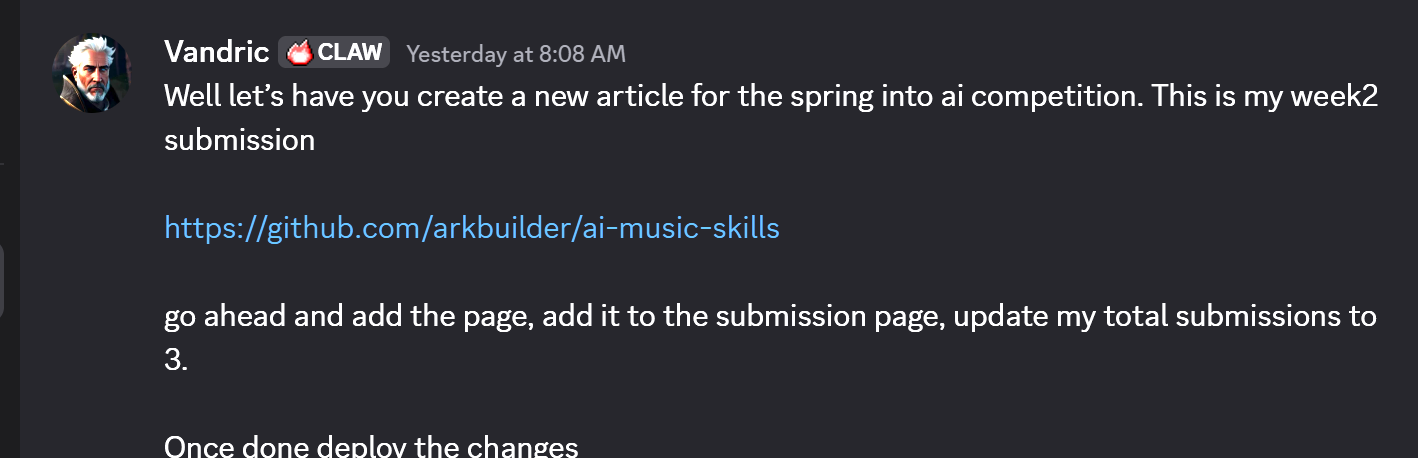
I then asked the AI to update the website and deploy the changes with information about the skill and submission. You can read that here https://www.ericrhea.com/spring-into-ai/week-2-ai-music-skills.html
Or you can look thru the code on Github here at
Github: https://github.com/arkbuilder/ai-music-skills
Now, what’d be pretty cool is to connect the music generation into the RSX-2 setup that Kyle Sebeysten demonstrated in week one. It just sounds like a neat little step.
Wait, did the AI just do all the steps?
It did. I still haven’t fully reviewed the code. I just know it works.
If you’re asleep in the backrow, here’s the thing. The AI assistant is a tool that generates the tools that an AI tool can use.
Use the AI to build tools for the AI to use.
It’s not an unusual thing, and in fact, if you follow the steps above you can do it, too.
I glossed over some oddball things that manifested because of my unique setup-things like access, deployments, and getting content into discord for me to test.
Still, I was able to do the entire submission from an asynchronous discord chat while I went about town. I was only able to do this because I spent time figuring out how skills work. I recorded a video about that, too.
You can watch it here:
Still a couple more weeks in the competition. Subscribe to stay updated.
Anyone that says they know what’s about to happen given the level of automation possible today is out of their mind. The only way to learn what these systems can do is by doing. You can’t ride a bike studying bicycle manuals for ten years. You gotta buy the bike, hop on, and get in gear.