Originally published as an Advisory Hour Substack post on 2026-03-01. This first-party site copy preserves the text, localizes public supporting media, and connects the record to its project trail.
Original post
“You must first unlearn what you have learned.” -Wise Talking Puppet

The latent space is a fertile feed.
I tried a new way of building software for Week3. Then I taught parts of it to Evan Rhea and found the process repeatable. The process is a twist on what I see everyone doing with software. It requires a perspective shift. You must embrace the idea of software as a garden.
Subscribe to see what grows next!
In a YouTube video I describe the how and why, so in this substack post I’ll put a little more time into discussing the insight and where it came from.
Let’s start by taking a look at the start of the competition.
The Competition
For the last 3 weeks, a small group of innovators has committed to a public exercise of “build in public” with a few twists. The competition scoring rewards proof of work over the work itself. Typically, these game jam competitions reward the quality of the software. This competition spun it around: software is cheap, proof of work is hard. Reward the proof of execution.
Each week a new theme drops. This is the third week of the competition. Everyone is fatigued. We all have day jobs, obligations, lives and so on. However, we’re all finding a way to make it work. The threat of getting put on a public slacker list might help with that.
Week3’s theme is interactive tutorials. Here’s the full sub-article about it. You can read it in a new window if you like. It’s just the release details for the competitors. However, it might seed you with some ideas, too.
Competitive Approaches
So now you know a small group of us are in a competition. The competition puts scores on things like writing articles and youtube videos. The pointing rewards proof of work. Do more youtube videos and get more points.
I’ve used this competition to experiment with my own process. I am both participant and administrator of the competition. I should say my agentic ai system is the administrator and I am glorified sends-message-over-discord-in-chief because that is the reality of the situation. An AI manages the score and submissions. I build that in week1.
So you see, each and every week in the competition I’ve experimented with new approaches for building software. Some of this is a result of scale: I have a team of agentic ai that are hungry for work. How do you manage that? This article isn’t the place to explore that topic specifically. This one is about software creation.
Suffice to say that I am learning as much about AI agents as they are about me. It’s a mutual coaching exercise. I wrote about the strange experience of this a few times, most recently with regards to Solivane. Everyone is constrained by tokens, credit cards, or time in the day. I’m no exception. I just use those constraints as the challenge. It’s a healthier perspective than throwing up your hands and going, “We’re broke-game over!”
Week 3 Submissions
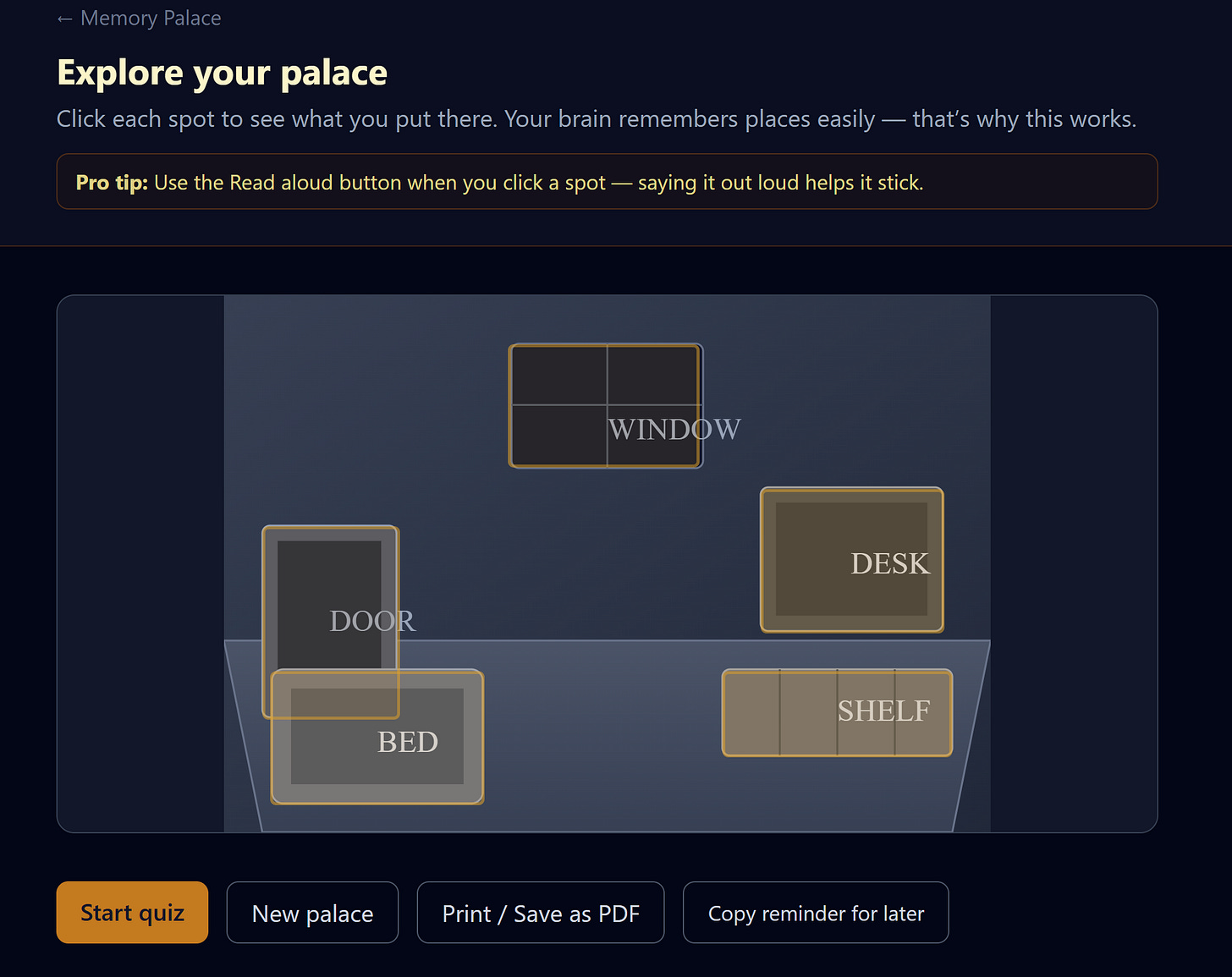
Kyle Sebeysten and Myles had real interesting submissions for Week3. Myles took the memory palace example and made it into the first memory palace construction app that I’ve ever seen-to this degree. It was quite something.
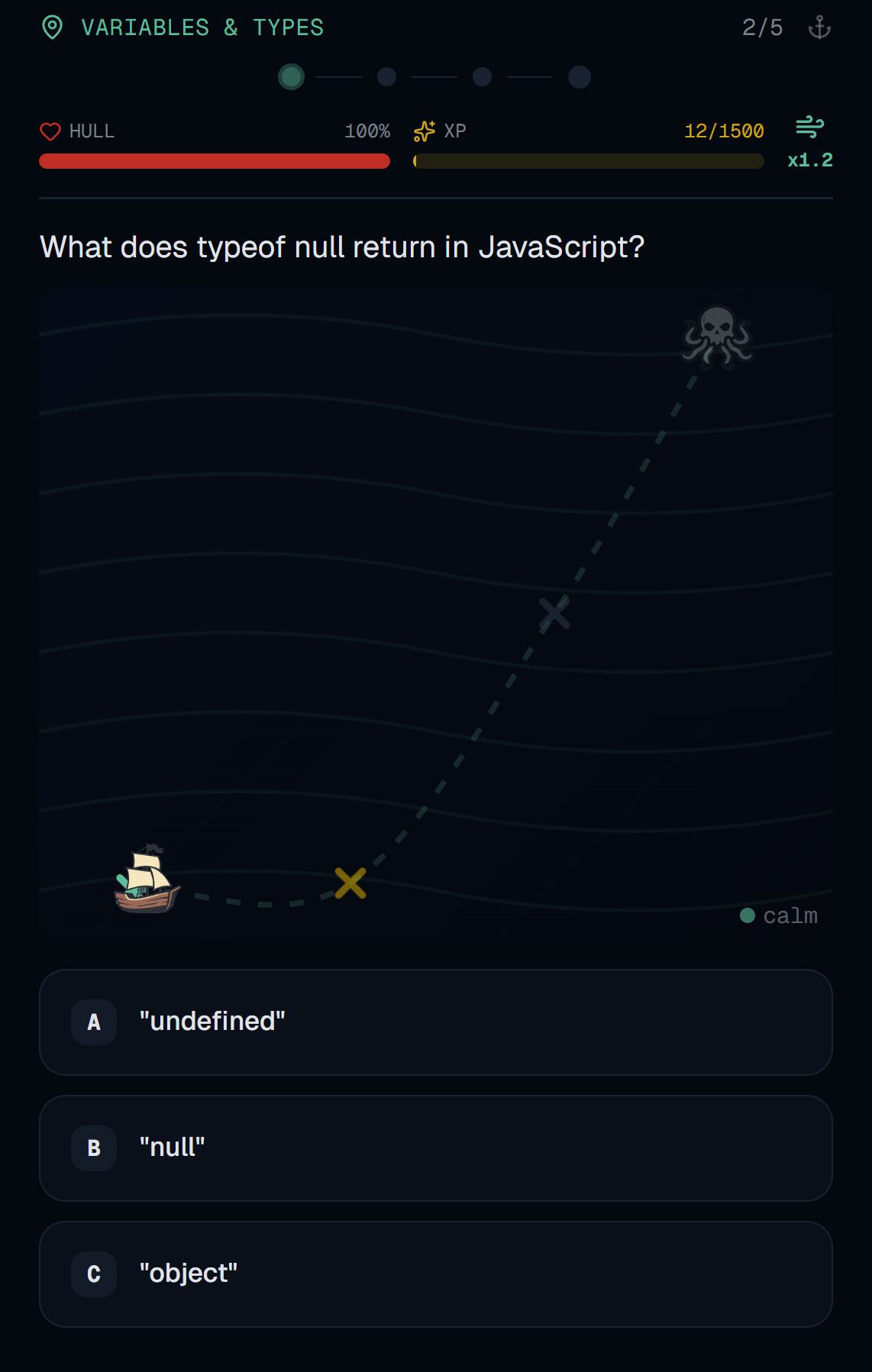
Kyle built on this idea for Link Level. This was also a really classy idea. What if you could just pop-in any article and get out of it an interactive video game-one that personalized the content to you, and created something that’d be fun and engaging?
And so when these submissions came thru I have a confession: I hadn’t even started week3 yet. I really wasn’t even sure what I was going to do. Interactive tutorials are a vast space of possibility. What would be interesting? The week ticked by and my days and evenings were jammed. Maybe I’d just come up with something along the way.
Unexpected Connections
Sometimes inspiration happens in unusual ways. You have to be looking for it.
Consider the wise words from my kids, “Get good, Dad.” That usually means skill stack. Let’s talk about product management skills. Just, in a different way.
Consider:
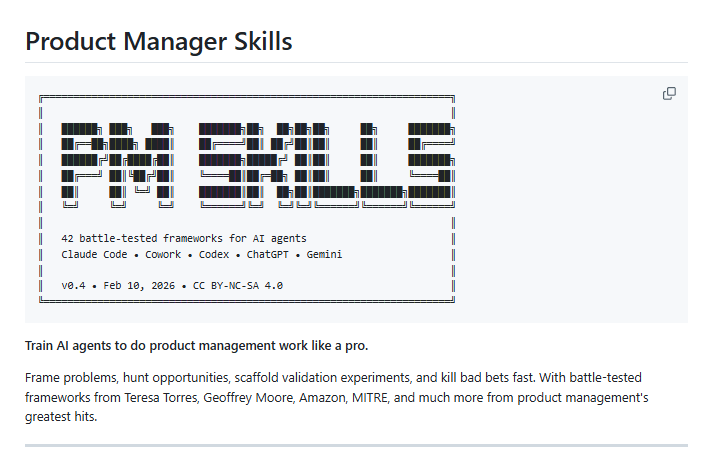
I came upon this product management skills repo. The source repository had more about product management written down than I’ve ever seen written down in one place about product management.
What did I do? Well, I ended up forking it for reasons I explain in the YouTube Overview video. The repo was interesting to me. It described the art of product management. I sent the repo fork to one of my agents. The Orchestrator created a team of 7 product management experts. That’s interesting. You can grab the repo here.
Phone Call
I’m blessed that my parents are still alive. My mother called. “You’re not going to believe what I did!”
“You got me,” I said pausing in my tracks as I was walking. If there was a camera on my face it would have been a sitcom moment. “You got me. I have no idea. What did you do?”
“I got a job!”
Phew, I thought to myself. My mind putting to rest an endless sea of possibilites. “Well, that’s exciting. It is springtime. Wait, did you-”
“It’s at the Garden Center!”
My mother: world championship expert at getting plants for her garden as cheap as possible. She should really have her own speaking tour on this. It’s impressive.
I smiled as I relayed over the phone, “Congratulations, Mom! I’m excited for you. You’ll have to send me photos of your garden.”
Gardens
Build enough software with AI and it feels like a “grown” thing. Even at scale, across a complex enterprise the build-out of software and it’s inherently complexity is like a living organism. If you’ve watched data flow thru complex platforms at scales, then you’ve seen the waves of data gently move thru layers of API servers and Enterprise Bus. It begins to resemble a kind of breathing, or heartbeat.
Vibe coding is like this. When you vibe software you’re laying out contextual rules for how the software is built. What’s the functional difference between building software over growing it? When I build software I stay attentive, work on each board and hammer in each nail. When I grow software I walk away and let the AI work. In fact, often for hours at a time.
The Idea

What if context is a seed and software is grown?
So the twist here was to not just borrow from what OpenAI set out in Harness Engineering. That is a great resource. In fact, I’ve shared it with a couple agents so they could implement their own harnesses. It’s very effective-but it was missing something.
I realized that maybe the project could contain seeds of expertise to shape the growth of the software. The way the coding tools work (and I explain this in more detail in the YouTube Overview video below) is that there is an explicit gathering phase where the coding assistant AI reviews your workspace for hints about what your project is. What if you hacked it with expertise about product management and the expertise required to deliver the product?
Would that work? I ran a test. It blew me away. I knew I could do it again, but was it… teachable? Was I doing something that wasn’t related to the context that was making the system… work?
As it happens, I was heading up to Iowa State University to pickup Evan Rhea so he could help me help someone we both knew that was moving. As an side, this isn’t a well known thing. In the midwest there are expectations based on what vehicle you down. If you own a truck, you know what I mean. I’m a truck owner. It’s just part of the contract of owning a truck. “Hey Eric, can you help us move on such-and-such date?” Of course, let me make a phone call.
“Hey Evan, what are you doing this weekend?”
Repeatability
Sometimes a one-trick pony is still better than no trick and no pony. In this case, there is no shortage of ponies or tricks.
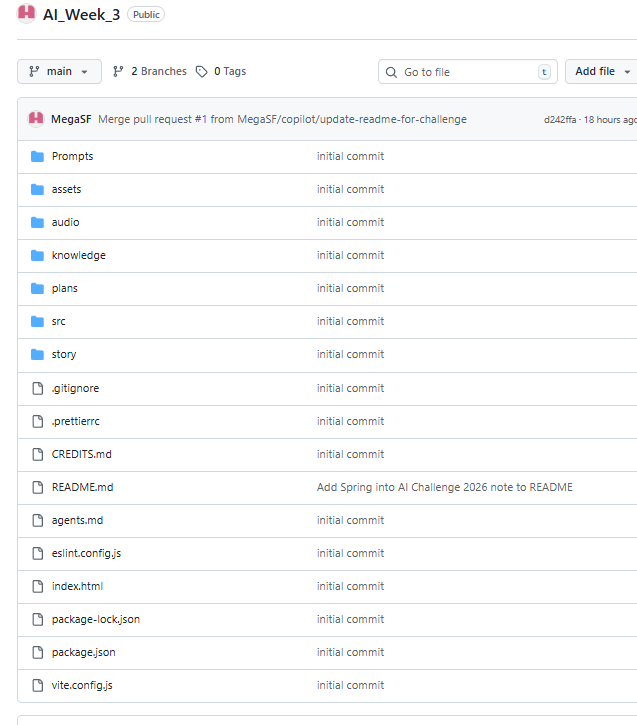
After picking Evan up from University we had a bit of a drive ahead of us. I took that as an opportunity to try out the system. The idea was boiled down to the essence:
Create the agents.md
Create the architecture.md
Load up the project with “context seeds” for the coding AI to find
Spin up a lot of agents and see what happens
We let the agents work while we did the move. When we came back, well, the code in the week3 repo is what was done. It worked, wow.
Seeding Context
The core difference was scale. I sprayed context like it was free and expected free code as a result. It was more like seeding a lawn than planting a tomato plant.
With the assistance of AI, I seeded a very large amount of specialized expertise. Expertise that covered every aspect of the project: art, sound, game design, marketing, product management, engineering. I wasn’t sure if the AI coding tools would make use of it-so I intentionally referenced the workspace folders in the prompts.
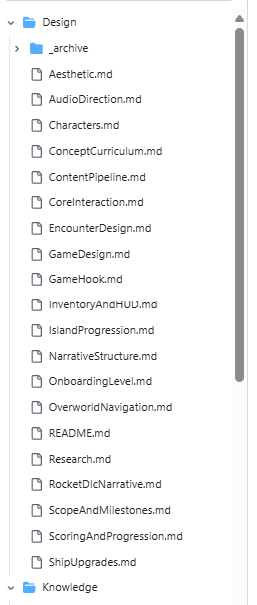
And it did.
You can check out the marketing landing page for the game here: https://stochastic-parrot.ericrhea.com/aboutthegame/characters.html keep in mind this entire project is less than 24 hours of work, total. I wasn’t even physically in the state next to my home computer to get this in-place.
There’s a lot more that could be said, but I’m out of time. Check out the video to see the app and I walk thru much of it.
Growing Software
So in this article you learned about the competition I’m in. You learned about how there’s a few of us competing with one another for glory, and some real medals. I ordered the medals from Amazon. They come in this week.
You also learned about this technique of growing software not just by having a prompt, but by spraying a field of contextual fertilizer down from which to grow out your idea. Perhaps it’s the Midwest in me, but the idea of the Latent Space as a fertile garden really works.
In the resources that follow you can watch the NotebookLM presentation on the technique, listen to me describe more specifics, or explore other links that I included you may want to click on. I can see your clicky finger is itching for a new link to click on.
Resources
Youtube Overview to Click On
Check out the deep dive here!
Github repo: https://github.com/arkbuilder/stochastic-parrot
NotebookLM video
NotebookLM does a walk thru of the technique. Here I provided it without commentary or context. If you’re looking to make sense of what the approach is at a glance, watch this.
Video summary:
The core problem it addresses is the developer dilemma: how to get AI to build an entire cohesive application from scratch, rather than just spitting out code snippets. The current result of using AI for code generation is often “chaos”, a tangled mess of functions and files lacking unified structure.
The solution proposed is knowledge seeding. This involves frontloading critical thinking by writing detailed markdown files that explain the architecture, software agents, and deployment plan before any code is written. This effectively creates the project’s “DNA” for the AI to follow.
The workflow involves three steps:
Document the knowledge, creating the master plan.
Feed the plan to the AI to generate the project skeleton.
The human developer refines, builds, and adds complex logic on top of this foundation.
This approach signifies a fundamental shift from treating AI as a simple code completion tool to a collaborator that needs to be educated on the project’s vision. This leads to better-structured applications and redefines the developer’s role to high-level architecture and teaching. The video concludes by suggesting that the future of programming might look less like lines of code and more like a well-written lesson plan.
Thanks for reading! Subscribe for free to receive new posts and support my work.