
Fly around the world in this submission
Watch the walkthrough, try the live dashboard, or inspect the source notes behind Kyle’s build.
Why this one caught my attention
When I first watched Kyle’s submission video, I rewatched it. The clever move was not only that he used AI tools to build the entry; it was that he used AI to generate textures, tune visuals, and create supporting tools that helped him build the entry itself.
That is the part worth paying attention to. SkyStats is not just a dashboard. It is a small example of AI-assisted creative tooling: use the model to make the next piece of the work easier, then use that artifact to keep moving.
What Kyle built
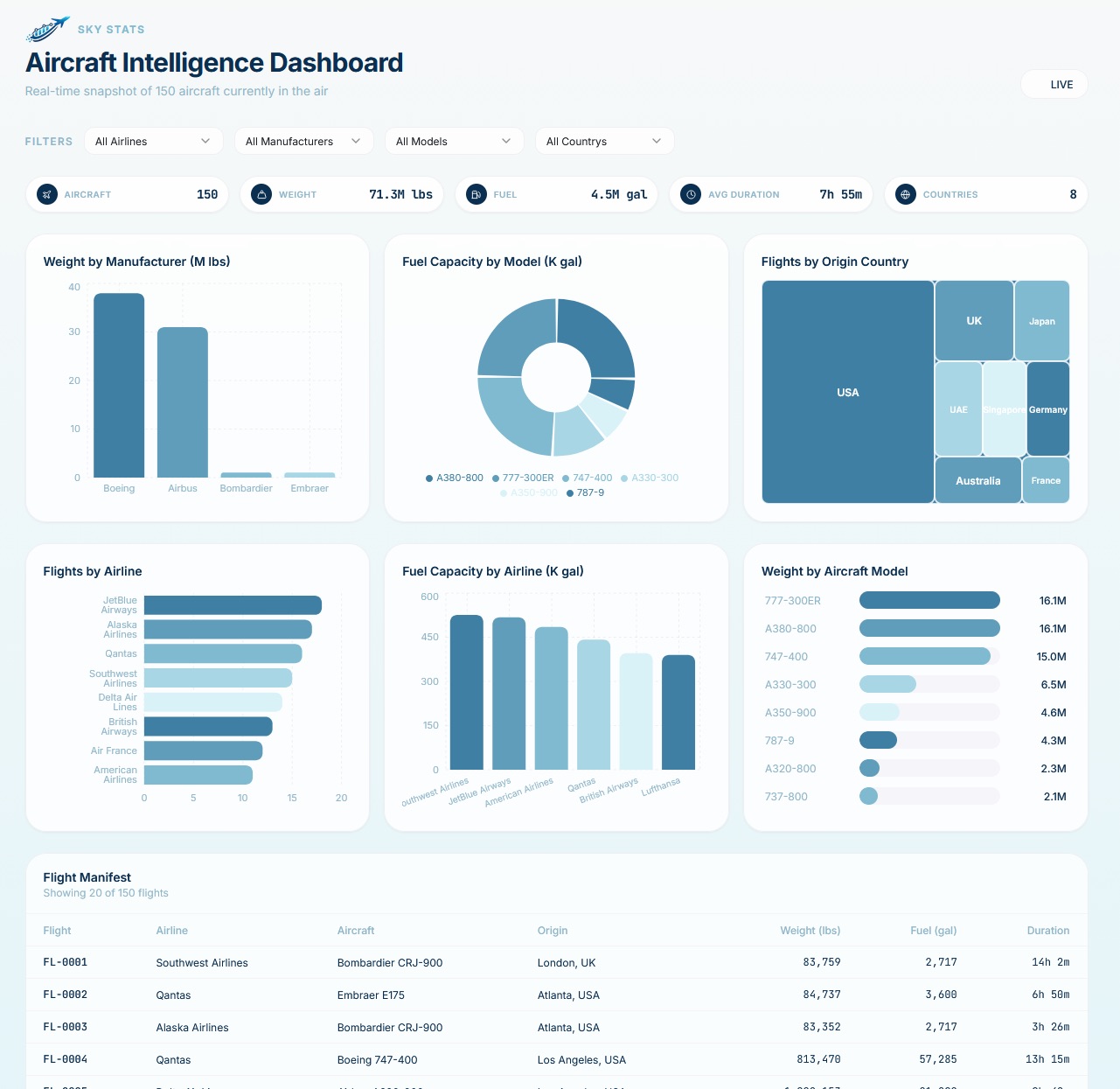
SkyStats is an interactive aircraft dashboard for Week 1’s Data Visualization, Dashboards, and Interactivity theme. The core question is simple and memorable: how much airplane weight is in the air instead of sitting on the earth?
- Aircraft data: randomly generated flight scenarios paired with real aircraft statistics pulled with ChatGPT, including weight by manufacturer and model.
- Interactive slicing: filters for manufacturer, airline, and country, with charts and tables that make the fake manifest feel like a BI tool.
- 3D presentation: a custom-textured Three.js globe with aircraft models flying around it, generated and iterated with AI assistance.
- Natural-language workflow: Kyle reports writing zero code by hand, leaning on Vercel V0, ChatGPT, and prompt-driven iteration.
The workflow signal
Kyle comes from cloud architecture, backend engineering, ETLs, data pipelines, and infrastructure. For this competition he deliberately stepped outside that lane and chased the kind of visually rich web experience many of us associate with the Flash era.
The interesting part is how quickly the workflow crossed domains. Vercel V0 generated the React app. ChatGPT helped with aircraft statistics, texture generation, and Three.js material experiments. The prompts were not just “make me an app”; they were specific creative direction: sky-colored interfaces, moving jets, keyed-out oceans, lighting tweaks, and aircraft paths that move frame by frame rather than sitting in a geosynchronous orbit.
“I’ve been pushing to learn AI more. It’s impossible to keep up with. The tools change almost daily. My friend Eric Rhea started Spring Into AI, a 5-week competition where we develop and ship in public. Perfection is a distraction. Delivering is the goal.”
— Kyle Sebestyen, from his Spring into AI note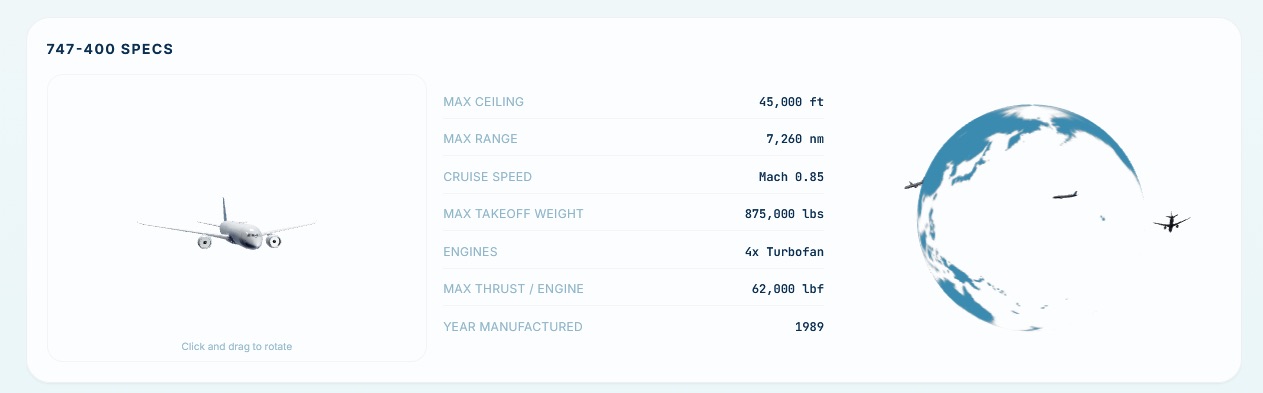
Why the submission works
The airplanes flying around the globe are a small detail, but they make the whole project feel considered. That extra visual layer turns a normal dashboard into a demo people remember.
That is a useful Spring into AI lesson: the best submissions do not need to be perfect or enormous. They need a clear idea, a visible artifact, a public trail, and one or two moments that show taste. SkyStats has all four.
Preserved links
- Original write-up: Advisory Hour source post
- Video demo: SkyStats on YouTube
- Live app: v0-aircraft-data-dashboard.vercel.app
- Source repository: seabass223/v0-aircraft-data-dashboard README
- Kyle on LinkedIn: SkyStats activity post
- Kyle on Substack: Follow Kyle Sebestyen
Source and subscribe note
This page is the first-party EricRhea.com version of the SkyStats Spring into AI write-up. The original publication remains available on Advisory Hour, and the broader competition feed lives there too.
Read the source post or subscribe to Advisory Hour for more competition entries.