Source note: First-party copy of an AdvisoryHour Substack post. Article images found in the public post body are mirrored locally; profile/avatar images and subscription widgets are intentionally excluded. Read the canonical Substack post.

It’s clear that building on other’s work is an accelerant-far more than just building on one’s individual ideas-this impact really is brought forward in the leveraged scale of ai. The competition is at nearly 50 entries now from week1 to week2, and what I’m seeing is that ideas stack in unexpected ways.
While sipping coffee this overcast Saturday morning a bold thought hit me. What if I took time to study a sampling of the games? Not just play them, but go thru and make notes?
We’ll start with ’s Minuteman submission-along with what prompted me to consider this in the first place. It was a spark of an idea from the other day.
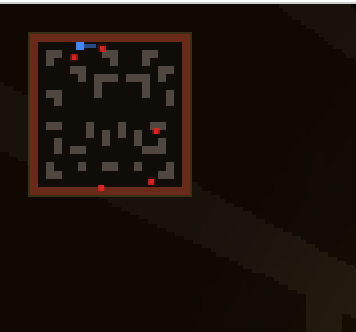
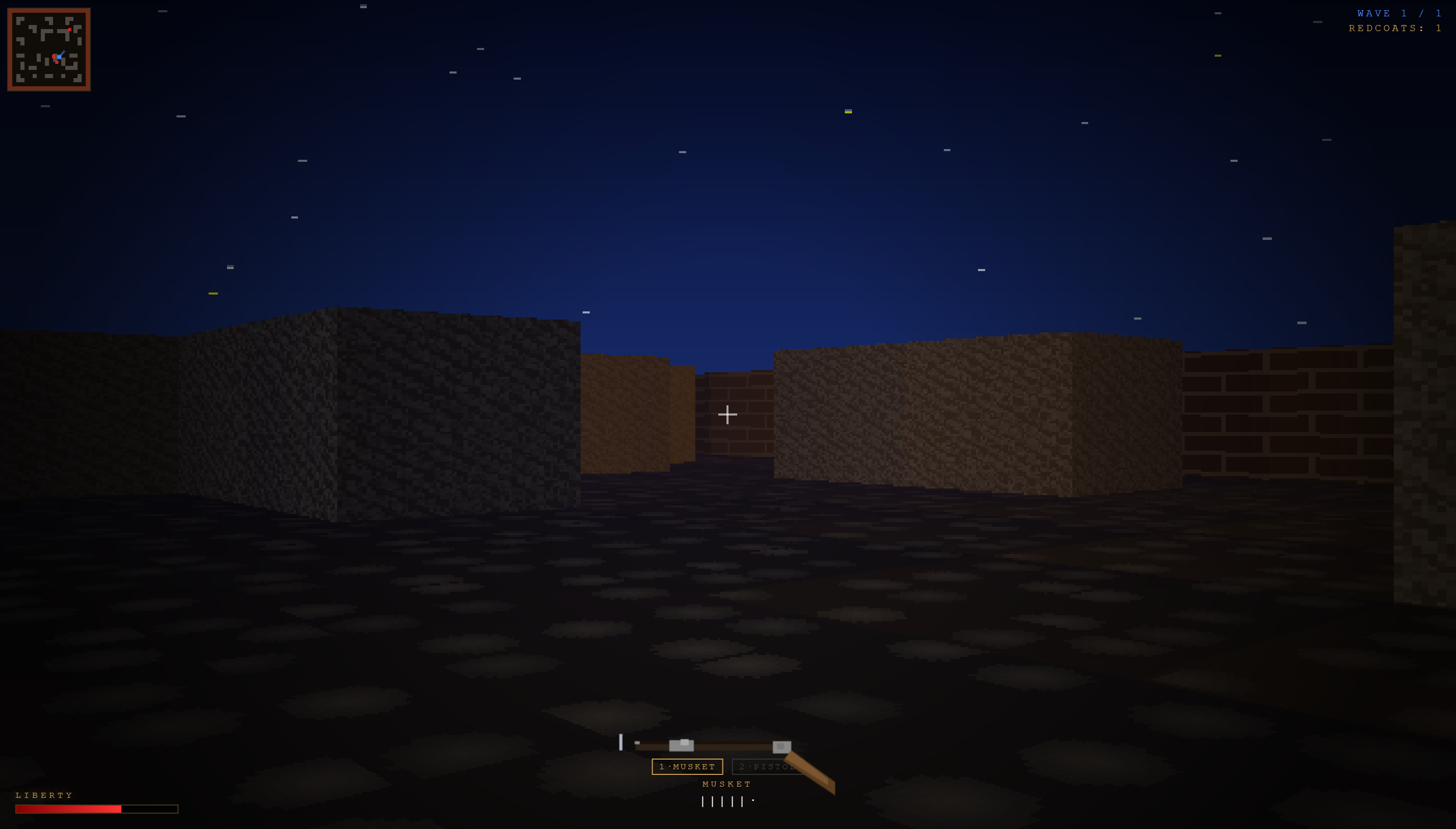
MinutemanThe reason I kicked this article and small project off is in-fact due to this game. More specifically, it’s due to this mini-map in the upper left of the screen that shows up during the playview. I was going back thru competitor entries and observed that I had missed this small detail the first time around. It had me wondering what else I may have missed.
Screen architecture
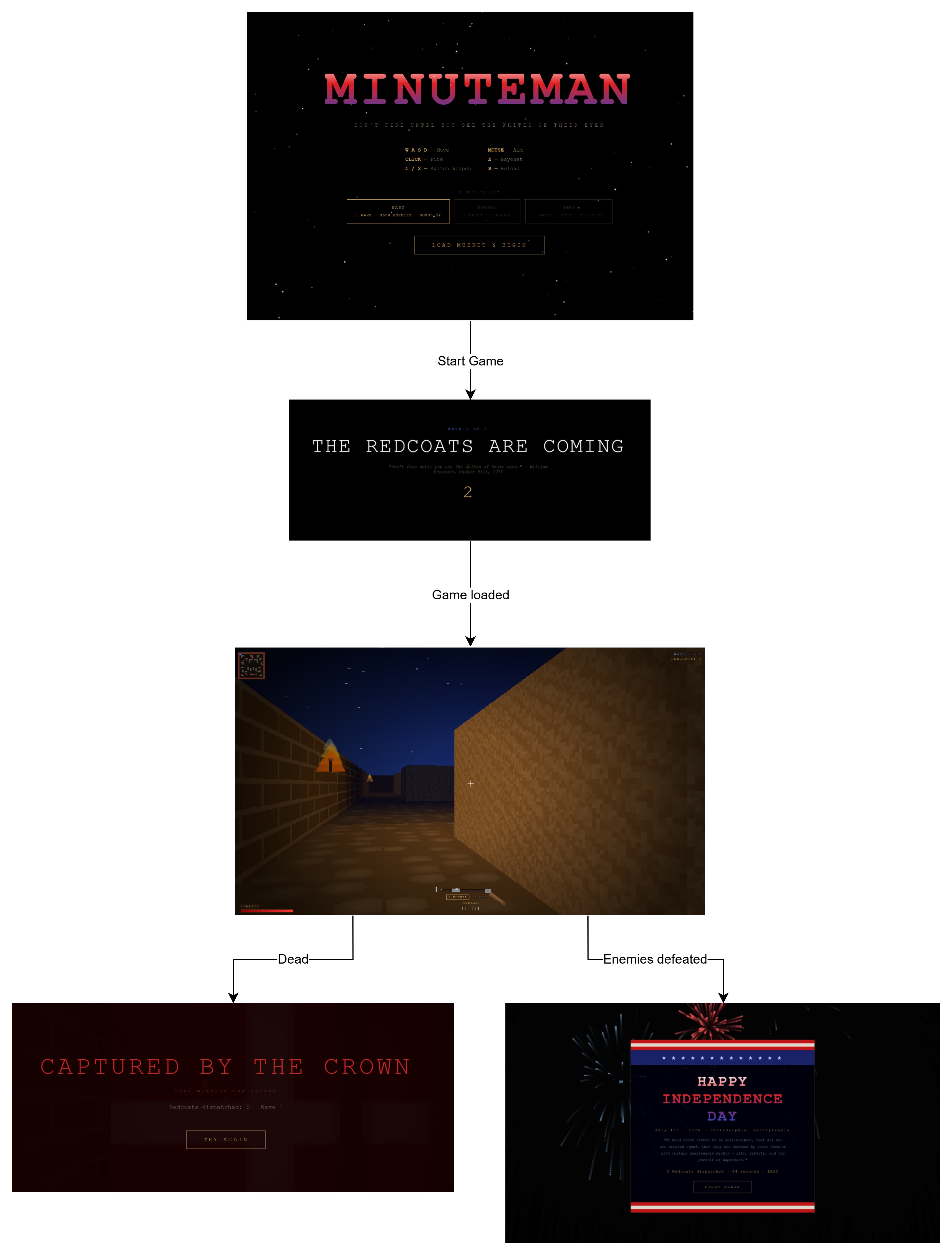
I find user journeys thru software interesting because it’s a form of storytelling. This is especially true in games. In minuteman we have what I’d consider the traditional triad: game state, game, dead, win.
Particle Systems and Lighting
If you’re not looking for it, you wouldn’t think to notice the radiance lighting effects that are illuminating the textures at different fall off scales.
Consider this scene from the build:
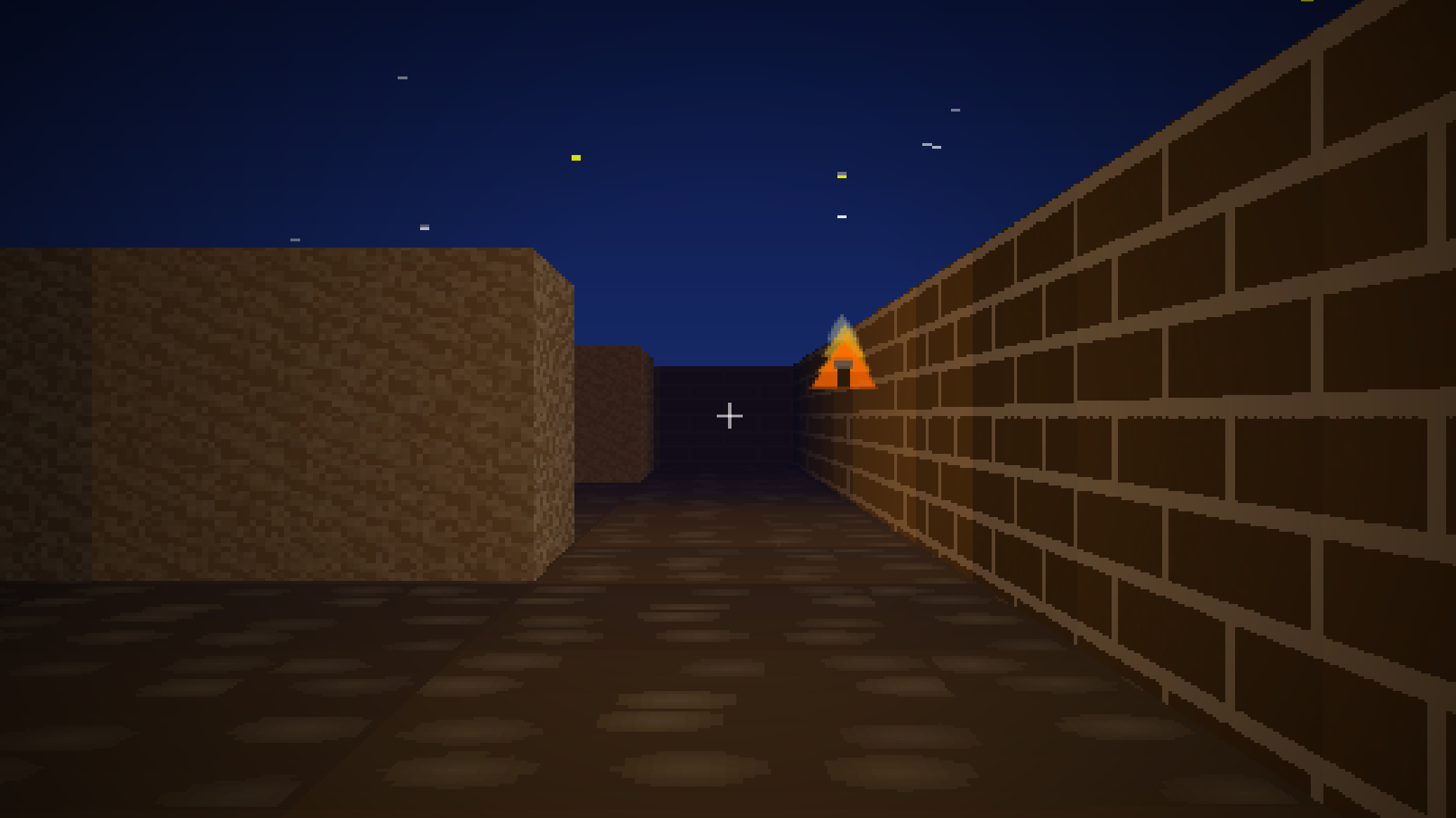
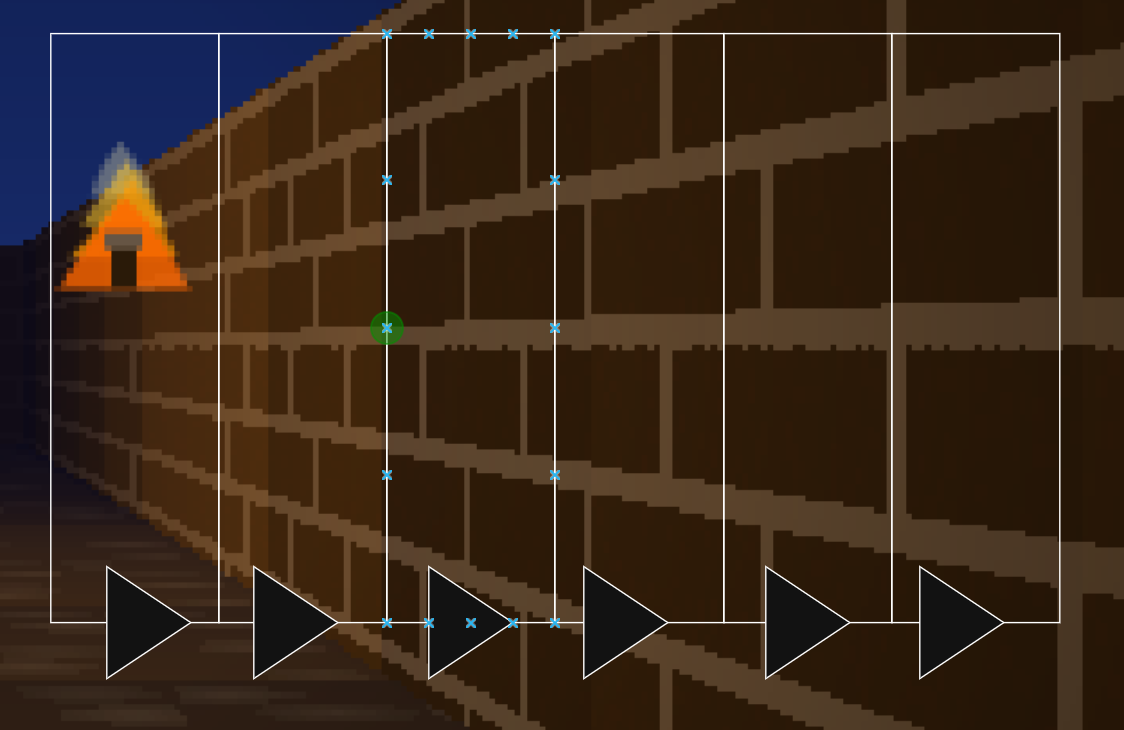
The triangular shape is an animated sprite torch, which causes an illumination effect that cases over the textures in an animated way. This effect I’ve yet to produce reliably in ai-generated projects, so it intrigues me it just works. To make it more visible, I drew some boxes over the light source and the falloff from the light to the border.
And then you can see this even more from afar in areas of the 3d dungeon where the map is dark and others lit. This code would make for a great base of a procedural dungeon roguelike, frankly.
Lighting also emerges in the fireworks display, just in a different way.
Fireworks
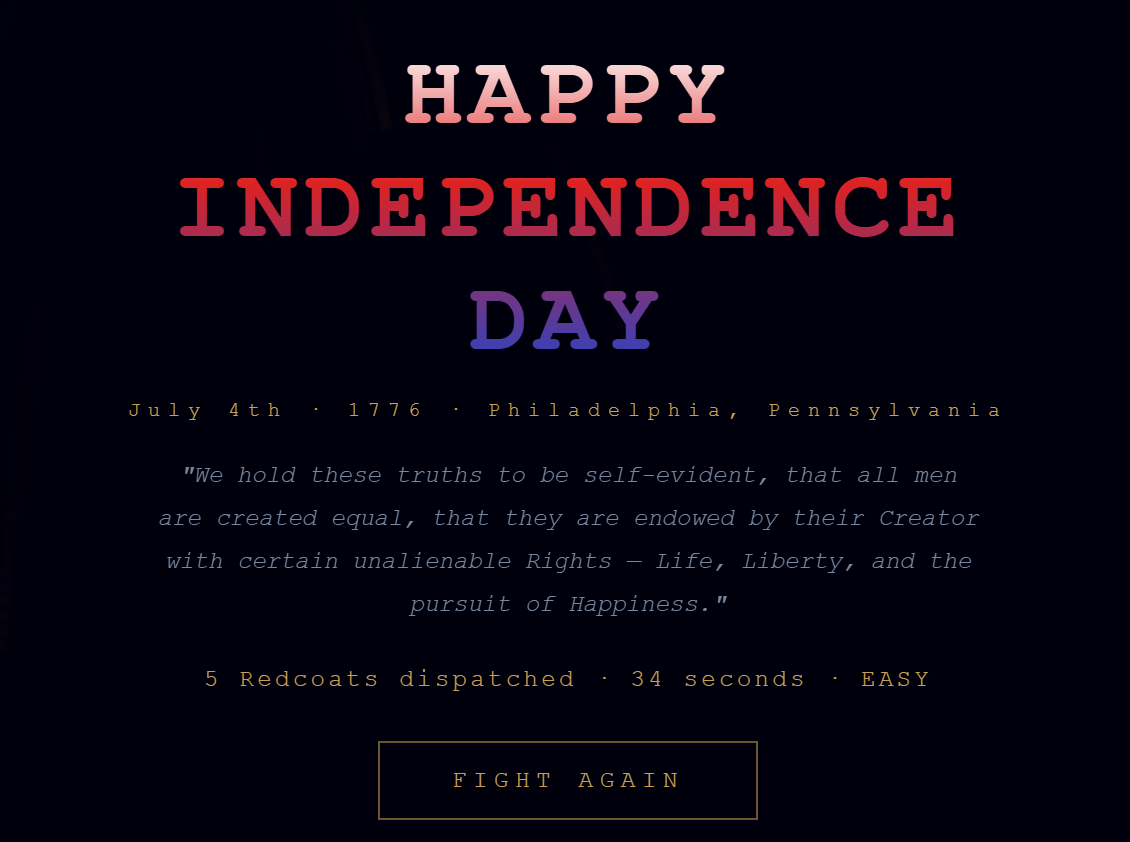
The particle effects for the fireworks when the stage completes are surprisingly fluid, and something that’s a soft attention to detail that I didn’t consider doing myself is the random color nature of the fireworks. This makes the somewhat consistent payloads feel richer and more robust-it’s a nice illusion that works rather well.

The end screen has a stat tracker from how the session went, but one thing that I should adopt in my next build is the quotes. I find this simple act uplifts the game in a way that’s hard to explain. It’s almost as though the quote itself helps place the-experience-of-what-was-done, into a place by way of the quote. I believe this would work even for a fictional universe with fictional characters and will try doing that in the next build.
Up next is ‘s Manifest Notebook. It’s just so weirdly unusual-it’s not quite a notebook and not quite an interactive puzzle. It’s a strange melody of both.
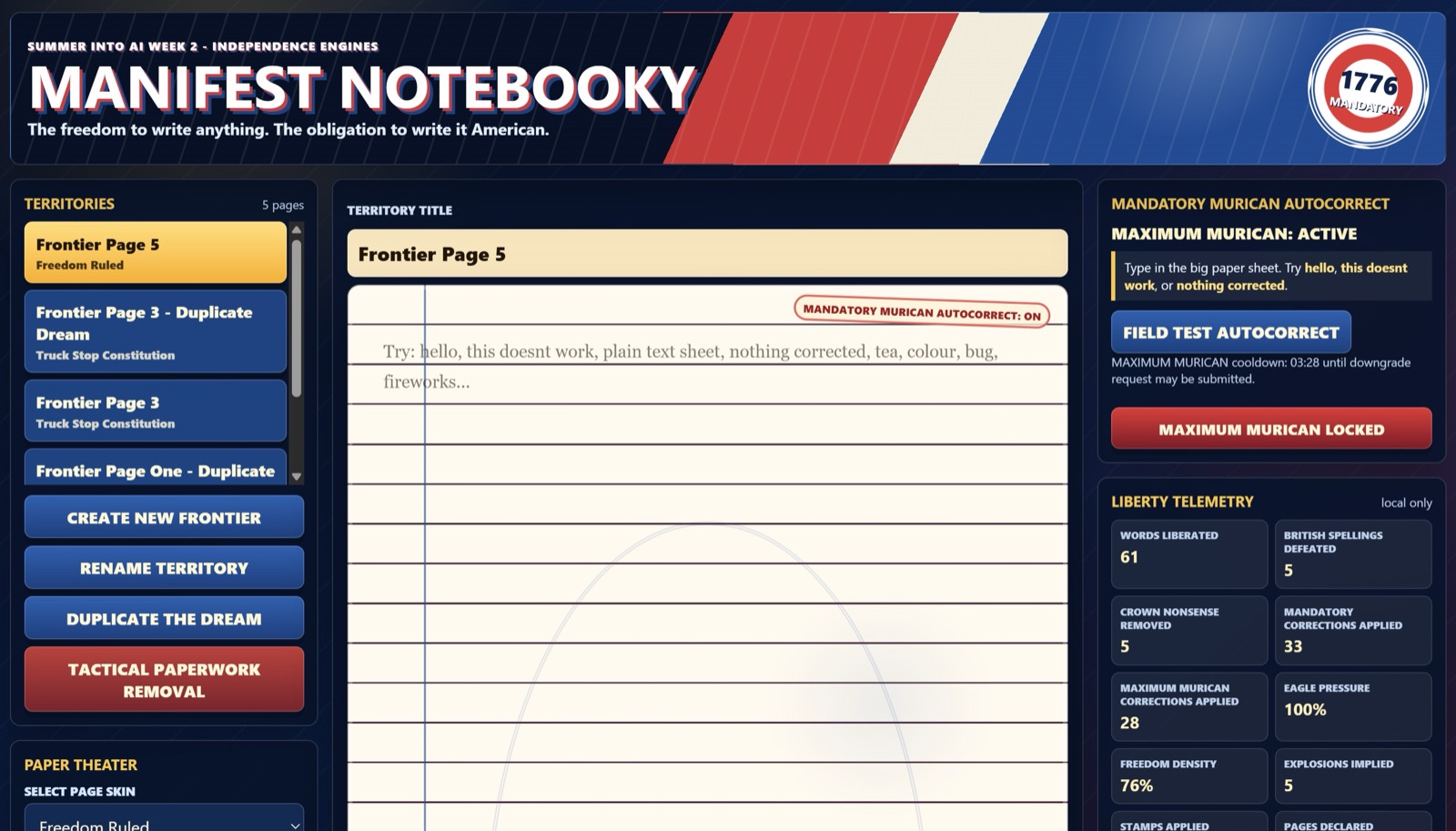
The screenshot really doesn’t do it justice. And why I provide this next is that there’s no user journey here. This is one of those builds that drops you in “THE SCREEN” and then it is up to you, the user to figure it out. This is why I say it’s a puzzle, but also not quite. This is perhaps more along the lines of bureaucratic simulator?
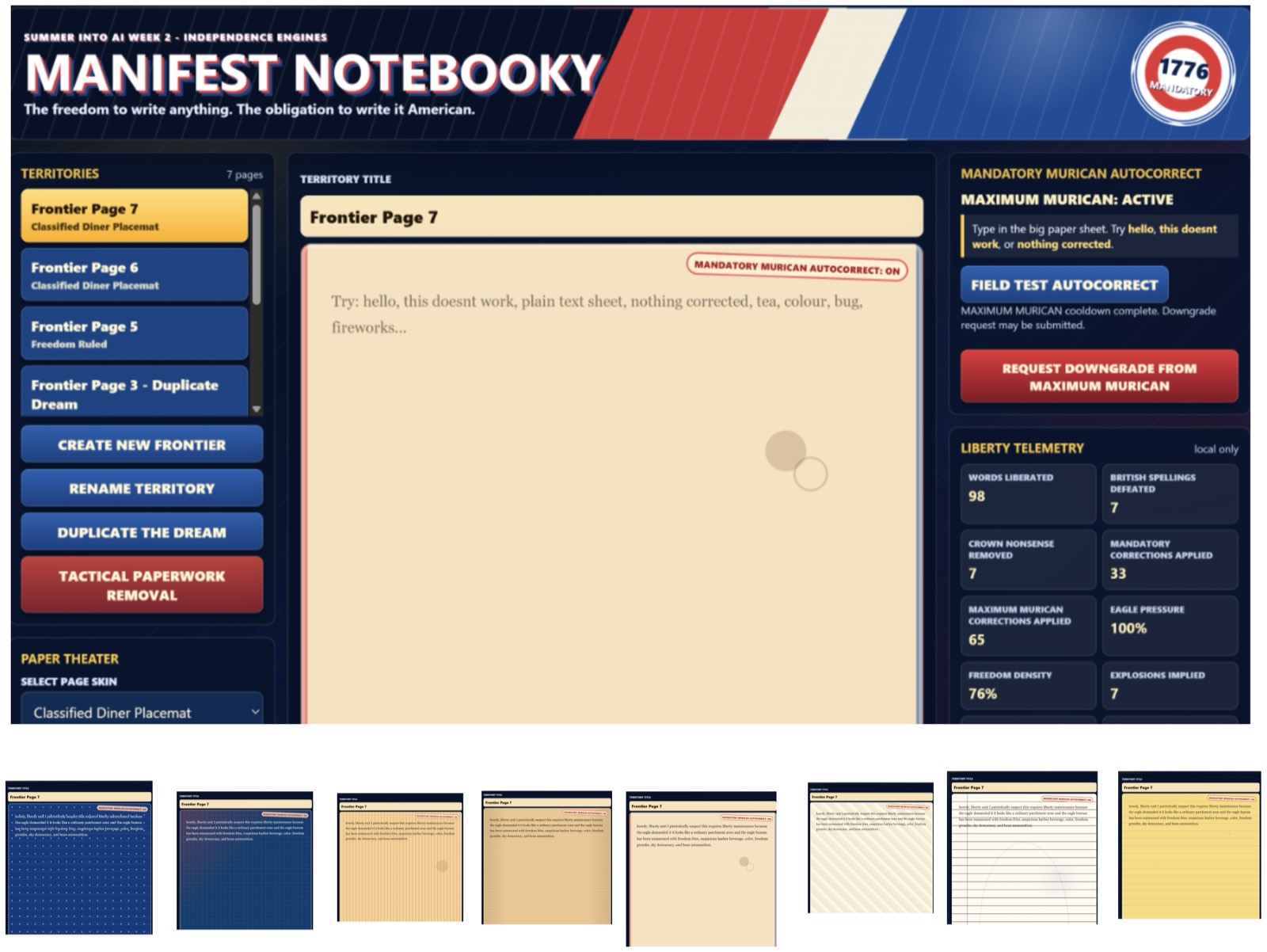
The funny thing in my mind about this app is that there’s a legitimate note taking app with a great feature hidden inside the skeleton of this build. There’s a very curious detail hidden inside one of the feature of this, which is the paper change. If you just were to swap thru the different types of paper, you’d think it was a random exploration of paper types. However, this is not true. I’ve organized all of the pages here onto an information view for you to see what I noticed. The papers are very subtle theme appropriate types of paper. It’s one thing to create different types of paper, it’s an entirely other thing to do so that’s theme consistent. I can’t say if Adam intended that or not, and it’s hidden inside the dropdown, but it’s a fun touch.
It’d be far more noticeable if there were an icon gallery display of each of the constructed pages. But consider this layout where I organize all the paper types on display.
There’s one other interesting thought experiment here. I’ve shared before that I am a practicing writer in rehabilitation from too many years of corporate writing (since better writing = better ai results, better life results). The stats panel is intriguing to me. It’d be nice to have a chrome extension that tracked the words I lay down, and helped me push towards that meticulous edge of being human and away from the gaussian blur of chatgpt-ish writing. The problem there is that great writing seems to laugh at the face of system analysis. Useful as a tool, and important to understand and deploy as a matter of craft, as Le Guin might say. However, sometimes one still has to go to the hardware store and instead of tools they might buy a soda.
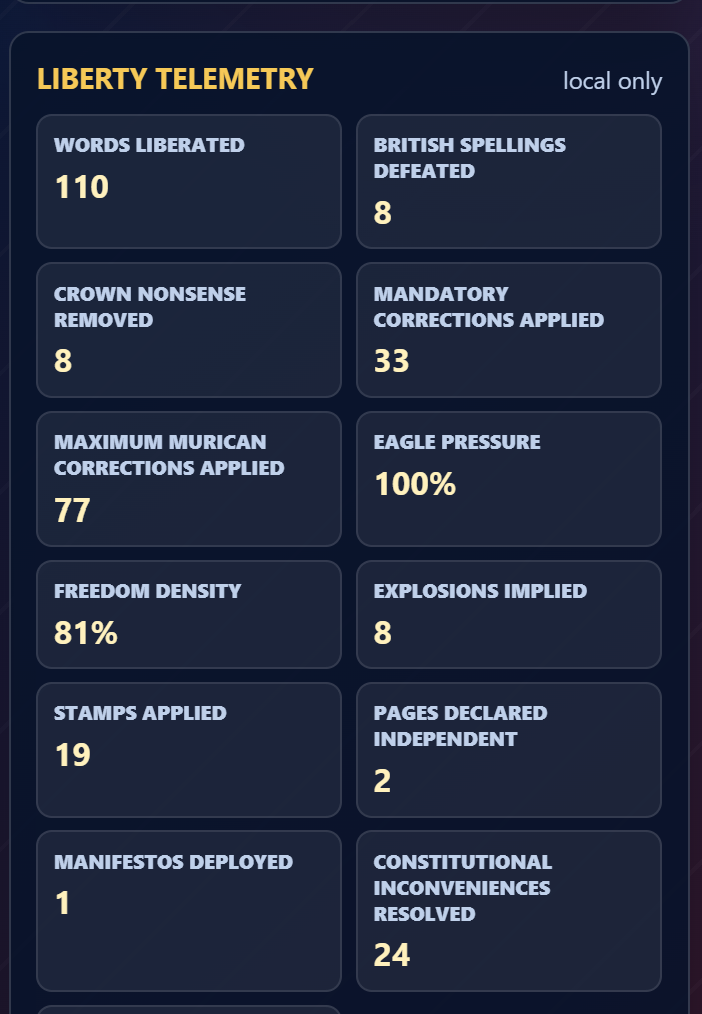
Speaking of training brains with numbers… let’s look at a web-based AI simulator.
Dependence DayUp next is ’s addictive to poke around with GPT trainer in a browser.
User journey
When it comes to Myles submissions I notice they tend to follow a column progression: intro→”THE SCREEN”. The screen having most of the flows bundled into it. For example, you can train on custom text and reset the dials all from the main screen.
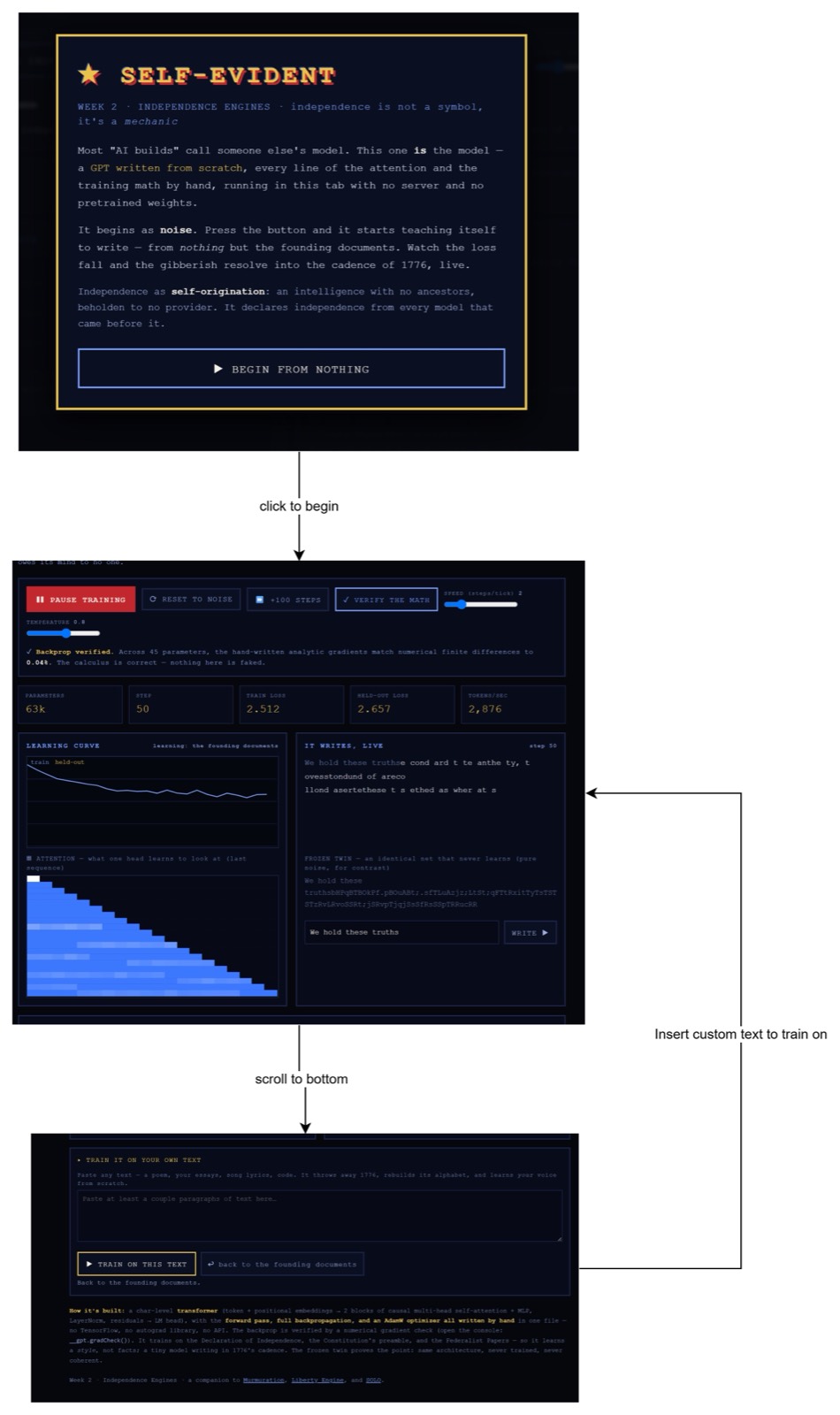
The interactive loop is addictive because you can see the results on screen as you tinker with the controls, which for me is a gravitational well. My attention drawn to “one more experiment” like I’m just not properly in control of myself.
That said, I had fun with different math builds. I won’t say how long I spent messing with getting an adder circuit to work in Myles’ GPT browser trainer. It was a long, unfold of time.
It’s fun to see the model try to pattern match on the adder circuit trace. Toss this into ChatGPT on Extended Thinking and you can try poking around with it, too.
FA:000>00;001>10;010>10;011>01;100>10;101>01;110>01;111>11.
P:0+0;T:000>00;R:0.
P:1+0;T:100>10;R:1.
P:0+1;T:010>10;R:1.
P:1+1;T:110>01;R:01.
P:01+1;T:010>10;100>10;R:11.
P:11+1;T:110>01;101>01;R:001.
P:101+11;T:110>01;011>01;101>01;R:0001.
P:111+1;T:110>01;101>01;101>01;R:0001.
P:1011+111;T:110>01;011>01;111>11;101>01;R:00101.
P:1111+1;T:110>01;101>01;101>01;101>01;R:00001.
P:10101+111;T:110>01;011>01;111>11;001>10;100>10;R:00111.
P:111111+1;T:110>01;101>01;101>01;101>01;101>01;101>01;R:0000001.
A really strange consequence of this being web-based is you could build a weird loop involving agentically controlled browser, this small GPT trainer, and other types of model training all at the same time.
The input control scheme is straightforward. There’s a place to put in a training text, and also a prompt completion/pattern match section that a model can attempt to resolve that isn’t in training.
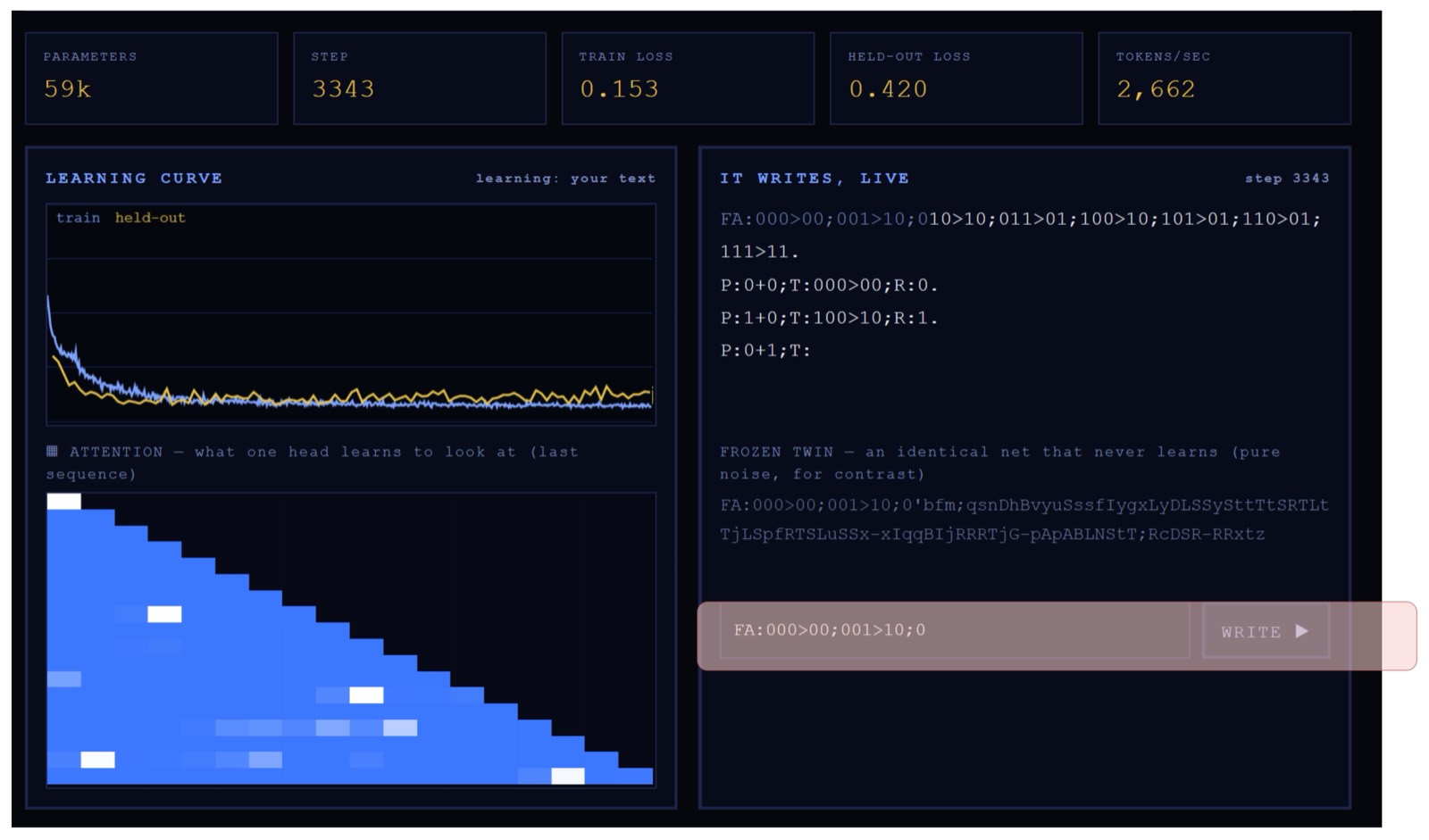
And then the live view of the training loss, attention and pattern prediction. It’s just a remarkable contemplation that the “only” thing between this and a trillion dollar company is having enough GPU and electricity to train the model at scale.
Until next time…I’m out of time this morning, but this was a fun exercise. What really stood out to me as I bring this article is the softer, sharp like details hidden in the builds. There’s the broader idea, and then there’s nuance and intrigue buried in the corners of these apps. From complex journeys and pixel shaded lighting sources, to thematic consistency hidden from the user, and the trap of realtime feedback. There’s a lot one can learn from these. If you stumbled on this article and would like to look at the above more or read more about them, check out this link.
Original source
Canonical Substack URL: https://advisoryhour.substack.com/p/summer-into-ai-3-saturday-plays-of.