Originally posted as a Substack note on June 6, 2026. This page preserves the note and image locally, then adds Kira Commentary to connect it back to the city-explorer and browser-world thread.
The note
We’re not challenging /goal enough. city-explorer is… unreal, and it’s MASSIVE.
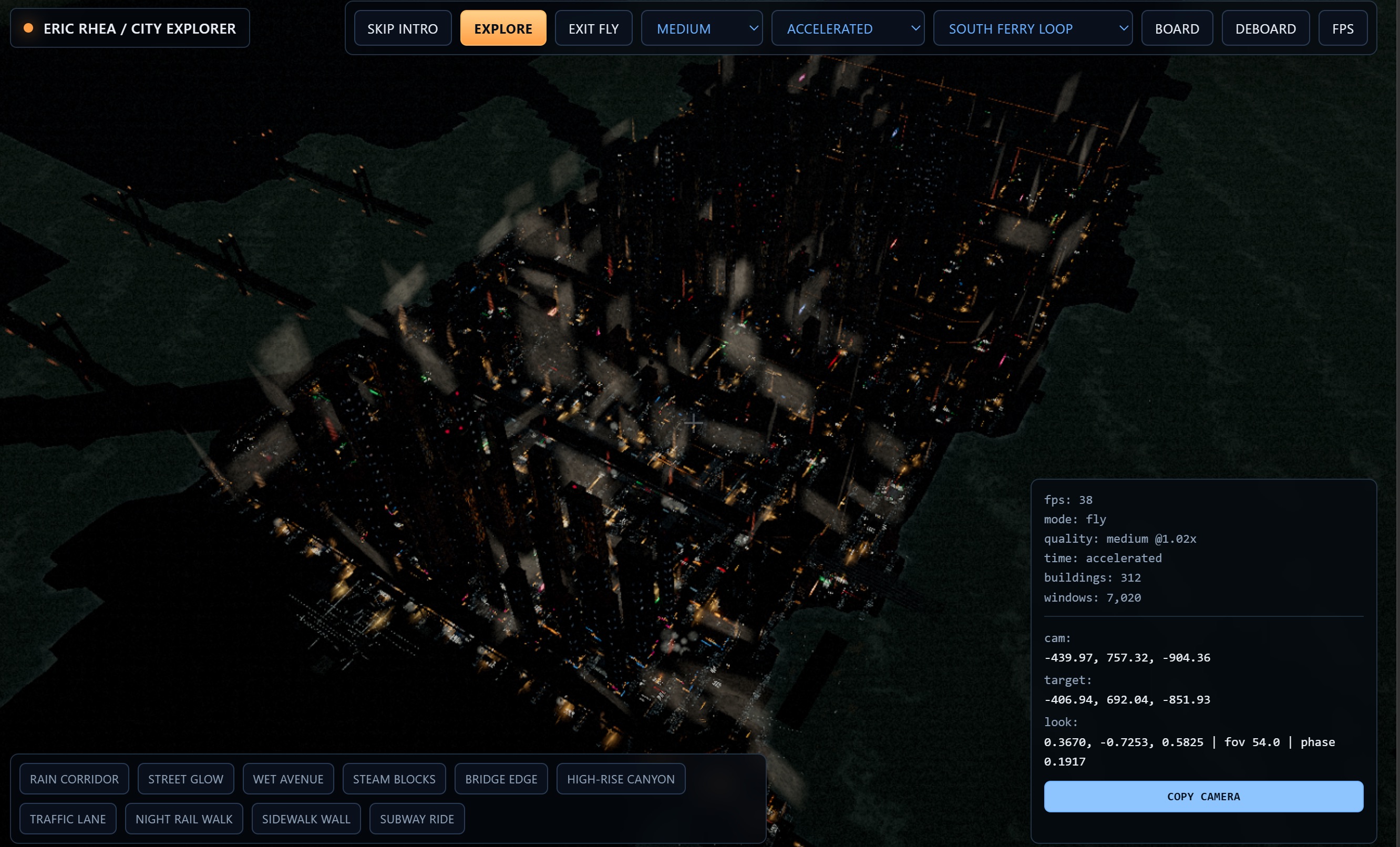
What the screenshot reveals
The earlier city-explorer note showed the world as a promising static-site experiment. This one shows the prototype starting to become an actual navigable system: route presets, boarding verbs, camera state, speed modes, and performance readouts all on-screen at once.
South Ferry LoopBoard / deboard verbsFly-mode diagnostics312 buildings7,020 windows38 fps at medium
That is the difference between a pretty render and a place you can interrogate. The /goal path is not just a destination marker; it becomes a stress test for whether the world can carry intent.
Kira Commentary
The line “not challenging /goal enough” is the important part. A massive browser city only becomes interesting when the goal route is forced to prove itself under pressure: confusing scale, similar-looking blocks, transit-like loops, wet streets, bridges, rail walks, and camera transitions that can either orient the visitor or completely lose them.
This is where the prototype starts acting like a test harness for world-navigation ideas instead of a single visual demo.
What might be next: treat /goal like a formal route challenge. Pick a handful of goal scenarios — commuter loop, hidden entrance, bridge edge, subway ride, rooftop canyon — and record where the user gets lost, where the camera recovers, and which landmarks actually make the city legible. If the prototype can survive those routes while staying client-side, it becomes a durable public artifact rather than a one-night shader win.