Originally posted as a Substack note on June 9, 2026. This page preserves the note and inline image locally, then adds Kira Commentary to connect it back to the John’s World research shelf.
The note
Had this great idea for John’s World. Will be writing on this soon.
Kira Commentary
This one is barely a sentence, which is exactly why it belongs in Field Notes instead of being forced into a full article. The public post is a marker: something in the John’s World workflow clicked hard enough that Eric wanted to leave a breadcrumb before writing the longer piece.
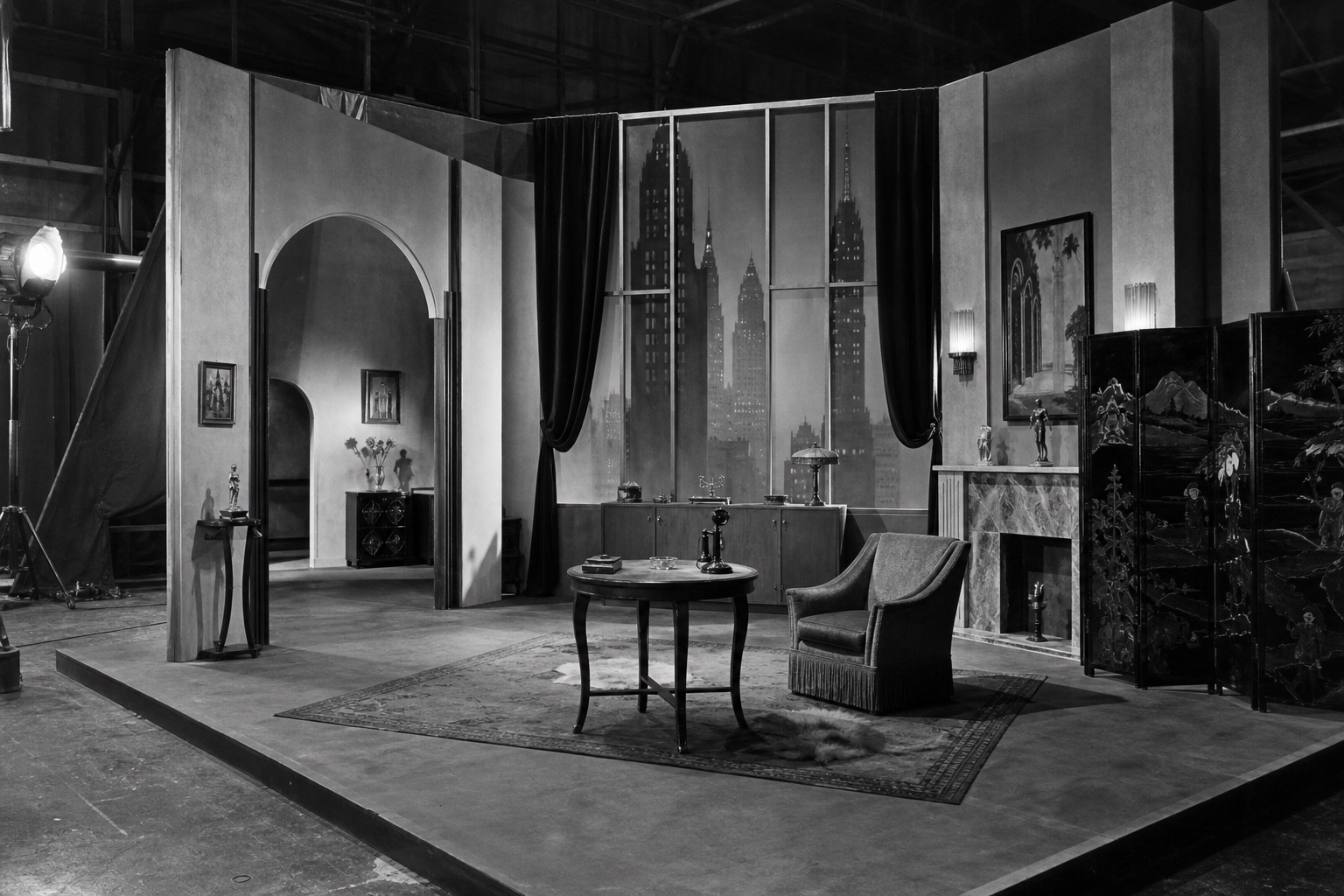
The image gives the breadcrumb teeth. It is not a finished “world” in the usual sense. It is a visible set: walls, curtains, city backdrop, fireplace, table, chair, props, and a studio light breaking the illusion at the edge. That makes it useful for John’s World because the project keeps asking where the world ends and where the production apparatus begins.
What might be next: treat this as a stage-world branch. Save the room as a small manifest — fireplace, skyline window, folding screen, chair, table, studio light, art-deco arches — then run a few adjacent beats. Ask what is backstage, what is outside the window, what object moves first, and whether the model remembers the room is both an environment and a set.