- Original campaign
- 30 stages
- Retro campaign
- 32 stages
- Character lab
- 27 entries
- Runtime
- Three.js r185
The television contains two campaigns
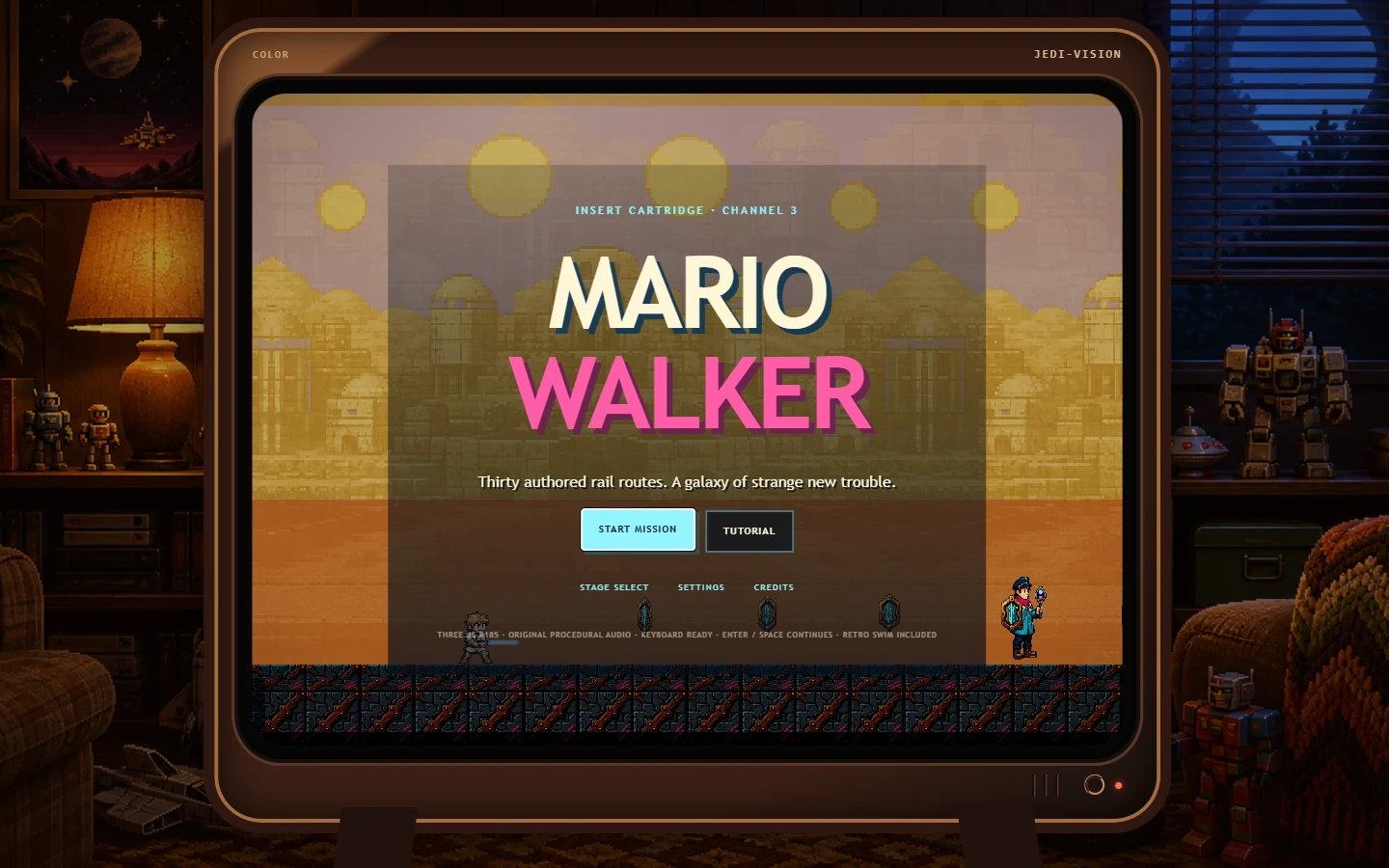
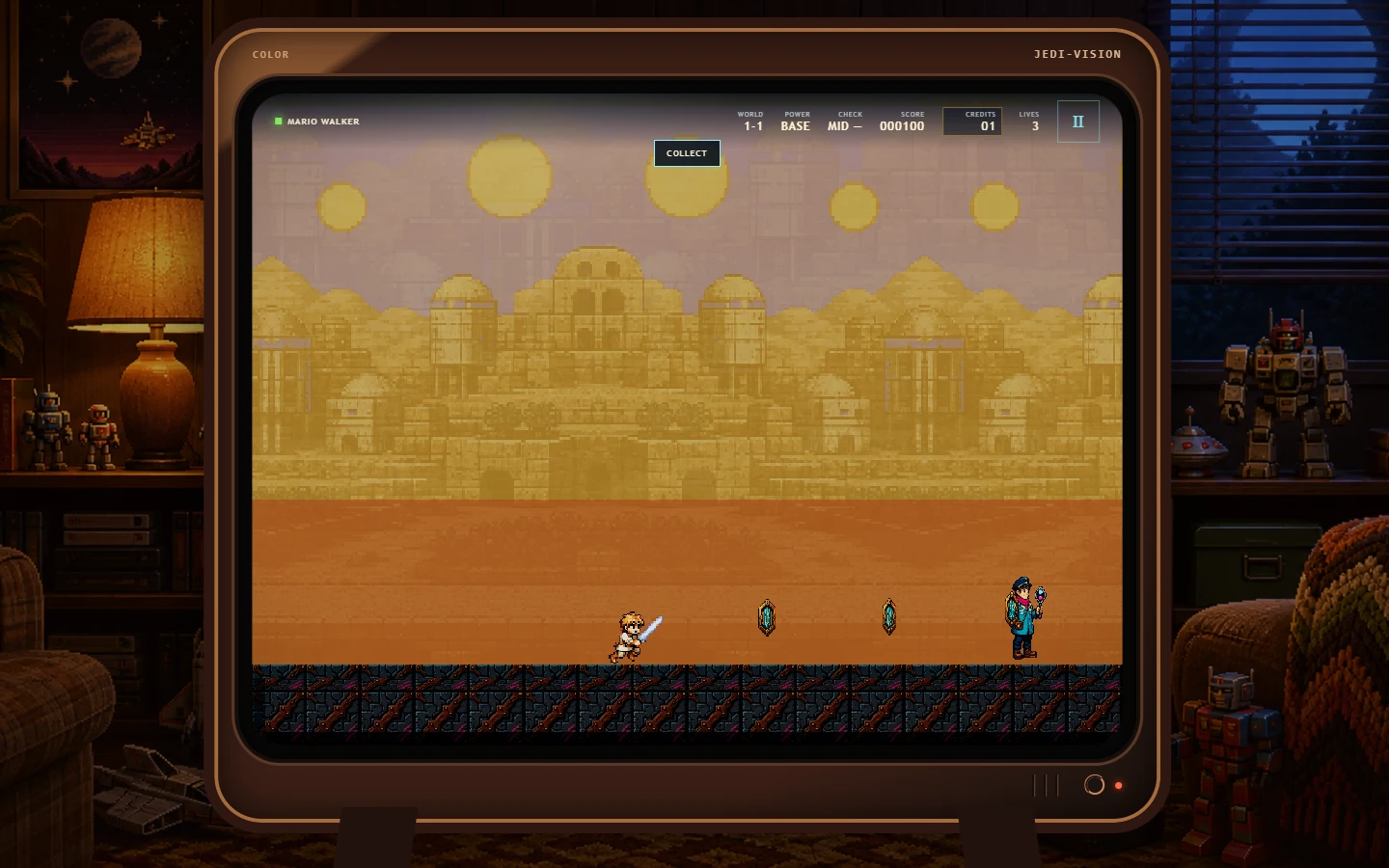
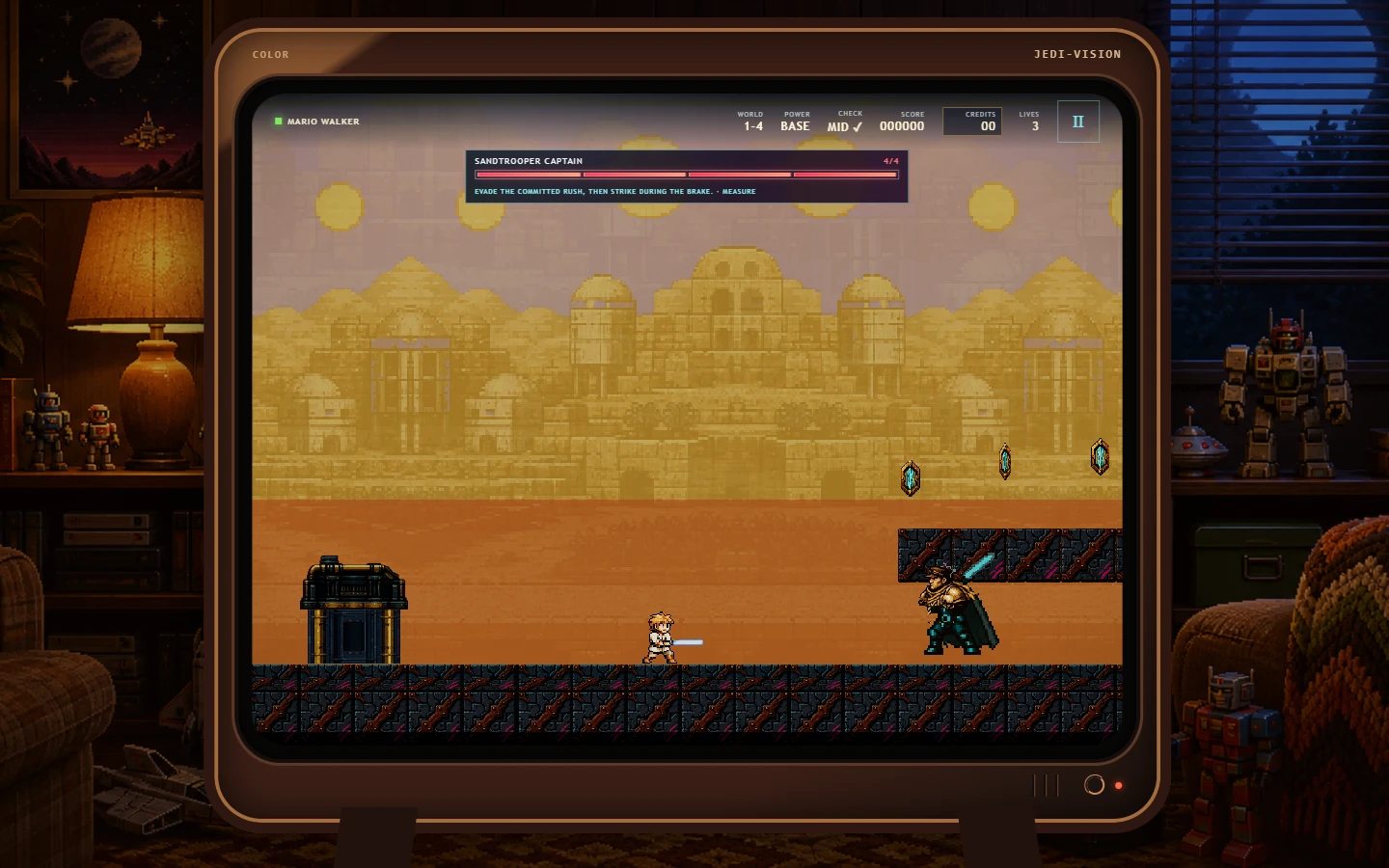
Mario Walker is a browser platform game built around running, jumping, blocking, and a lightsaber that makes old bricks regret their career choices. The original campaign crosses thirty authored space-fantasy routes. Eight fortress stages end with bosses that demand a visible counter, not a lucky pile of hits.
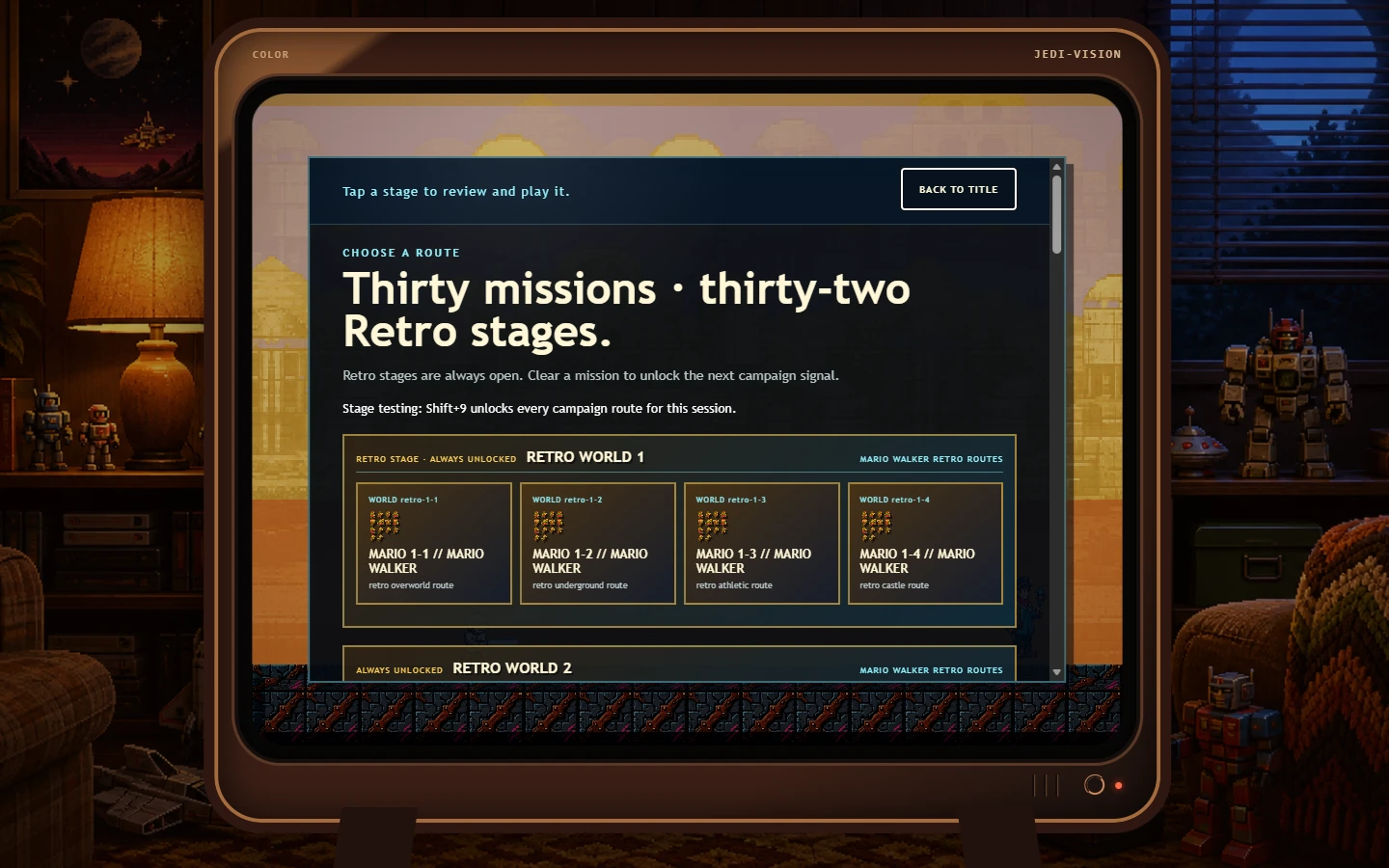
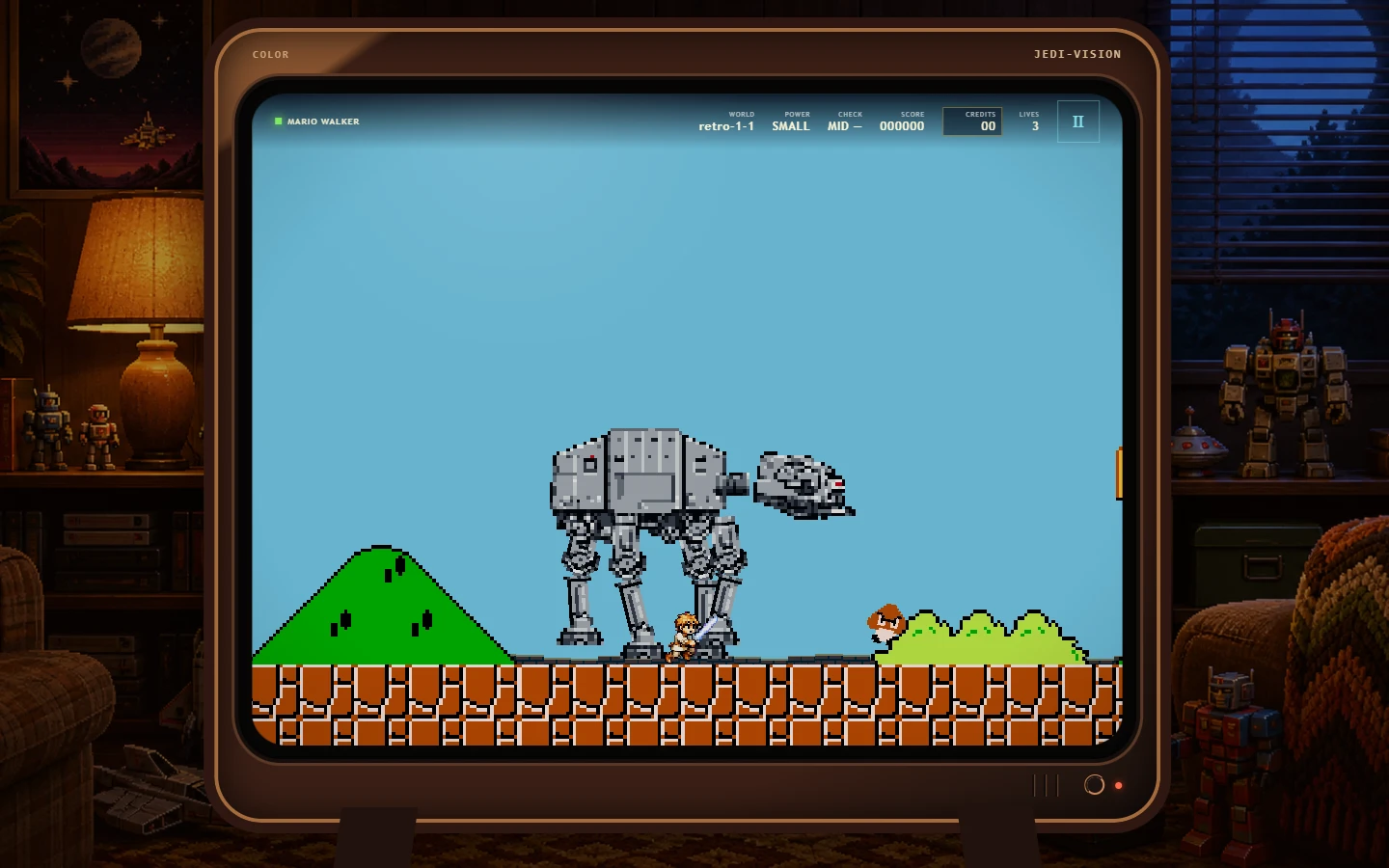
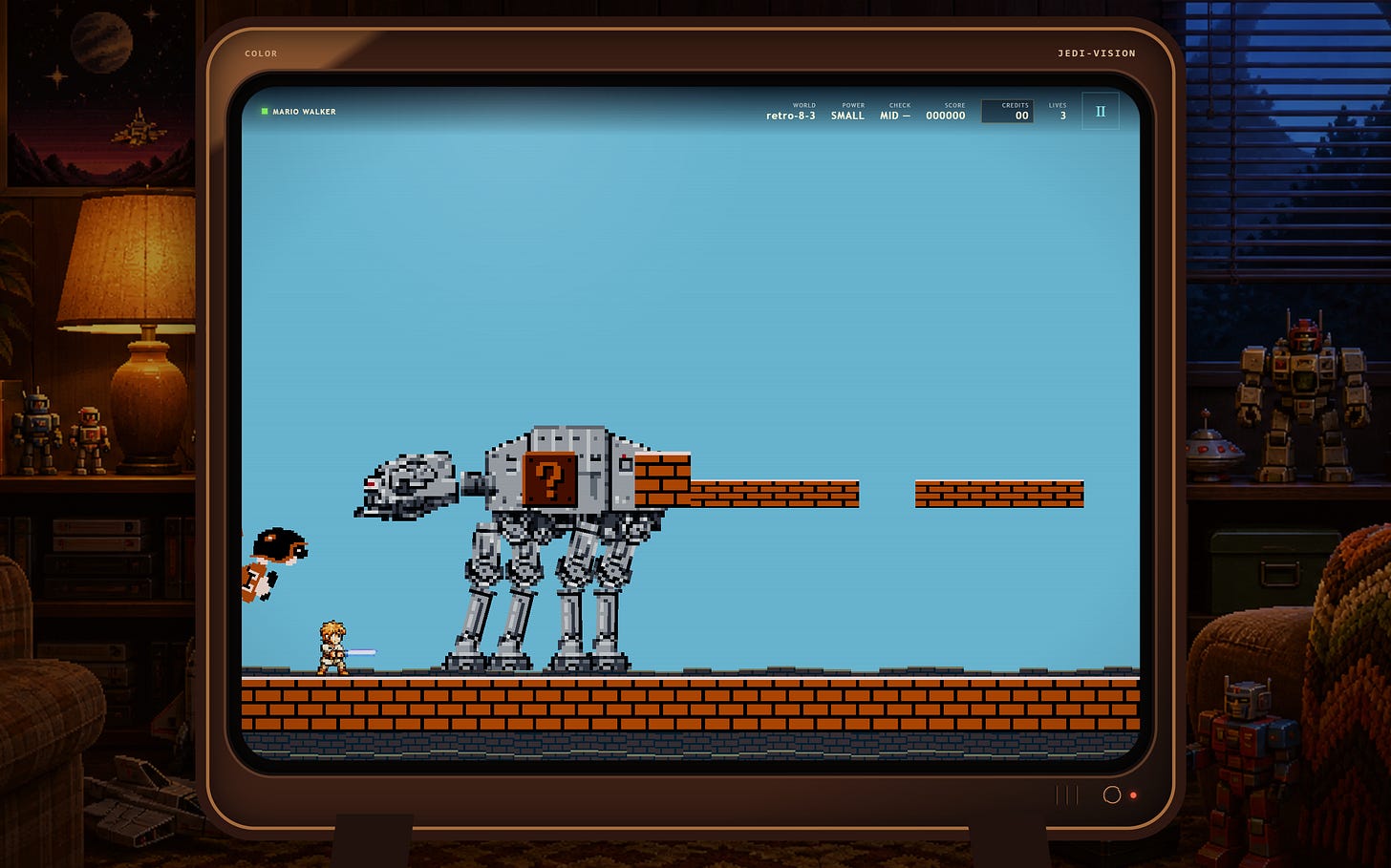
The stage selector also opens thirty-two Retro routes from the start. Luke stays the player character. His movement, saber, block, checkpoints, and damage rules travel with him while the terrain and enemy roster change around him.
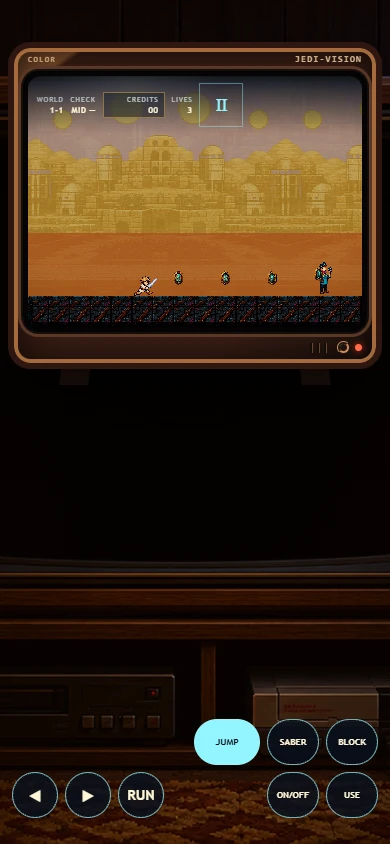
The game supports keyboards, gamepads, and touch controls. Its music, atmosphere, and sound effects are synthesized at runtime through Web Audio. No outside service is needed after the local files load.
From cartridge to stage clear
The menus are short because the route is long. A new player can learn the controls, choose a campaign, read one briefing, and get moving.
- TitleStart, continue, open the tutorial, or jump to stage select.
- Choose a routePick an unlocked mission or any always-open Retro stage.
- Read the briefingSee the location, route type, checkpoint, and par time.
- PlayRun, jump, deflect, collect credits, and activate the midpoint beacon.
- Prove masteryUse the route's lesson to open a boss doorway or reach the goal.
- Clear the stageRecord score and time, then unlock the next original mission.
Retro branch: all thirty-two Retro stages are available immediately. They do not wait for original-campaign progress.
The cartridge, the route, and the trouble
From the build log
The first public record caught Mario Walker before it was ready to play. A glitch note caught the background simulation continuing after Luke had fallen. The postmortem asks how one person reviews a game that an agent can expand faster than anyone can play it.
August 26, 2026 · Postmortem
The game grew faster than anyone could play it.
Sixty-two stages, a Character Lab, and an AI-readable debug pane made abundance itself the next design problem.
Read the experiment postmortem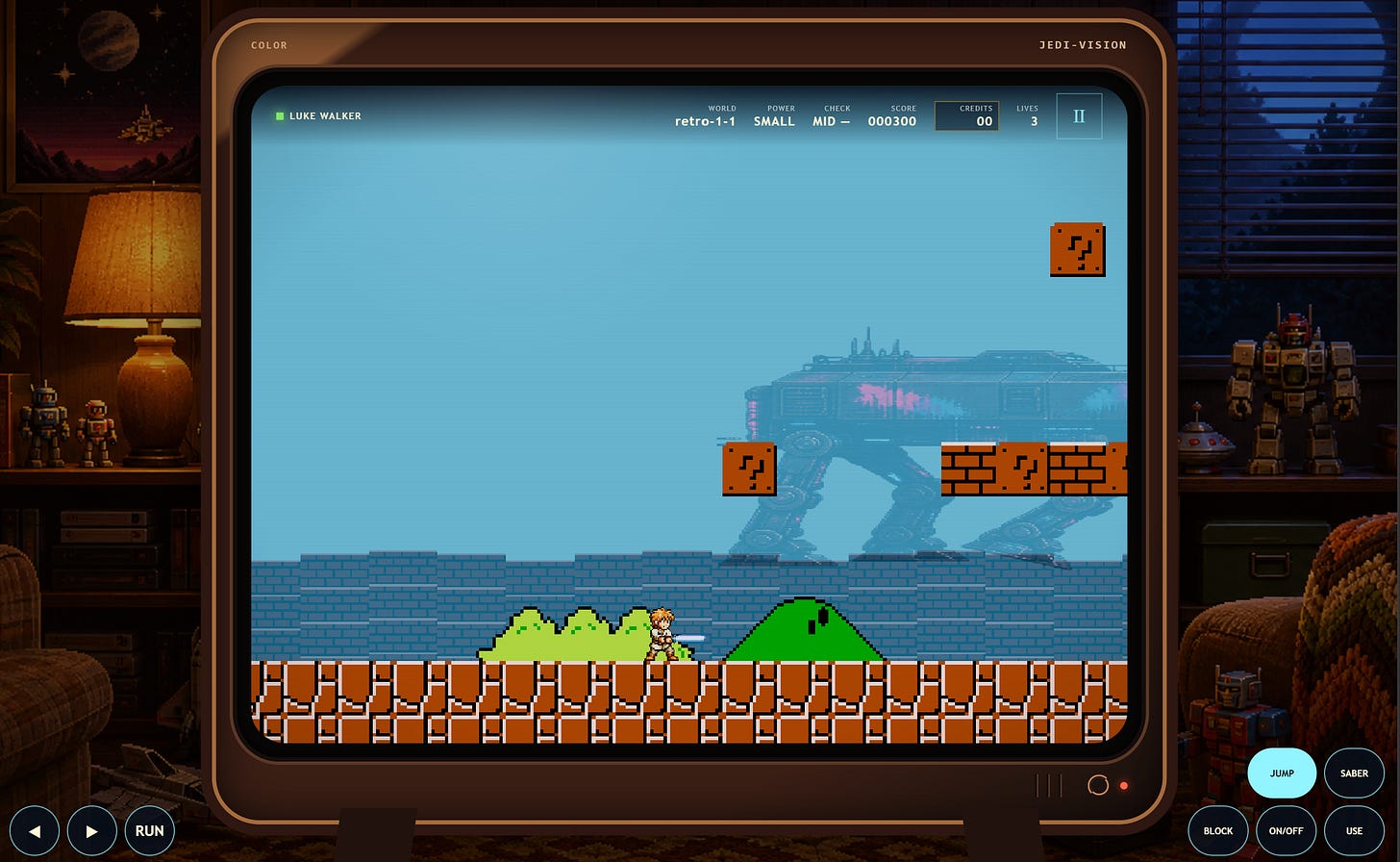
August 22, 2026 · Build note
What if Luke walked into a Mario stage?
The rough build already had multiple routes, bosses, flying Goombas, and more stages than one maker had time to play straight through.
Read the original build note
August 22, 2026 · Glitch note
The stage kept moving after Luke did not.
Leave the failed stage alone and an AT-AT eventually walks past, firing at the Goombas that caused the trouble.
Watch the localized glitch videoEvery moving subject gets a control plane
The character lab is the other half of Mario Walker. It exposes the production motion, view, variant, timeline, sound cue, and diagnostics for each animated subject. The preview does not substitute a second display model. It loads the same source art and controller used by the game.
Twenty-seven ways to stop the timeline
Search the full roster, filter by campaign, open a lab, and move through neighboring entries without returning to the project page.
Open the Character Lab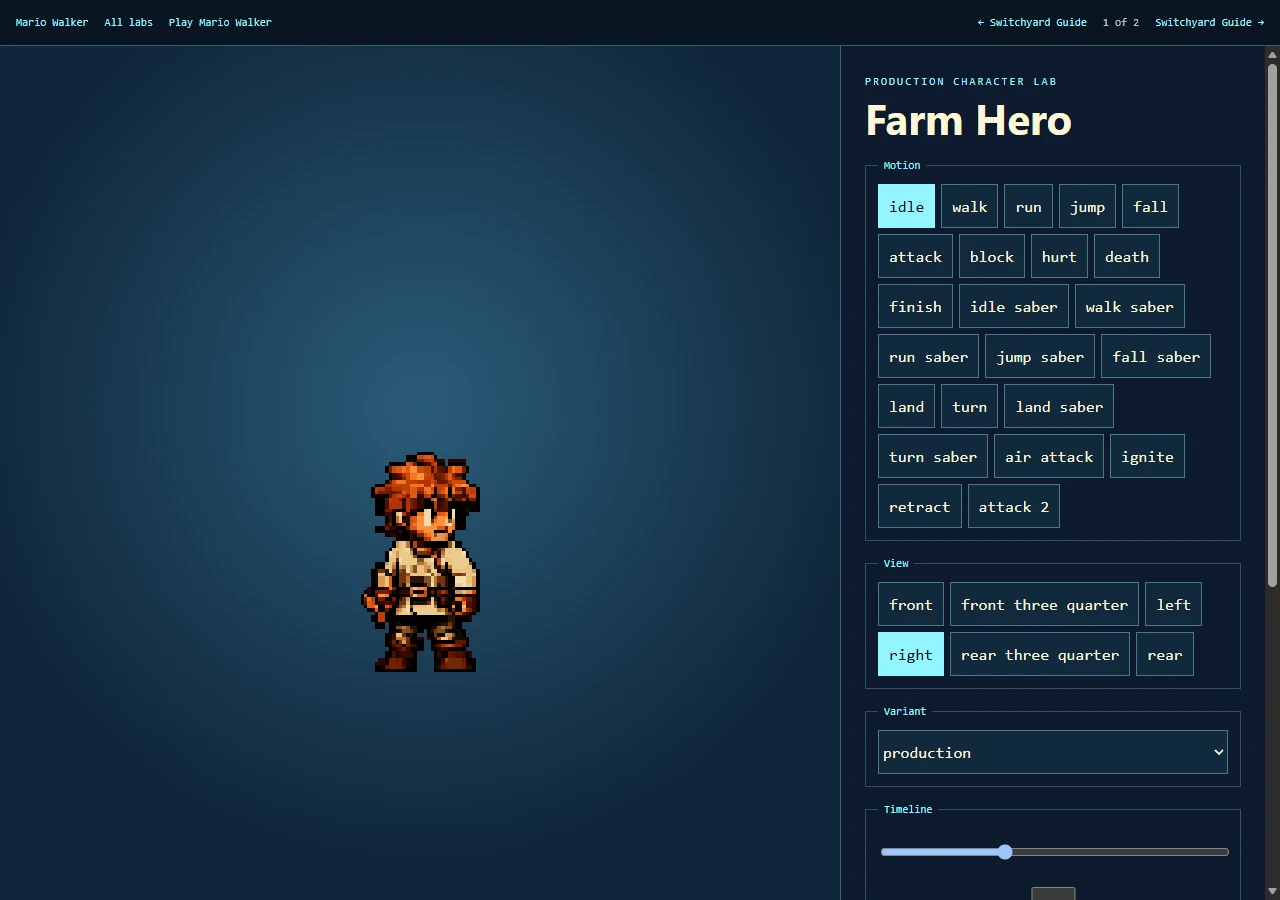
What the build is testing
The game treats movement and combat as readable choices. A jump can be buffered. A short press and a long press produce different arcs. A block can reverse the right projectile. A saber solves one problem and creates another when a moving shell is nearby.
The original campaign teaches those rules in a sequence: notice, reason, practice, disrupt, reframe, and master. A boss then asks for the same idea under pressure. The Retro campaign tests whether those controls remain understandable against a different set of shapes and timings.
The entire experience is static HTML, CSS, local JavaScript modules, local Three.js r185 files, generated and authored sprite atlases, and procedural Web Audio.