Originally published as an Advisory Hour Substack post on 2026-07-31. This first-party site copy preserves the text, localizes public supporting media, and connects the record to its project trail.
Original post
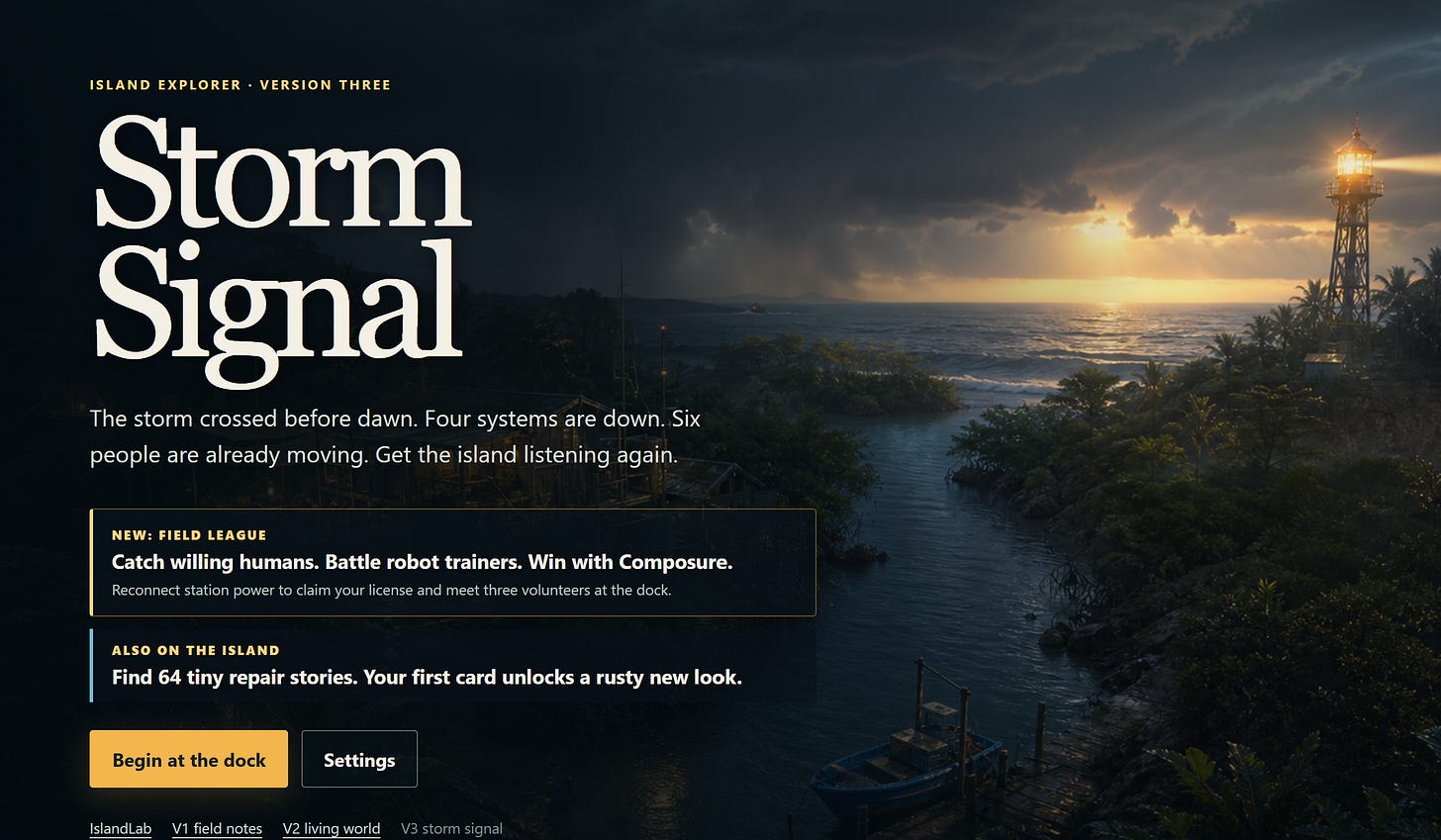
The loader for V3 is required because in this experiment I put my recent learning that the coding tools can do 3D modeling to work. This isn’t just an island, it’s a full experience. And one that, I admit, maybe I put too much into. So much that I pre-planned the Island Lab series knowing that I’d have to write at least two articles on the v3 island. It really is something else-the start menu gives a fast example of what I mean.
For starters, there is a loading screen and a start menu. If you noticed in V1 and V2 of the island experiments, these weren’t included. You’re just dropped into the simulation with an expectation that you know what it is and why you’re there. This V3 makes use of some techniques I picked up during the Summer into AI competition, which makes the overall experience feel far more polished and complete-even if there’s still a ton I’d love to change and improve.
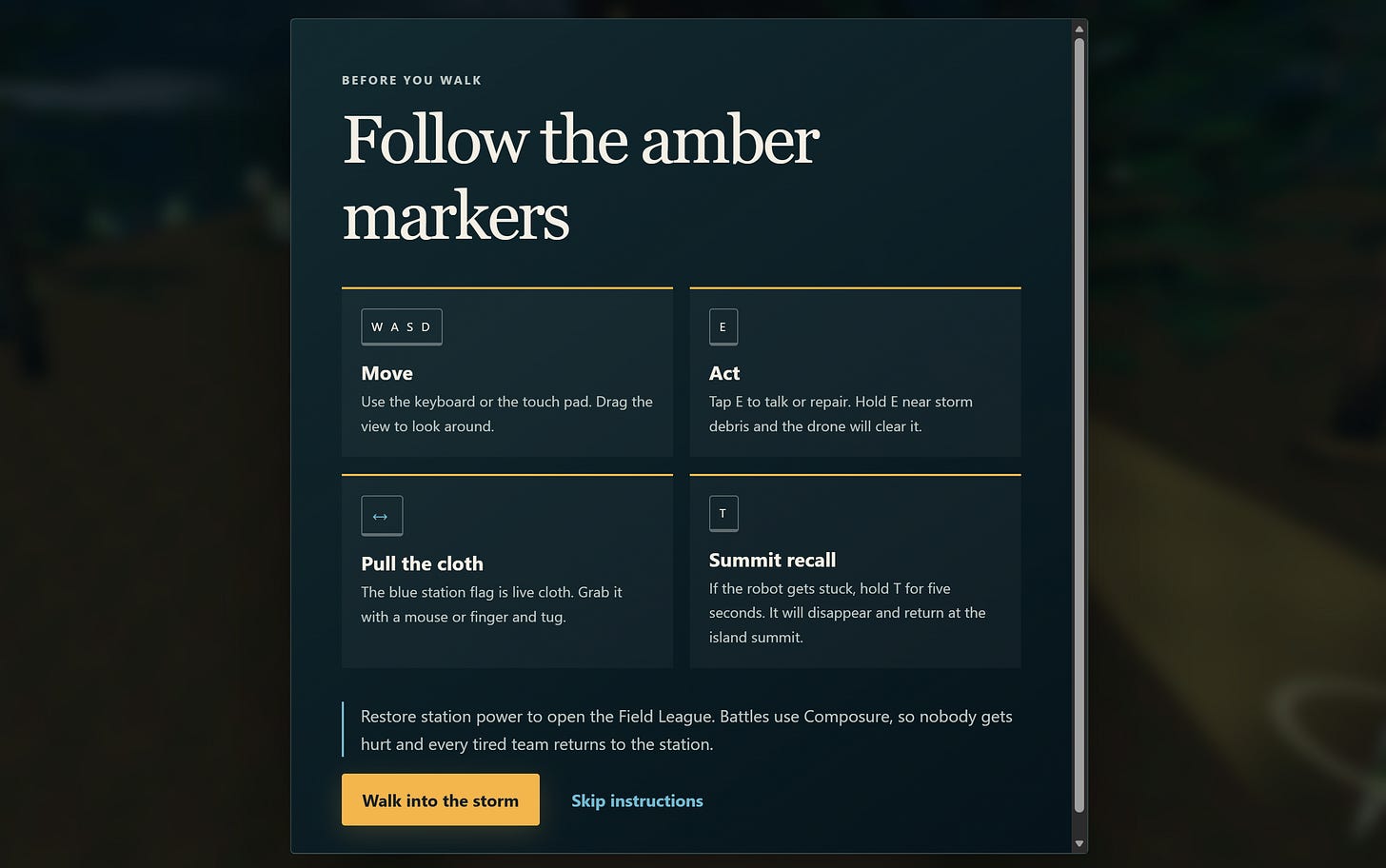
Included in the start menu, or rather that first step after “Begin at the dock” is a brief command display that lets you know the essentials of the experience. There’s a longer story behind each of these-and if you’re a subscriber to this substack you may even wonder if a component is tied up with one of my other experiments on something similar.
A great case in point: the ability to manipulate the flag as a textile sounds like something I may have pulled from textile academy. In that experiment I built a realtime cloth solver for threejs. This is the first project where that technology idea enters an interactive game-beyond that textile academy itself, of course.
Robot and a Drone
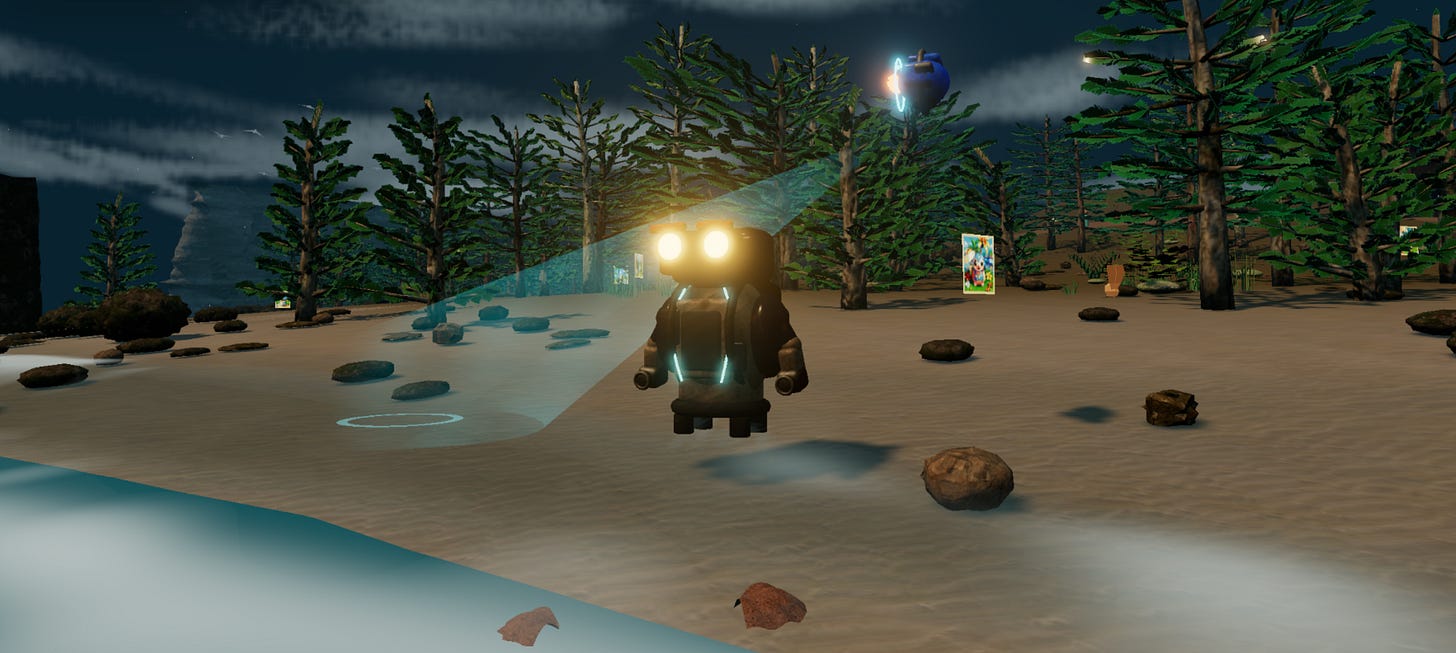
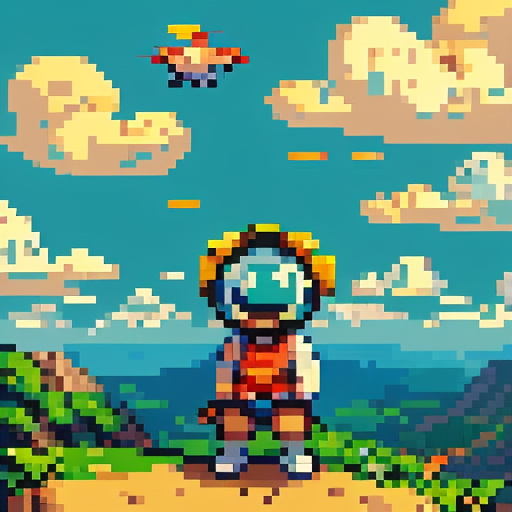
When you enter the map you’ll quickly learn that the main avatar is a refrigerator of a robot and some sort of flying companion that scans nearby objects. It wasn’t enough to build in the controls for a main character-I wanted the robot to have a companion to help you find the activities as you move about. This becomes useful later on in the (dare I say) end game of the island itself.
Teleport
Holding the ‘t’ button causes a fun teleport. I added this after I got stuck doing some exploration. This annoyed me that I couldn’t just teleport back to the start-so there was only one thing to do. Ensure the robot could teleport itself and it’s drone helper back to the safe spot at the top of the island, which also gives quite the view of the overall scene.
The Sprint Animation
The sprint animation is subtle and if you didn’t know to look for it, I’d forgive you for wondering what the big deal is. The big deal to me is that the entire animation sequence, and the pixar like squeeze and stretch, was a composite solution by ChatGPT 5.6 (sol on xHigh) driving blender and the threeJS runtime. The entire flow would be challenging for an indie developer: shift to run, release, trigger a new animation set, show a re-balancing of the character. I can recall days on similar projects. Here, the coding assistant just solved it as an after-thought.
The collectible card game
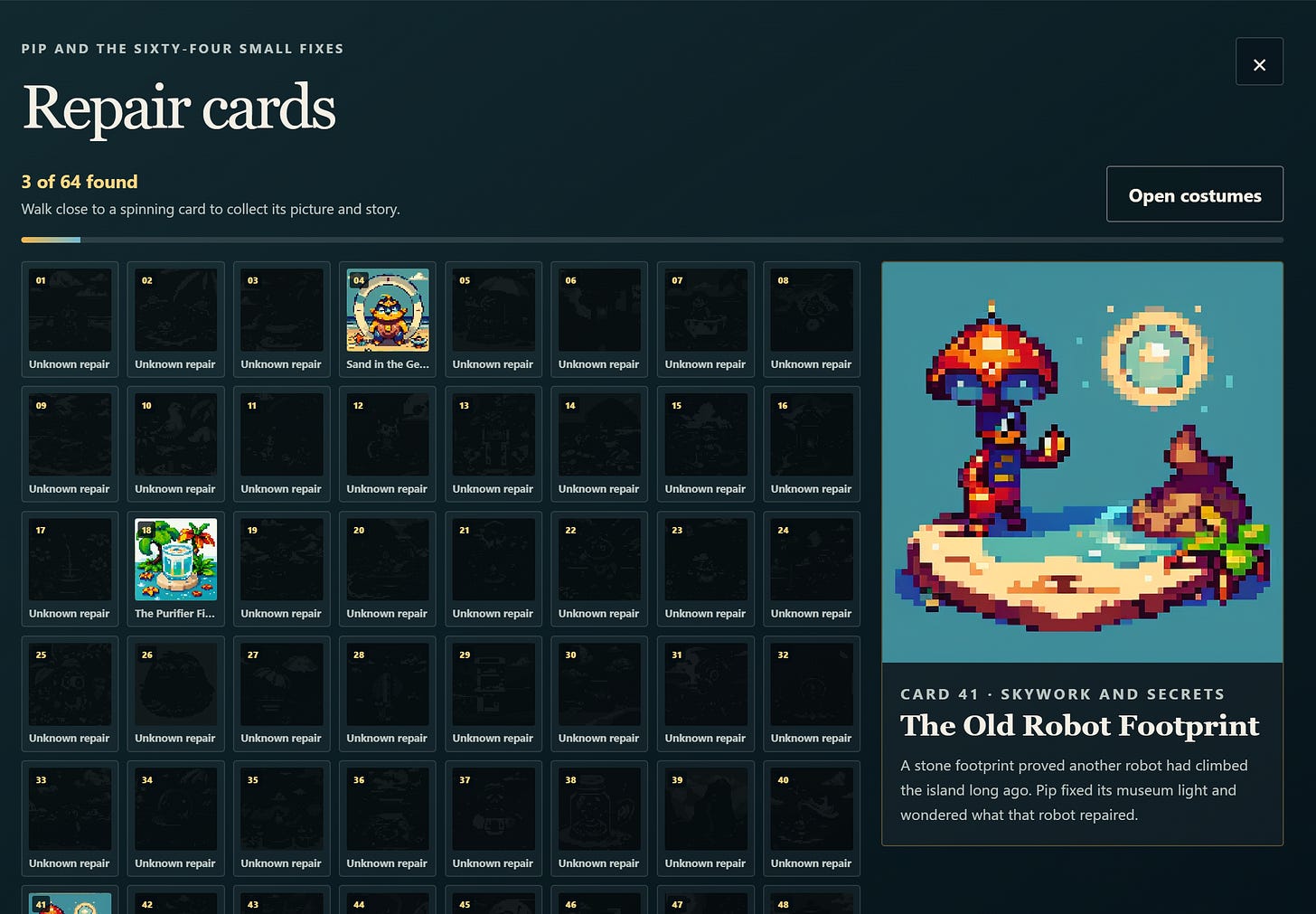
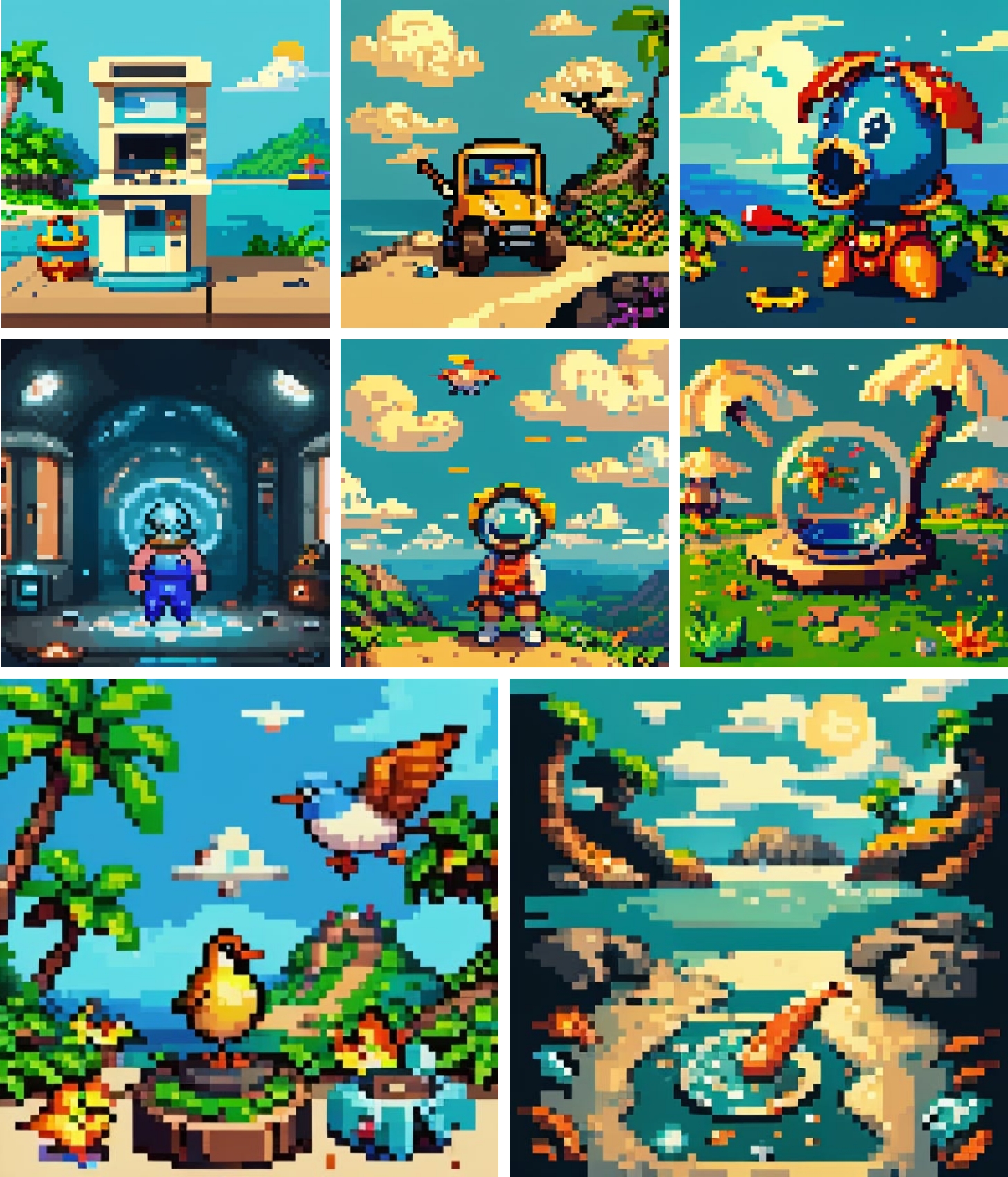
I've written on the perks of local AI. I put those to work here. There’s a mini-game where you collect cards across the island. After so many cards collected, you get a new costume for the robot. There are a total of 64 cards to find. Each card has a story. It’s all thematic to the situation: robot on an island. It’s also preposterous: there’s a skin unlock system, a collectibles tracker, and an enormous vault of content to pursue. The system worked on this while I was driving downtown. I’m not even sure how long it took-I didn’t bother to check. It was done when I returned home that day. Here’s some of the fun art you can collect along the way.
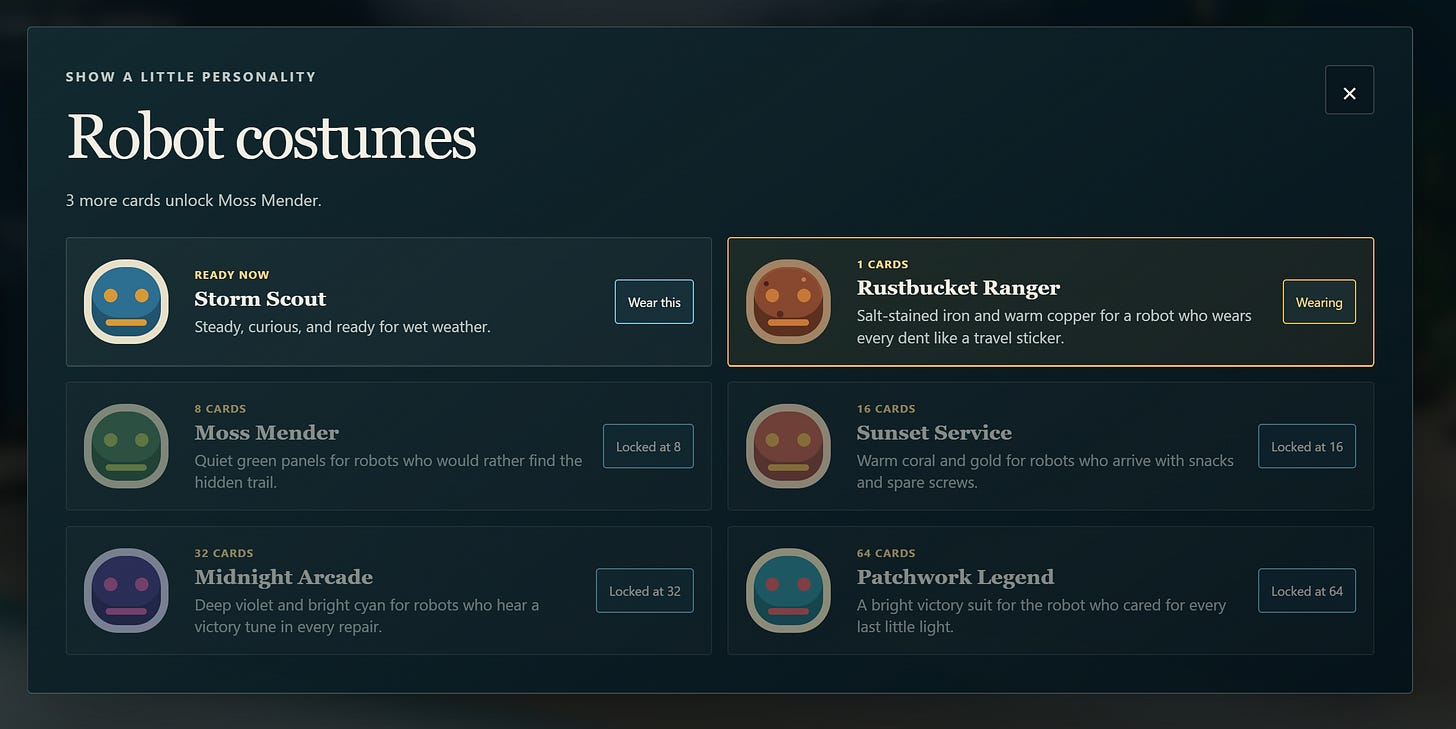
Collecting the cards unlocks different costumes. There’s a costum picker screen available to help you choose your fit.
The Robot’s Spaceship
It was one of those late nights. The dog was snoring at the edge of the couch. The house was still, the glow of the monitor was bright with multiple terminals running coding agents building all manner of things. And before I retired for the night, a question vexed me. How did the robot get there?
The robot needed an in-game explanation for how it got there. Yes, the robot can teleport. Teleporting between planets seems odd. What if the teleportation were from a spaceship? That’s the idea that inspired me. So, in the background of the stage you’ll find the Robot’s Spaceship parked in idle just patiently waiting for you to finish your work.
Beach Life
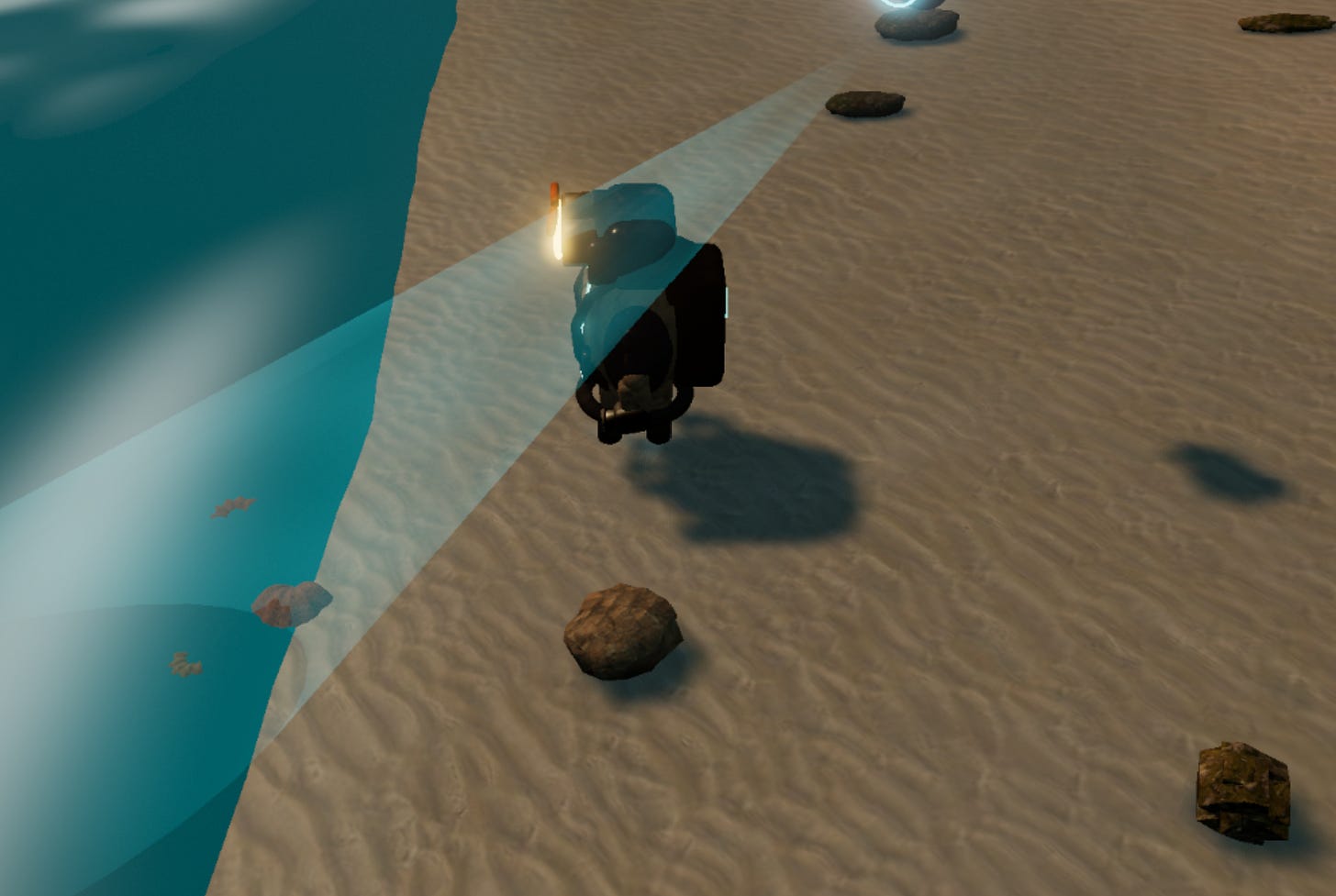
The beach has all manner of things. There’s even sea shells. They’re a decoration that just makes the beach feel more real.. The coding model built robots, buildings, rocks and yes, even sea shells using blender.
I’ll discuss even more hidden systems and features of this little experience. In the next article in this series. There’s squirrels that climb trees, a debris cleaning system, and more.
Connected work
- Island Lab Series: 3 of 5, Island V2: See the simulated civilization and persistent memory experiment that came before Storm Signal.
- Island Lab Series: 5 of 5, Island V3 Part 2: Continue through the wildlife, repair systems, foliage, shadows, and small details across the island.
- Enter Island V3: Storm Signal: Play as the explorer robot and restore the storm-damaged field station.