This first-party copy preserves Eric’s original AdvisoryHour/Substack post for the research section of EricRhea.com. The original remains available at advisoryhour.substack.com.
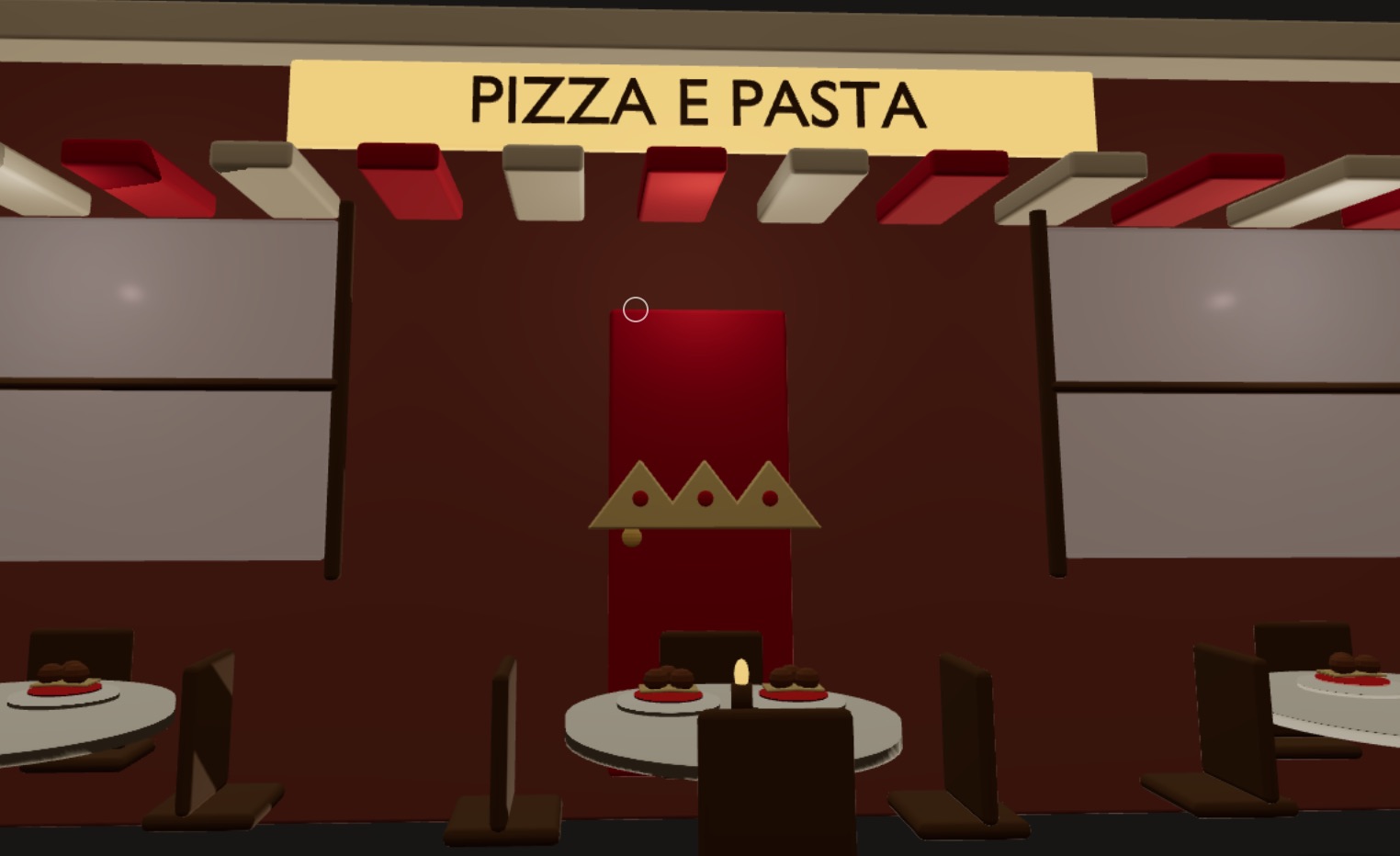
Automated 3D factory
I mentioned in prior days how building Wrigley Field showed me a new path to building 3D geometry. In this experiment, I took that idea and focused on texturing automation using ChatGPT-5.5. Could the model build a clothing retail store? How would I solve texturing in a performant way? What are the “big ideas” in using AI to build out geometry?
The beautiful insight with a retail clothing store is that it allows you to quickly identify all the problems in your texturing process. It could be aesthetic quality, memory budgets, scale, or other dimensional concerns. A clothing retail store allows you to see every mistake, fast.
How the world was constructed
In this case, the world wasn’t constructed using the standard pairing of say Codex or Claude with ThreeJS. Instead, this world is constructed with a Blender pipeline using the Blender MCP. I’m consistently surprised at both the speed of this and how well it works overall. I’m getting effectively low-poly 3D models for free on any topic. This is incredibly liberating—I can drop into Blender still, and those shortcut keys are forever burned into my mind.
The thing is that it’s very difficult to pull off this scene—it’d take some care and some work as a human to build both the 3D geometry as well as the texture components.
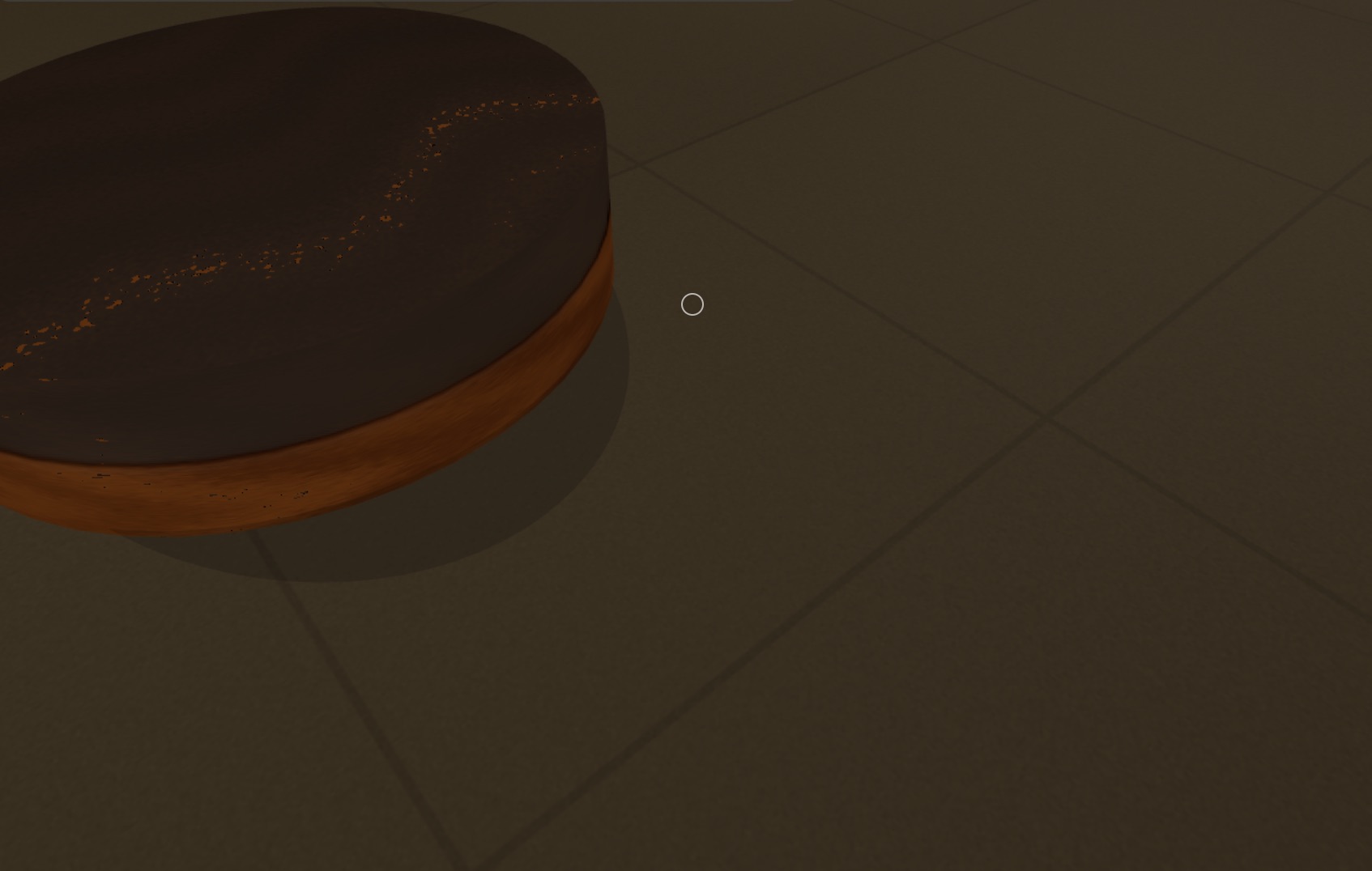
There’s a lot of subtle details that are hard to see unless you zoom into a given component. For example, the floor tiles are simple and nice. The really neat thing? These textured images are generated using local AI. I’m very happy with the result.
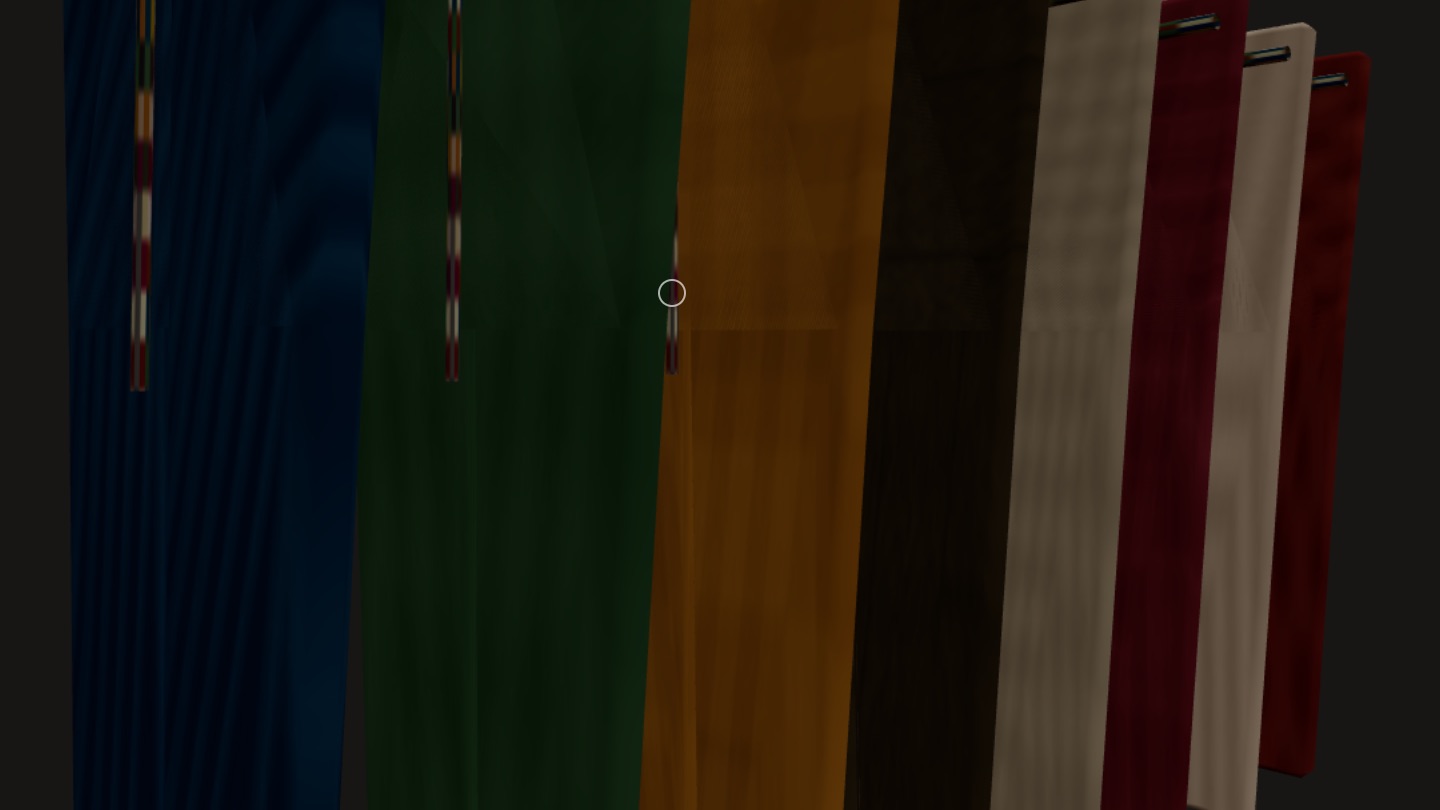
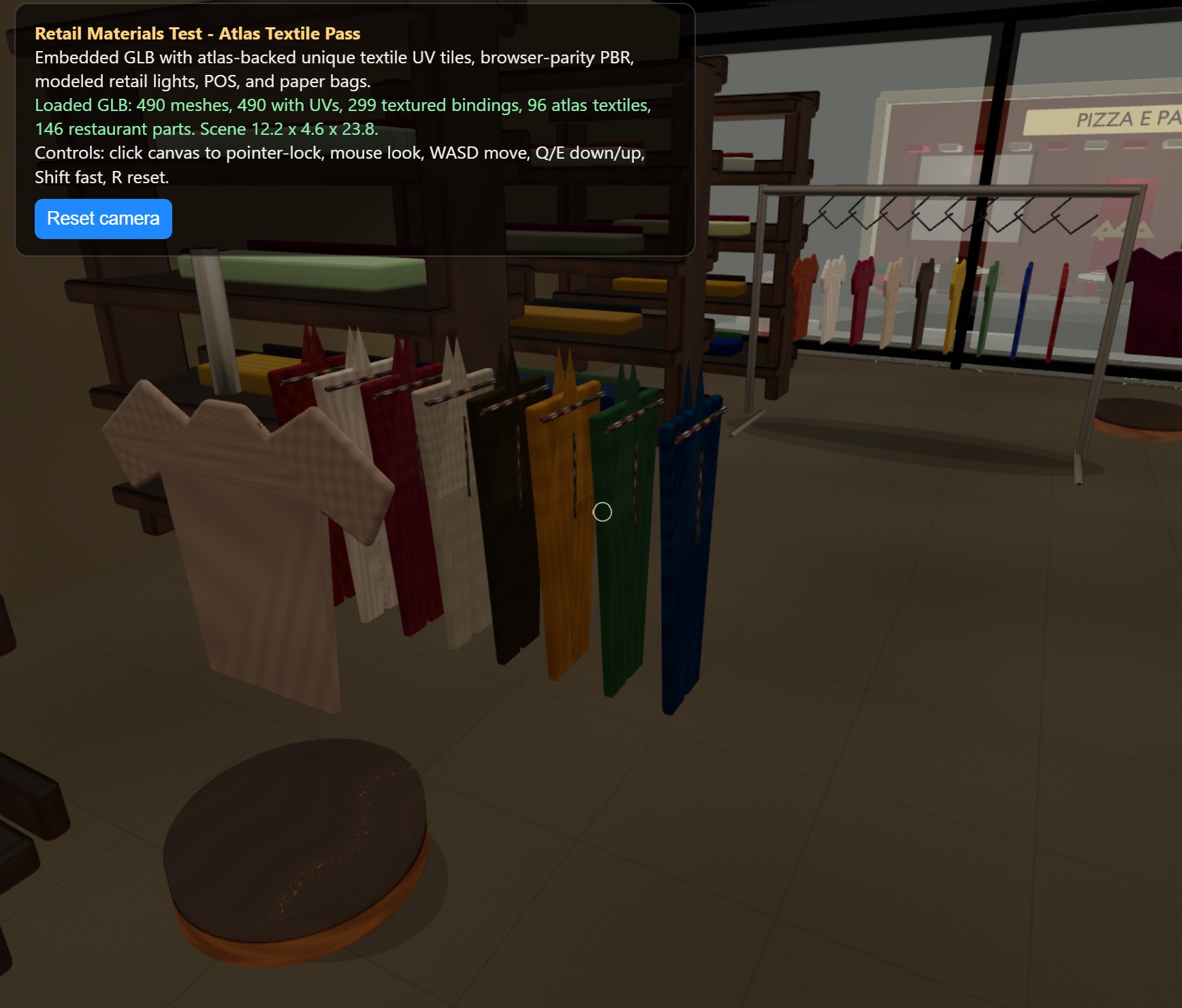
In order to test the texturing of different clothing, I had 5.5 build shirts in the scene. I wasn’t sure if the cloth modifier would be used or what to expect. Perhaps with a little elbow grease I can get a better cut of shirt, but that wasn’t the purpose of this test. Instead, consider the texture variety here. Each shirt is a subtle, unique texture variation.
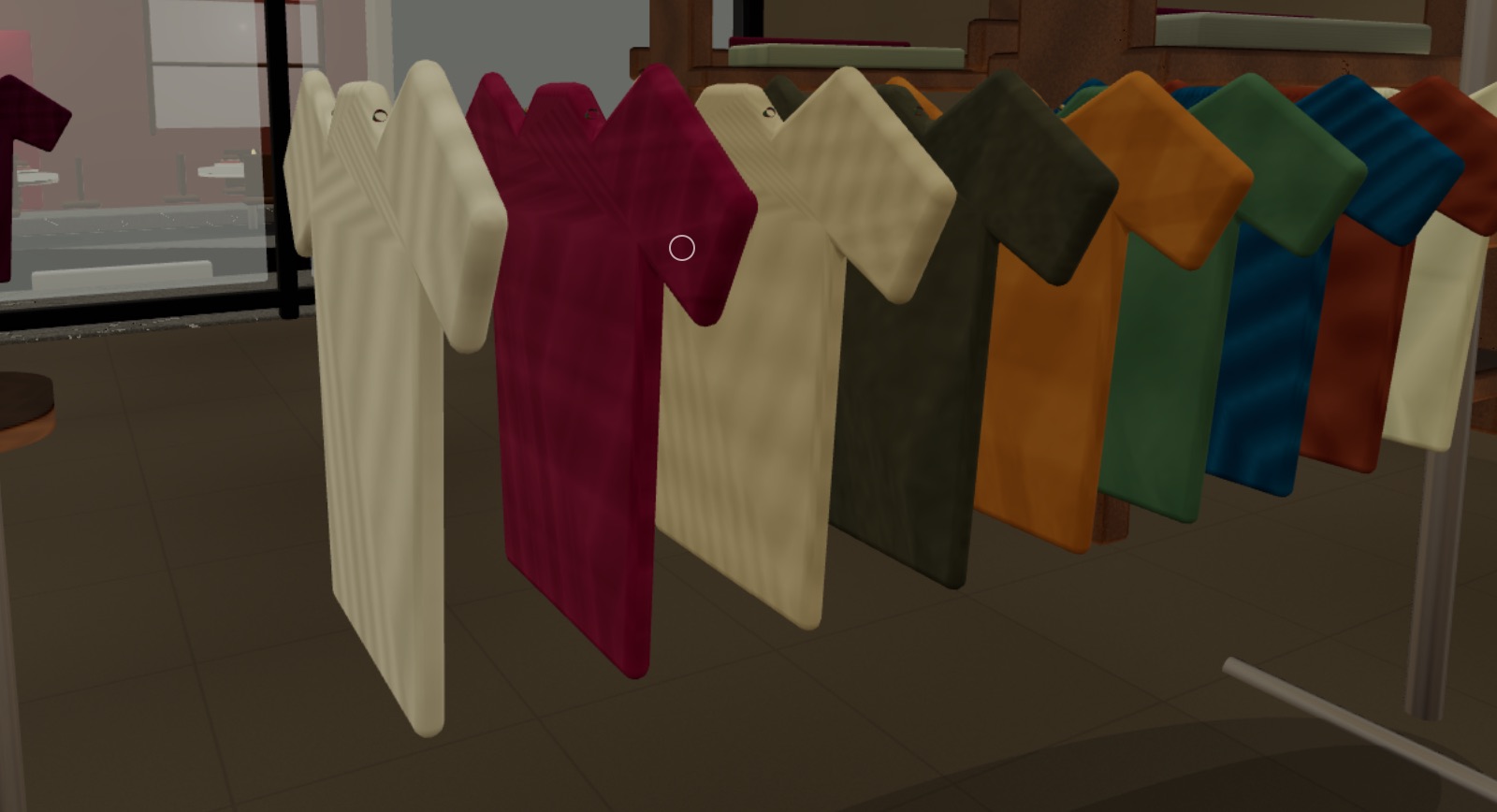
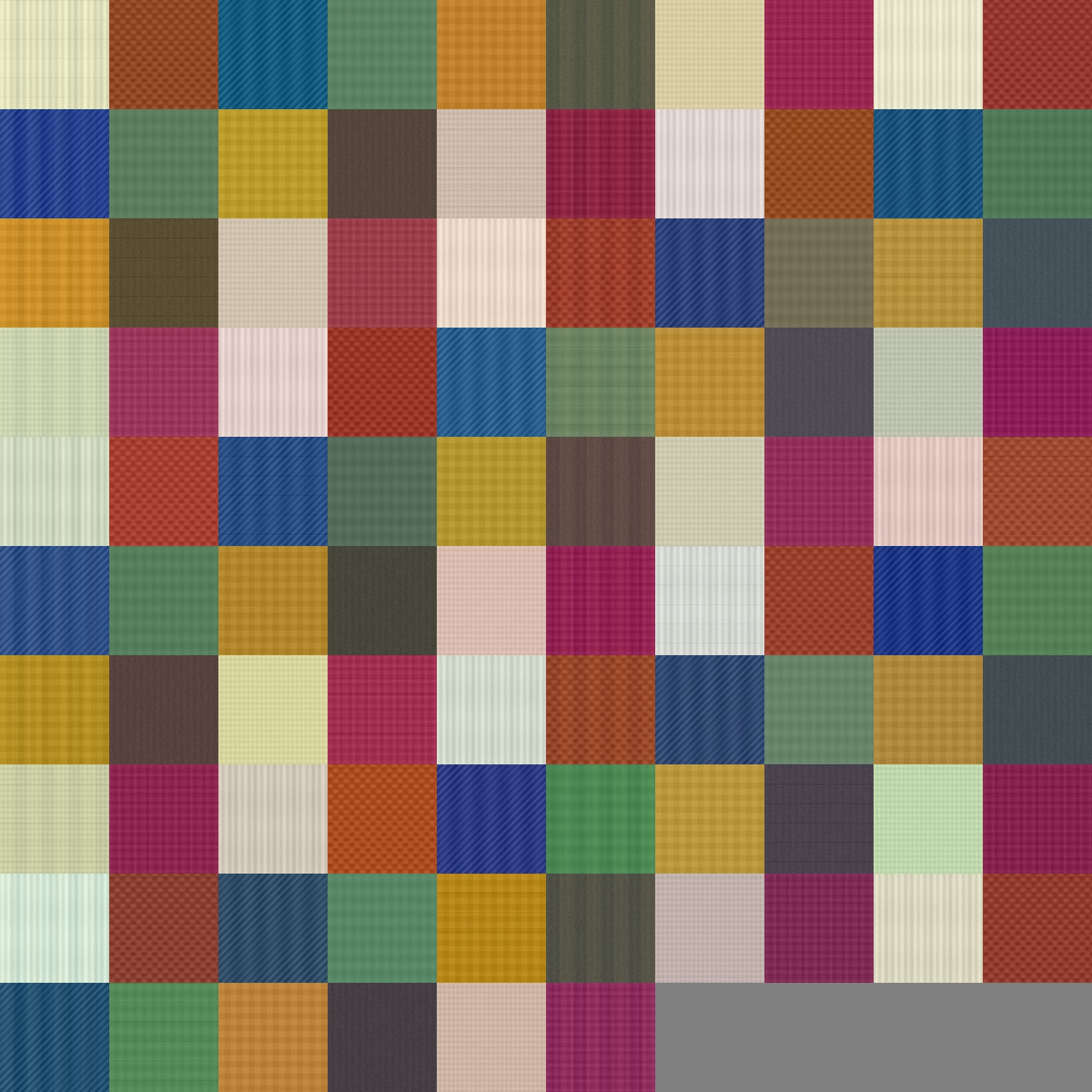
The key idea is the texture atlas. This allows for a significant variety of textures when combined with a normal map and it all fits in one image.
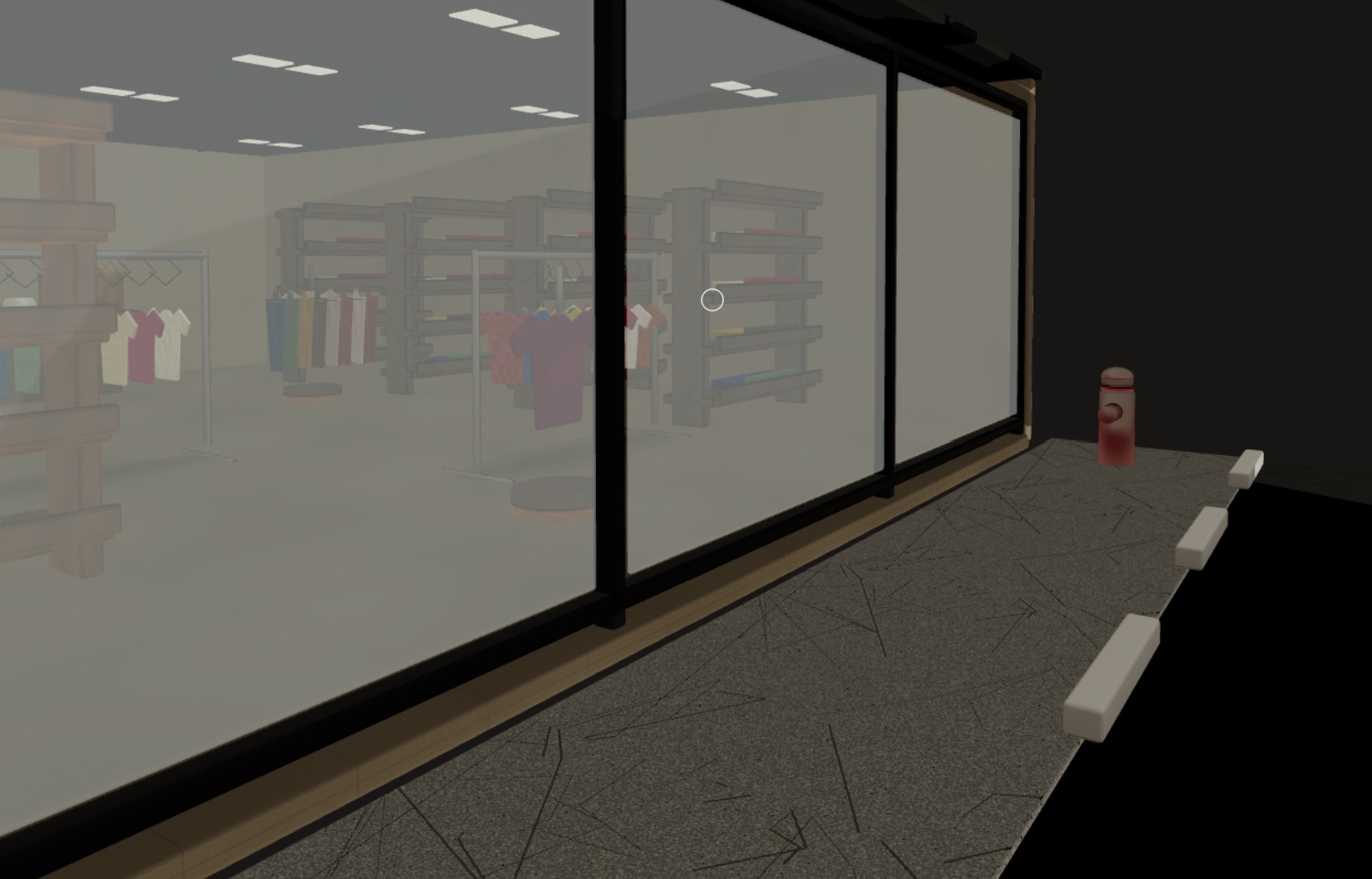
The entire scene is navigable
The entire scene is navigable. Feel free to fly around and check it out. The link is in my research subfolder over at my website. Next I’ll be scaling this out even further. How big of a scene can I make using these new techniques?
Texture gallery
Here’s a gallery of textures for you to use in your projects.
Thanks for reading. Subscribe for free to receive new posts and support my work.