Originally published as an Advisory Hour Substack post on 2026-08-31. This first-party site copy preserves the text, localizes public supporting media, and connects the record to its project trail.
Original post
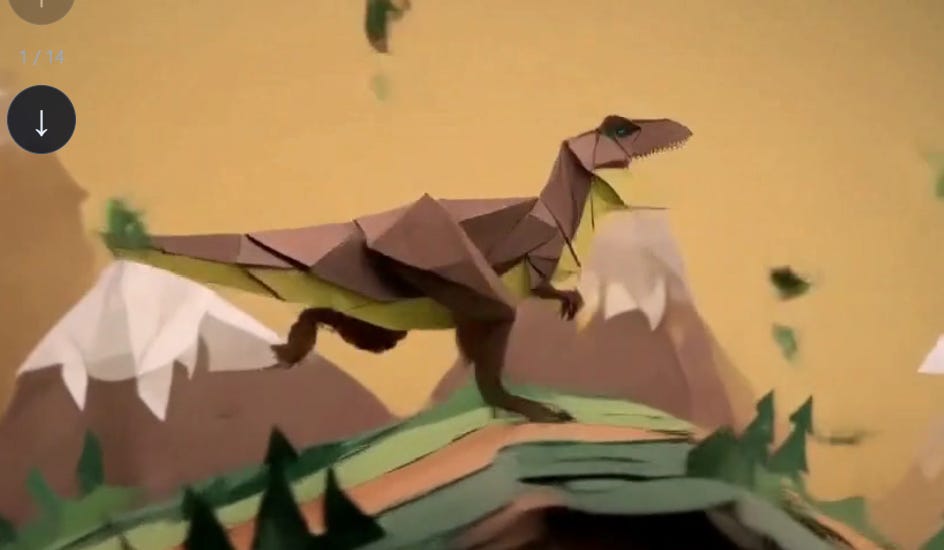
I built MusicLab a few weeks ago to bring together all the music generation into one easy to use swipe interface. The idea in MusicLab was to map signals around generated content to make it easy to navigate all the generated content that’s filling up my harddrive. Why not do the same with video?
EricLocal AI: MusicLab’s swipe to exploreTikTok provided inspiration for a new human user interaction idea to make sense of the abundance of music that’s spilled out of local AI systems. I find myself under the weight of abundance in hard to explain ways. I have galleries and filters, entire content libraries that are deep in the ways. When you start a system that generates ne…Read more23 days ago · EricThe core idea here is to drive Codex to replicate the TikTok interest graph algorithm. First, what’s it generally look like? Well, it looks and works a lot like TikTok.
What is an Interest Graph, anyway?
Social networks had the content problem long before AI generated abundance emerged. The stories written on “The Feed” and their perplexing problems fill the airwaves if one looks into the corners of these systems. When thousands, if not millions of people were posting content online it quite quickly breaks any search or filter in a meaningful way. Even Google search does a lousy job these days of surfacing so much of that content. There’s unimaginable content hidden away inside walled gardens and the only surfacing mechanism is The Feed. Some of this is an entrapment mechanism: if you can’t get it elsewhere, then you won’t be elsewhere.
The early social networks were built up on an idea of showing content by a filtering tool: who you follow. Maybe you’d follow someone and enjoy their style of content. And for a time, this worked. You might keep up with a close relative or professional contact. However, this system breaks down under the change waterfalls.
First, maybe you’d follow a celebrity for a time. The celebrity would be “hot” and be your main focus and interest. I believe everyone has had this experience with someone at some point. What happens over time? They’re like an overstayed guest that you’d like to usher out of the house. You’d prefer if not a single post ever graced your feed again. Your interests changed.
Second, it’s that family member and their controversial posts. You wanted to know when Uncle John was going down to fish at the local river. Maybe you could have done with a little less politics. The problem here I’m highlighting is that of too much un-aligned interests. You were interested in John’s fishing hole. You were less interested in his view of politics. And you don’t want to know about fishing at the local river in the winter time, just the summer.
TikTok’s genius move was to scale out a solution to this filter and content challenge by a change in perspective. The social network would treat every aspect of your interactions as signal and then map that to what content the network has.
In the world “pre-TikTok” the question that the algorithm resolves is “You know/follow these people. Which of their posts should you see?” In the world of TikTok, the question the algorithm resolves is “We have this piece of content. Which people are most likely to want it right now?”
This works especially well because we humans have interests that change over time. I’m my own example of this phenomenon. In a causal review of several hundred related posts, articles and software builds, it’s clear that my interests cover a wide range. There’s some amount of consistency, but where my attention is at may change or drift over time. Further, there’s a separation of my public interests versus my private. I believe this to be true for you, too. A 1:1 session with your boss isn’t likely to be posted online, in any channel-not if you value being able to return back to the job!
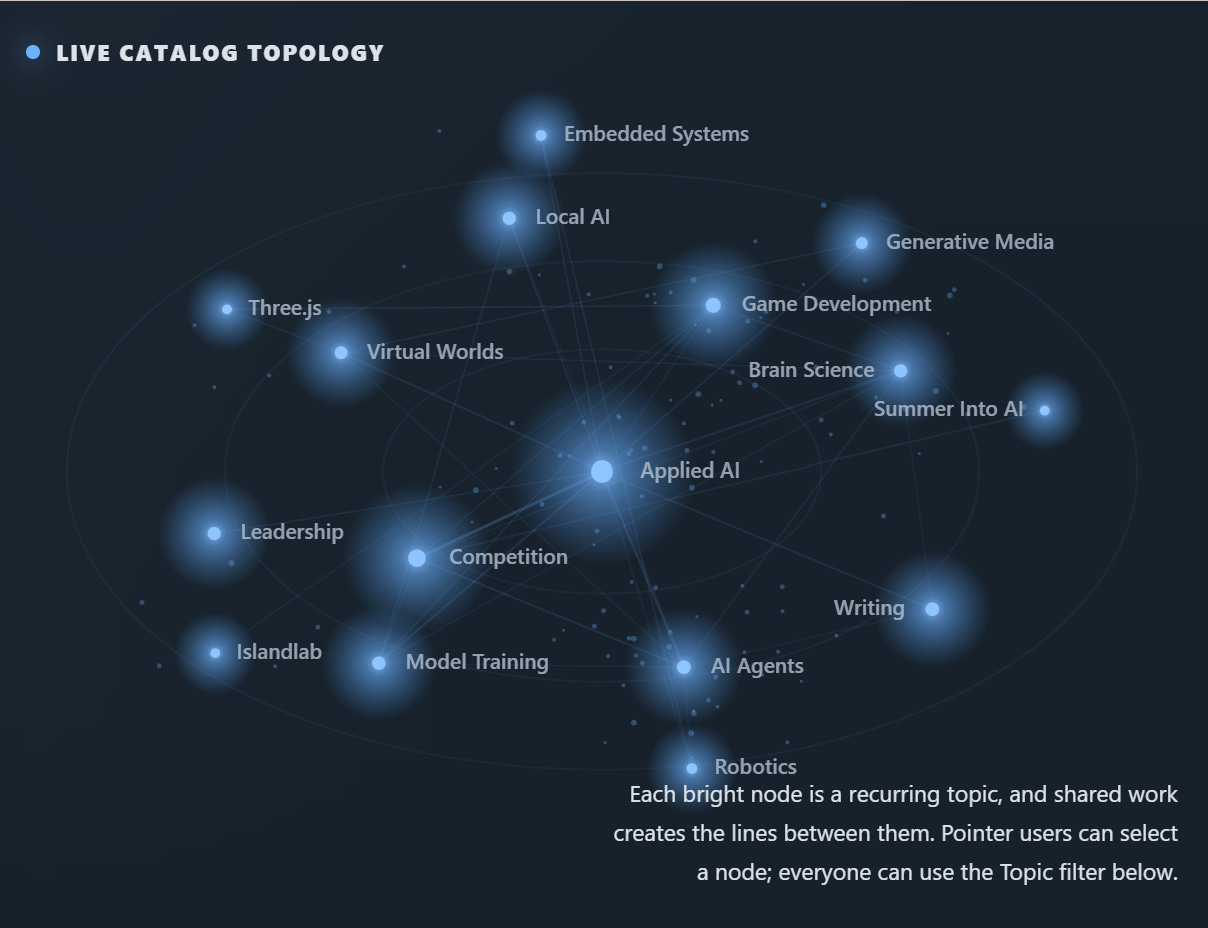
The atlas on my site is fun for me because it shows how my interests have developed and changed over time since I took up the hobby of writing online this year. There’s a few emerging islands that I may yet build on as time goes on. The point here is that interests change.
All the big AI tools do a great job researching and unpacking how the TikTok algorithm works, and why it does. The deeper layers into the algorithm, even at an “ai glance” are enough to pickup on the key ideas. I did have ChatGPT assemble one of our conversations into a landscape image you can mine yourself for how to implement this in a broader or deep sense. The algorithm isn’t hard, per se. It’s just “a lot” to do at once.
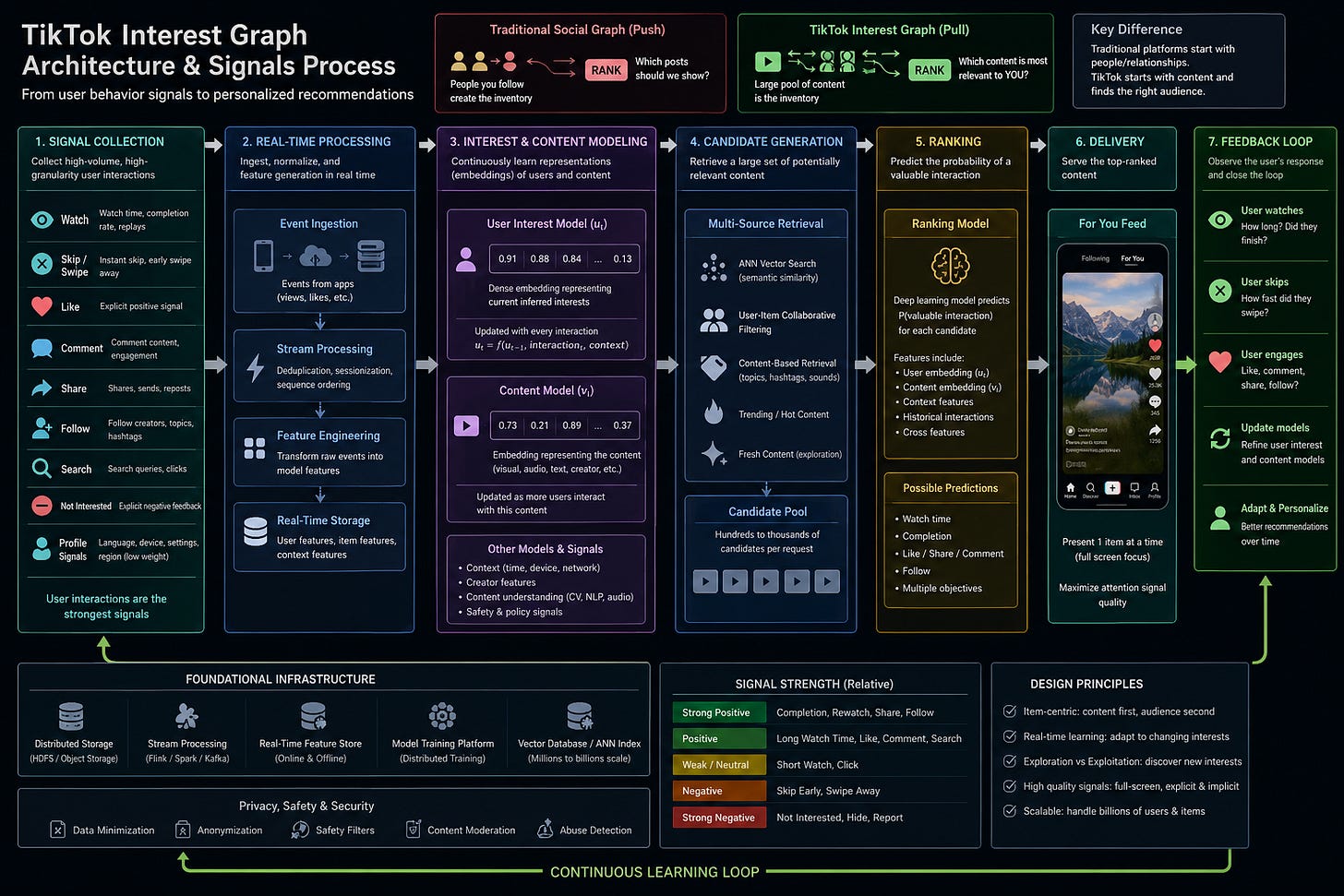
The complete TikTok algorithm is a lot to build into a home lab and it isn’t necessary. The good news is you don’t need to boil the ocean. The first step is the simple one: just build the UI, and then from there you can slowly layered on like a mortar and bricks each of the components that best align to your use-cases. In my case, each video generated comes with a bunch of predefined tags and filters used. A subsequent improvement will make use of the vision technology that I wrote about here:
The prompt to replicate a TikTok UX is a one liner. “Build a UX clone of the TikTok UX based on the videos in (location).” Building an operation or business is completely different. Building a TikTok isn’t just the code. There’s a whole set of operational challenges around video storage, delivery, and more. I don’t have a mechanism to share my HomeTok feed for that reason. The egress and ingress feeds would eat me alive. This means that to compensate I’d need a revenue channel to offset the costs. To get the revenue channel setup, it most likely means ads and sponsorships of content, or subscriptions, which means building out a paid user base. Then to handle demand is a real need for even more compute and even more capabilities. So be thinking of how you might solve those challenges if you decide to make something like a home-based TikTok available to the public.
The mud truck videos may look familiar. I used one in the post on MudTruck ‘99!
EricGamelab: Truckmud ‘99The Islandlab v4-1 taught me a few new tricks on how to reason thru modification of terrain. I brought over those ideas on a gimmick of a game: “Truck Mud ‘99”. The idea here is simple: you race a truck thru the mud. There are tracks, unlocks and upgrades that you can buy for your truck. The big technology trick here is “muddy tracks”. It’s best seen in…Read more22 days ago · EricConnected work
- VideoLab Build Notes: Watch the HomeTok demonstrations collected with other VideoLab build records.
- VideoLab: Browse the public film and motion catalog that grew from the same media problem.
- MusicLab and VideoLab Upgrades: See how the public media catalogs changed after the HomeTok experiment.