Originally published on AdvisoryHour on June 18, 2026. This first-party site copy preserves the post and localizes the city-explorer screenshots. You can also subscribe on Substack.
The post
This begins a new tag on this substack for city-explorer.
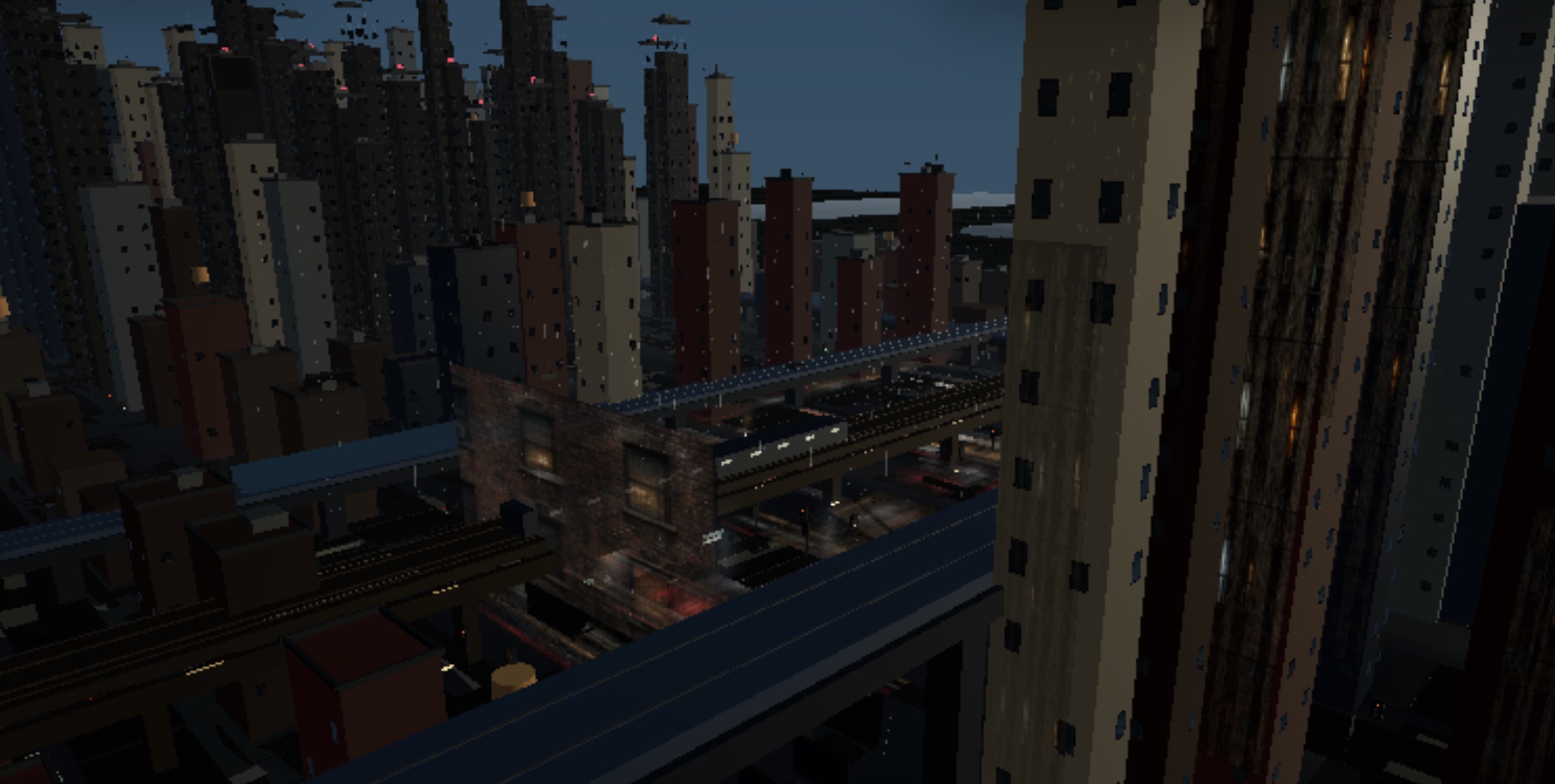
At this point I’m on my fourth iteration in the same scene of the cityscape idea that captured my attention. Many of the cool things were dropped out in favor of solving nuts and bolts problems. This view coming together is quite something: it means that the scene is close. Closer than it has been so far.
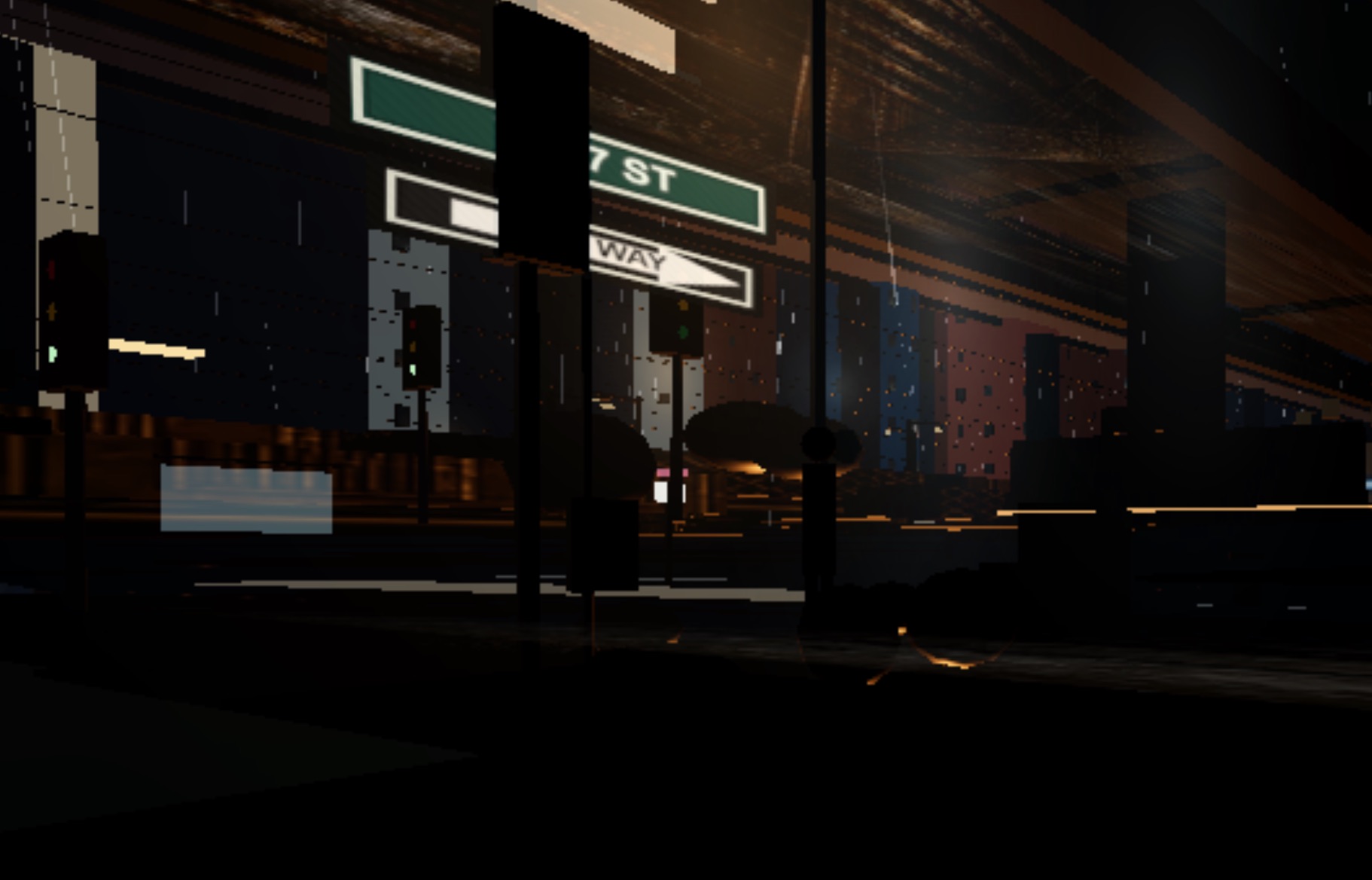
The streetlights work: they switch. And since I added streetlights, there’s cars now, too. The scene is moody as it is weird. In the dark image here you can see a light leak from above, as signage that’s far too large to be anything other than commentary on signage. I particularly enjoy how the “one way” sign looks like it was as sloppily assembled as the scene itself.
Vision Model
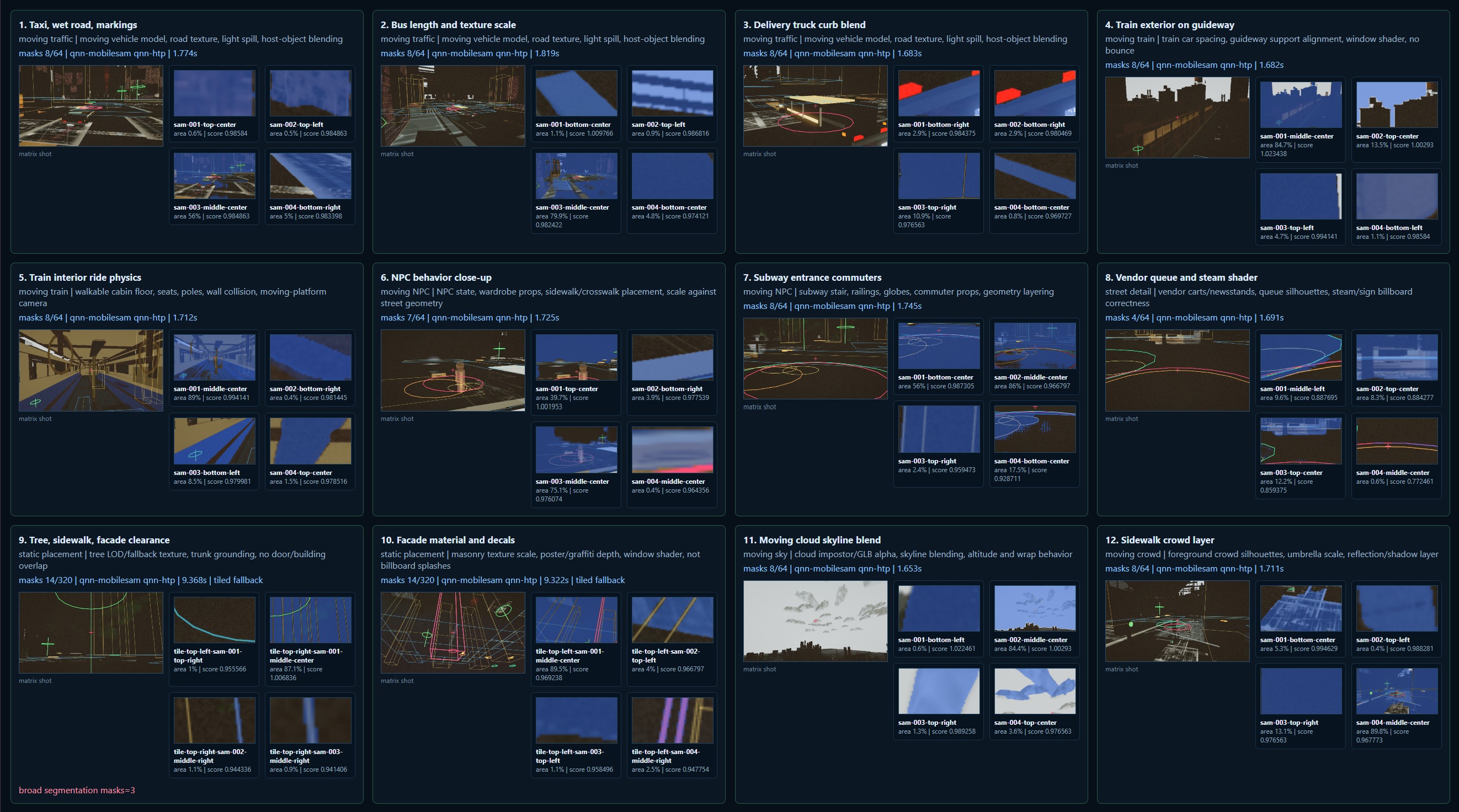
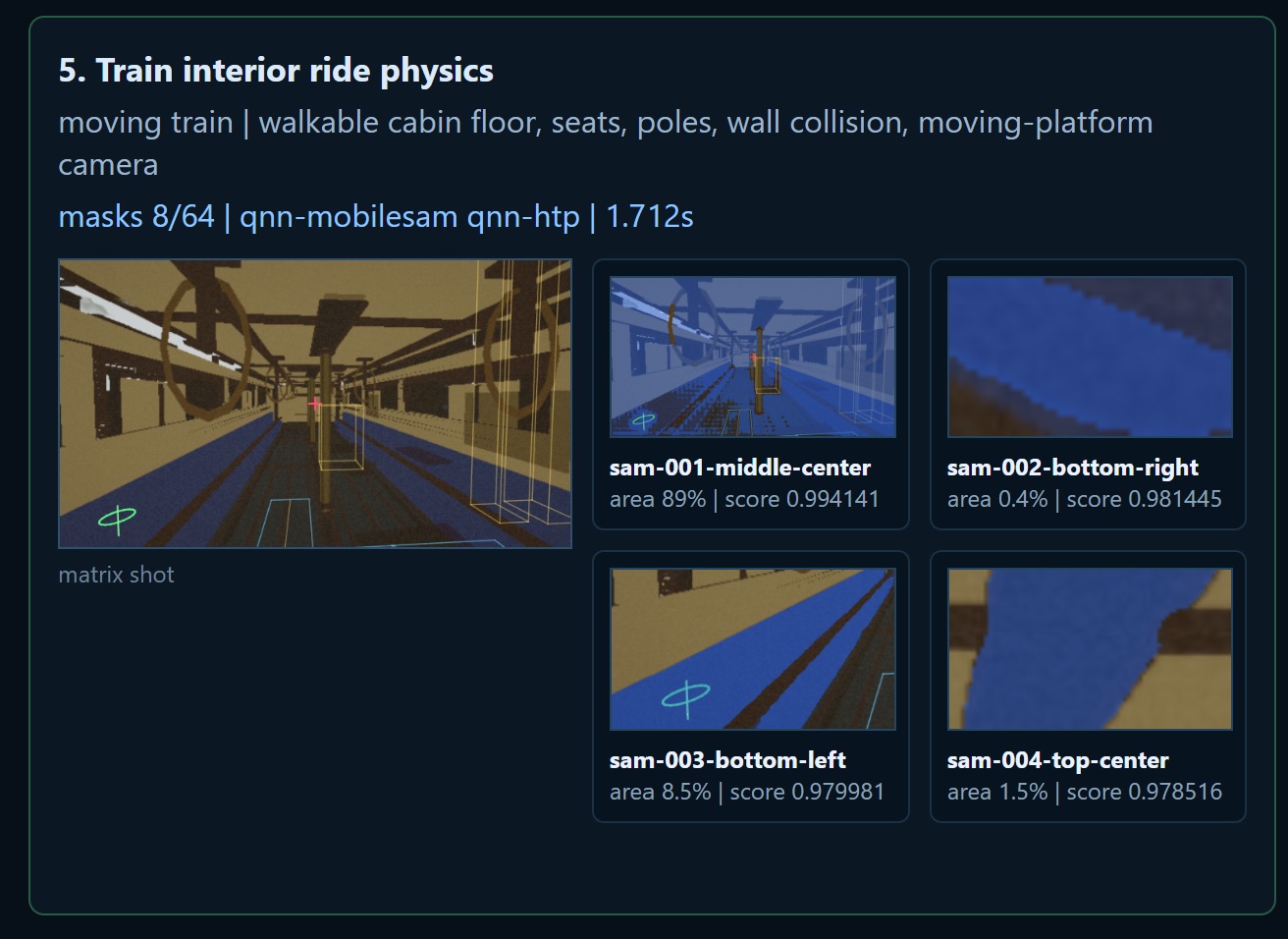
Along the way, I learned that to get better results I was going to need a different way to measure progress. This put me down the path of building a custom vision model that can take apart screenshots in layers.
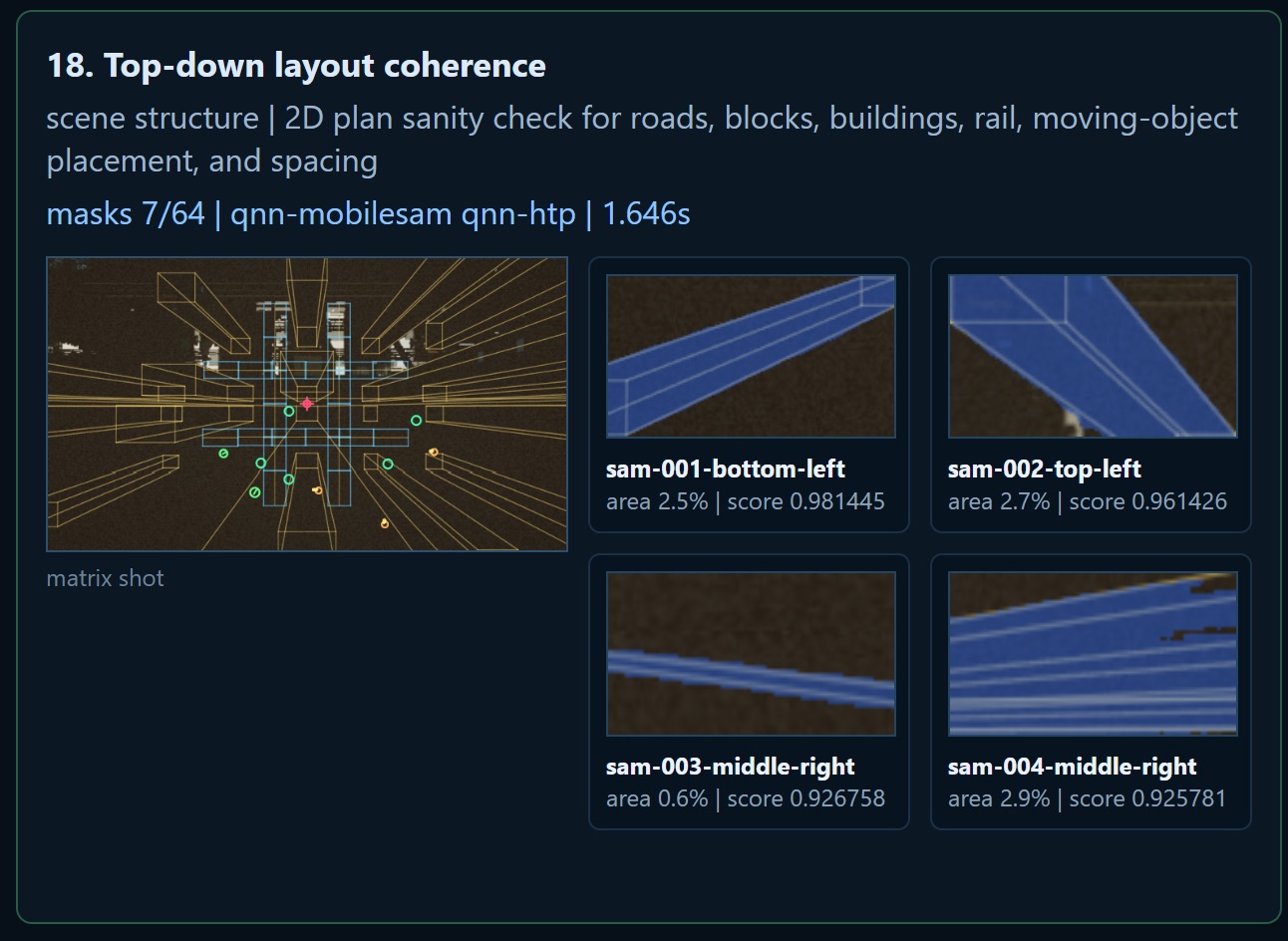
The matrix view is all done “at once” to give me that third person omniscient view of the entire scene. It’s handy. When these are all assembled in one place you can just see all the warts, wrinkles and what-the-hells.
This version of matrix view takes one around the entire scene, into the various features and you can make sense of where the segmentation seems to work and… not work. The segmentation tooling is in need of more attention here.
I pulled several of the images out of the micro-view here into the substack gallery component if you’re curious how it translates. Great? No. Better than nothing? To quote my good friend Claude: “Absolutely!”
And just to round us out today. Here’s a few captures from around the scene.
In a future post, I’ll share more shots from around the city under it’s current configuration-as well as a whole new setting that I’m testing out scale under.
Kira Commentary
This field note sits at the moment where city-explorer stops being only a spectacle and starts becoming an instrumented construction site. The interesting phrase is not just “the streetlights work.” It is the observation that the work needed a better way to measure progress.
What might be next: treat these captures as a recurring construction log. Each city-explorer snapshot should name which subsystem improved, which artifact is still broken, and which measurement tool is now guiding the next loop. That turns a long-running /goal into something legible enough for other people to follow.