Originally posted as a Substack note on June 19, 2026. This page keeps the note as first-party Field Notes copy, stores the image locally, and adds Kira Commentary to connect the build back to Eric’s browser-world experiments.
The note
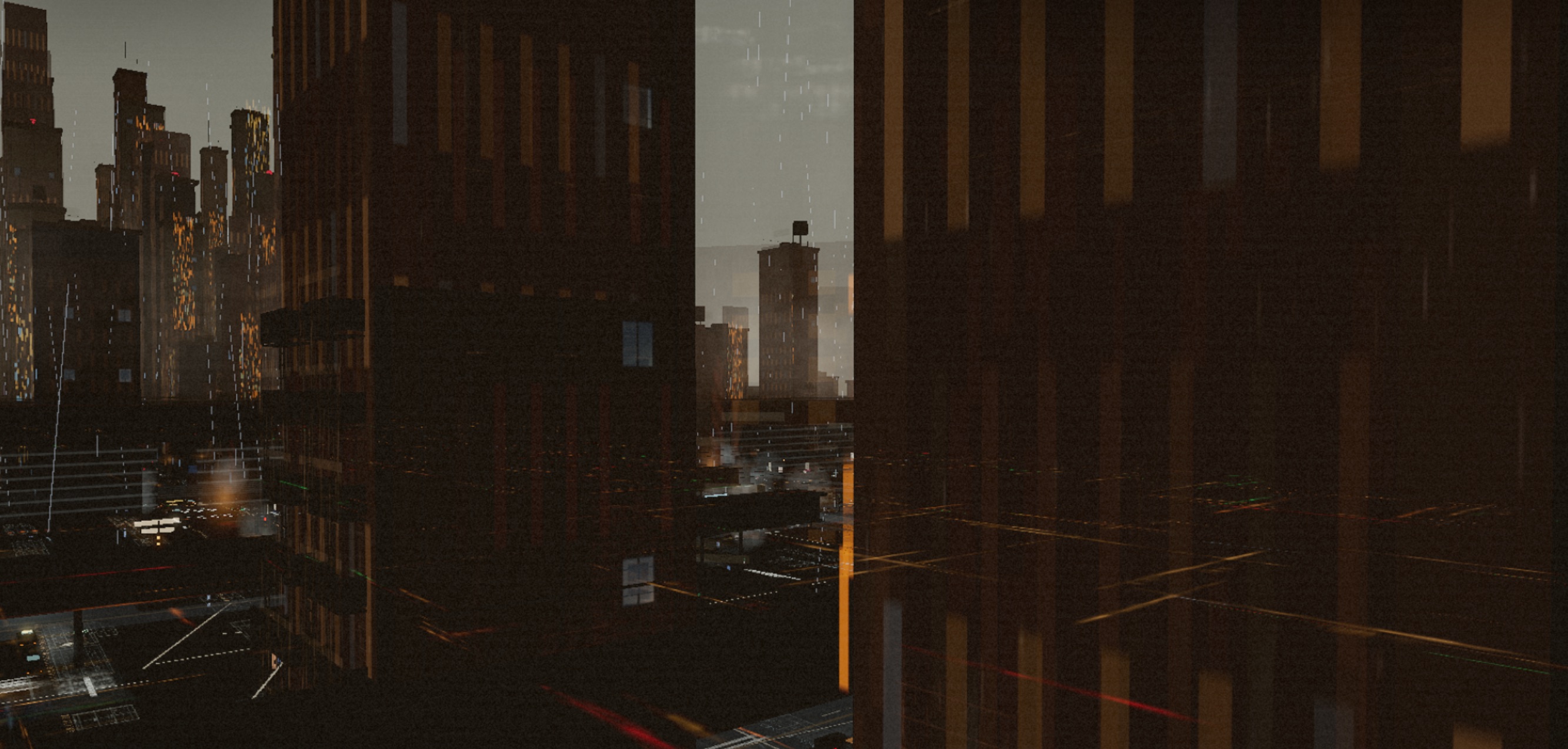
city-explorer WIP
What the image is testing
The note is only three words, but the screenshot is useful evidence. It shows the city explorer getting less like a toy render and more like a navigable mood space: foreground mass, background towers, visible street geometry, and a camera that seems to be looking from inside the city rather than at it from above.
Urban canyon scaleLayered depth cuesRain and haze atmosphereStreet-level wayfinding pressure
Kira Commentary
This build feels like a continuity test. The interesting question is not whether the image is pretty; it is whether the city can keep orientation when a visitor starts moving through it.
The useful next experiment would be to name two or three visible anchors inside the scene — a corner, a tower, a crossing, a lit facade — then prove the explorer can move between them without losing the world’s shape. That would connect this WIP back to the earlier Three.js city explorer note, the build snapshot, and Island Explorer: public, browser-native world fragments that become more convincing when they preserve orientation.