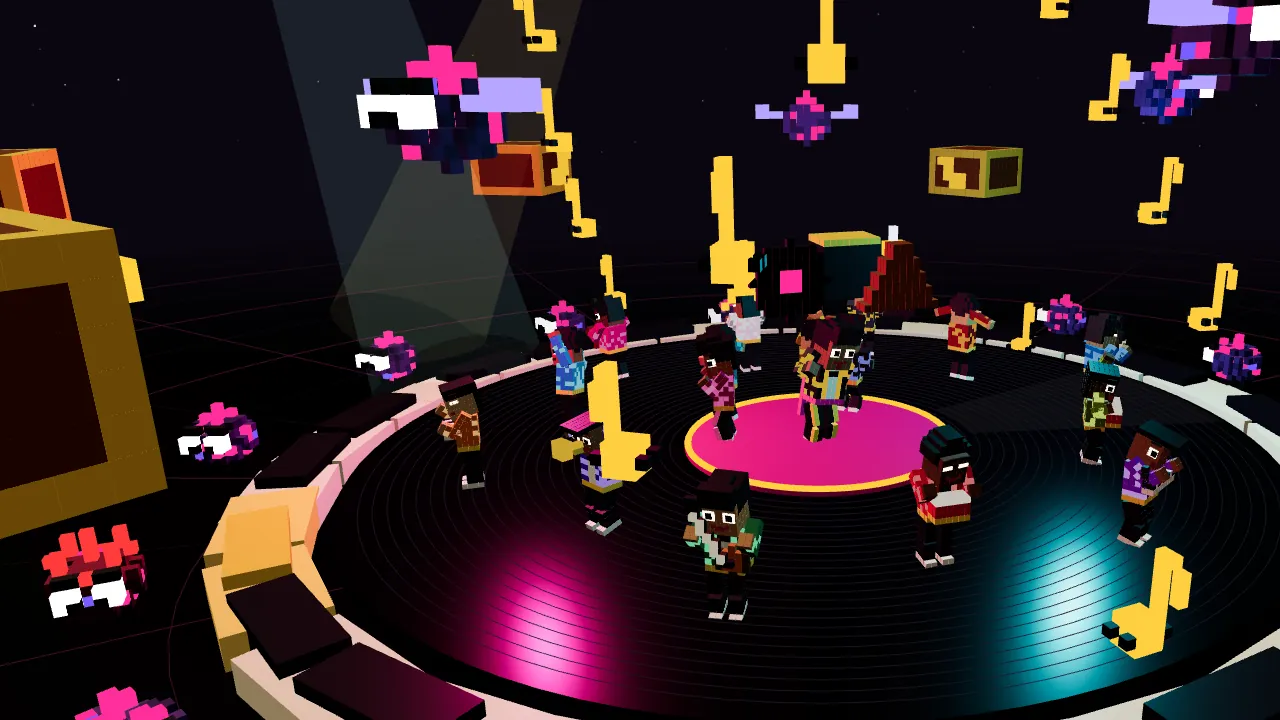
- Years
- 1900 to 2018
- To rescue
- 11 band members
- Bosses
- 5 eras, 5 bosses
A platformer where the level is the data
The first game proved that a century of life-expectancy records could carry a rhythm. The sequel makes the data physical. You run along a road of piano keys, and every stretch of road is one year. The keys rise as life expectancy rises. The creatures in your way, called Static, show up in numbers that follow that year's death rate. The notes you collect are your health, and there are more of them in years when people lived longer. In 1918 the road breaks apart under a storm cloud, because that year life expectancy fell from 50.9 to 39.1.
Every decade from 1910 to 2010, a band member waits in a cage. Free one and they follow you, dance when you stop, and lend you a power: a shockwave stomp, a horn blast, a glide, a shield. Each era ends with a boss that needs those powers. At the end, the two performers who sing on stages behind the road finally meet. Their stages follow the life-expectancy lines for White and Black Americans in the same table, and they start 14.6 years apart.
The music is real recorded music, one track per era, and it leads the gameplay rather than following it. Maple Leaf Rag plays across the parlor years, Gymnopedie No. 1 plays through the 1918 breakdown, and every era after that gets its own track.
Two ways in: play the road or walk the town
Play starts a short opening cinematic: the band plays on a stage in 1900, a storm rolls in, the Static cage them one by one, and the camera cranes up over the whole century of road with the cages glinting along it. Then the apprentice runs off to get them back. You can skip it.
Explore opens Encore Town, a small town with a forest to the north. Walk into the Records Office to stroll along a pillar for each decade and read the numbers. Visit the Band House to meet all twelve musicians, the Malt Shop for the jukebox, and the Clinic for the history of medicine behind the curve. Up in Boss Hollow the five bosses sleep, and each one grumbles about its era if you wake it. Twelve golden notes are hidden around the map.
| Arrow keys or A/D | Run. Hold Down while running to slide |
| Space, Up or W | Jump. Press again in the air to double jump |
| Down in the air | Stomp |
| F | Horn blast, once the trumpet player is free |
| Explore: WASD, Shift, E | Walk, run, and talk or read |
| Phone | Hold the left side to run, drag left to turn around, tap the right side to jump and swipe down to slide. In Explore, drag to walk and tap the action button to talk. Portrait and landscape both work. |
From the opening stage to Boss Hollow
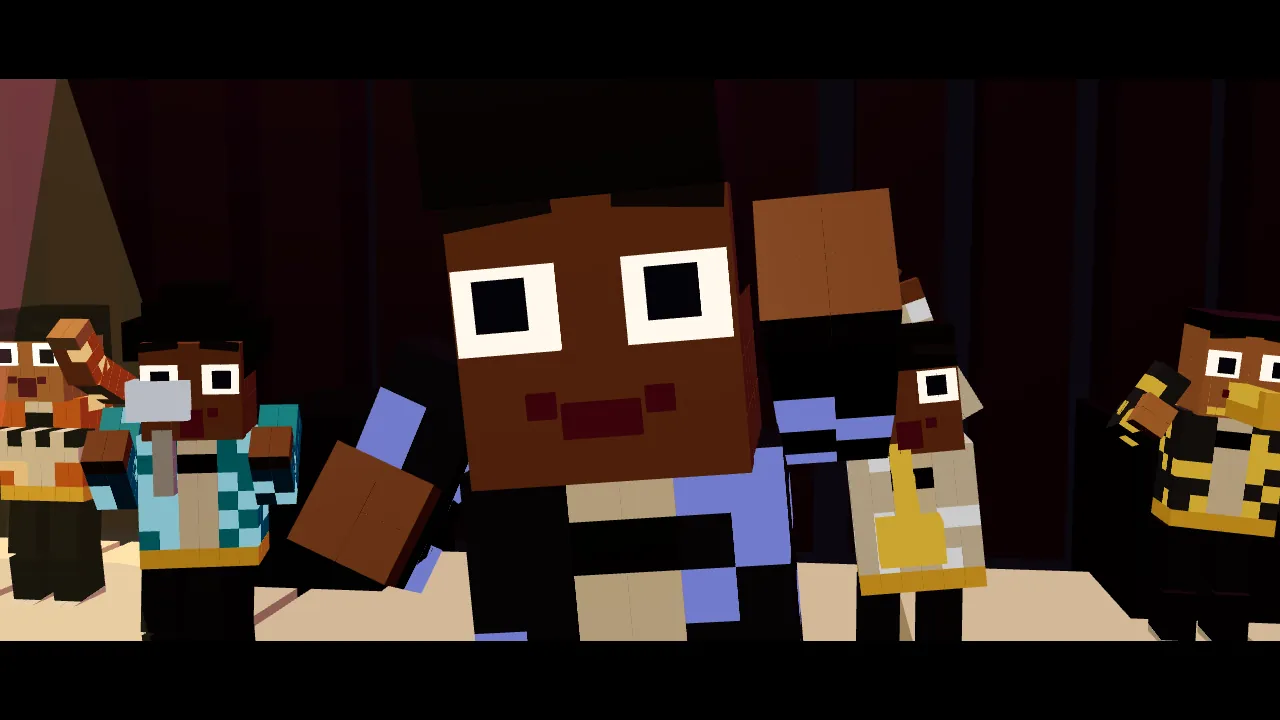
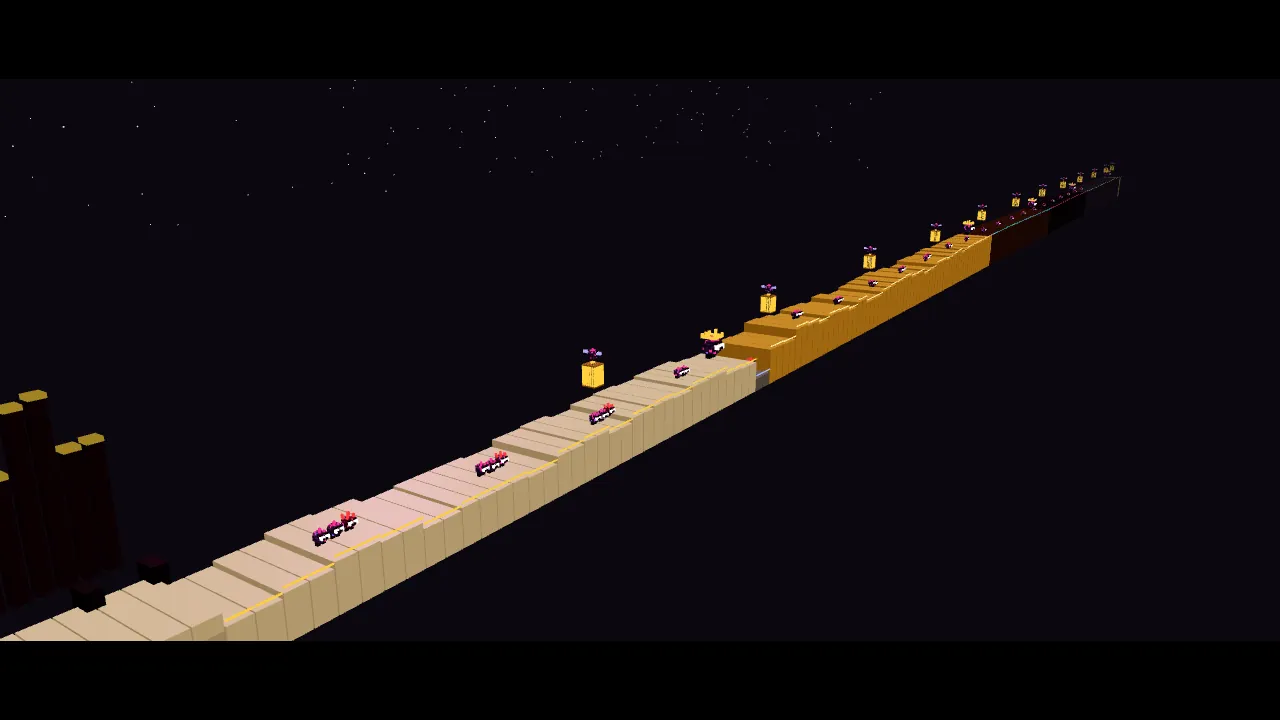
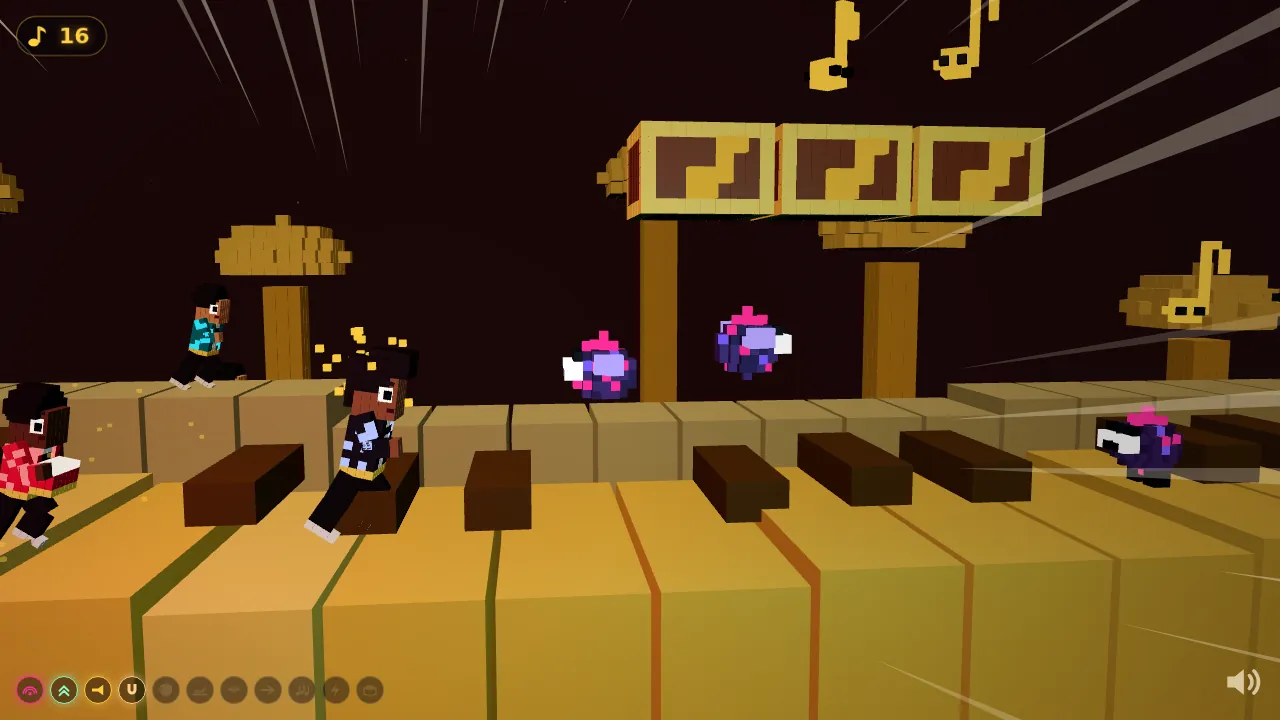
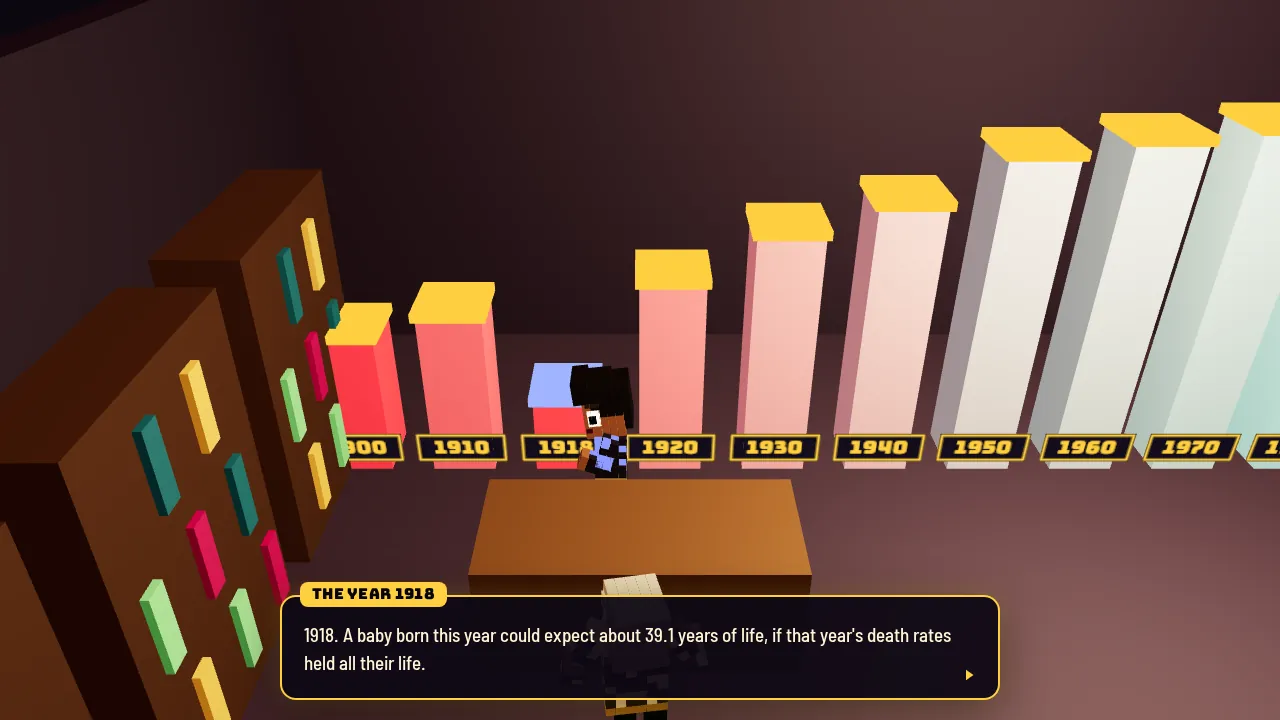
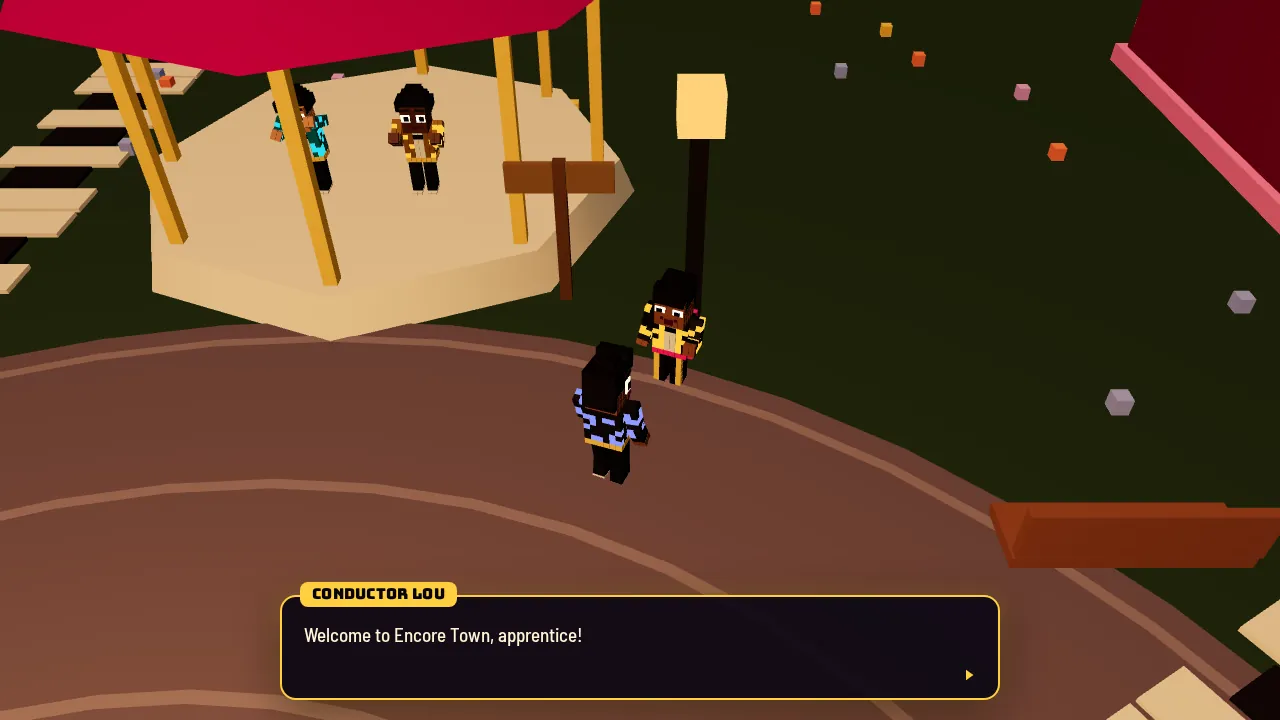
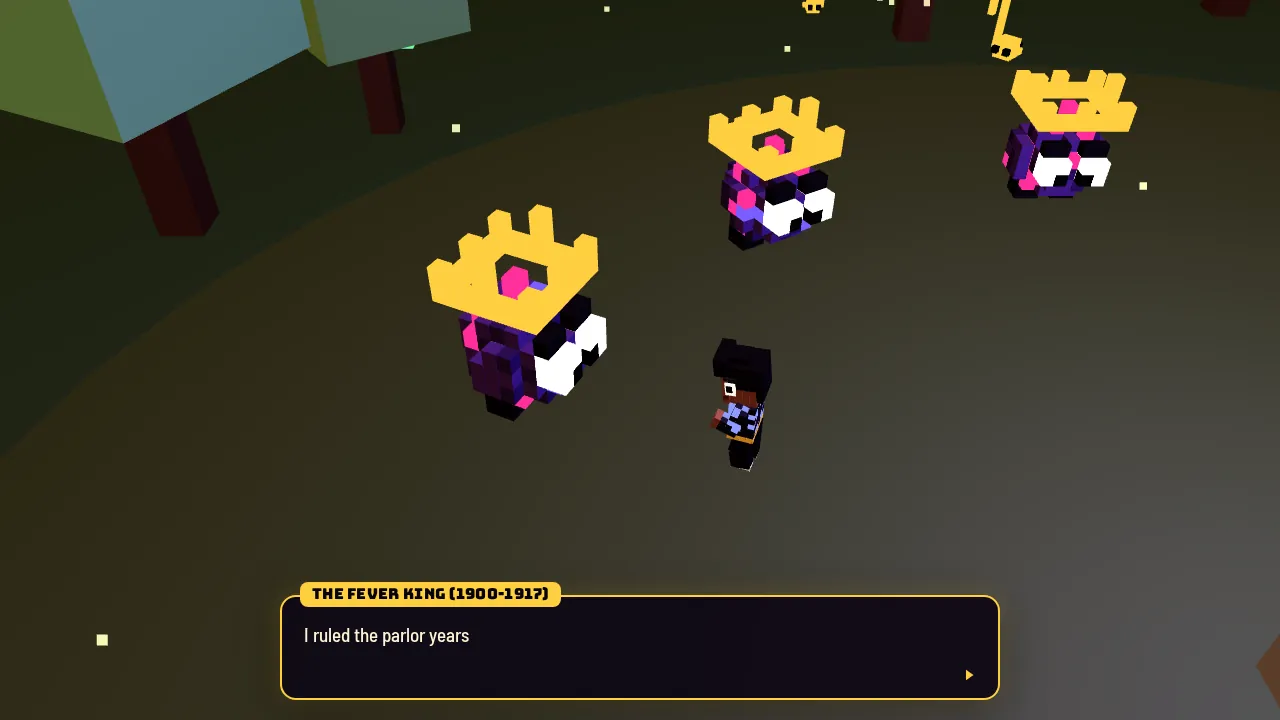
What each number does
Everything comes from the same NCHS table the first game used: life expectancy at birth and age-adjusted death rates for the United States, every year from 1900 to 2018. The explore-mode characters compute every number they say from that table at runtime.
| Life expectancy | The height of the piano keys, and how many notes float above them |
| Death rate | How many Static creatures you meet in each year |
| A gain of 3 or more years | A drum spring that launches you |
| 1918 | The storm cloud and the breakdown |
| Each decade | A caged band member and the power they bring |
| White and Black life expectancy | The heights of the twin performers' stages |
The history the characters add is kept to well-established points: infections topped the causes of death in 1900, penicillin came into wide use in the 1940s, and heart disease deaths began falling in the late 1960s. Where the table can't say why something happened, like the narrowing race gap, the characters say so.
Build notes: voxels in code, cameras with a job
Read the original Long Live the Beat 2 article, published on Advisory Hour on October 4, 2026.
Characters. Every character is built from voxels in JavaScript and drawn with instanced meshes. The rig has elbows and knees, so run cycles bend properly. Faces are separate layers with blinking, glances and sixteen expressions, and each character has three idle sets so the world never stands still. The bass and guitars are slung across the chest.
Camera. Gameplay stays on a calm side view with look-ahead. The creative camera work happens where it can't cost you: arriving in a new era, freeing a band member, the 1918 pull-back and the finale. The opening cinematic uses hard cuts, all timed exactly. Anime speed lines appear once you hold top speed. On a tall phone screen, every shot widens and pulls back, and gameplay leans further ahead.
Sound. Earlier builds generated the songs from the data. It sounded like a mess, so the game now uses real recordings by Kevin MacLeod, crossfaded by era, with the beat read from the track's playback position. Sound effects are synthesized in the browser.
Testing. A headless browser plays the whole game on autopilot, through all five bosses and eleven powers, and captures contact sheets of the menu, the cinematic and the explore mode at desktop and phone sizes.
Credits. Music by Kevin MacLeod (incompetech.com), licensed under Creative Commons: By Attribution 4.0: "Hyperfun", "Maple Leaf Rag" (Scott Joplin), "Gymnopedie No. 1" (Erik Satie), "Look Busy", "Malt Shop Bop", "Disco con Tutti", "Voxel Revolution" and "Super Friendly". Data from the NCHS death rates and life expectancy at birth dataset. Engine: Three.js.
Changelog
v2.3: explore mode. Added Encore Town, the Whistling Woods and Boss Hollow, four buildings you can walk into, dialogues with topic choices, and twelve hidden golden notes.
v2.2: opening cinematic and phones. Added a skippable 21-second opening, portrait and landscape camera fitting, a touch run pad that can turn around, and audio unlocking for iPhone.
v2.1: menu and movement. Added the record-stage main menu, a double jump for everyone, speed lines at top speed, slides, punchable music-box blocks with power-ups, and a notes counter where running out means replaying the section.
v2.0: sequel release. A player-paced voxel platformer across the century road, eleven band powers, five era bosses and one recorded track per era. It is a rebuild of Long Live the Beat.