- Campaign
- 11 tracks
- Garage
- 5 loadout slots
- Rival field
- Up to 3 trucks
- Runtime
- Local Three.js
The mud is not decoration
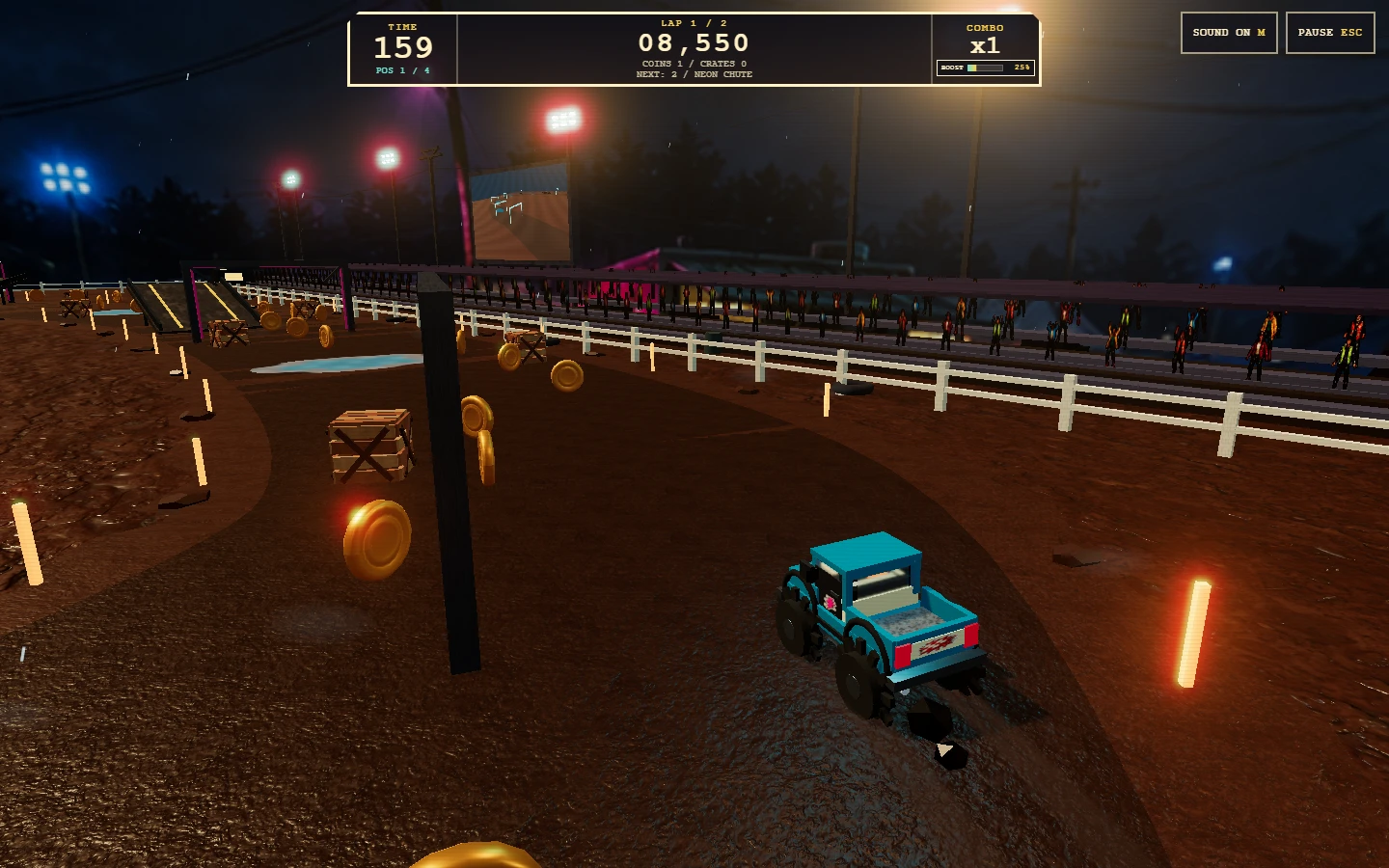
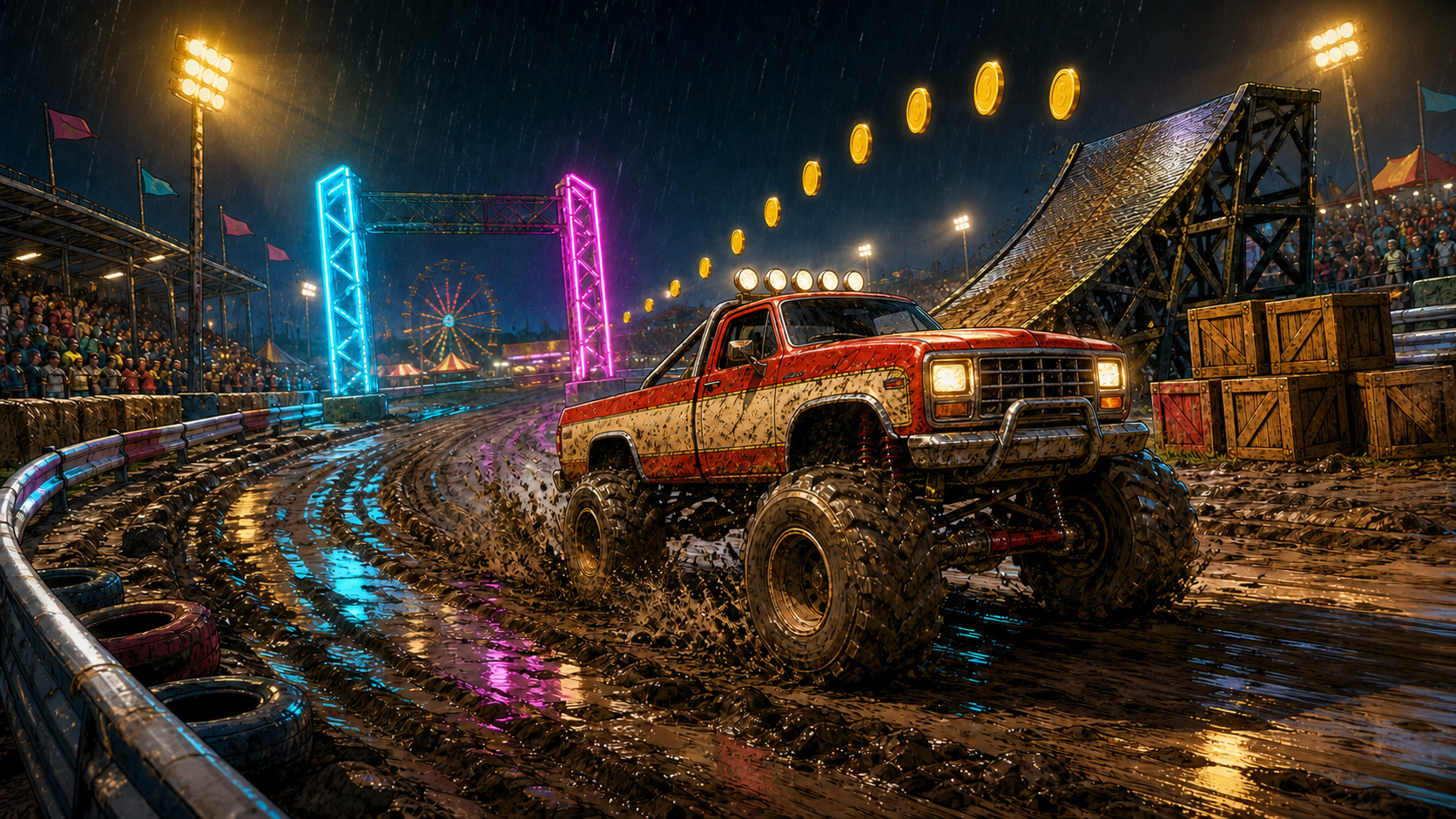
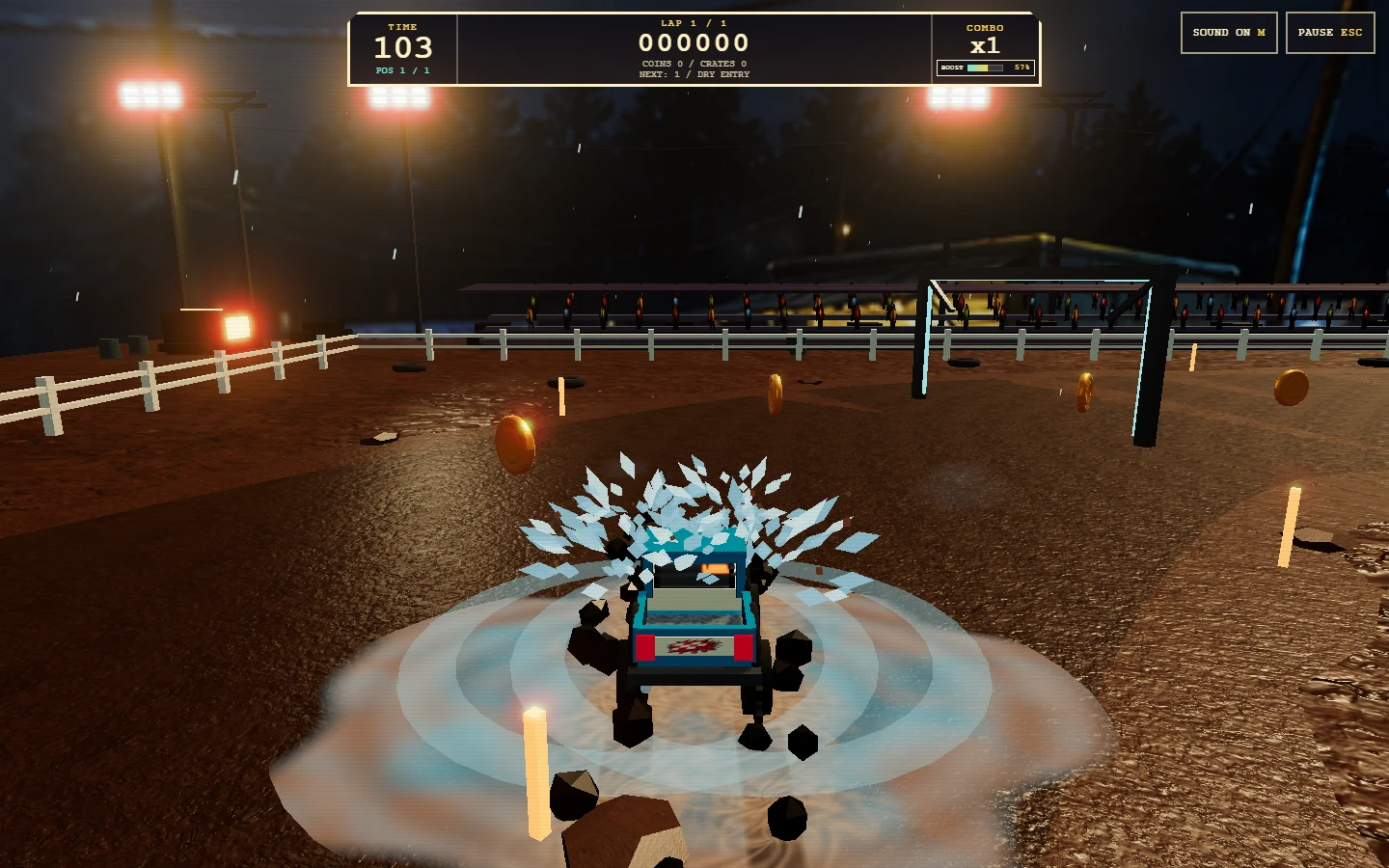
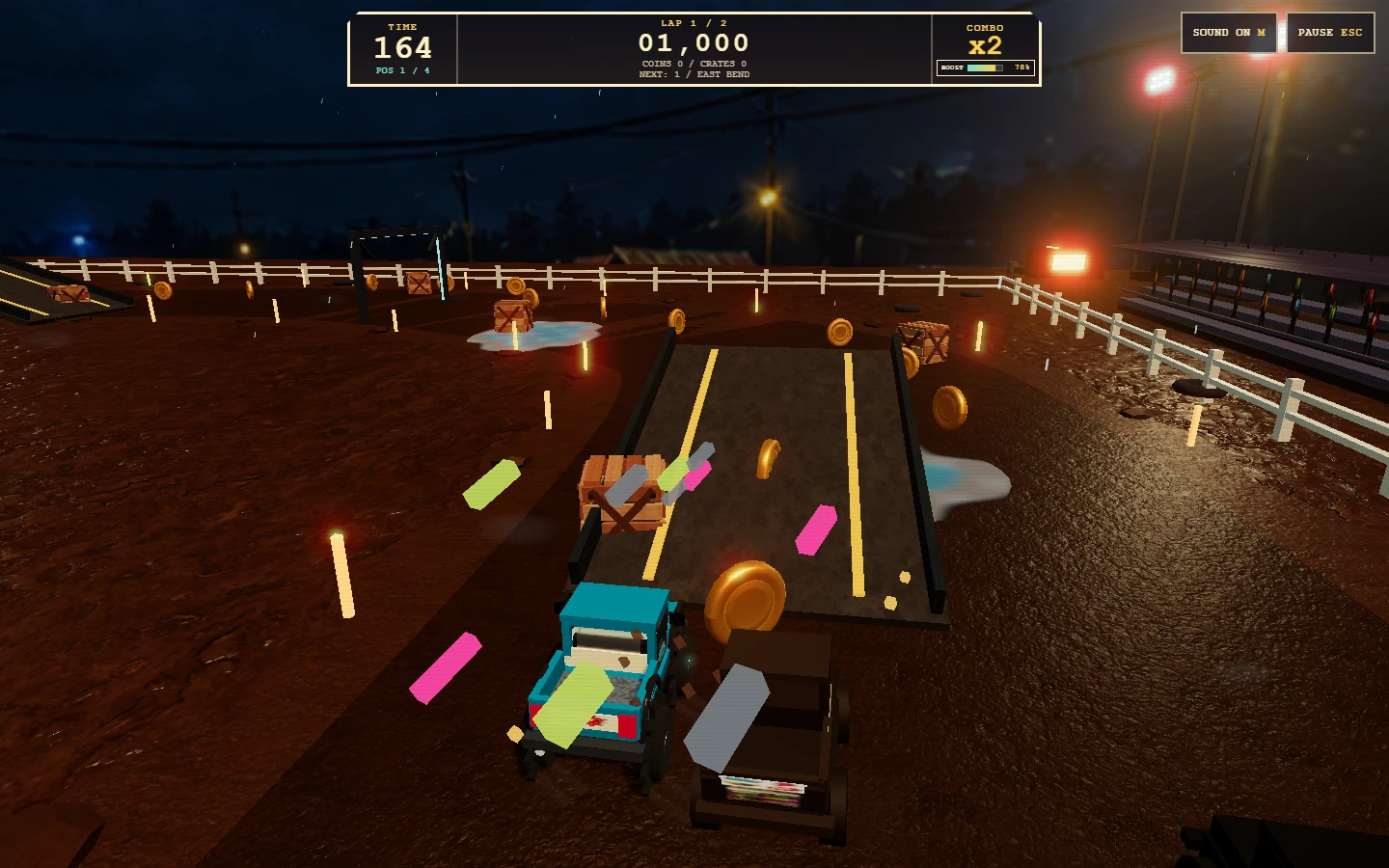
Mud Truck '99 is a closed browser-game experiment built around one question: can a track surface teach the player how to drive? Puddles carry wetness onto the exit. Deep mud takes speed. A clean line preserves momentum. A crate shortcut pays in score and splinters, then sends the truck into the next corner with less speed than it had before.
The game answers with an arcade campaign instead of a simulation manual. Follow the next cyan gate, read what the truck does, and decide whether the straight ahead is worth a coin line, a ramp, a pass, or a burst of boost.
Everything runs from static local files. Scores, medals, settings, campaign progress, and garage purchases stay in browser storage. The game makes no analytics or gameplay network calls.
Eleven tracks teach one decision at a time
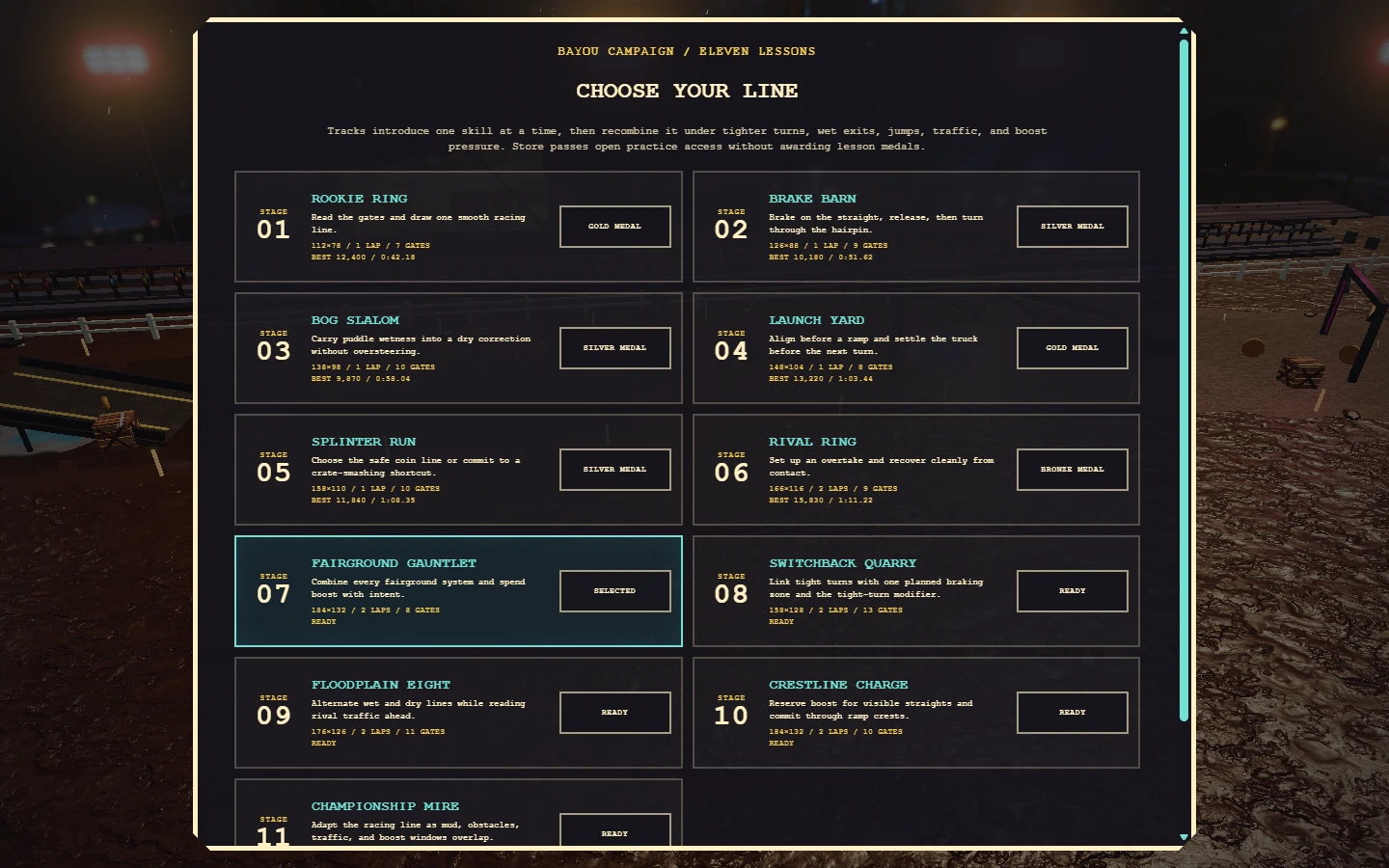
The first courses isolate a skill. Later courses put the old choices back together under traffic and time pressure.
Find the line
Rookie Ring teaches ordered gates. Brake Barn adds a real braking zone. Bog Slalom asks the truck to leave water without losing the dry recovery.
Commit on purpose
Launch Yard rewards alignment before takeoff. Splinter Run makes the player choose between clean coins and a destructive crate shortcut.
Add other trucks
Rival Ring introduces passing and contact. Fairground Gauntlet adds boost pressure. Switchback Quarry tests early braking and tight-turn steering.
Recombine everything
Floodplain Eight, Crestline Charge, and Championship Mire overlap wet lines, traffic, ramps, boost, and the need to think two gates ahead.
Read, commit, recover, repeat
- Read the gateOnly the next cyan checkpoint advances the route.
- Choose a lineCoins, crates, puddles, ramps, and rivals create different costs.
- Control the truckBrake early, countersteer, or hold the tight-turn modifier.
- Earn boostDrifts, landings, passes, near misses, and smashes refill the reserve.
- Recover quicklyReset from a buried line and protect the next attempt.
- Bank the resultMedals, times, coins, and the next lesson persist locally.
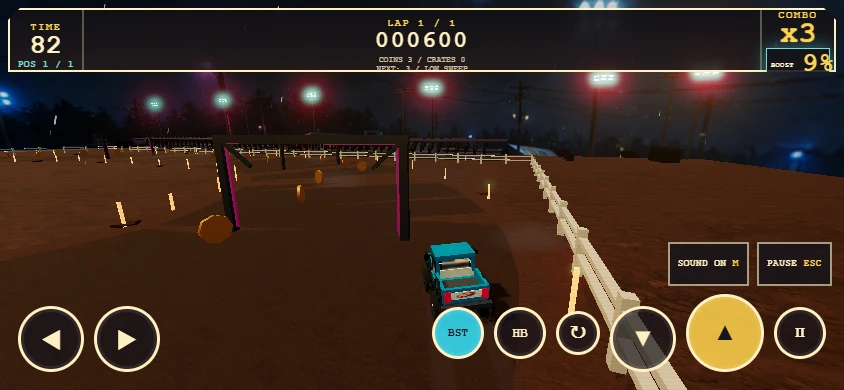
The menu, the mud, and the consequences
The garage changes the tradeoff
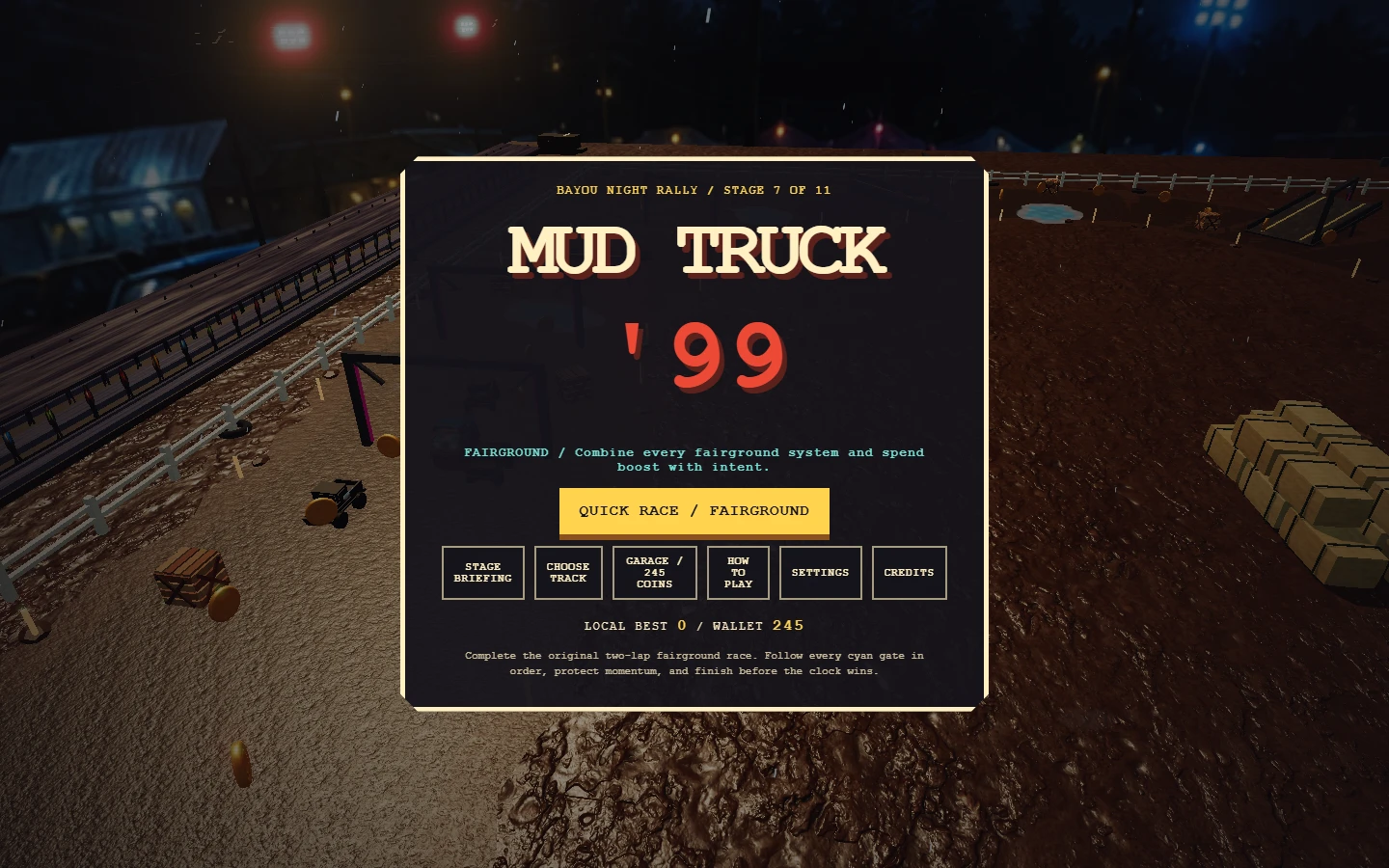
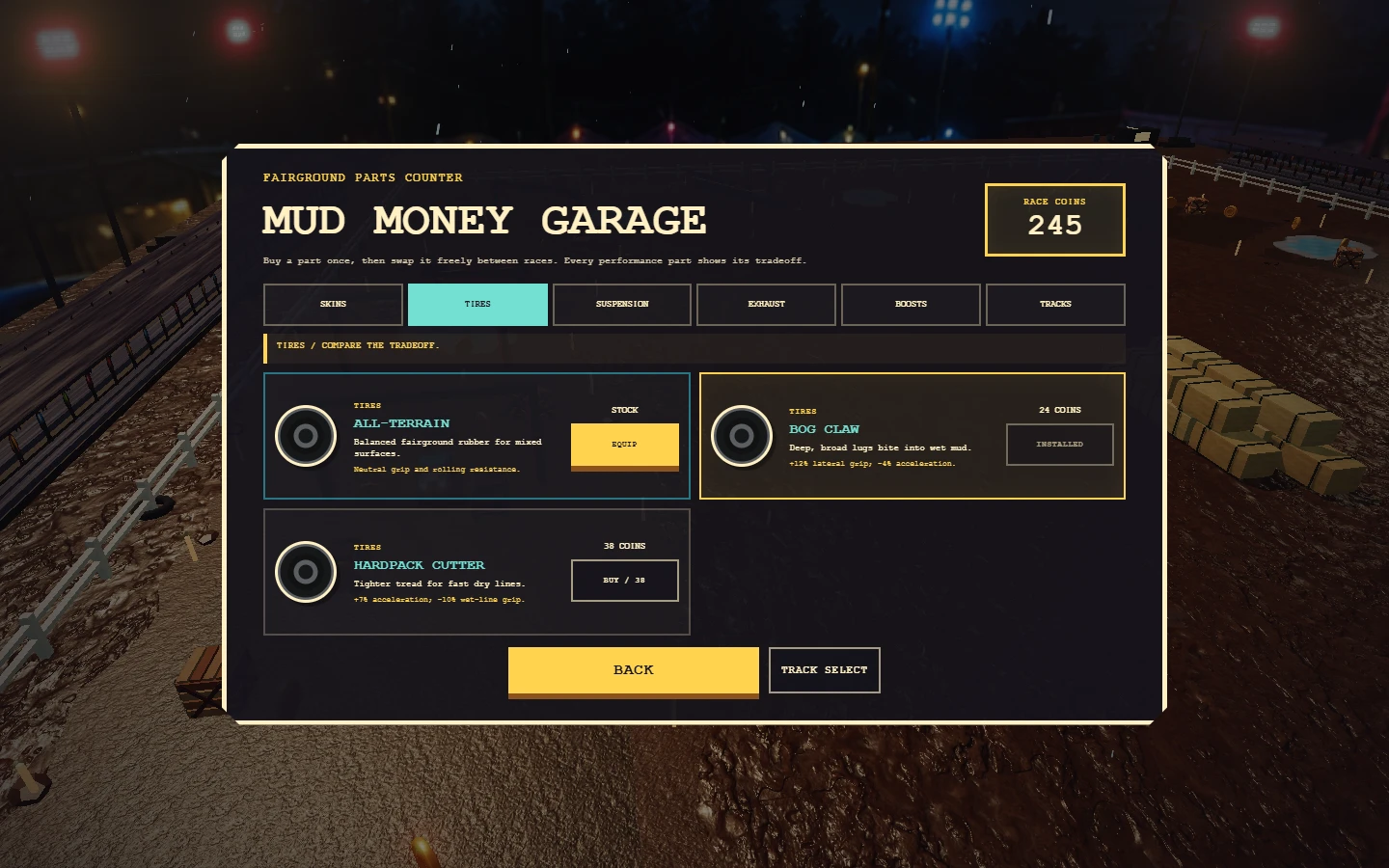
Race coins buy three paints, three tire profiles, three suspensions, three exhausts, and three boost systems. A long-travel suspension settles harder landings. Bog tires hold wet lines but give up acceleration. The short boost cell hits hard and empties quickly. The game keeps one choice in each slot, so a loadout is a set of decisions rather than a pile of permanent upgrades.
Handling Lab
Compare the legacy baseline, arcade speed, and final mud-rally target in a stripped-down top-down arena.
Open the Handling LabSpectator Lab
Switch between five fairground spectators, idle and cheer motions, and exact animation phases.
Open the Spectator LabWhat the closed experiment contains
The runtime uses Three.js r185, local PBR textures, adaptive drawing-buffer limits, restrained bloom, procedural rain and audio, persistent mud trails, breakable crates and fences, rival damage, automatic recovery, and a mobile-specific render budget. The game ships with no runtime framework or server dependency.