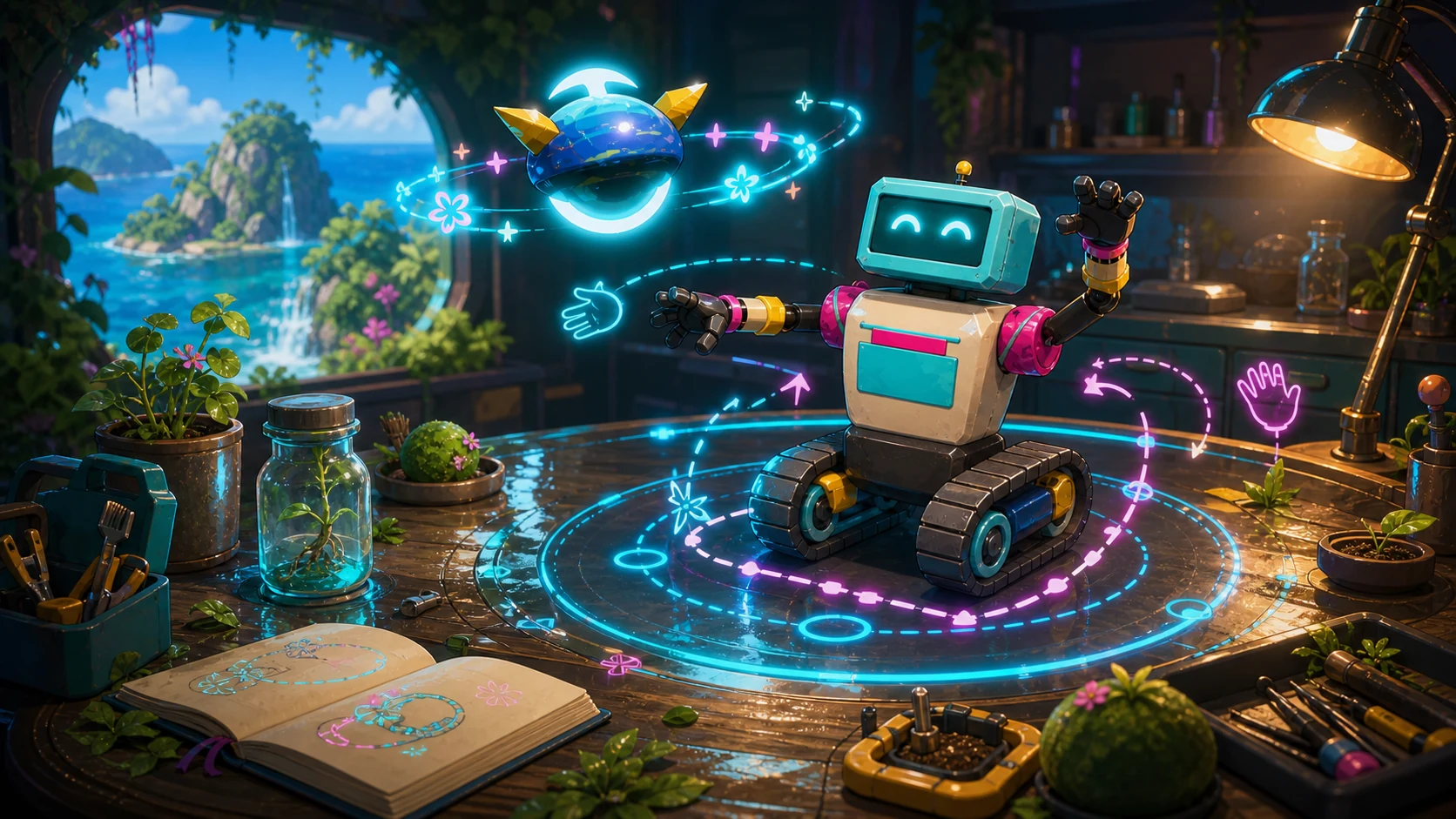
A repair adventure needs a body that can carry, scan, stomp, tighten, and stand in the rain. V3 answered with a blocky tracked robot that the original diary affectionately called a refrigerator of a robot.
The shape worked. Treads made contact with the ground easy to read. The bright face carried emotion without dialogue. Repair poses made every fixed cable and spinning machine feel like something the player had actually done.
From V3 to V4
V3 sends the robot through four ordered repairs and a long cleanup route. It collects story cards, unlocks costumes, visits Field League, and can recall to the summit after T is held for five seconds.
V4 gives the design more weight, clearer tread motion, livelier hands, stronger landings, and a larger face. It can look concerned, puzzled, curious, or delighted. It can even stop to inspect its own treads, which is either excellent maintenance or the beginning of professional doubt.
Is the robot named Pip?
V3 includes a 64-card collection called Pip and the Sixty-Four Small Fixes. Pip repairs many of the same kinds of things. The playable character is called Explorer Robot or Field Unit elsewhere.
No current project record says they are the same character. Pip remains the hero of the cards. Explorer Robot remains the name of the playable machine.
How the character works
V3 uses a Blender-authored GLB body tied to repair, cleanup, costume, card, League, and saved world systems.
V4 separates movement from presentation. Tracked drive controls travel and turning. Rig binding, face state, hand choreography, idle behavior, jump and landing presentation, track motion, and action routines add character on top.
Named behaviors include concern, celebration, puzzlement, lookout, signal listening, tread inspection, drone waltz, takeoff, landing, and interaction. Desktop and mobile models have separate manifests. Runtime fallback protects play if the preferred asset cannot load.
The connection from V3 to V4 is a clear design lineage. The project does not claim one proven fictional timeline between every build.