- Hero
- Pip
- Worlds
- 4
- Main idea
- Keep moving
- Status
- Complete
A fast dinosaur in a world that refuses to sit still
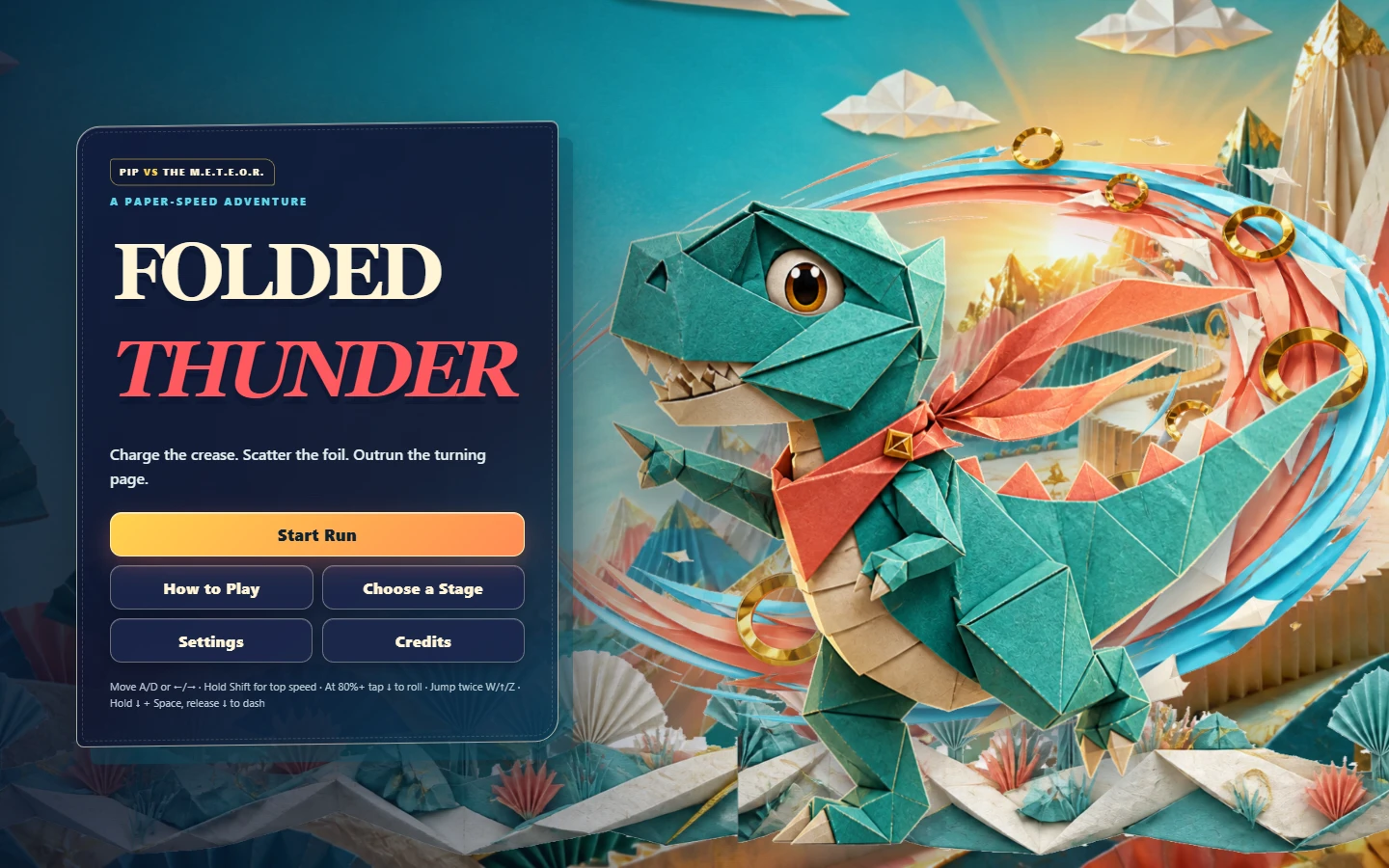
Pip is a little dinosaur made from folded paper. The Foldlands change every time they wake. Roads bend, leaves close their own cuts, and old stories curl toward new endings.
Mr. Blank hates that. His machine is called M.E.T.E.O.R., short for Meridian Engine That Enforces Ordered Reality. It will force the whole world into one perfect prediction. Pip answers this careful plan by running through it at top speed.
Folded Thunder began with the speed and loops of Sonic the Hedgehog in mind. The finished game found its own shape through paper-ball movement, crease gates, changing routes, and ornate machines that look much too expensive to kick.
Speed is a tool, not just a number
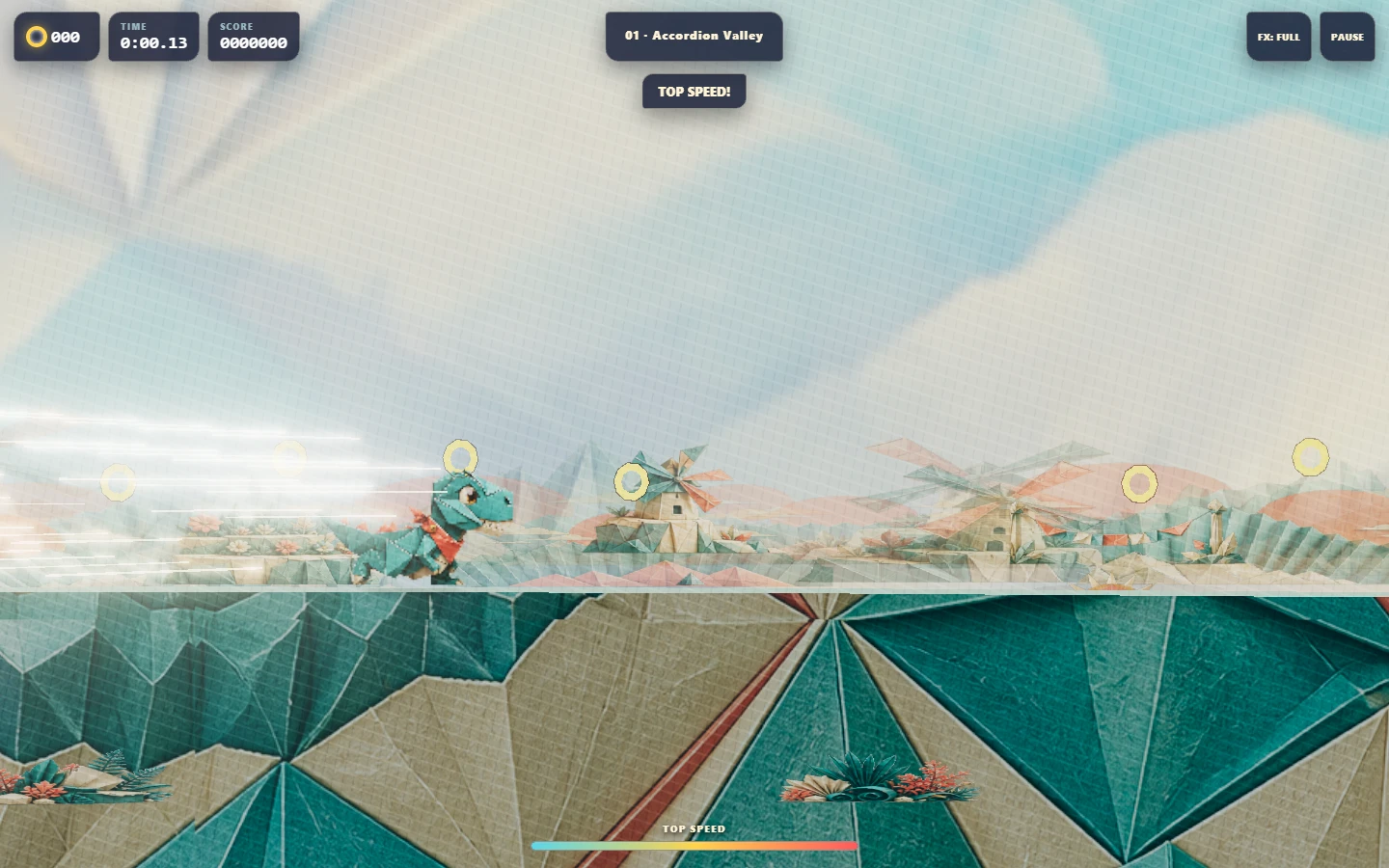
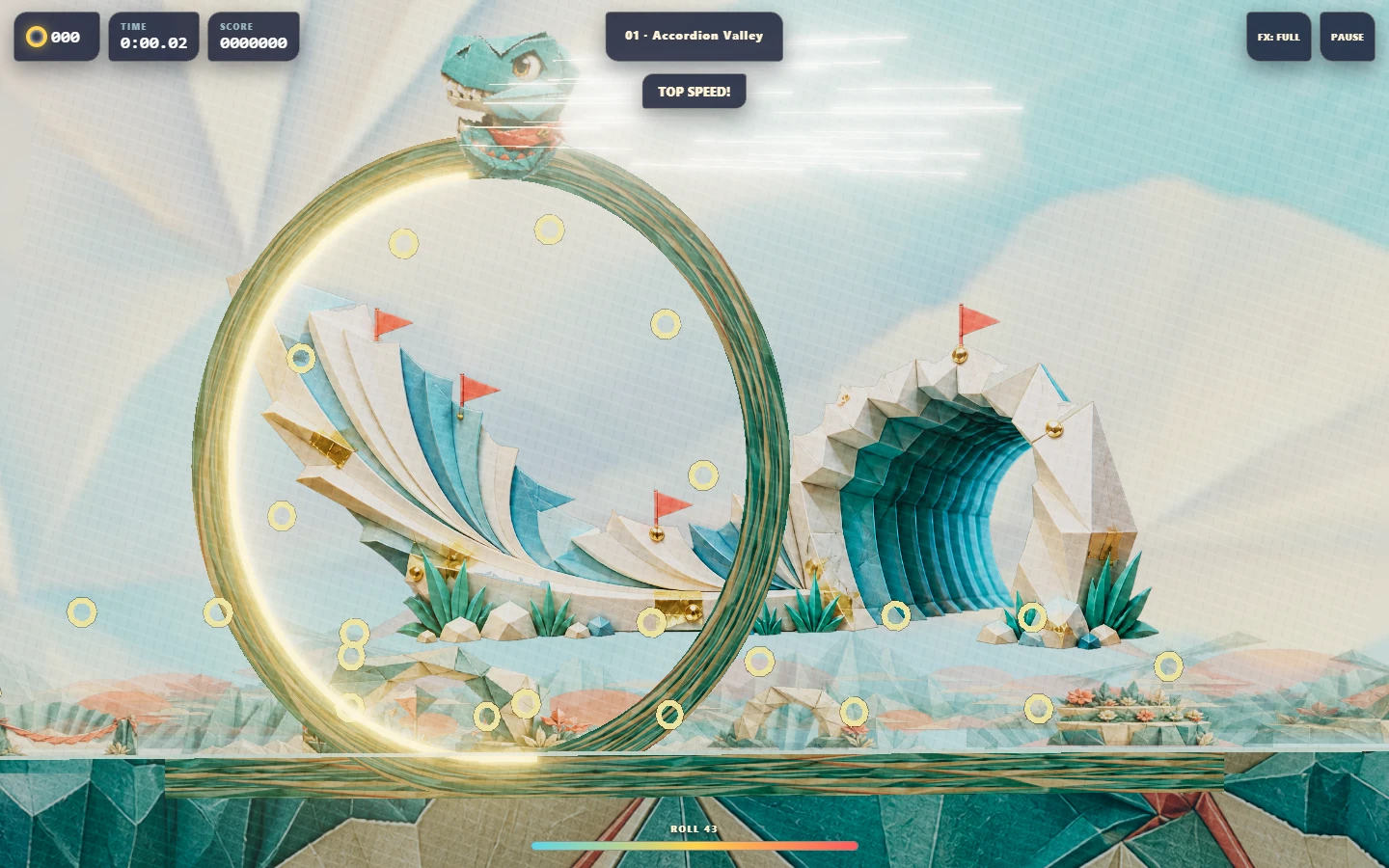
Most obstacles ask how Pip is moving. A slow jump reaches one route. A fast jump carries farther. A roll can break a gate, but only after Pip has built enough speed.
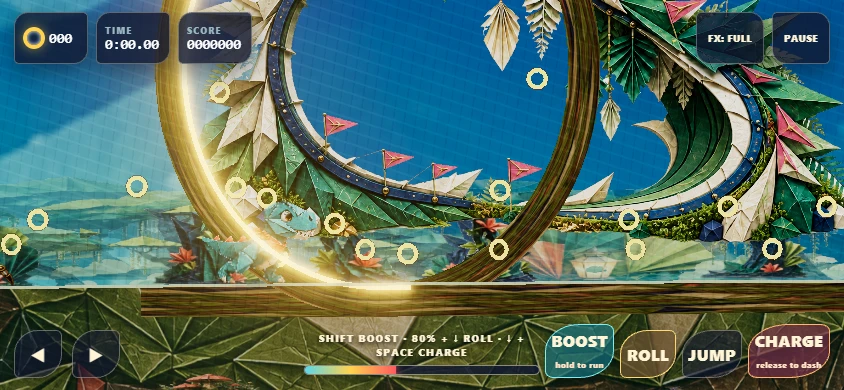
- A D or arrowsRunMove left or right and learn the slope of the page.
- Hold ShiftBoostKeep accelerating until the speed lines begin to fly.
- 80% speed + DownRollCurl into a paper ball and smash through crease gates.
- Space twiceDouble-foldJump again in the air for a second lift and a faster spin.
- Down + SpaceCrease dashCharge in place, then spring toward top speed.
Coins buy one more mistake
Coins are Pip's safety net. A hit spills up to ten of them across the page. Grab a few before they vanish and the run can continue. Take a hit with no coins left and Pip returns to the last checkpoint.
A Fold Shield gives three seconds of protection. Fast and safe routes also split apart. The quick route may hold more coins, but it usually asks for better timing.
Four worlds keep changing the question
Accordion Valley
Catch the sunrise, learn the crease, and topple the Grand Cartographer's giant compass.
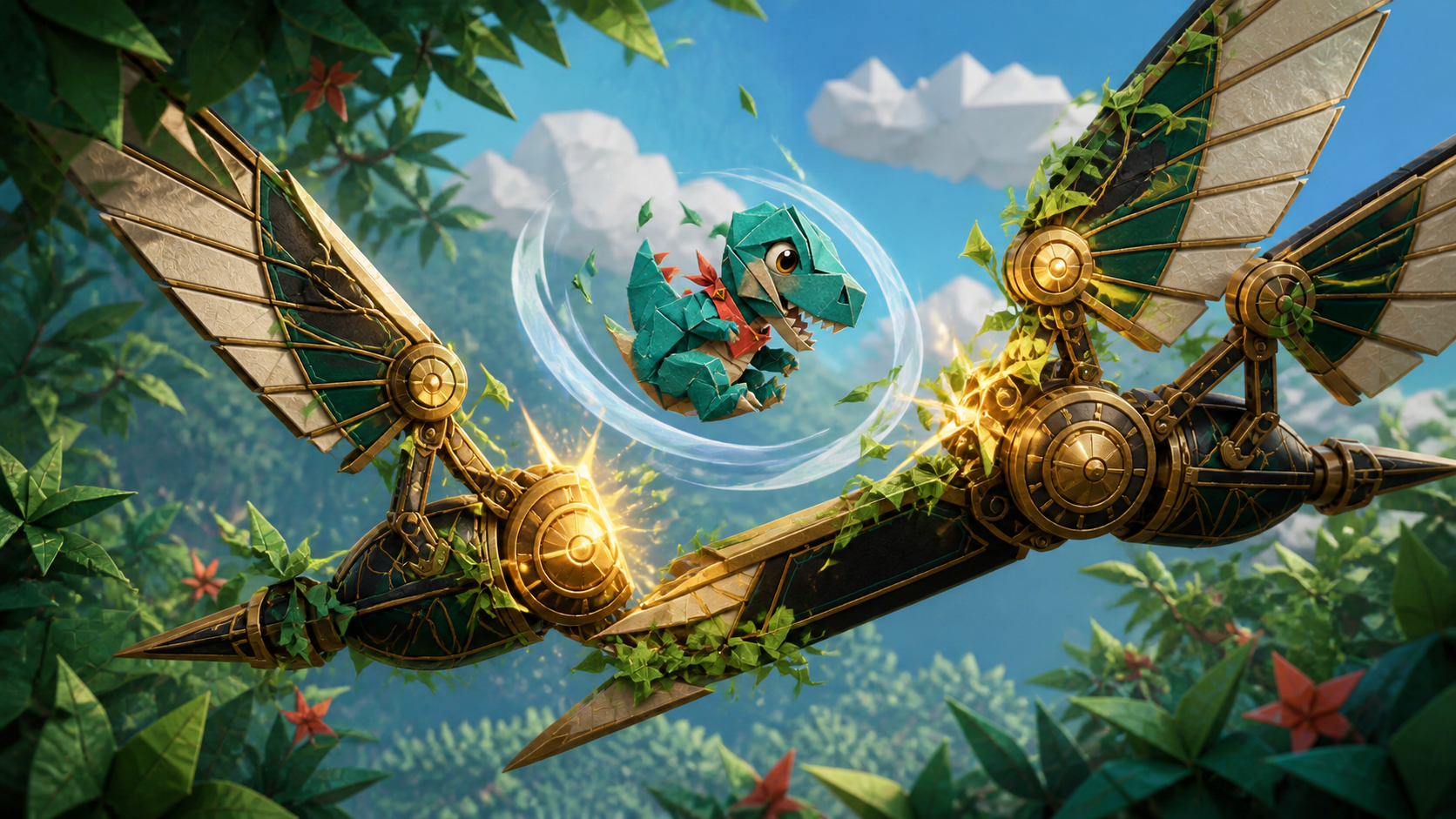
Canopy Fold
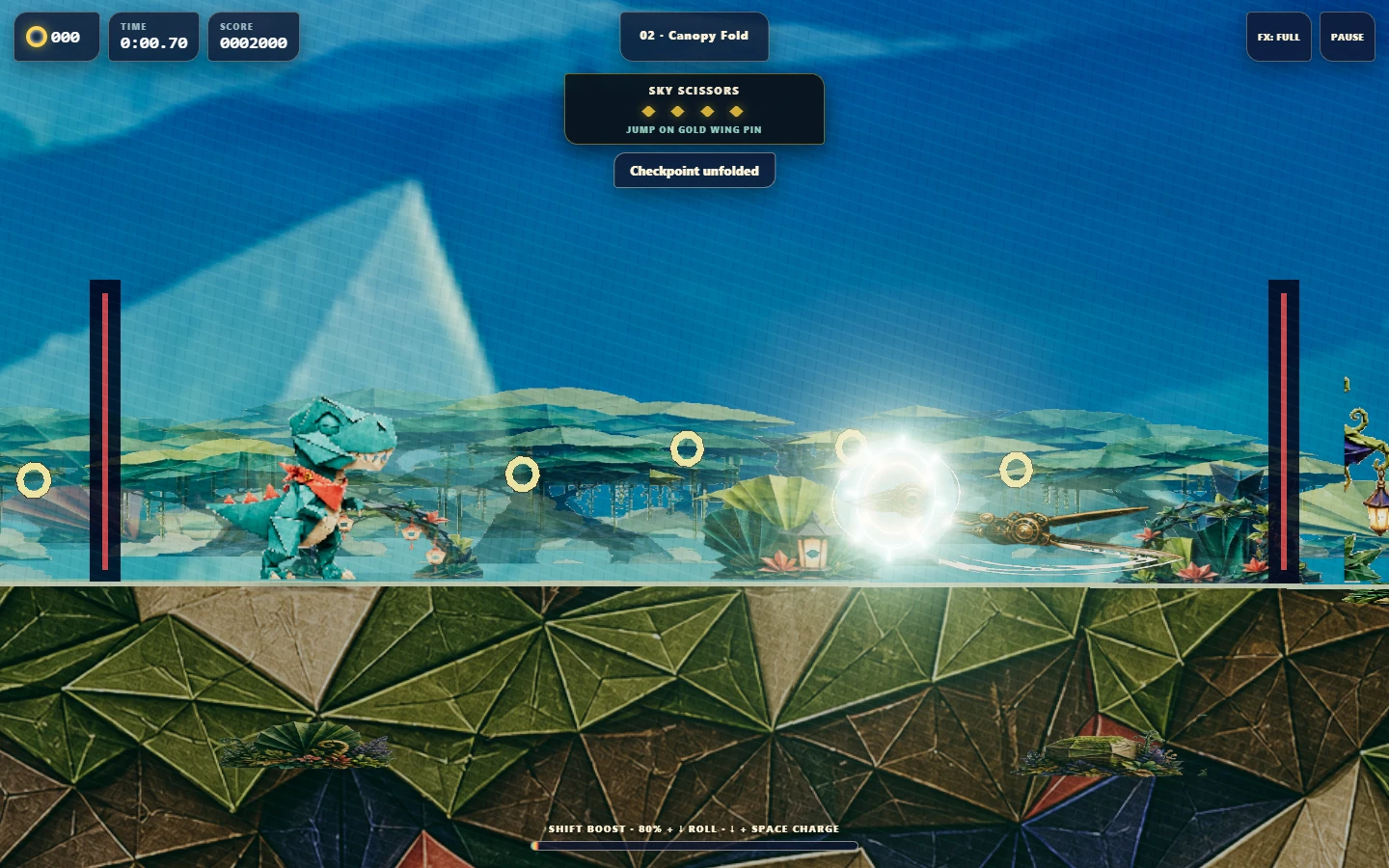
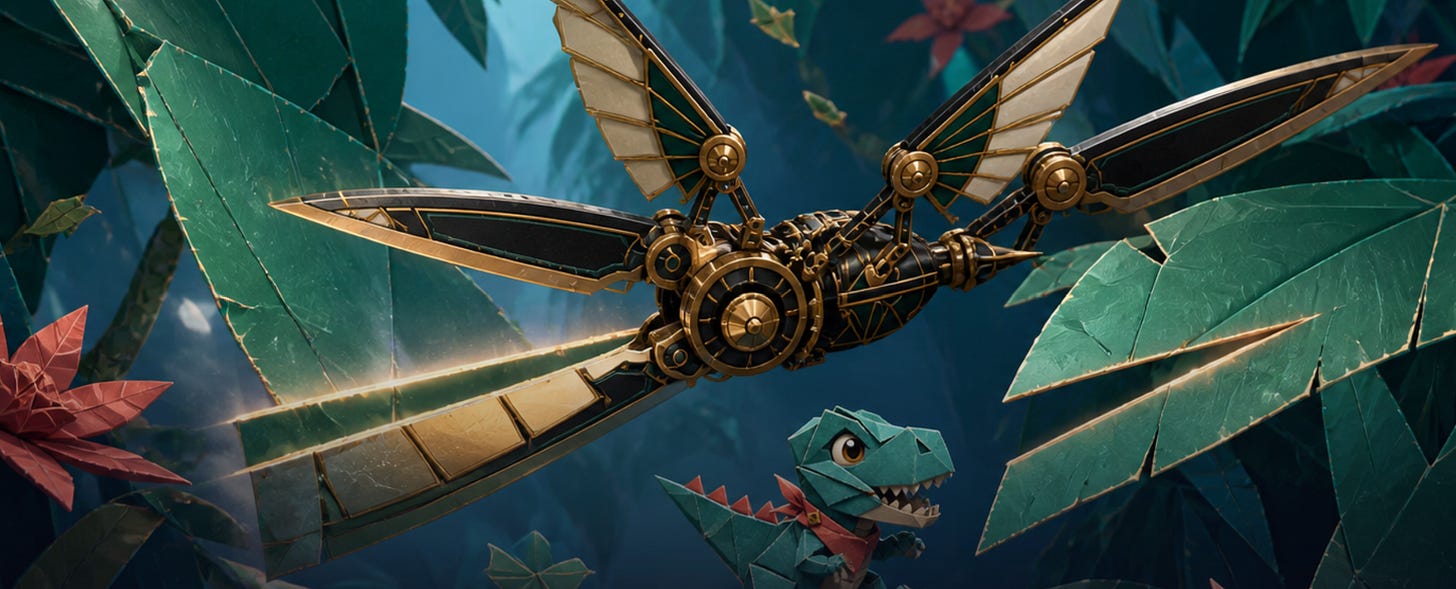
Choose the high leaves or tear through below while Sky Scissors trims every wild path.
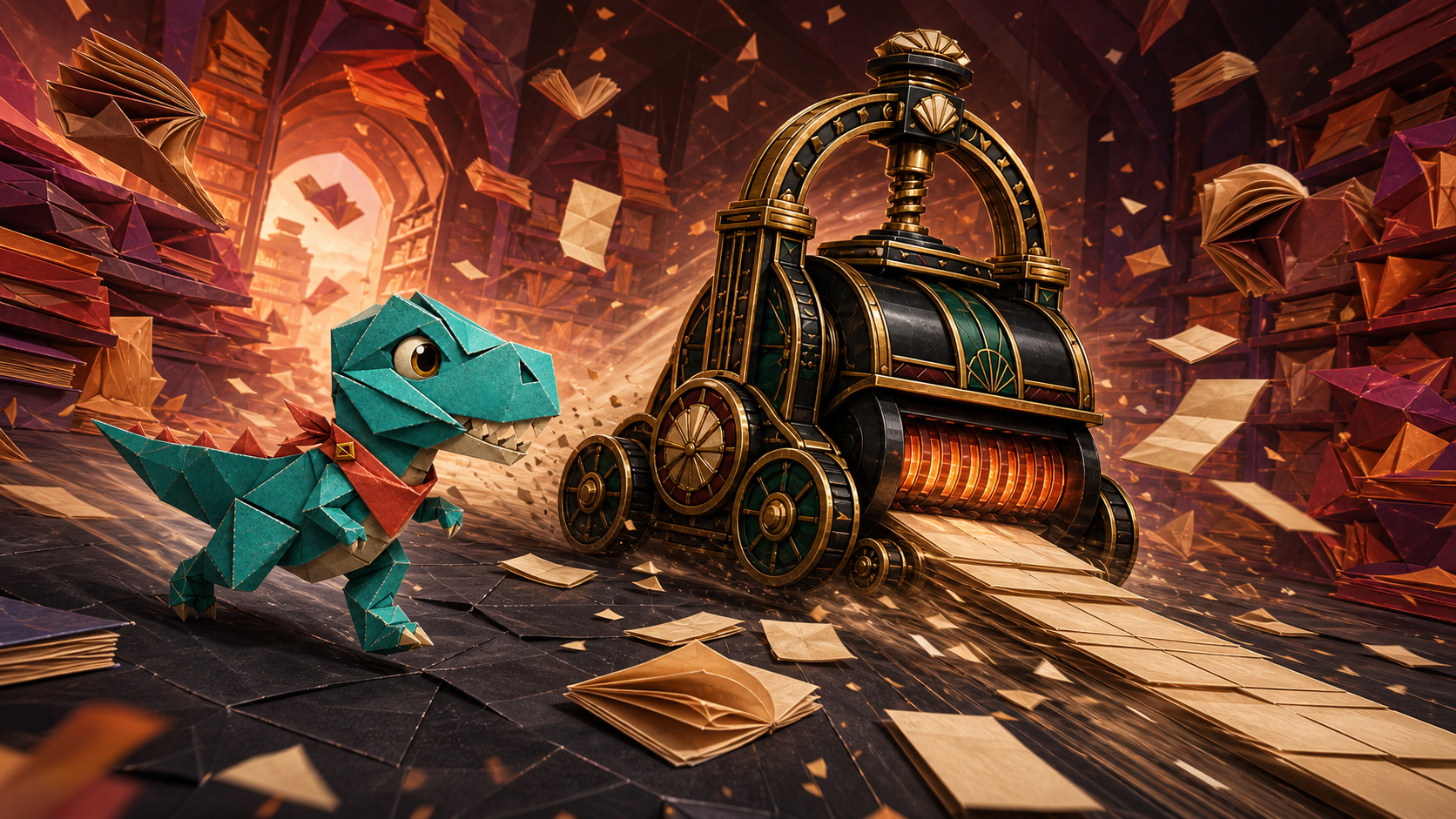
Ember Archive
Outrun the heat before Hot Press irons every old story into the same ending.
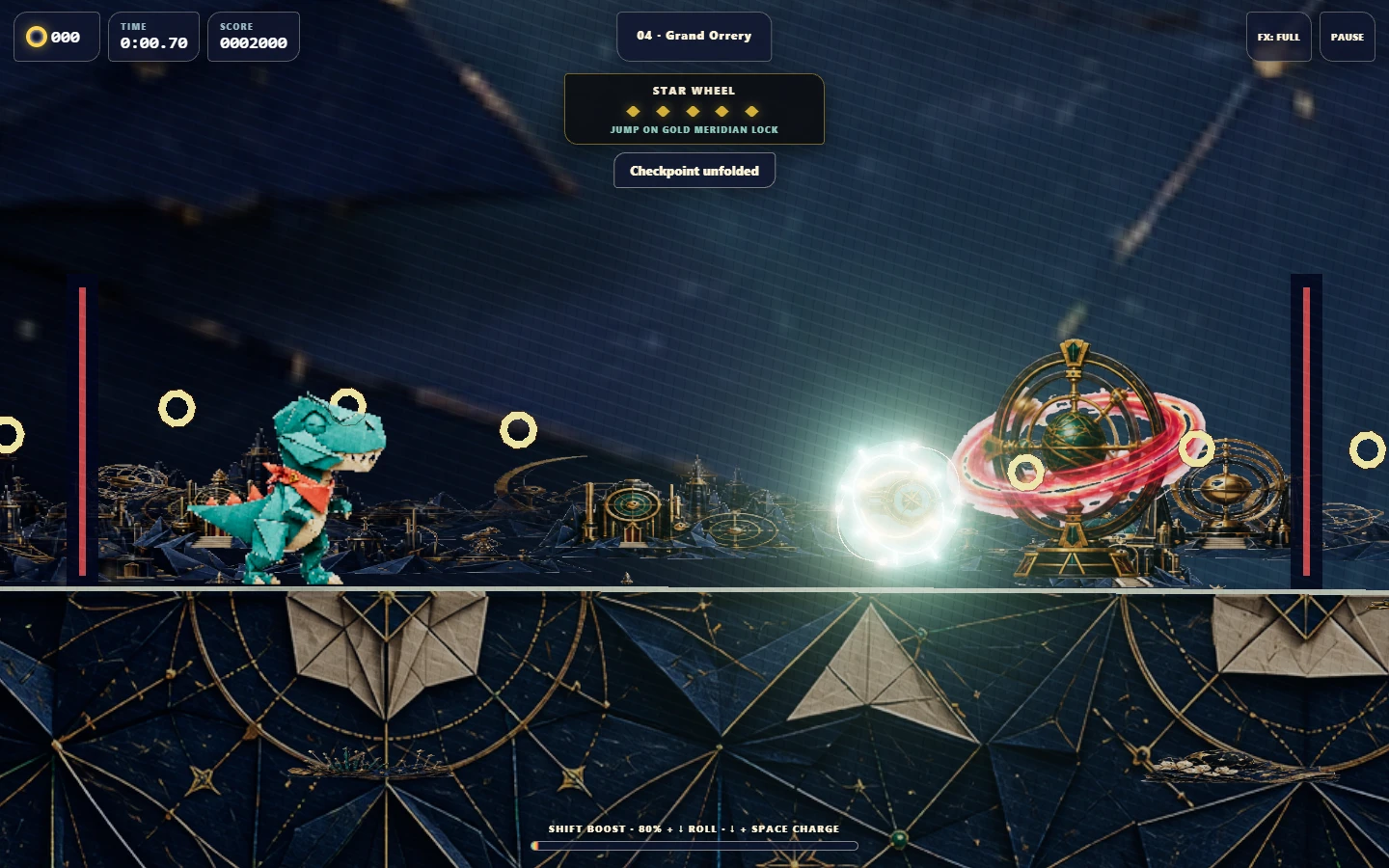
Grand Orrery
Break the perfect orbit, defeat Star Wheel, and claim the Meridian Key.
Mr. Blank has mistaken control for care
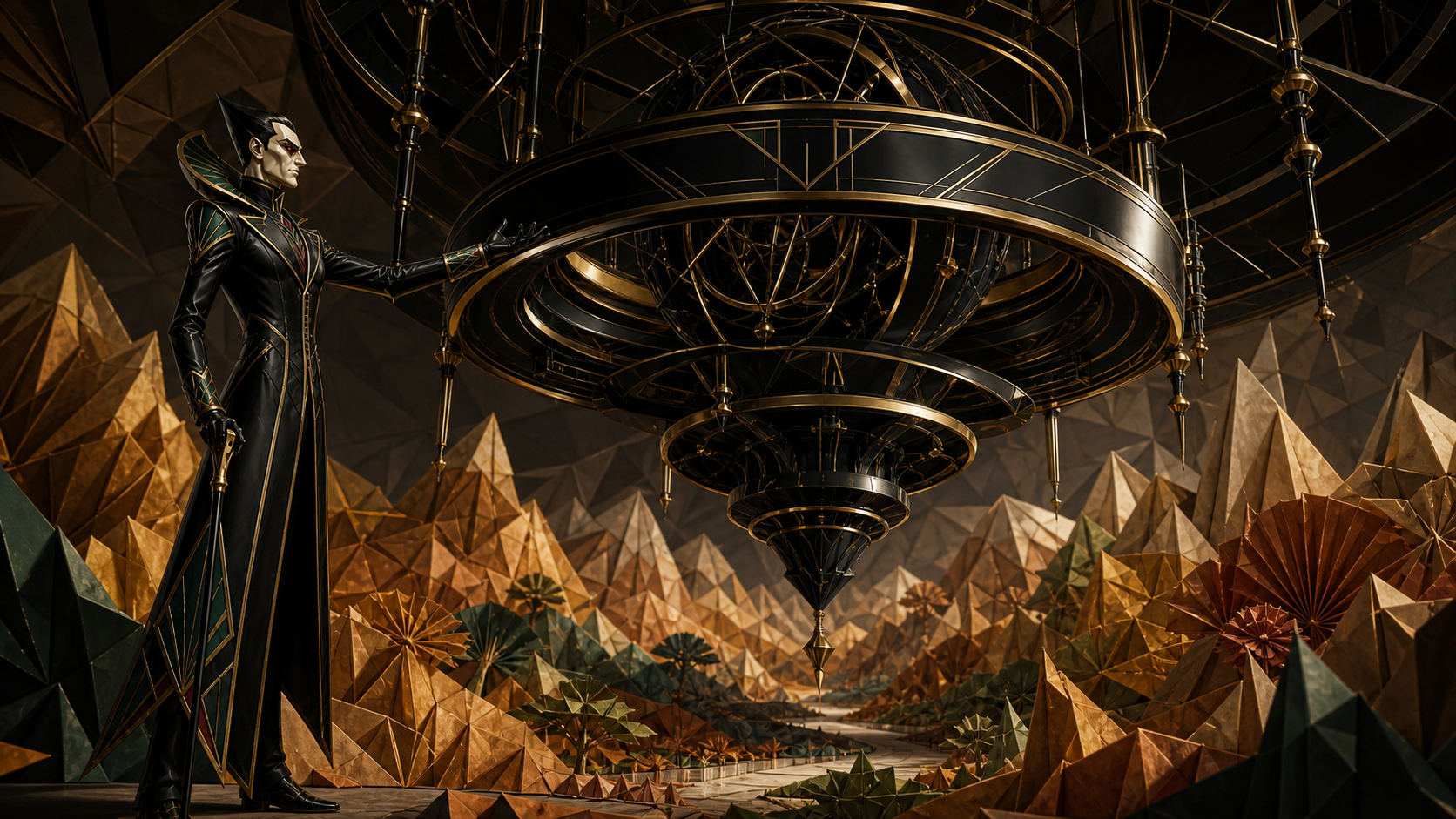
Mr. Blank once trusted a perfect prediction. The Foldlands changed and proved it wrong. He decided the world was the error, so he built M.E.T.E.O.R. to correct every fold, route, and ending.
Pip wins because a changing world is not broken. Surprise, adaptation, and play are strengths here. At the end, Pip keeps the future open and takes the Meridian Key. Mr. Blank escapes with an incomplete machine and a very bruised sense of certainty.
The whole world follows one fold
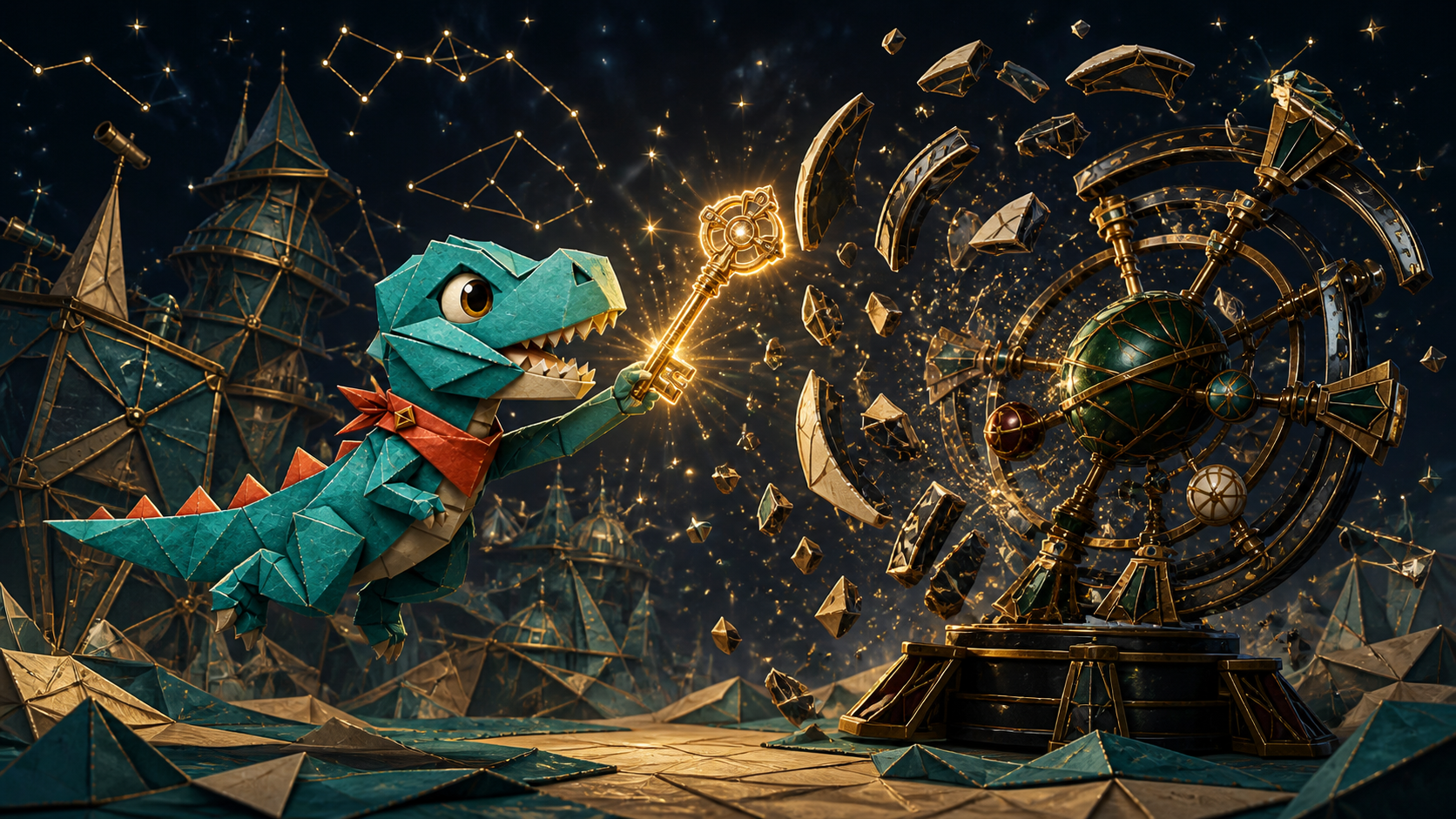
The bright paper scenery and Pip's rough edges sit against Mr. Blank's polished black lacquer and gold machinery. That contrast reaches the menus, bosses, cutscenes, and stage props. Pip curls into a wad when jumping, unfolds on landing, slides when changing direction, and has several small idle motions when the player lets go.
Local sound effects replaced the first procedural sounds. Stage music, paper wind, sung story tracks, speed lines, and bloom tied to Pip's pace made the final game feel much larger than the first runner test.
Three notes from a project that became hard to stop
The public notes caught Folded Thunder while its story and controls were still moving. The first premise was broader and the boss fights were rough. Two later posts show the paper-ball controls settling in, followed by richer sound and generated character videos.
Story note: The archived posts preserve the ideas as they appeared at the time. This overview follows the finished game, where Mr. Blank uses M.E.T.E.O.R. to impose Ordered Reality on the Foldlands.
Pip arrives in paper
The first note introduces the Sonic-inspired runner, the folded art, and boss mechanics that still needed work.
Read the origin note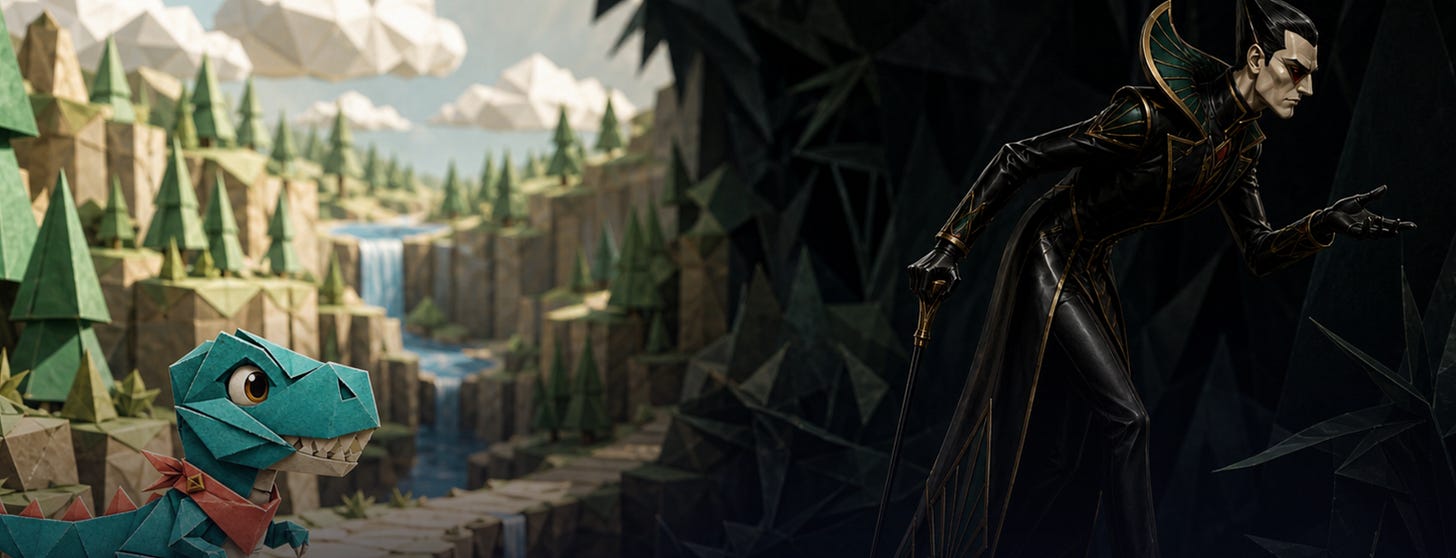
The movement finds its shape
Rolling, hopping out of the ball, crease charging, foot slides, and speed lines turn running into a set of choices.
Take the wider tour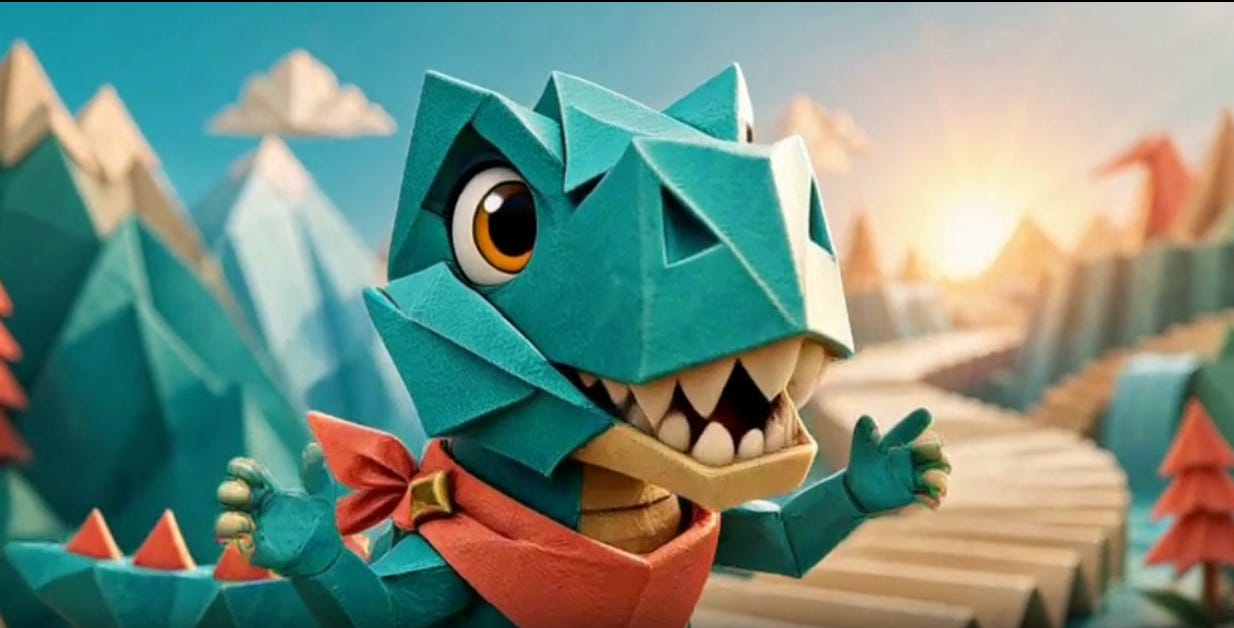
Pip starts talking
Real sound, music, longer stages, and generated videos make the characters feel ready to leave the browser.
Watch Pip in videoWhat the build tested
Folded Thunder asks whether generated character art, a local Three.js runtime, and carefully tuned movement can hold one visual idea across an entire game. The answer lives in small connections. Speed changes the bloom. Slopes change the jump. A fold becomes both animation and control.
The game also keeps its production controls close. Character labs, momentum tests, landscape checks, boss labs, and an AI-readable experience contract sit beside the finished route. They made the tricky parts easier to inspect without asking a player to repeat a whole stage.
Build record
Complete, with one fold left open: I had to stop because this project was far too easy to keep expanding. I loved Pip, the characters, and this strange new world. The four-stage browser game is complete. If enough people want more, I would gladly look at what Pip might become on Steam, a console, or even in a Game Boy-style form.