- Route
- Le Havre to Givet
- Train
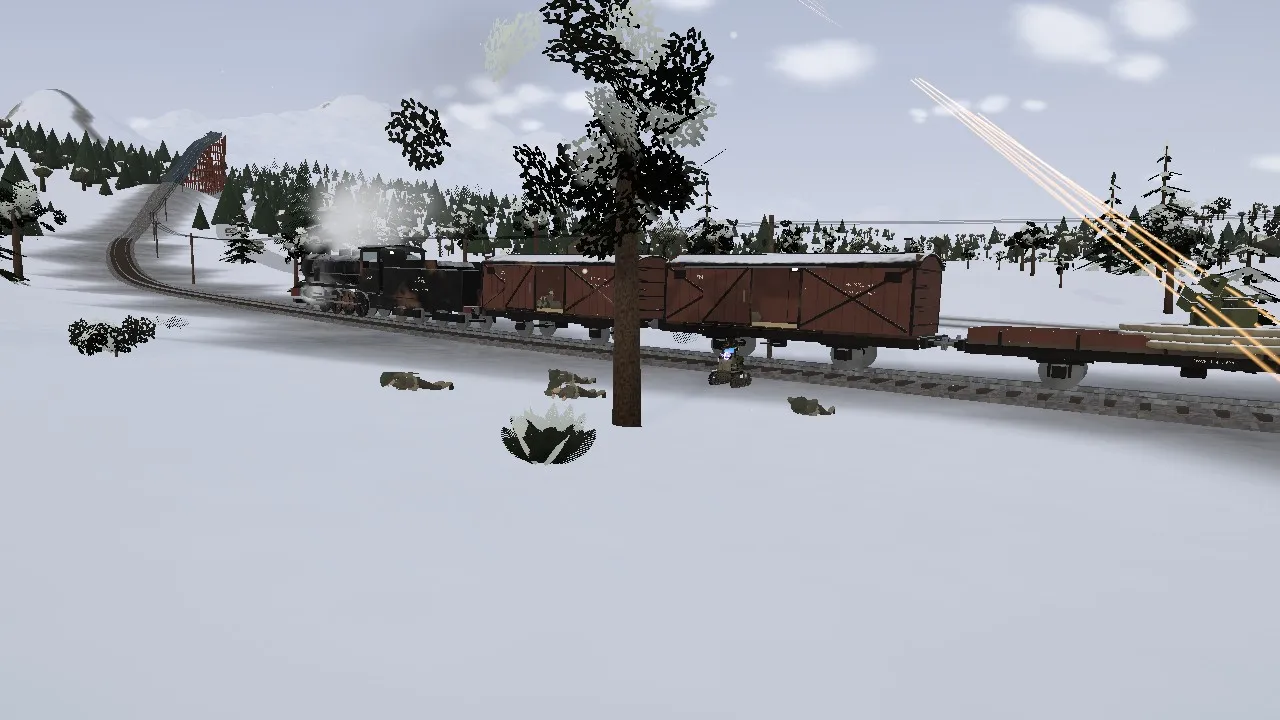
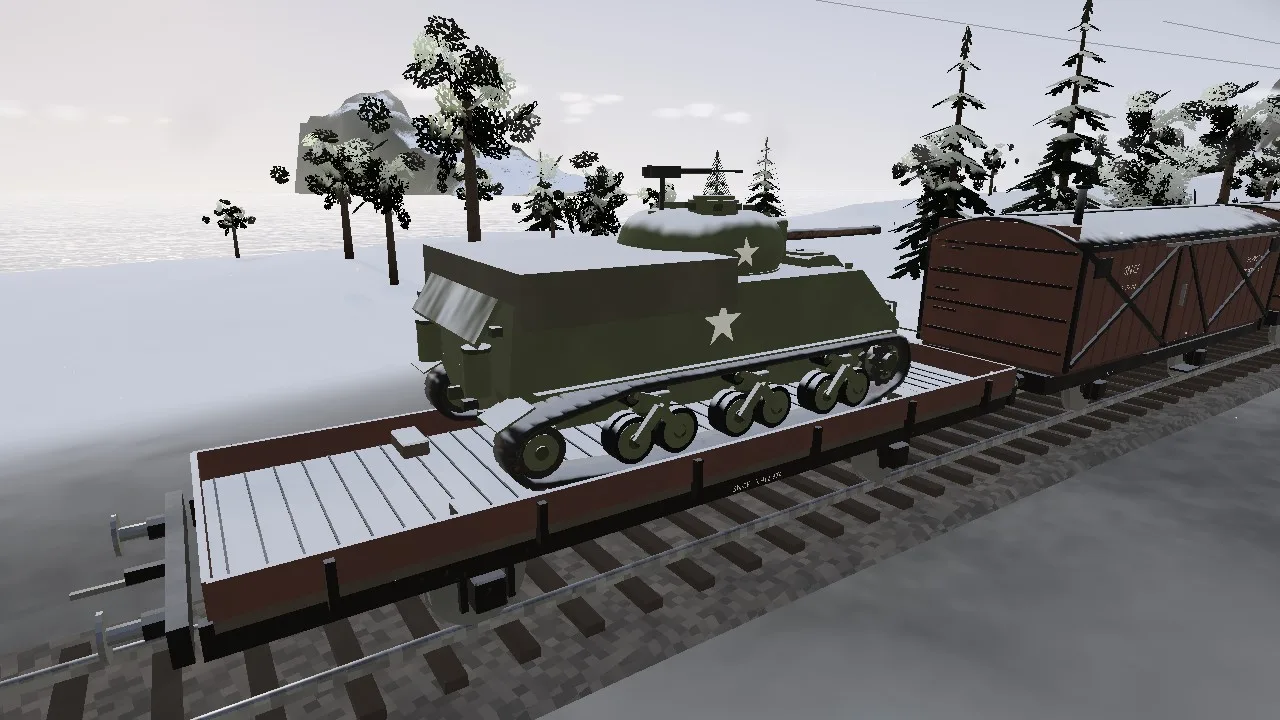
- S160 and six cars
- Along the line
- Ruins, wrecks, an air raid
- Source
- A combat diary
A ride toward somewhere you don't want to go
The idea comes from Jim Sharp's Diary of a Combat Infantryman. Replacements landed at what was left of Le Havre and rode east in small French boxcars, the "40 and 8s" stencilled for forty men or eight horses, toward the Battle of the Bulge. They had straw on the floor, a stove if they were lucky, and the door open a crack for air.
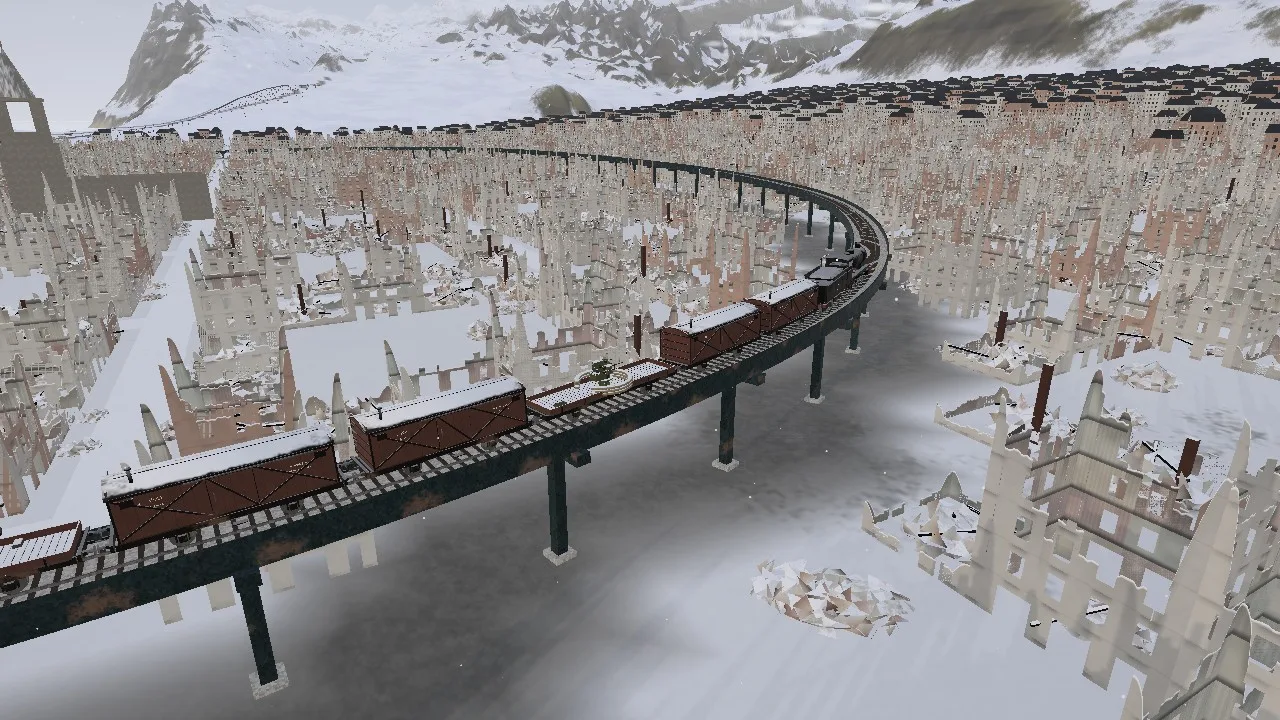
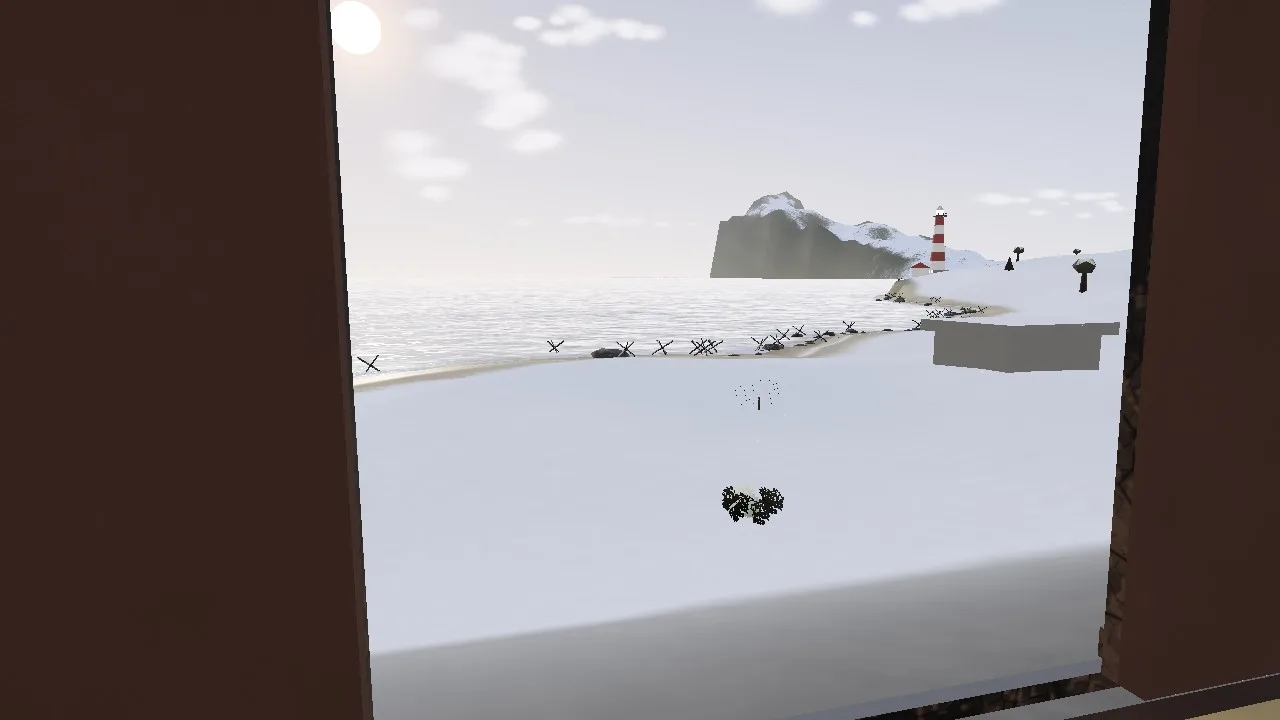
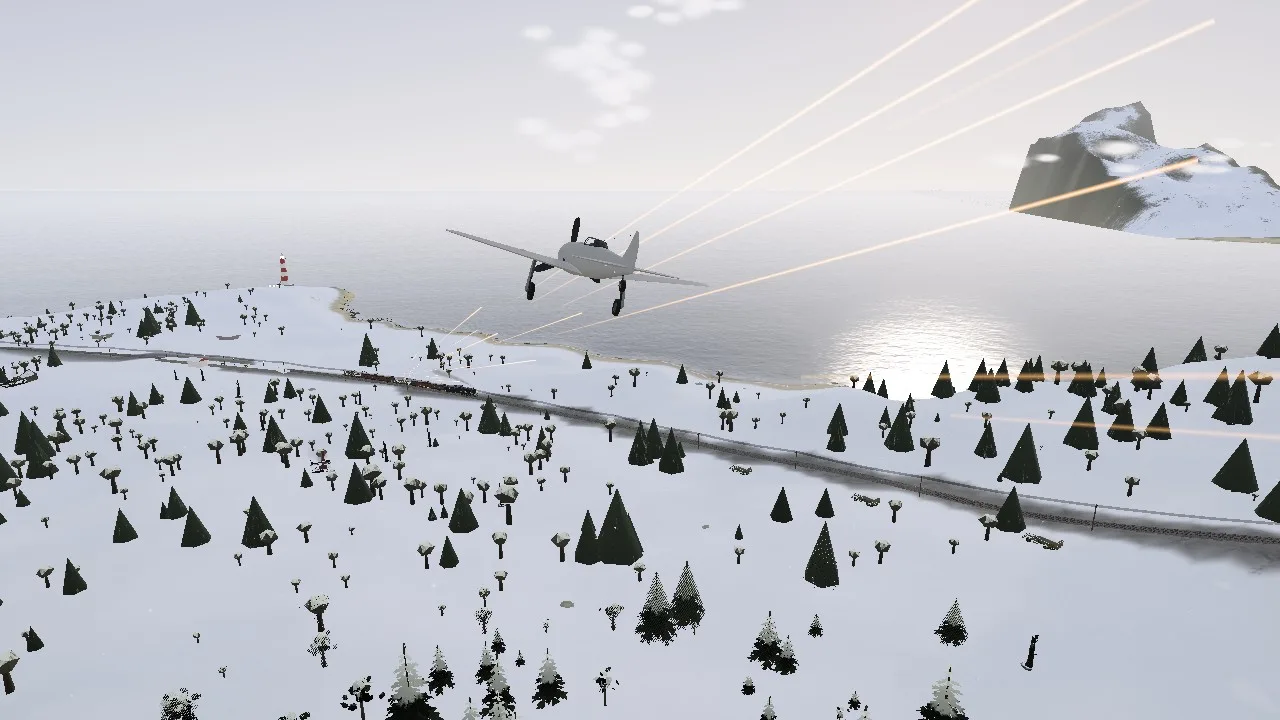
Seven makes the same trip. The train leaves the wrecked port in the morning, crosses the river on a new Army bridge, runs along the coast past the Atlantic Wall, and turns inland through the snow. A train lies burned beside the track. German tanks sit black in the fields where they were knocked out in the summer. In the middle of the trip two Fw 190s come in low along the train, and the quad fifty on the flak car answers until a pair of P-47s chase them off. Then there is a convoy on the road, gun flashes on the horizon, and the railhead, where the trucks are waiting.
Shoreline Limited was about arriving somewhere you want to stay. This ride runs the same engine the other way. Seven's captions start at "There has been a mistake." The world doesn't joke along with him.
Learn the controls
| W A S D | Drive on the platform and along the boxcar floor |
| Mouse drag, wheel | Look around, zoom |
| E | Board the train or step down |
| C | Cameras: Seven, the boxcar door, chase, the footplate, trackside |
| G | Leave the station now |
| Hold F | Speed up the ride (not while the train is under attack) |
On a phone or tablet. Drag on the left of the screen to drive and on the right to look. The buttons switch cameras, board and speed up the ride.
Le Havre to the front
Build notes
The engine. Everything that makes the train run comes from Shoreline Limited: the track and timetable, the bogies and couplings, the cameras, Seven walking the floor of a moving car, the terrain, trees, sky and water. It is copied rather than shared, so neither game has to change for the other.
The train. A USATC S160 2-8-0, the American engine shipped over by the hundred to run the French lines after D-Day, pulling four 40-and-8 boxcars, a flatcar with a quad fifty in a sandbag ring and a flatcar carrying a Sherman. All of it is modelled in Blender at human scale and drawn larger to fit a robot on treads.
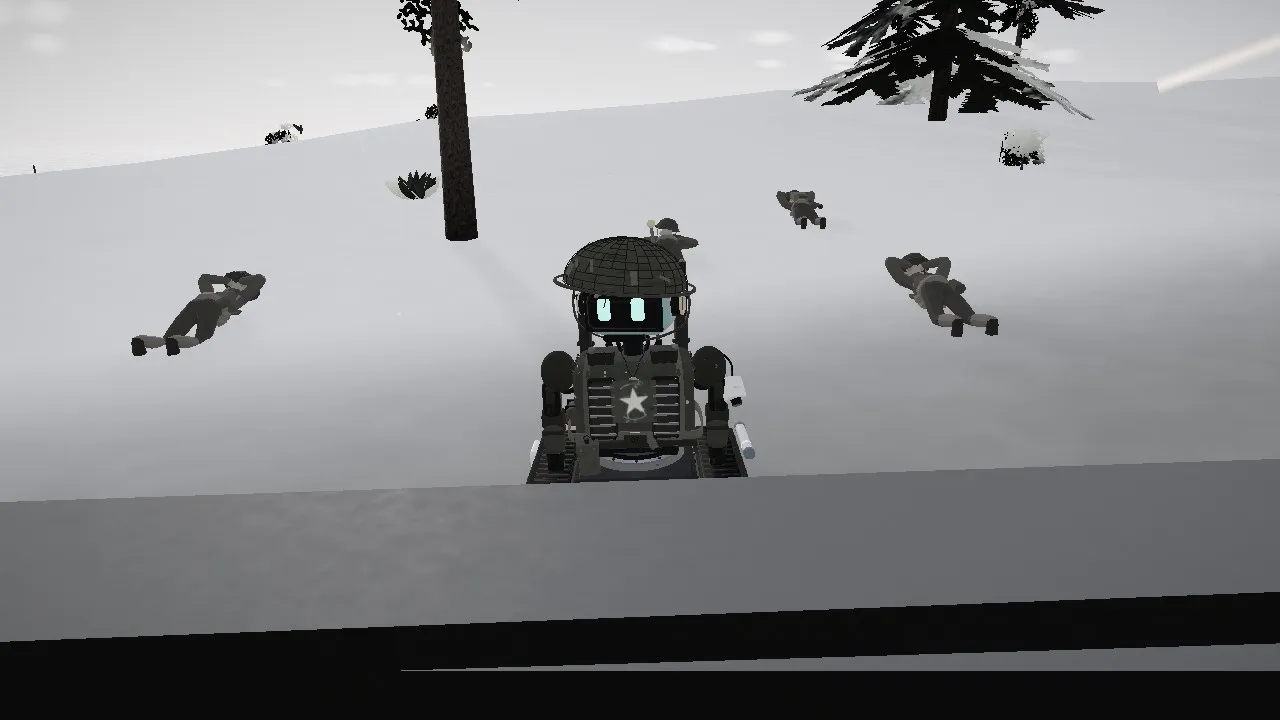
The stations and the people. Le Havre's station, Givet, the GIs and the burned train are new Blender builds (blender/build_stations.py, build_gis.py, build_wreck.py). The soldiers are low-poly humanoids in the style of Beanie33's Low Poly WW2 Soldier: one faceted body grown from a skeleton, rigged, with the helmet, belt, canteen and pack riding the bones, then posed and baked. The wreck is made from the troop train's own model, so the car burned out beside the line is the same kind of car Seven is riding in.
The war. The German armour, the Fw 190s, the scenery and the sounds are Kursk's, loaded straight from that game's folder. The Sherman, jeep, deuce-and-a-half truck, P-47 and M45 quad mount are new Blender builds. Le Havre's ruins are one instanced shell with a shader that cuts the windows, breaks the tops and scorches the walls. Snow settles on everything that faces up.
The research. A folder of public-domain films and photographs of the French railways in 1944 and 1945 (wrecked yards, repaired bridges, Bulge snowfields) sets the look. None of it is film of Sharp's train, so the route and stops are an interpretation.
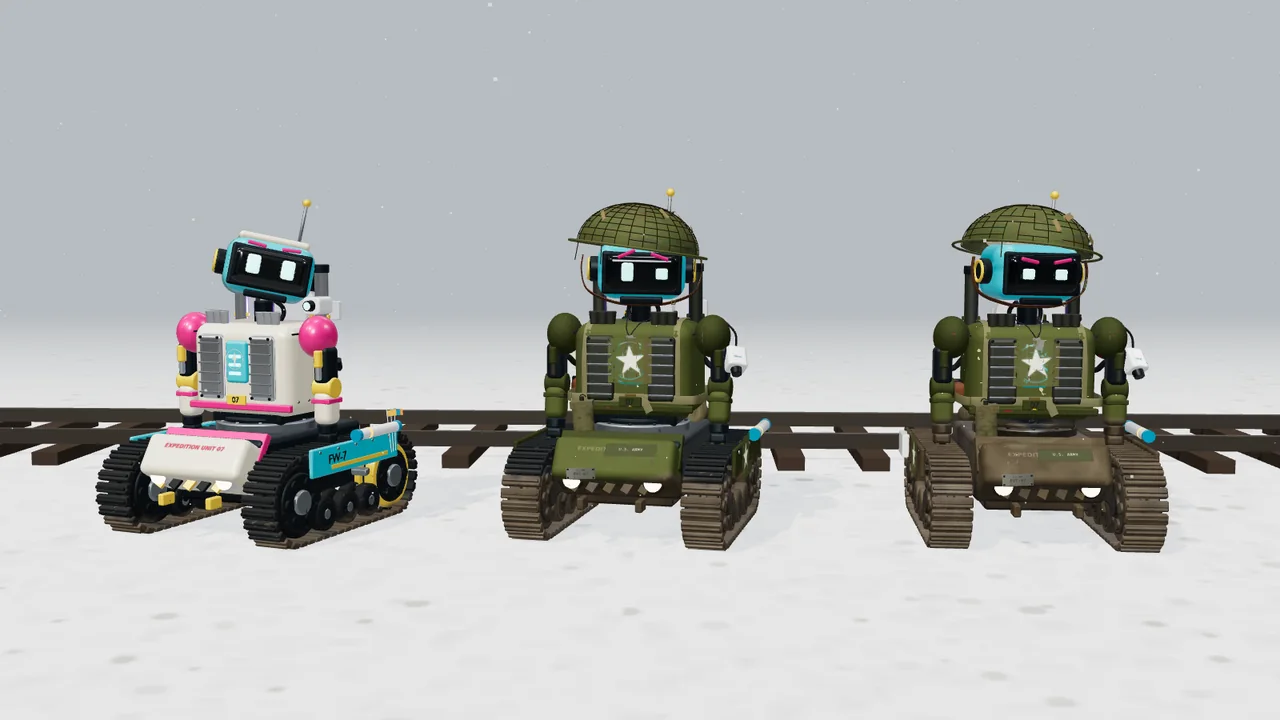
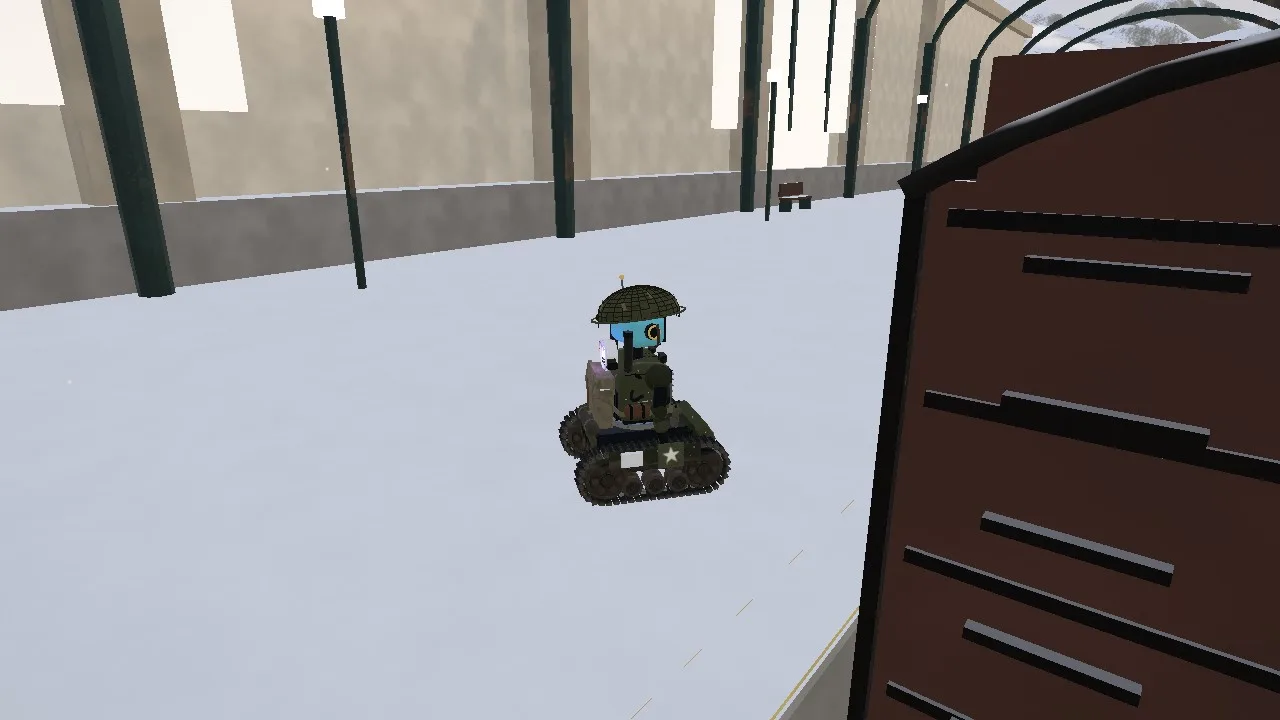
Seven. The Army skin is built at run time on the same rig as every other Seven: brush paint that misses, a crooked star over his old Expedition emblem, a helmet tied on with a strap, and a cracked time module that still says 2087.
Changelog
v0.4.1: an ending, and fixes. When the roll call is done the ride ends like a film. The camera cuts round the railhead and to each man in Seven's car, with his name, his home and what happened to him, then to Seven. It then rises toward the guns and fades to black: to be continued? Out on the line, after the halt or when the train is held for Seven, a man kneels in each boxcar door and reaches down, so Seven can be hauled aboard from the snow without jumping. The convoy's road now lies on the ground, and the trucks follow it, tilting with the slope instead of sinking into it. Seven no longer tips onto his back at a platform edge. The Givet platform faces the right way up, and the bullet holes no longer shine like lasers.
v0.4: voices, and the danger of getting off. The men talk now, in their own voices. There are eight of them, one from each part of the country: Mahoney from Boston, Bloom from Brooklyn, Kowalski from Hamtramck, Pruitt from Iowa, Tolliver from Harlan County, Dupree from Macon, Ortega from San Antonio and Whitcomb from Montana. They tell stories while the car rolls, they react to the bridge, the wrecks and the planes, they shout at the halt, and the sergeant calls the roll at Givet. Seven only listens. Getting off and watching the train leave is a bad idea now: the men get the train held up the line, and German riflemen come over the skyline with a Panzer IV behind them. Seven's chassis takes the hits, and the only real way out is a boxcar door. The dirt and rust on a moving train now stay put on the cars instead of sliding along them.
v0.3.3: a better wait. The loader now tells the truth about shader compiling, shows its progress and keeps the page responsive while it works. Dispatches from the line type out while you wait. A Report for duty button appears when the world is ready. The snow now drifts and gusts on the wind, and ground snow streams along in the squalls.
v0.3.2: the real train. The engine and the boxcars are rebuilt from period photographs. The S160 now has its bar frames, spoked drivers with balance weights, outside steam pipes, Walschaerts valve gear, high running boards, riveted smokebox, two domes and archbar-truck tender. The rods now drive the wheels. The 40-and-8s have their iron frames with the arched straps, leaf springs, spoked wheels, French buffers and the HOMMES 40 CHEVAUX 8 plate.
v0.3.1: real surfaces. The boxcars are boards now, with gaps, grain and nail heads. The engine is old paint over pitted steel, the uniforms are wool serge and the packs are canvas. All of it is baked in Blender from real relief and laid over the models, and cloth and wood no longer shine like plastic. Seven is smaller too, so he fits between the men in the boxcar instead of rolling over their boots.
v0.3: what it costs. The men in Seven's boxcar have names now. Kowalski, Ortega, Pruitt, Bloom and Tolliver are eighteen to twenty-two, and they will tell you where they're from. The air raid stops the train: the engine is hit, the train brakes to a dead halt in open country, and everyone has seconds to get off and get down in the snow before the fighters come back down the length of it. The youngest freezes, and it's up to you whether Seven goes back for him. Anyone still aboard when the guns arrive is hit, Seven included, and a hit on Seven damages the time module that is his only way home. Afterwards there is daylight through the bullet holes in the boxcar, a car burning further back and an engine limping on. Near misses deafen and drain the colour out of the picture. At Givet the sergeant calls the roll and not everyone answers.
v0.2: company, and the right country. The other replacements ride along: GIs in overcoats and M1 helmets sit against the boxcar walls, sleep in the straw and wait with their duffels on the platforms, and Givet counts them off. Le Havre's station is now the gutted 1932 building with its clock tower, and Givet is a stone SNCF station with a goods shed. The wreck beside the line is a burned-out 40-and-8 and an S160 on its side. The convoy has a rutted road, the lighthouse is gone, and the land past the coast is a low chalk plateau instead of mountains.
v0.1: the first ride. Le Havre to Givet in one trip: the ruined port, the river bridge, the beach defences, the wrecked train, the fields, the air raid, the convoy and the railhead.